What Is a Torus Battery — and Why Is Everyone Searching for It?
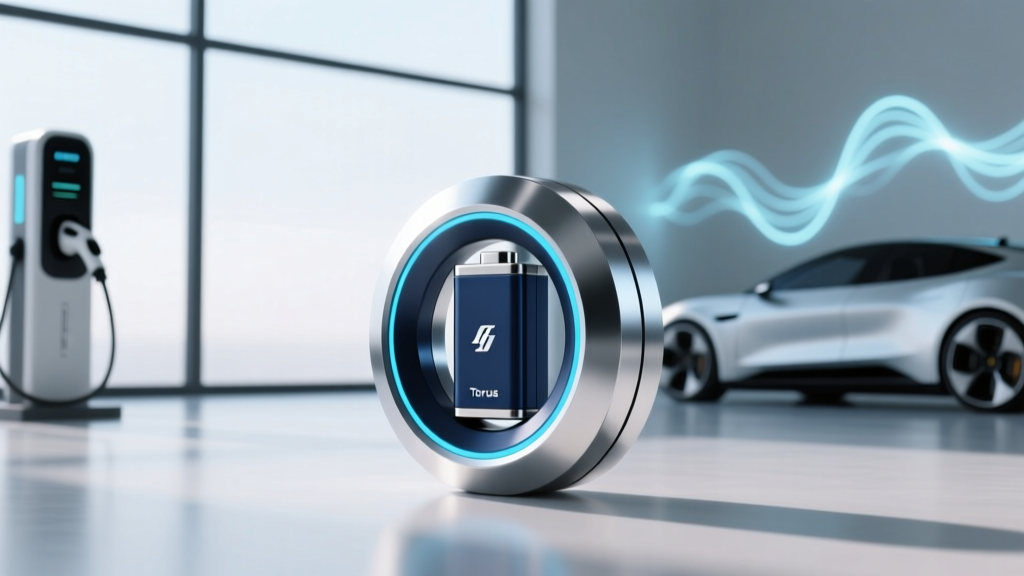
If you have been browsing EV forums or tech headlines lately, you may have encountered the term torus battery. The phrase generally refers to battery cell or module designs that use a toroidal (doughnut-shaped) geometry for the electrode or energy-storage medium. Several research labs and startups have explored torus-shaped battery architectures because the geometry can improve thermal dissipation, reduce internal resistance, and allow more flexible packaging inside a vehicle's skateboard platform.
As of 2026, however, no mainstream production EV ships with a torus-geometry cell. The term is most often associated with early-stage research from university labs and patent filings rather than a chemistry you can order at a Tesla or Hyundai dealership. What is shipping today — and what matters for your purchase decision — is the chemistry inside the cell: primarily lithium iron phosphate (LFP) and nickel manganese cobalt (NMC), with nickel cobalt aluminum (NCA) still appearing in certain performance applications.
This guide covers the battery technologies that actually power today's EVs, what the data says about longevity and replacement cost, and where emerging concepts like torus-shaped cells and solid-state batteries fit on the realistic timeline.
EV Battery Chemistry: LFP vs NMC vs NCA
Every EV battery pack is composed of hundreds or thousands of individual cells. The chemistry of those cells determines range, charging speed, cold-weather behavior, cycle life, and cost. Here is how the three dominant chemistries compare in production vehicles as of the 2026 model year:
| Attribute | LFP (Lithium Iron Phosphate) | NMC (Nickel Manganese Cobalt) | NCA (Nickel Cobalt Aluminum) |
|---|---|---|---|
| Energy Density (Wh/kg, cell-level) | 160–190 | 220–270 | 240–280 |
| Cycle Life (to 80% capacity) | 3,000–5,000+ | 1,000–2,000 | 800–1,500 |
| Cold-Weather Performance | Moderate (10–15% range loss at 20°F) | Better (8–12% range loss at 20°F) | Better (8–12% range loss at 20°F) |
| Peak DC Fast Charge Rate | Typically 150–170 kW | Typically 200–350 kW | |
| Typical Cost ($/kWh, pack-level) | $100–$120 | $130–$160 | $135–$165 |
| Cobalt Content | None | Low (5–10%) | Low (~5%) |
| Common In-Vehicle Examples (2026) | Tesla Model 3 RWD, BYD Seal, Ford Mustang Mach-E Select (LFP variant) | Hyundai Ioniq 5, Kia EV6, Chevrolet Equinox EV, VW ID.4 | Tesla Model S/X, Lucid Air |
| Best Suited For | Daily commuting, budget-focused buyers, high-mileage drivers | Long-range trips, fast-charging priority, cold climates | Performance vehicles, luxury sedans |
LFP: The Longevity and Value Play
LFP chemistry has surged in popularity because it eliminates cobalt entirely, costs less per kilowatt-hour, and endures far more charge cycles before meaningful degradation. The trade-off is lower energy density, which means a given pack weight yields fewer miles. Tesla's Model 3 RWD with its ~60 kWh LFP pack earns an EPA-estimated 272 miles of range — respectable, but below the 341-mile EPA estimate of the Long Range AWD variant using NMC/NCA cells in a larger ~82 kWh pack (source: fueleconomy.gov).
One practical advantage of LFP: manufacturers often recommend charging to 100% regularly to keep the battery management system (BMS) calibrated, since LFP's voltage curve is extremely flat across most of its state of charge. This is the opposite of NMC/NCA guidance, where 80–90% daily charge is preferred.
NMC: The Range and Charging-Speed Leader
If maximum EPA range and fast DC charging are your priorities, NMC remains the dominant choice. Hyundai's Ioniq 5 Long Range (77.4 kWh NMC pack) peaks at roughly 240 kW on a 350 kW DC fast charger, reaching 10–80% in approximately 18 minutes under optimal thermal conditions. Real-world charging curves taper significantly above 80%, so plan your road-trip stops around the 10–80% window to minimize time at the charger.
How Long Do EV Batteries Actually Last?
The short answer: in most cases, the battery will outlast the rest of the vehicle. Data from fleet operators, manufacturer reports, and independent testing consistently shows that modern liquid-cooled EV battery packs lose roughly 10–15% of their original capacity over the first 150,000–200,000 miles.
- Tesla fleet data (2024 Impact Report): Model 3/Y packs retain approximately 85% of original capacity at 200,000 miles.
- Geotab fleet study (2025 update): Average EV battery degradation across 10,000+ vehicles was ~2.3% per year, or roughly 18–20% loss over 8 years.
- Consumer Reports analysis: Most EV batteries retain 80–90% capacity after 100,000 miles; replacement before 150,000 miles is uncommon.
- LFP-specific data: CATL and BYD LFP cells tested beyond 3,000 full cycles at 80%+ retention — equivalent to roughly 600,000+ miles in a 200-mile-range vehicle.
The key variable is how you use and charge the battery. Degradation is not linear: the steepest capacity loss occurs in the first 20,000–30,000 miles (often 3–5%), after which the curve flattens considerably. A well-maintained NMC pack at 150,000 miles may still hold 85–88% of its original capacity.
What Does the Battery Warranty Actually Cover?
Federal law mandates a minimum battery warranty of 8 years or 100,000 miles (whichever comes first) for EVs sold in the United States. In California Air Resources Board (CARB) states, that minimum extends to 10 years or 150,000 miles. Most major manufacturers match or exceed these thresholds:
| Manufacturer | Warranty Period | Mileage Cap | Capacity Retention Threshold |
|---|---|---|---|
| Tesla (Model 3/Y RWD — LFP) | 8 years | 100,000 miles | 70% |
| Tesla (Model 3/Y Long Range/Performance) | 8 years | 120,000 miles | 70% |
| Hyundai / Kia | 10 years | 100,000 miles | 70% |
| Chevrolet (Equinox EV, Blazer EV) | 8 years | 100,000 miles | 60% |
| Ford (Mustang Mach-E, F-150 Lightning) | 8 years | 100,000 miles | 70% |
| Volkswagen (ID.4) | 8 years | 100,000 miles | 70% |
| BMW (i4, iX) | 8 years | 100,000 miles | 70% |
| Rivian (R1T, R1S) | 8 years | 175,000 miles | 70% |
The capacity retention threshold is the critical number. If your battery drops below that percentage (typically 70%, though Chevrolet uses 60%) within the warranty period, the manufacturer is obligated to repair or replace the pack — or individual modules, if the design supports modular replacement — to bring capacity back above the threshold. This does not cover normal wear that stays above the threshold, and it does not cover damage from accidents, flooding, or unauthorized modifications.
EV Battery Replacement Cost: What the Numbers Say
Battery replacement is the single most cited concern among prospective EV buyers — and the most frequently exaggerated. Here are realistic out-of-warranty replacement costs for common pack sizes in 2026:
| Vehicle / Pack Size | Battery Cost (Parts) | Labor | Total Estimated Range |
|---|---|---|---|
| Tesla Model 3 RWD (~60 kWh LFP) | $6,000–$8,500 | $1,500–$2,500 | $7,500–$11,000 |
| Hyundai Ioniq 5 (~77.4 kWh NMC) | $9,000–$13,000 | $2,000–$3,000 | $11,000–$16,000 |
| Ford F-150 Lightning Extended Range (~131 kWh) | $18,000–$25,000 | $2,500–$4,000 | $20,500–$29,000 |
| Chevrolet Silverado EV (~200 kWh) | $25,000–$35,000 | $3,000–$5,000 | $28,000–$40,000 |
| BMW iX xDrive50 (~111.5 kWh) | $15,000–$20,000 | $2,500–$4,000 | $17,500–$24,000 |
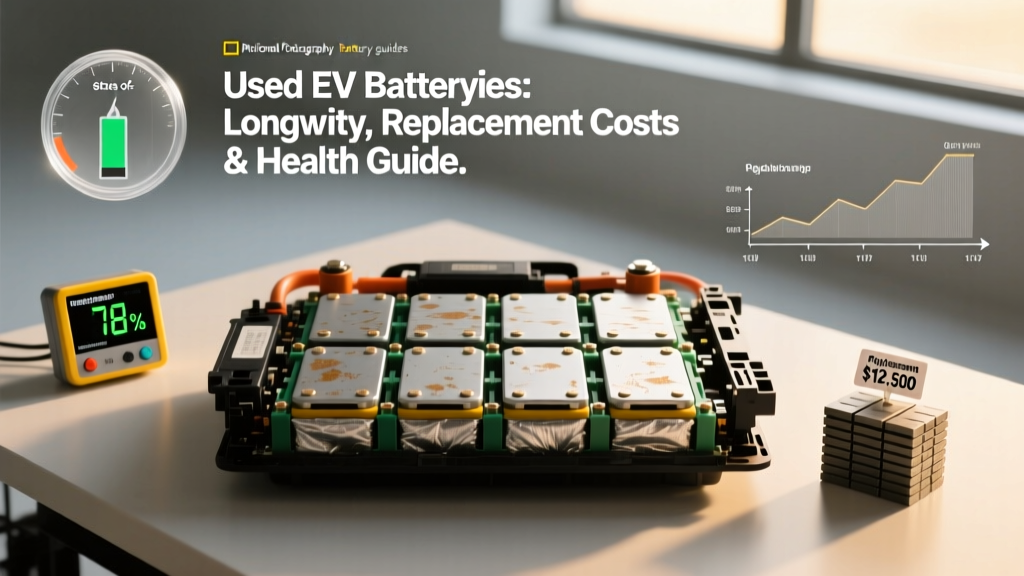
Two important context points: First, pack-level battery prices have fallen from over $400/kWh in 2010 to roughly $110–$140/kWh in 2026, and they continue trending downward. Second, most EV owners never replace the battery. The pack typically outlasts the vehicle's economic life, and many packs are repurposed for stationary energy storage after automotive use. The fear of a $30,000 surprise bill at 100,001 miles is not supported by warranty terms or failure-rate data.
Factors That Affect Battery Longevity (and What You Can Control)
Battery degradation is driven by electrochemical stress. The more stress you impose, the faster capacity fades. Here are the primary factors, ranked by impact:
- Daily state of charge (highest impact): For NMC/NCA packs, keep daily charging between 20–80%. For LFP packs, periodic 100% charges help BMS calibration. Avoid leaving any pack at 100% for extended periods.
- DC fast-charging frequency: Occasional road-trip fast charging is fine. Daily use of 150+ kW DC charging accelerates degradation by ~1–2% additional loss over 100,000 miles compared to Level 2 home charging.
- Extreme temperatures: Sustained exposure to ambient temperatures above 95°F accelerates calendar aging. Precondition the battery before fast charging in cold weather (below 40°F) to avoid lithium plating.
- Deep discharges: Avoid regularly running the battery below 10%. Most BMS systems include a buffer (typically 2–5 kWh unusable at the bottom), but habitual deep cycling still stresses cells.
- Storage at high SoC: If storing the vehicle for weeks, set charge to ~50%. Calendar aging accelerates significantly above 80% SoC in warm conditions.
- Thermal management: Liquid-cooled packs (standard on virtually all 2026 EVs) degrade far slower than passively cooled packs. Keep the vehicle plugged in during extreme heat or cold so the thermal management system can operate.
How to Check and Monitor Battery Health (State of Health)
State of Health (SoH) is the percentage of original capacity your battery currently retains. A brand-new pack is 100% SoH; a pack that held 75 kWh when new and now holds 67.5 kWh is at 90% SoH.
Methods for Checking SoH
- Manufacturer app / in-car display: Tesla, Hyundai, BMW, and others now provide a battery health indicator in the vehicle settings or companion app. This is the easiest method but may not show a precise percentage — some display only a "Good" / "Normal" status.
- OBD-II diagnostics with EV-capable scanner: Tools like the OBDeleven, Carly, or dedicated EV scanners can read the BMS-reported SoH directly. This is the most accurate consumer-accessible method.
- Third-party services: Companies like Recurrent Auto and AVILOO offer battery health reports by analyzing your charging data or running a standardized charge-discharge test. Useful for used-EV purchases.
- Manual calculation: Charge to 100%, note the displayed range, and compare to the original EPA-rated range. Adjust for known efficiency changes. This method is approximate (±3–5%) because displayed range is influenced by recent driving patterns.
For used-EV buyers, always request a battery health report before purchase. A SoH reading below 85% on a vehicle with fewer than 60,000 miles may indicate abusive charging habits or a defective module and warrants a dealer inspection.
Where Do Torus Batteries and Solid-State Fit on the Timeline?
The torus battery concept — along with other novel cell geometries like cylindrical 4680 cells, blade cells, and structural packs — represents incremental packaging and thermal innovation rather than a wholesale chemistry change. Toroidal cell designs are being researched for their potential to reduce thermal hotspots and improve volumetric efficiency, but no automaker has announced a production timeline for torus-geometry cells in a consumer vehicle.
The more consequential near-term technology shift is solid-state batteries, which replace the liquid electrolyte with a solid conductor. Toyota has announced plans for a solid-state EV with an estimated 600+ mile range by 2027–2028, while Samsung SDI targets mass production around 2027. However, initial solid-state packs will likely debut in limited-production, premium vehicles at high cost before reaching mainstream price points.
Silicon anode technology (used by companies like Sila Nanotechnologies and Group14) is already shipping in limited applications and offers a 10–20% energy density improvement over conventional graphite anodes. Expect broader adoption in 2026–2028 model-year vehicles.
- Silicon anode cells: Limited production 2025–2026; broader adoption 2027–2028
- Semi-solid-state cells: Initial production in China (NIO, WeLion) 2024–2025; US/EU vehicles 2027+
- Full solid-state cells: Premium vehicles 2028–2030; mainstream price points 2031+
- Torus / novel geometry cells: Research stage; no announced production timeline
- Sodium-ion cells: Budget EVs in China 2024–2026; US market entry uncertain
All timelines are estimates based on manufacturer announcements and industry analysis. Production dates have historically slipped by 1–3 years.
Frequently Asked Questions
How long do EV batteries last in years and miles?
Modern liquid-cooled EV battery packs typically retain 80–90% of their original capacity after 150,000–200,000 miles and 10–15 years of use. Full failure requiring replacement before 200,000 miles is statistically uncommon. The pack will usually outlast the vehicle's economic life, especially given declining replacement costs and improving cell durability.
How much does it cost to replace an EV battery?
Out-of-warranty replacement costs range from roughly $7,500 for a smaller LFP pack (e.g., Tesla Model 3 RWD, ~60 kWh) to $28,000–$40,000 for a large truck pack (e.g., Chevrolet Silverado EV, ~200 kWh). However, the vast majority of EVs never require a full battery replacement during ownership, and the federal warranty mandates coverage for at least 8 years/100,000 miles with a 70% capacity retention threshold.
What does the EV battery warranty actually cover?
The warranty covers battery capacity loss that falls below the stated threshold (typically 70% of original capacity) within the warranty period (typically 8 years/100,000 miles, or 10 years/150,000 miles in CARB states). It covers defects in materials and workmanship. It does not cover damage from accidents, misuse, unauthorized modifications, or normal degradation that remains above the threshold.
How do I check my EV battery's health?
Use your vehicle's built-in battery health indicator (available on most 2024+ models), connect an OBD-II EV-capable scanner to read BMS-reported SoH, or use a third-party service like Recurrent Auto. For used-EV purchases, always verify SoH before buying — a reading below 85% on a low-mileage vehicle warrants further investigation.
LFP vs NMC — which battery chemistry is better?
Neither is universally better; the right choice depends on your priorities. Choose LFP if you want maximum cycle life (3,000–5,000+ cycles), lower cost, cobalt-free sourcing, and you primarily commute with home charging. Choose NMC if you need maximum EPA range per charge, faster DC charging speeds (200–350 kW peak), better cold-weather range retention, and you take frequent road trips. Both chemistries will comfortably last 150,000+ miles with proper care.
Is a torus battery available in any EV I can buy today?
No. Torus-geometry battery cells remain in the research and prototype stage. All production EVs in 2026 use conventional cylindrical (e.g., 2170, 4680), prismatic, or pouch cells with LFP, NMC, or NCA chemistry. If torus-cell designs reach production, they would likely appear in the 2029–2032 timeframe at the earliest.
Sources: fueleconomy.gov (EPA range and efficiency data), IRS §30D clean vehicle credit rules, manufacturer specification sheets and warranty documentation.