The Real Lifespan of EV Batteries: What the Data Shows
The single biggest concern for used EV buyers and long-term owners is the high-voltage traction battery. Will it last? What happens when it degrades? And how much does a replacement actually cost? The short answer, backed by fleet data and manufacturer warranty structures, is that modern EV batteries routinely outlast 150,000 miles with meaningful capacity remaining — and many will outlive the rest of the vehicle. But the details matter enormously depending on chemistry, usage patterns, and climate.
This guide breaks down what we know from real-world degradation studies, current replacement pricing, federal warranty mandates, and the chemistry trade-offs that determine how your battery ages. Whether you're evaluating a used EV or trying to maximize the life of your current one, these are the numbers that matter.
How Long Do EV Batteries Actually Last?
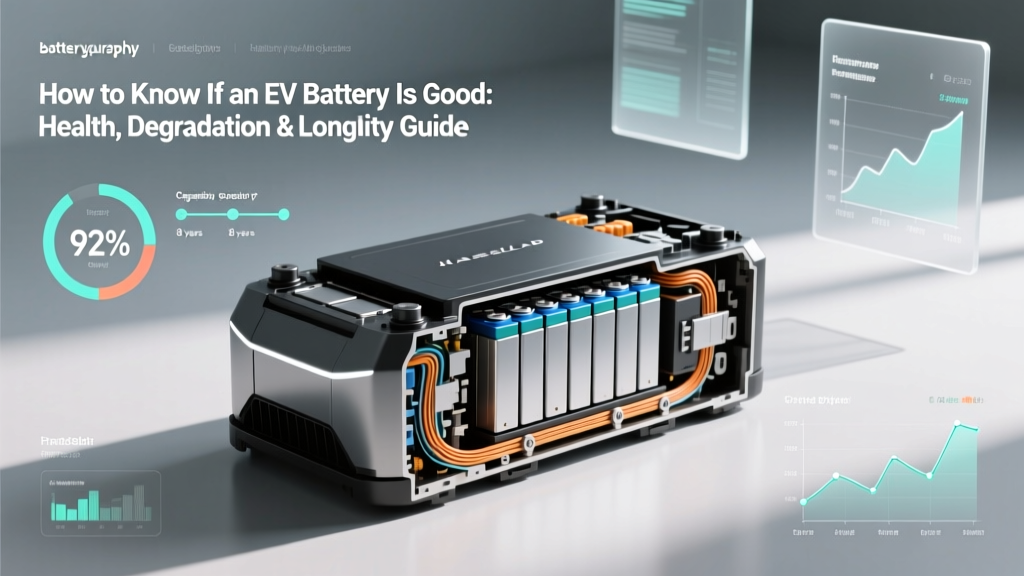
Based on aggregated fleet data from sources like Geotab's long-term battery health study covering over 10,000 electric vehicles, the average EV battery loses roughly 1.8% to 2.3% of its original capacity per year under typical driving conditions. That translates to the following real-world expectations:
| Age | Average Capacity Retained | Example: 80 kWh Pack (Usable Range Impact) |
|---|---|---|
| Year 1 | 97–98% | ~78.4 kWh (negligible loss) |
| Year 3 | 93–95% | ~75.2 kWh (~12 mi range loss on 250-mi EPA) |
| Year 5 | 89–92% | ~72.0 kWh (~20 mi range loss) |
| Year 8 | 84–88% | ~68.8 kWh (~28 mi range loss) |
| Year 10 | 80–85% | ~66.0 kWh (~35 mi range loss) |
| Year 15 | 72–78% | ~60.0 kWh (~50 mi range loss) |
Sources: Geotab fleet data, Recurrent Auto battery reports. Actual degradation varies by chemistry, climate, and charging habits. Cold climates and frequent DC fast charging accelerate loss.
The critical insight: battery degradation is not linear. Most packs experience a steeper drop in the first 1–2 years (roughly 3–5% total) as the solid-electrolyte interphase (SEI) layer stabilizes, then settle into a slower, more predictable decline. A battery that has lost 8% over its first three years is not necessarily on track to lose 24% over nine — the curve flattens.
For used EV buyers, this means a 4-year-old vehicle with 88% State of Health (SoH) is performing exactly as expected and likely has many years of useful service ahead. The battery is not "failing" — it's aging normally.
LFP vs. NMC/NCA: Which Chemistry Ages Better?
The two dominant lithium-ion chemistries in today's EVs degrade differently, and the choice has significant implications for used-battery longevity.
| Attribute | LFP (Lithium Iron Phosphate) | NMC/NCA (Nickel Manganese Cobalt / Nickel Cobalt Aluminum) |
|---|---|---|
| Energy Density | Lower (~160 Wh/kg cell-level); heavier packs for same range | Higher (~250–300 Wh/kg); lighter, more range per kWh |
| Cycle Life | 3,000–5,000+ full cycles to 80% SoH | 1,000–2,000 full cycles to 80% SoH |
| Calendar Aging | Slower; tolerates 100% SoC storage better | Faster at high SoC; prefers 20–80% daily window |
| Cold Performance | Weaker below 32°F; slower charging, more range loss | Better low-temp conductivity; less winter penalty |
| Cost per kWh | ~$80–100/kWh (cell-level, 2025–2026 pricing) | ~$110–140/kWh (cell-level) |
| Thermal Stability | Excellent; very resistant to thermal runaway | Good with active thermal management; more sensitive |
| Common In | Tesla Model 3/Y RWD, Ford Mustang Mach-E Select (2025+), BYD models, Rivian Standard | Tesla Long Range/Performance, Hyundai Ioniq 5/6, BMW iX, most luxury EVs |
The takeaway for used-battery buyers: LFP packs generally offer superior cycle life and tolerate daily 100% charging without accelerated degradation — a significant advantage if you plan to keep the vehicle past 150,000 miles. NMC/NCA packs deliver more range per pound and perform better in cold climates, but they're more sensitive to sustained high-SoC storage and fast-charging heat. Neither chemistry is "bad" — the right choice depends on your climate, daily mileage, and ownership horizon.
What Does the Battery Warranty Actually Cover?
Federal law mandates that EV battery warranties cover a minimum of 8 years or 100,000 miles (whichever comes first). In California Air Resources Board (CARB) states — which include California, Colorado, Connecticut, Maine, Maryland, Massachusetts, New Jersey, New York, Oregon, Rhode Island, Vermont, Virginia, and Washington — the mandate extends to 10 years or 150,000 miles.
| Manufacturer | Warranty Period | Capacity Threshold | Notes |
|---|---|---|---|
| Tesla (Model 3/Y) | 8 yr / 120,000 mi (Long Range); 8 yr / 100,000 mi (RWD) | 70% retention | LFP RWD packs carry same threshold |
| Hyundai / Kia | 10 yr / 100,000 mi | 70% retention | Among the longest standard coverage |
| Ford (Mach-E, F-150 Lightning) | 8 yr / 100,000 mi | 70% retention | Transferable to second owner |
| GM (Ultium-based) | 8 yr / 100,000 mi | 70% retention (60% on some commercial) | Modular pack design may lower future repair cost |
| BMW | 8 yr / 100,000 mi | 70% retention | Extended warranty available for purchase |
| Rivian | 8 yr / 175,000 mi (R1T/R1S) | 70% retention | Highest mileage threshold in segment |
The 70% capacity retention threshold is the industry standard trigger for a warranty claim. If your 80 kWh pack can no longer hold at least 56 kWh (as measured by the BMS or a dealer diagnostic), the manufacturer must repair or replace it at no cost. In practice, very few batteries fall below this threshold within the warranty period — Geotab's data shows average retention at year 8 is still 84–88%.
Critical for used buyers: Battery warranties are typically transferable to subsequent owners automatically. When evaluating a used EV, confirm the remaining warranty period by checking the original in-service date (not the model year) through the manufacturer or a dealer VIN lookup.
How Much Does It Cost to Replace an EV Battery?
This is where fear-mongering runs rampant, so let's anchor the discussion in actual numbers. Battery replacement is expensive, but it's also extremely rare within the first 10–12 years of ownership. Most EVs are scrapped for collision damage, electronics failure, or rust before the battery reaches end-of-life.
| Vehicle / Pack Size | Battery Capacity | Chemistry | Estimated Replacement Cost |
|---|---|---|---|
| Tesla Model 3 RWD | 60 kWh (LFP) | LFP | $8,000–$12,000 |
| Tesla Model Y Long Range | 75 kWh (NMC) | NMC | $12,000–$16,000 |
| Hyundai Ioniq 5 | 77.4 kWh | NMC | $11,000–$15,000 |
| Ford F-150 Lightning Extended | 131 kWh | NMC | $18,000–$25,000 |
| Chevrolet Equinox EV | 85 kWh (Ultium) | NMC | $10,000–$14,000 (modular repair may reduce) |
| Nissan Leaf (40 kWh) | 40 kWh | NMC (passive cooling) | $6,500–$9,000 |
| BMW iX xDrive50 | 111.5 kWh | NMC | $18,000–$22,000 |
Several factors are working in buyers' favor:
- Cell prices continue to fall. Pack-level pricing dropped below $130/kWh in 2025 for NMC and under $90/kWh for LFP, down from over $200/kWh just five years ago (source: BloombergNEF).
- Modular repair is expanding. GM's Ultium platform and some Hyundai/Kia packs allow individual module replacement rather than full-pack swaps, potentially cutting costs by 50–70% for localized cell failures.
- The aftermarket is growing. Independent EV repair shops and refurbished battery suppliers are emerging, offering packs at 30–50% below OEM dealer pricing for out-of-warranty vehicles.
The honest context: a $15,000 battery replacement on a 10-year-old EV that's worth $18,000 is a tough economic call. But the data shows that fewer than 5% of EV batteries require full replacement before 150,000 miles. Most owners will sell, trade, or total the vehicle for unrelated reasons before facing this cost.
What Kills EV Batteries Faster? Five Degradation Accelerators
Not all miles are created equal. These five factors measurably accelerate capacity loss:
- Frequent DC fast charging above 150 kW. High-current charging generates internal heat that stresses cell chemistry. Tesla's own data suggests vehicles that DC fast charge more than 90% of the time show roughly 1–2% additional degradation over 100,000 miles compared to primarily L2-charged vehicles. The effect is real but modest — not catastrophic.
- Sustained high State of Charge (SoC). Storing an NMC battery at 100% SoC for days or weeks accelerates calendar aging through electrolyte oxidation. LFP chemistry is more tolerant of this, which is why Tesla recommends 100% daily charging for LFP Model 3 RWD vehicles. For NMC, set your daily charge limit to 80% and only charge to 100% before long trips.
- Extreme heat exposure. Ambient temperatures above 95°F combined with high SoC create the worst-case degradation scenario. Vehicles in Phoenix, Las Vegas, and central Texas show slightly elevated degradation rates in fleet studies. Active thermal management (liquid cooling) mitigates this significantly — it's one reason passively cooled packs like the early Nissan Leaf degraded faster.
- Deep discharge cycles. Regularly driving the battery below 10% SoC stresses the anode. The BMS maintains a buffer (typically 2–5 kWh below the displayed 0%), but habitually running the pack to near-empty still accelerates wear.
- High-mileage, high-C-rate driving. Repeated hard acceleration and sustained high-speed driving (80+ mph) draw high current from the pack, generating heat. Track use or heavy towing in hot weather compounds this effect.
How to Check Battery Health (State of Health) on a Used EV
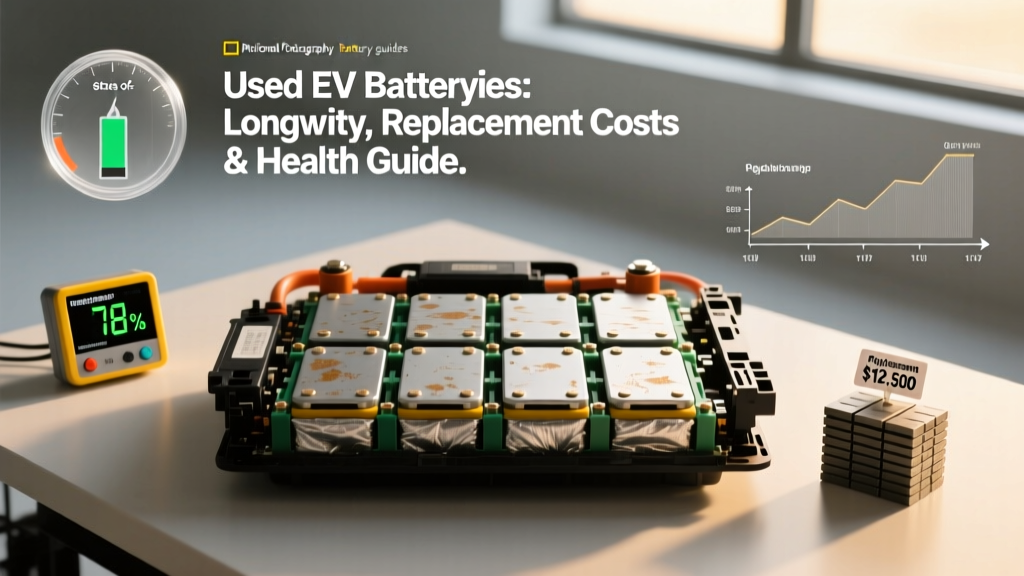
State of Health (SoH) is the percentage of original capacity a battery can still hold. A new battery is 100% SoH; one that holds 72 kWh out of an original 80 kWh is at 90% SoH. Here's how to verify it:
- OBD-II diagnostic tools: Apps like Leaf Spy (Nissan Leaf), TeslaFi or Scan My Tesla (Tesla), and Car Scanner (general OBD-II) can read the BMS-reported SoH directly. A $30–50 OBD-II dongle plus a smartphone app is usually sufficient.
- Dealer battery health report: Most manufacturers can print a battery health certificate showing current capacity vs. original. Request this during a pre-purchase inspection — it's often free or under $50.
- Range-based estimation: Charge the vehicle to 100% and note the displayed range. Compare it to the original EPA figure, adjusting for temperature (cold weather reduces displayed range by 10–30% even on a healthy battery). This is crude but directionally useful.
- Third-party services: Companies like Recurrent offer battery health reports based on connected-car data, and some used-EV marketplaces now include SoH scores in listings.
For used EV buyers: A SoH reading of 85–92% on a 3-to-5-year-old vehicle is normal and healthy. Walk away only if SoH is below 75% on a vehicle still under warranty (that suggests a defective pack that should be replaced before you buy) or below 70% on an out-of-warranty vehicle unless the price reflects a looming replacement cost.
Maximizing Battery Life: A Practical Ownership Checklist
- Set daily charge limit to 80% for NMC/NCA vehicles; 100% is fine for LFP daily use.
- Use Level 2 home charging as your primary method (7–11.5 kW). It's gentler on cells and dramatically cheaper than public DC fast charging.
- Precondition the battery before DC fast charging — most EVs do this automatically when you navigate to a charger. Cold batteries charge slower and experience more stress.
- Avoid storing above 90% SoC for more than 24–48 hours. If leaving the car for a week or more, aim for 50–60% SoC.
- Minimize exposure to extreme heat — park in shade or a garage during summer when possible.
- Don't obsess over avoiding DC fast charging. Occasional road-trip fast charging (1–3 times per month) has a negligible impact on long-term health. The convenience is worth it.
What's Coming Next: Solid-State and Silicon-Anode Batteries
Next-generation battery technologies are advancing, but timelines matter for today's buyers:
Silicon-anode batteries (used in limited form in the GMC Hummer EV and expanding to other GM Ultium vehicles) increase energy density by 15–25% and enable faster charging. These are production-ready now and appearing in 2025–2026 model-year vehicles. They represent an incremental improvement, not a revolution.
Solid-state batteries — which replace the liquid electrolyte with a solid conductor, promising 40–50% more energy density, faster charging, and improved safety — remain in limited pilot production. Toyota has announced a 2027–2028 target for limited commercial availability, and Samsung SDI and QuantumScape are pursuing similar timelines. Realistically, solid-state batteries will not appear in mainstream, affordable EVs before 2029–2030 at the earliest.
What this means for used-battery buyers: Don't delay a purchase waiting for solid-state. Today's lithium-ion packs — both LFP and NMC — are mature, well-understood, and demonstrably durable. The next technology wave will take years to reach scale and will debut at premium price points.
Frequently Asked Questions
How long do EV batteries last in years and miles?
Based on fleet data, most modern EV batteries retain 80–85% of original capacity at 10 years and 150,000 miles. Many will exceed 200,000 miles before dropping to the 70% threshold that typically defines "end of life" for automotive use (the pack still works — it just offers reduced range). LFP chemistries tend to outlast NMC in cycle count, though NMC performs better in cold climates.
How much does an EV battery cost to replace in 2025–2026?
Full pack replacement ranges from roughly $6,500 for a small pack (Nissan Leaf 40 kWh) to $22,000+ for large packs (BMW iX, Ford F-150 Lightning Extended Range). Most mainstream EVs (Tesla Model 3/Y, Hyundai Ioniq 5, Chevrolet Equinox EV) fall in the $10,000–$16,000 range including labor. Modular repair options on platforms like GM Ultium can reduce costs by 50–70% for isolated module failures.
What does the federal battery warranty mandate cover?
Under federal law, EV batteries must be warranted for at least 8 years/100,000 miles against capacity loss below a specified threshold (typically 70%). In CARB states, the mandate is 10 years/150,000 miles. The warranty covers defects and excessive degradation — not damage from accidents, flooding, or improper modification. Warranties are generally transferable to subsequent owners.
How do I check the battery health on a used EV before buying?
The most reliable methods are: (1) an OBD-II scan tool reading the BMS-reported State of Health percentage, (2) a dealer battery health certificate, or (3) a third-party report from a service like Recurrent. A full charge to 100% and comparison against original EPA range gives a rough estimate but is affected by temperature and driving conditions.
Is LFP or NMC better for a used EV battery?
For pure longevity, LFP has a measurable advantage: 3,000–5,000 cycle life vs. 1,000–2,000 for NMC, plus better tolerance for 100% SoC storage. However, NMC offers more range per pound and better cold-weather performance. If you live in a mild climate and prioritize maximum ownership lifespan, LFP is the stronger choice. If you need maximum range and deal with harsh winters, NMC is preferable.
Does fast charging ruin EV batteries?
Exclusively DC fast charging (90%+ of all charges) adds roughly 1–2% extra degradation over 100,000 miles compared to primarily Level 2 charging, according to Tesla and Geotab data. It's a measurable effect but not a deal-breaker. Occasional fast charging on road trips has negligible long-term impact. Preconditioning the battery before fast charging — which most modern EVs do automatically — significantly reduces stress.
Can I upgrade a used EV's battery to a larger or newer one?
In most cases, no. Battery packs are vehicle-specific in physical dimensions, voltage architecture, BMS software, and cooling connections. A few exceptions exist (Nissan Leaf owners have swapped in higher-capacity packs from later model years), but for the vast majority of EVs, you're limited to a like-for-like replacement. The economics rarely justify an upgrade even when technically possible.