If you own a Tesla Model Y — or you're seriously considering one — the high-voltage traction battery is the single most expensive and consequential component in the vehicle. It determines your range, your charging speed, your long-term ownership cost, and ultimately how much the car is worth when you sell it. Yet misinformation about EV battery lifespan, degradation, and replacement cost is everywhere.
This guide cuts through the noise with hard data. We'll walk through the specific battery chemistries Tesla uses in the Model Y lineup, what real-world degradation looks like over tens of thousands of miles, exactly what the warranty covers, what a replacement would actually cost (and how likely you are to need one), and the daily habits that meaningfully extend battery life.
LFP vs. NMC: Which Chemistry Is in Your Model Y Battery?
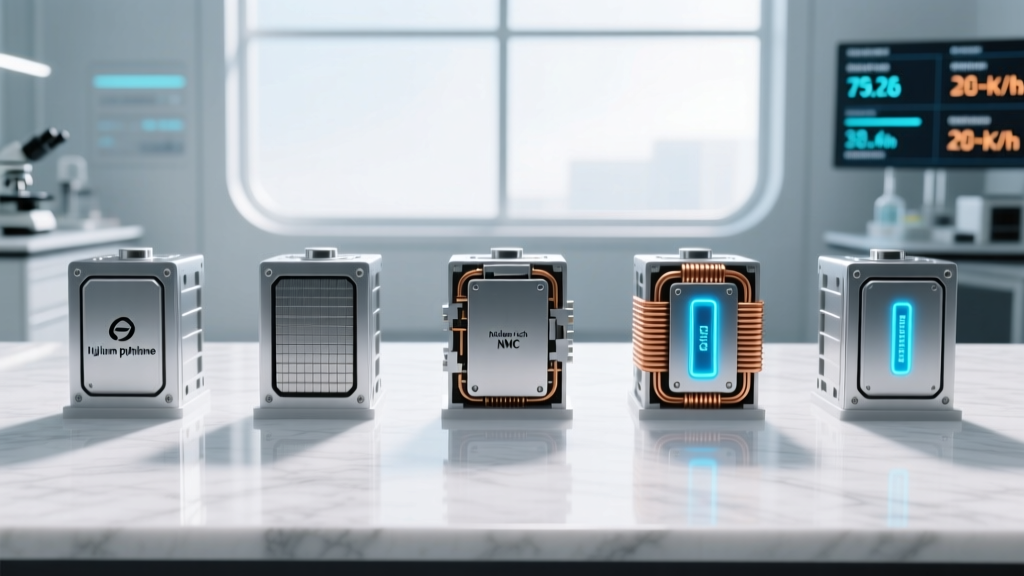
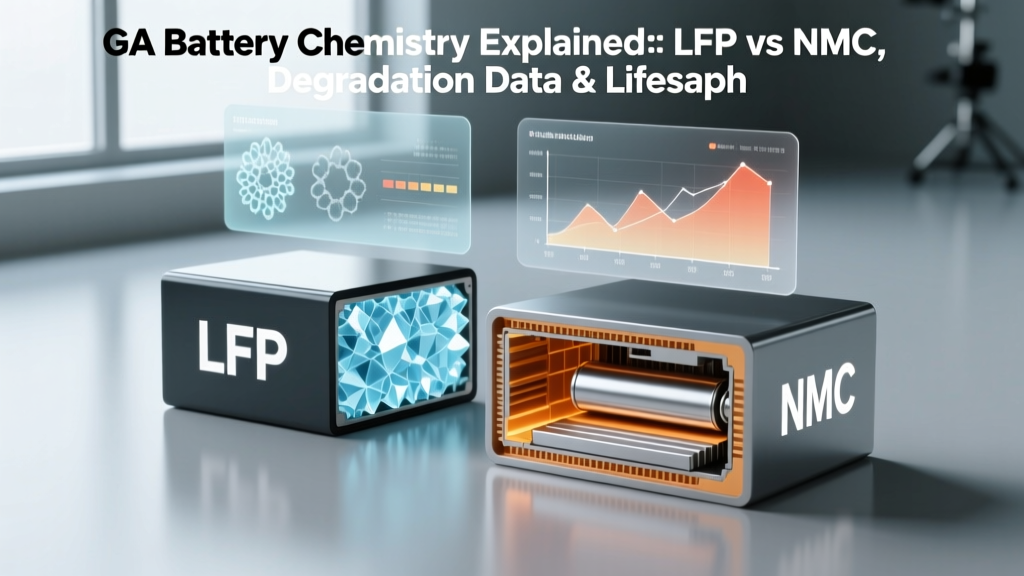
Not all Model Y batteries are the same. As of the 2025–2026 model years, Tesla builds the Model Y with two distinct lithium-ion chemistries depending on the trim:
- Standard Range (Rear-Wheel Drive): Uses LFP (lithium iron phosphate) cells — typically CATL prismatic cells. Usable capacity is approximately 60 kWh.
- Long Range and Performance (AWD): Use NMC (nickel manganese cobalt) or NCA-type cells — primarily from Panasonic (2170 cylindrical) and LG Energy Solution. Usable capacity ranges from approximately 75 to 82 kWh depending on model year and pack revision.
The chemistry choice isn't arbitrary. Each has distinct engineering trade-offs that affect your daily ownership experience.
| Attribute | LFP (Standard Range) | NMC/NCA (Long Range / Performance) |
|---|---|---|
| Energy Density | Lower (~160 Wh/kg cell-level) | Higher (~250–270 Wh/kg cell-level) |
| Usable Capacity (Model Y) | ~60 kWh | ~75–82 kWh |
| EPA Range (2025–2026) | ~260–280 mi | ~310–330 mi |
| Cycle Life | 3,000–5,000+ cycles | 1,000–2,000 cycles |
| Cold-Weather Performance | More range loss in freezing temps (15–25%) | Better cold performance (10–18% loss) |
| Recommended Daily SoC | 100% OK — Tesla recommends periodic full charge | 80% daily, 100% only for trips |
| DC Fast-Charge Speed | Peak ~170 kW, 10–80% ~25 min | Peak ~250 kW, 10–80% ~20–22 min |
| Cost (Cell-Level) | Lower — no cobalt or nickel | Higher — commodity-sensitive |
| Thermal Stability | Excellent — higher onset temp for thermal runaway | Good — requires more active thermal management |
Which is better? There's no universal winner. LFP is the better choice if you want maximum cycle life, lower cost, and don't mind ~50 fewer miles of EPA range or slightly slower DC charging. It's ideal for daily commuting and warmer climates. NMC/NCA is better if you need maximum range, faster charging on road trips, or regularly drive in cold weather. Tesla's decision to offer both reflects these different buyer priorities.
How Long Does a Model Y Battery Last? Real Degradation Data
The question every prospective EV buyer asks: how long until the battery is toast? The data is far more reassuring than the fear-mongering suggests.
Tesla's own 2023 Impact Report (the most comprehensive dataset Tesla has published) showed that Model 3 and Model Y vehicles retained approximately 85% of their original range at 150,000 miles. That's an average — many vehicles do better. The degradation curve is not linear: you typically see the steepest loss in the first 10,000–20,000 miles (roughly 2–4%), after which the curve flattens significantly.
Typical Model Y Battery Degradation Curve (aggregated owner data):
- 0–15,000 miles: 2–4% capacity loss (initial formation period)
- 15,000–50,000 miles: Additional 2–3% loss (total ~5–7% from new)
- 50,000–100,000 miles: Additional 3–4% loss (total ~8–11% from new)
- 100,000–150,000 miles: Additional 3–5% loss (total ~12–15% from new)
- 150,000–200,000+ miles: Gradual, slow decline — many packs still above 80% SoH
Independent data from sources like fueleconomy.gov and owner-community tracking (Teslanomics, Recurrent Auto) broadly corroborate these figures. Recurrent Auto's 2024 analysis of over 15,000 Tesla vehicles found that the median range loss at 100,000 miles was approximately 10%, with significant variation based on charging habits and climate.
To put this in real-world terms: a Long Range AWD Model Y with an EPA rating of 320 miles would, at 100,000 miles, still deliver roughly 285–295 miles of range under similar conditions. That's a noticeable but entirely livable reduction — not a crisis.
How many years does that translate to? The average American drives about 13,500 miles per year (per FHWA data). At that rate, 150,000 miles takes roughly 11 years. Most Model Y batteries will outlast the period most owners keep the vehicle. Battery failure — a sudden, catastrophic loss — is exceedingly rare and covered under warranty.
What Does the Tesla Battery Warranty Actually Cover?
Tesla's battery and drive unit warranty is one of the more straightforward in the industry, but the details matter.
| Model Y Trim | Warranty Period | Mileage Limit | Minimum Capacity Retention |
|---|---|---|---|
| Standard Range (RWD, LFP) | 8 years | 100,000 miles | 70% |
| Long Range / Performance (AWD, NMC) | 8 years | 120,000 miles | 70% |
What this means in practice: If your Model Y's battery drops below 70% of its original usable capacity within the warranty period (whichever limit you hit first — years or miles), Tesla will repair or replace it at no cost. The replacement battery will have at least 70% capacity — Tesla does not guarantee a brand-new pack.
What's NOT covered: Cosmetic issues, damage from accidents or flooding, modifications, or failures resulting from using non-Tesla-approved charging equipment that damages the pack. Normal degradation above the 70% threshold is also not a warranty claim — that's expected wear.
Per Tesla's official warranty documentation, the warranty transfers to subsequent owners, which supports resale value.
How Much Does a Model Y Battery Replacement Cost?
This is the question that generates the most anxiety — and the most exaggerated numbers online. Here's the reality as of 2025–2026:
| Scenario | Estimated Cost (Parts + Labor) | Notes |
|---|---|---|
| Full pack replacement (out of warranty, NMC Long Range) | $12,000–$16,000 | Based on service-center invoices shared by owners; varies by pack revision |
| Full pack replacement (out of warranty, LFP Standard Range) | $9,000–$13,000 | Lower cell cost; fewer service instances reported |
| Module-level repair (partial pack) | $3,000–$7,000 | Tesla increasingly performs module swaps rather than full-pack replacement |
| In-warranty replacement | $0 to owner | If within 8 yr / 100k–120k mi and below 70% SoH |
When is a replacement actually needed? Catastrophic battery failure in a Model Y is rare. The vast majority of Model Y packs never require replacement during typical ownership. Out-of-warranty replacements generally occur only after 150,000+ miles on vehicles that are 10+ years old — and by that point, the cost must be weighed against the vehicle's depreciated value. For context, a 2021 Model Y Long Range with 150,000 miles has a market value around $18,000–$22,000 as of early 2026, making a $14,000 battery replacement a borderline economic decision.
The more common scenario is a module-level repair, where Tesla replaces a subset of modules within the pack rather than the entire assembly. This is significantly cheaper and increasingly the standard service approach.
Factors That Affect Model Y Battery Life (And What You Can Control)
Not all batteries age equally. The spread in degradation data — some Model Y packs at 92% State of Health at 80,000 miles, others at 85% — is largely explained by how the vehicle is used and charged.
Habits that maximize Model Y battery longevity:
- Set the right daily charge limit: NMC owners should set daily charging to 80% and only charge to 100% when departing on a road trip. LFP owners can (and Tesla recommends they should) charge to 100% periodically — at least once per month — to allow the BMS to calibrate cell balancing.
- Minimize DC fast-charging frequency: Occasional Supercharging is fine. But if you DC fast-charge daily (especially at 250 kW V3 stalls), expect accelerated degradation — studies suggest 1–3% additional loss over 100,000 miles compared to predominantly Level 2 home charging.
- Use preconditioning: When navigating to a Supercharger, the Model Y automatically warms or cools the battery to optimal charging temperature. Always use this feature — it reduces stress on the cells and improves charge speed.
- Avoid prolonged storage at extreme SoC: Don't leave the car sitting at 100% for days, and don't let it sit near 0% for extended periods. For long-term storage (travel, etc.), Tesla recommends leaving the vehicle plugged in with the charge limit set to 50%.
- Manage extreme temperatures: In hot climates, park in shade or a garage when possible. In cold climates, keep the vehicle plugged in so the thermal management system can maintain battery temperature without draining the pack. The Model Y's heat pump (standard since 2021) helps significantly with cold efficiency.
- Drive smoothly when possible: Aggressive acceleration and frequent high-speed driving increase cell temperature and stress. Regenerative braking set to standard recaptures energy efficiently and reduces brake wear.
The biggest controllable factor is charging habit. Owners who primarily charge at home on a Level 2 wall connector (7–11 kW, typically 240V / 32–48A) and keep daily SoC between 20% and 80% consistently show the best long-term State of Health numbers. This isn't theoretical — it's borne out across tens of thousands of data points in fleet studies.
How to Check Your Model Y Battery Health (State of Health)
Tesla does not display a simple "Battery Health" percentage in the vehicle UI the way some competitors do. But there are reliable methods to assess your pack's State of Health (SoH):
Method 1: Range comparison at full charge. Charge the vehicle to 100% (or to your known limit) and note the projected range. Compare this to the original EPA-rated range. For example, if your Long Range Model Y was rated at 320 miles EPA and now shows 285 miles at 100%, that's roughly an 11% degradation — which is normal for 60,000–90,000 miles. Note: projected range fluctuates with temperature and driving style, so compare under similar conditions.
Method 2: Third-party apps. Apps like Tessie, Stats, and TeslaFi pull data from Tesla's API and can calculate estimated SoH by tracking energy added versus range gained over multiple charge cycles. These provide a more stable SoH estimate than a single full-charge reading.
Method 3: Tesla Service diagnostic. If you suspect abnormal degradation (e.g., a sudden range drop, or SoH below 70% within the warranty period), you can request a battery health check through the Tesla app. Tesla service can run a full diagnostic and provide a capacity assessment.
Method 4: OBD-II dongles and Scan My Tesla. For technically inclined owners, a Bluetooth OBD-II adapter paired with the Scan My Tesla app exposes raw BMS data, including nominal full pack energy (kWh), which can be compared to the original rated capacity to calculate SoH precisely.
What's Next? Emerging Battery Tech and the Model Y
The battery landscape is evolving rapidly, and Tesla is at the center of several developments worth tracking — with realistic timelines.
4680 cells: Tesla's larger-format 4680 cylindrical cells, manufactured at Giga Texas, are already in production Model Y vehicles (primarily the Austin-built Standard Range and some AWD variants). These cells use a tabless electrode design for improved thermal management and a dry-coating manufacturing process that reduces cost. As of early 2026, 4680 packs are still ramping — energy density and production yield continue to improve with each manufacturing iteration.
Silicon-dominant anodes: Companies like Sila Nanotechnologies and Group14 are developing silicon-rich anode materials that could boost energy density by 20–40% over current graphite anodes. Tesla has signaled interest in this direction, but commercial-scale deployment in a production Model Y pack is not expected before 2028–2030.
Solid-state batteries: The long-promised solid-state battery — replacing the liquid electrolyte with a solid conductor — would offer step-change improvements in energy density, charge speed, and safety. Toyota, Samsung SDI, and QuantumScape have all announced prototype milestones. However, no automaker has yet demonstrated a solid-state pack at automotive scale and cost. Realistic mass-production timelines remain 2029–2032+ for premium applications, and likely later for a cost-sensitive vehicle like the Model Y. Any claims of solid-state batteries being "available now" should be treated skeptically.
For today's buyer, the practical takeaway is this: current LFP and NMC chemistries are mature, well-understood, and proven at scale. You don't need to wait for a breakthrough to buy with confidence.
Model Y Battery Frequently Asked Questions
How long do EV batteries last in years and miles?
Based on aggregated Tesla fleet data and third-party studies (Recurrent Auto, Teslanomics), most Model Y batteries retain 80–88% of original capacity at 150,000 miles. At the US average of ~13,500 miles/year, that's roughly 11 years. Many packs will last 200,000+ miles before falling below the 70% warranty threshold. Catastrophic failure is rare.
How much does it cost to replace a Tesla Model Y battery?
A full out-of-warranty pack replacement runs approximately $9,000–$16,000 depending on chemistry (LFP vs. NMC) and pack revision. Module-level repairs — increasingly the standard service approach — typically cost $3,000–$7,000. In-warranty replacements (within 8 years / 100,000–120,000 miles, below 70% SoH) cost the owner nothing.
What does the Model Y battery warranty cover?
Tesla covers the battery and drive unit for 8 years / 100,000 miles (Standard Range) or 8 years / 120,000 miles (Long Range / Performance). If capacity drops below 70% within that period, Tesla repairs or replaces the pack at no charge. The warranty transfers to subsequent owners. It does not cover accident damage, misuse, or normal degradation above 70%.
How do I check and maximize my Model Y battery health?
Check SoH by comparing your 100%-charge projected range to the original EPA rating, or use third-party apps (Tessie, TeslaFi, Scan My Tesla) for more precise tracking. Maximize longevity by setting daily charge limits appropriately (80% for NMC, periodic 100% for LFP), favoring Level 2 home charging over daily DC fast charging, using preconditioning for Supercharger sessions, and avoiding prolonged storage at extreme SoC levels.
LFP vs. NMC — which Model Y battery is better for me?
Choose LFP (Standard Range) if you prioritize maximum cycle life (3,000–5,000+ cycles), lower cost, and don't need the extra ~50 miles of range. Charge it to 100% periodically as Tesla recommends. Choose NMC/NCA (Long Range / Performance) if you need maximum EPA range (310–330 mi), faster DC charging (peak 250 kW), and better cold-weather performance. Keep daily SoC at 80%. Neither is objectively "better" — they serve different use cases.
Does frequent Supercharging damage the Model Y battery?
Occasional Supercharging has minimal impact. However, exclusive or daily DC fast-charging at high power (150–250 kW) does accelerate degradation compared to Level 2 charging. Fleet data suggests 1–3% additional capacity loss over 100,000 miles for vehicles that predominantly DC fast-charge. Use Supercharging for road trips and rely on home Level 2 charging for daily needs when possible.
Will Tesla's battery technology make my current Model Y obsolete?
Future chemistries (4680 improvements, silicon anodes, solid-state) will eventually offer better energy density and faster charging, but these are years away from mass-market deployment. Current Model Y batteries are mature technology with proven longevity. Waiting for a hypothetical future pack is rarely the right financial decision — depreciation on your current vehicle will likely outpace any battery-tech gains in the near term.
Sources: Tesla Impact Report, fueleconomy.gov, Tesla New Vehicle Limited Warranty, Recurrent Auto fleet studies, FHWA annual mileage data.