Understanding the Tesla Model Y Battery Capacity and Chemistry
The Tesla Model Y remains one of the best-selling electric vehicles in the U.S., and for good reason: strong range, access to the Supercharger network, and competitive pricing. But beneath the floorpan sits the single most expensive component in the car — the high-voltage traction battery. Whether you're shopping for a new 2026 Model Y or evaluating a used one, understanding the Model Y battery capacity, its chemistry, and how it degrades over time is essential to making a confident purchase.
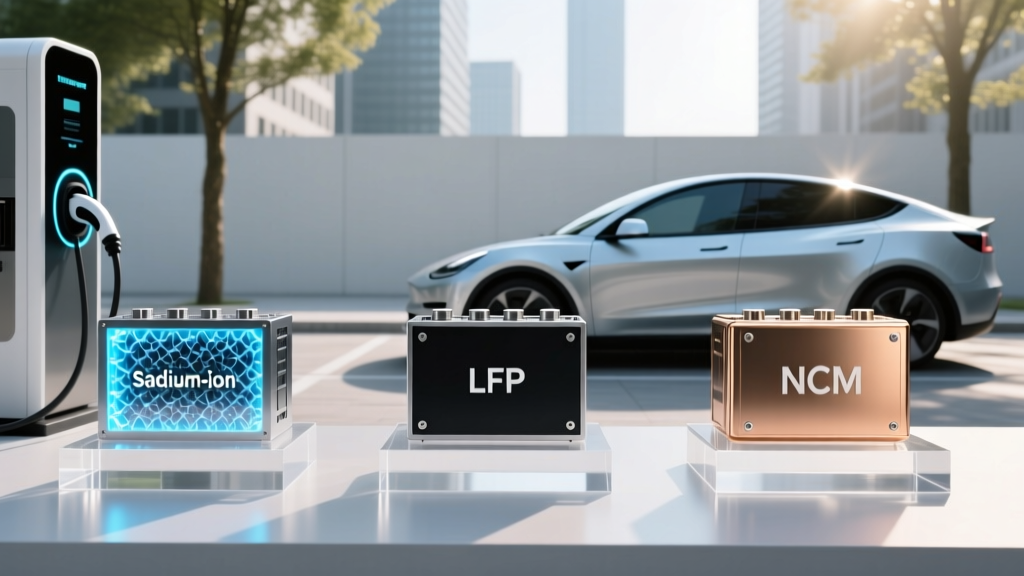
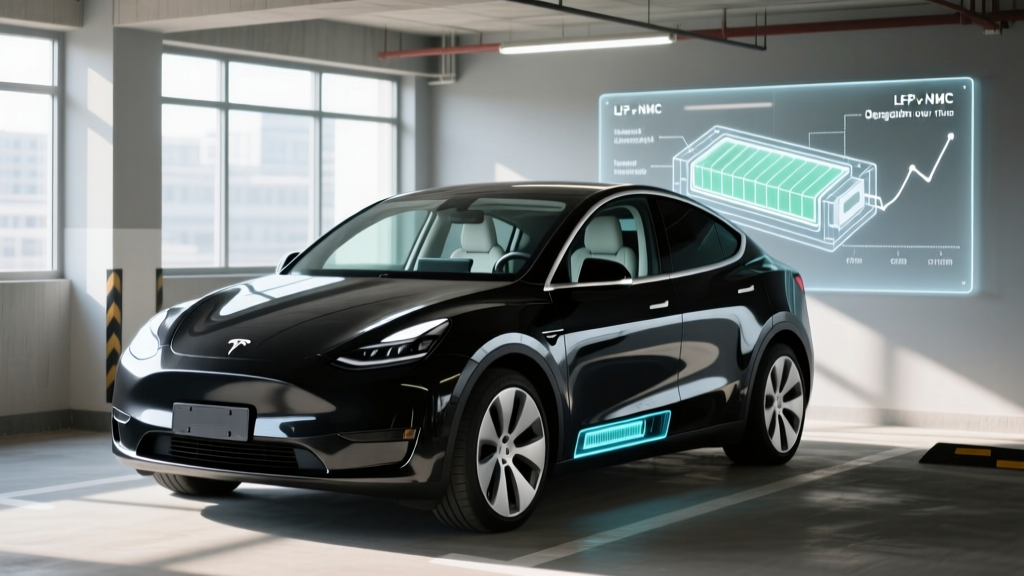
Tesla currently offers the Model Y with two distinct battery chemistries depending on the trim. The base Rear-Wheel Drive (RWD) model uses a lithium iron phosphate (LFP) pack, while the Long Range and Performance variants use nickel-based chemistry (NMC/NCA). The difference matters more than most buyers realize — it affects usable capacity, charging habits, cold-weather behavior, and long-term degradation.
| Attribute | LFP (RWD Trim) | NMC/NCA (Long Range / Performance) |
|---|---|---|
| Usable Capacity | ~60 kWh | ~75 kWh |
| EPA Range | ~260 mi | ~310–320 mi |
| Energy Density | Lower (heavier per kWh) | Higher (lighter per kWh) |
| Cycle Life | 3,000+ cycles | 1,500–2,000 cycles |
| Cold-Weather Performance | More range loss in freezing temps | Better cold-weather retention |
| Recommended Daily SoC | 100% (Tesla recommends periodic full charge) | 80% daily, 100% for trips |
| Cost to Manufacturer | Lower (no cobalt/nickel) | Higher |
| Peak DC Fast Charge | ~170 kW | ~250 kW |
kW vs. kWh — the critical distinction: kW (kilowatts) measures power — how fast energy flows into the battery during charging. kWh (kilowatt-hours) measures energy — how much the battery stores total. A 75 kWh battery charged at 250 kW will not fill in 18 minutes; the charge curve tapers significantly above 80% State of Charge (SoC). Expect a 10–80% DC fast charge in roughly 25–30 minutes on the Long Range Model Y at a V3 Supercharger, and 30–35 minutes on the LFP variant at its lower peak rate.
Real-World Range vs. EPA Sticker: What Model Y Owners Actually See
EPA Range vs. Real-World Expectation
Model Y Long Range AWD: EPA 320 mi → Expect ~270–290 mi on highway trips at 70 mph; ~220–240 mi in sustained freezing weather with cabin heat.
Model Y RWD (LFP): EPA 260 mi → Expect ~220–235 mi highway; ~180–200 mi in freezing conditions.
The EPA test cycle includes a mix of city and highway driving at moderate speeds. In practice, sustained highway driving above 65 mph, cold temperatures below 32°F, aggressive acceleration, and cabin heating all reduce range. Tesla's heat pump (standard on all current Model Y trims) mitigates cold-weather losses compared to older resistive-heater EVs, but physics still applies — expect 15–25% range reduction in deep winter. According to fueleconomy.gov, the 2025 Model Y Long Range AWD achieves 122 MPGe combined (28 kWh/100 mi), which translates to roughly 3.5–4.0 miles per kWh in mixed real-world driving.
Battery Degradation: What the Data Actually Shows
Battery degradation is the gradual, irreversible loss of total capacity over time and charge cycles. It is not a cliff — it's a curve that is steepest in the first year or two and then flattens considerably. Tesla's own 2023 Impact Report (the most recent comprehensive dataset published) showed that Model 3 and Model Y vehicles retained approximately 85% of original battery capacity after 200,000 miles. Independent data from fleet operators and owner surveys corroborates a similar trajectory.
Typical Model Y Battery Degradation Curve (NMC/NCA Long Range)
- Year 1 / 15,000 mi: ~3–5% loss (initial formation loss)
- Year 3 / 45,000 mi: ~6–8% total loss
- Year 5 / 75,000 mi: ~8–10% total loss
- Year 8 / 120,000 mi: ~10–15% total loss
- 200,000 mi: ~13–17% total loss (fleet data average)
LFP packs in the RWD trim show slower degradation in cycle-life testing (3,000+ cycles to 80% capacity), but real-world multi-year data on Tesla's Model Y LFP packs is still maturing as the RWD trim was introduced more recently.
For context, a Long Range Model Y starting at 320 miles EPA that loses 12% over eight years would still deliver roughly 282 miles of EPA-equivalent range — more than adequate for most daily and road-trip use. The battery does not "die" at a certain mileage; it simply holds less energy, reducing range proportionally.
Tesla Battery Warranty: What's Covered and What Isn't
Tesla's battery and drive unit warranty is one of the stronger guarantees in the EV market, but understanding its specifics prevents unpleasant surprises.
| Trim | Warranty Duration | Mileage Limit | Minimum Capacity Retention |
|---|---|---|---|
| RWD (LFP) | 8 years | 100,000 miles | 70% |
| Long Range AWD | 8 years | 120,000 miles | 70% |
| Performance | 8 years | 120,000 miles | 70% |
What this means: If your Model Y's battery drops below 70% of its original usable capacity within the warranty period (whichever limit — time or mileage — comes first), Tesla will repair or replace it at no cost. The replacement may be a new or remanufactured pack that meets the 70% threshold. The warranty covers defects and excessive degradation but does not cover damage from collisions, flooding, improper modifications, or using the vehicle as a stationary power source outside of approved V2H/V2L configurations.
It's worth noting that the 70% threshold is conservative relative to observed degradation. Based on current fleet data, a Model Y would need to experience abnormally high degradation to fall below 70% within 120,000 miles. Most owners will never need a warranty claim. For the latest official terms, always check Tesla's warranty documentation directly.
EV Battery Replacement Cost: When and How Much
This is the question that generates the most anxiety among prospective EV buyers. Let's address it with data rather than speculation.
| Scenario | Battery Pack | Estimated Cost (Parts + Labor) | Typical Timing |
|---|---|---|---|
| Out-of-warranty replacement (Long Range, NMC) | ~75 kWh | $12,000–$16,000 | Rarely before 200,000+ mi |
| Out-of-warranty replacement (RWD, LFP) | ~60 kWh | $9,000–$13,000 | Rarely before 250,000+ mi |
| Under warranty (excessive degradation) | Any | $0 (covered) | Within 8 yr / mileage limit |
| Module-level repair (if available) | Partial | $3,000–$7,000 | Case-by-case |
The honest context most coverage omits: The vast majority of EV batteries outlast the useful economic life of the vehicle itself. According to data from NHTSA and independent fleet analyses, full battery replacements on Tesla Model Y vehicles are exceedingly rare within the first 150,000 miles. Most degradation-related claims involve individual module failures or BMS (Battery Management System) recalibration rather than full-pack swaps.
When replacement is eventually needed — typically well past 200,000 miles — costs have been declining roughly 8–12% per year as battery manufacturing scales and recycling improves. By the time a 2026 Model Y needs a new pack in 2038–2040, replacement costs are projected to be substantially lower than today's figures. Additionally, a degraded battery that retains 70–80% capacity still has significant second-life value for stationary storage applications, which offsets disposal or recycling costs.
Factors That Accelerate (or Preserve) Battery Health
Not all miles are equal when it comes to battery wear. Several factors meaningfully influence how quickly your Model Y's battery degrades:
Maximize Battery Longevity — Best Practices
- Daily SoC limits: Set charge limit to 80% for NMC/NCA (Long Range/Performance). For LFP (RWD), Tesla recommends charging to 100% at least once per week to keep the BMS calibrated — LFP chemistry tolerates full charge better than NMC.
- Minimize DC fast charging: Occasional Supercharging is fine, but daily reliance on DC fast charging (especially above 150 kW) accelerates degradation. Level 2 home charging at 7–11 kW is gentler on the cells. Frequent Supercharging has been correlated with 1–3% additional capacity loss over 100,000 miles versus primarily Level 2 charging.
- Avoid extreme SoC storage: Don't leave the car sitting at 100% or below 10% for extended periods (more than a few days). If storing for a vacation, set SoC to 50% and leave it plugged in with a low charge limit.
- Precondition before fast charging: Use the Tesla app or navigation to a Supercharger to precondition the battery. A cold battery charged at high power suffers more stress. The Model Y will automatically precondition when a Supercharger is set as the navigation destination.
- Temperature management: Park in shade or a garage when possible in hot climates. The battery thermal management system runs even when parked in extreme heat, which uses a small amount of energy but protects the cells.
- Limit track/launch mode use: Repeated hard acceleration and high-speed driving generates significant battery heat. Occasional fun is fine; daily aggressive driving adds wear.
How to Check and Monitor Your Model Y Battery Health (SoH)
Tesla does not display a simple "battery health percentage" in the vehicle's interface the way some competitors do. However, there are several reliable methods to estimate your State of Health (SoH):
Method 1 — Range comparison at known SoC: Charge the vehicle to 100% (or a known percentage) and note the displayed range. Compare this to the original EPA range at the same SoC. For example, if a Long Range Model Y originally displayed 320 miles at 100% and now displays 290 miles at 100% with similar tire pressure and temperature, that suggests roughly 9–10% degradation. Note: displayed range in Teslas is calculated from a fixed efficiency figure, not a rolling average, making it a reasonably consistent benchmark.
Method 2 — Third-party apps: Tools like Tessie, Stats (iOS), and TeslaFi log charging sessions and can estimate SoH by comparing energy added during a known charge session to the battery's expected capacity. These apps draw data from Tesla's API and are widely used by the owner community.
Method 3 — Service center diagnostic: If you suspect abnormal degradation (e.g., a sudden range drop), a Tesla Service Center can run a full battery health diagnostic that reads individual module voltages, internal resistance, and total pack capacity. This is the most authoritative measurement and is typically performed during warranty-related visits.
Method 4 — OBD-II dongles (limited): Some aftermarket OBD-II readers can pull battery data from the CAN bus, though Tesla limits the data exposed through the standard OBD port compared to the proprietary service connector. Results vary by adapter and software.
Emerging Battery Technology: What's Next and When
While today's Model Y relies on proven lithium-ion chemistries, the battery landscape is evolving rapidly. Here's a realistic look at what's on the horizon — with honest timelines, not hype:
Silicon-dominant anodes: Companies like Sila Nanotechnologies and Group14 are replacing graphite anodes with silicon-based materials, which can store up to 10× more lithium ions per unit mass. This translates to 10–20% energy density improvements. Early production applications are appearing in select 2025–2026 EV models, with broader adoption expected by 2028–2030. Tesla has already incorporated small amounts of silicon in its anode mix, but a full silicon-dominant anode in a Model Y is not yet in production.
Solid-state batteries: These replace the liquid electrolyte with a solid material, promising higher energy density, faster charging, and improved safety. Toyota, Samsung SDI, and QuantumScape are leading development, but commercial-scale production remains the bottleneck. Toyota has announced a solid-state battery EV for limited production around 2027–2028, but widespread, cost-competitive solid-state packs in mainstream vehicles like the Model Y are not expected before 2030–2032 at the earliest. Solid-state technology is real but should not influence a current purchase decision.
4680 cells and structural packs: Tesla's in-house 4680 cylindrical cells (larger format, tabless design) are already in production at the Austin Gigafactory and are used in some Model Y vehicles. These cells offer manufacturing cost advantages and slightly improved thermal management. Over time, as 4680 production scales and yield improves, expect incremental range and cost benefits — but not a dramatic step-change for current owners.
LFP expansion: LFP chemistry continues to gain market share due to its lower cost, longer cycle life, and cobalt-free supply chain. CATL and BYD are pushing LFP energy density higher with cell-to-pack designs. Expect future Model Y RWD trims to potentially gain range as LFP energy density improves, narrowing the gap with NMC variants.
Frequently Asked Questions
How long do Tesla Model Y batteries last in years and miles?
Based on Tesla fleet data and independent analysis, Model Y batteries typically retain 85% or more of their original capacity after 200,000 miles. In terms of calendar years, most owners will keep the vehicle 10–15 years before the battery's reduced range becomes a practical limitation. The battery doesn't "die" — it gradually holds less energy. With proper care, a Model Y battery should comfortably exceed 200,000 miles before degradation makes range noticeably restrictive.
How much does it cost to replace a Tesla Model Y battery?
An out-of-warranty full pack replacement runs approximately $12,000–$16,000 for the Long Range (NMC) and $9,000–$13,000 for the RWD (LFP), including labor. However, full replacements are rare — most degradation is gradual and linear, and warranty coverage protects against abnormal loss for 8 years / 100,000–120,000 miles. Costs are also declining annually as battery manufacturing matures.
What does the Tesla battery warranty actually cover?
Tesla warrants the Model Y battery against defects and excessive capacity loss (below 70% of original) for 8 years and 100,000 miles (RWD) or 120,000 miles (Long Range/Performance). It does not cover damage from accidents, flooding, unauthorized modifications, or normal cosmetic wear. If the battery falls below 70% retention within the warranty window, Tesla repairs or replaces it at no charge.
How do I check my Model Y's battery health?
Charge to 100% and compare displayed range to the original EPA figure — this gives a rough SoH estimate. For more precision, use third-party apps like Tessie or TeslaFi that log charge sessions via Tesla's API. For definitive answers, a Tesla Service Center can run a full diagnostic measuring individual module health and total pack capacity.
LFP vs NMC — which Model Y battery chemistry is better?
Neither is universally better; they serve different priorities. Choose LFP (RWD) if you want lower cost, longer cycle life, the ability to charge to 100% daily without concern, and don't need maximum range. Choose NMC (Long Range/Performance) if you need the longest possible range, better cold-weather performance, faster DC charging speeds, and all-wheel drive. LFP sacrifices energy density and cold-weather range for durability and cost; NMC sacrifices cycle life and cost for range and performance.
Does frequent Supercharging damage the Model Y battery?
Frequent DC fast charging causes slightly more degradation than Level 2 charging due to higher currents and heat generation. Studies and fleet data suggest an additional 1–3% capacity loss over 100,000 miles for vehicles that rely primarily on Supercharging versus home Level 2 charging. Occasional Supercharging on road trips has negligible impact. The key is to avoid making 250 kW DC charging your daily routine when a Level 2 home charger is available.
Is it safe to charge my Model Y to 100% every day?
For the LFP battery in the RWD trim, yes — Tesla actually recommends periodic 100% charges to keep the battery management system calibrated. For NMC/NCA batteries in the Long Range and Performance trims, daily charging to 100% accelerates degradation. Set your daily limit to 80% and only charge to 100% when you need the full range for a trip.
Sources: EPA fuel economy data via fueleconomy.gov, Tesla new vehicle limited warranty via tesla.com/support, NHTSA vehicle safety data via nhtsa.gov.