The Chemistry Behind Your EV's Range and Longevity
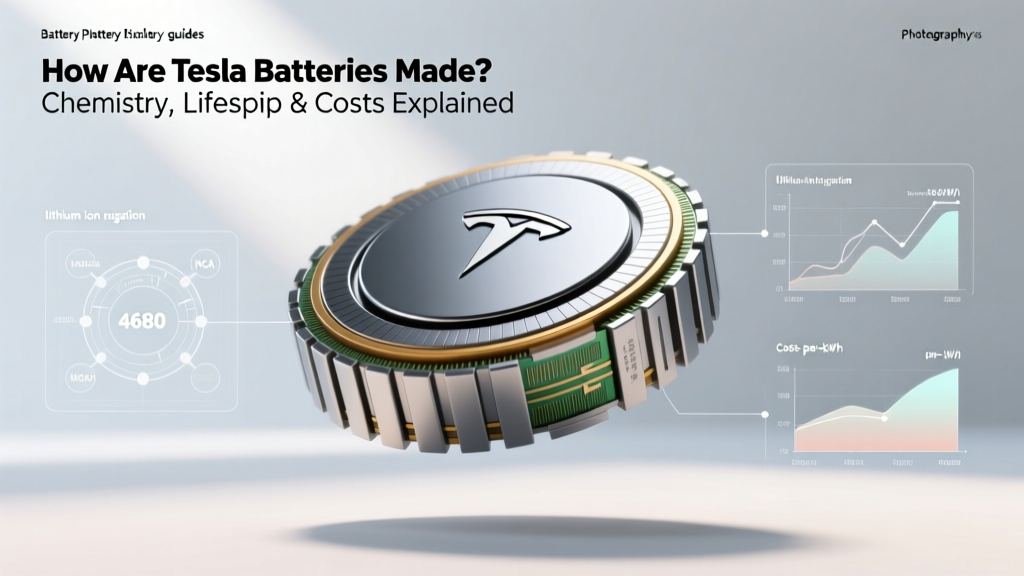
Every electric vehicle on the road today relies on one of a handful of lithium-ion chemistries to store energy in its high-voltage traction battery. But a new contender — the sodium-ion battery — is moving from lab to production line, promising lower costs and better cold-weather performance. Before you evaluate whether an EV with sodium-ion cells makes sense for your next purchase, you need a firm grasp of the chemistry landscape that already defines EV ownership: energy density, cycle life, degradation behavior, warranty protection, and replacement economics.
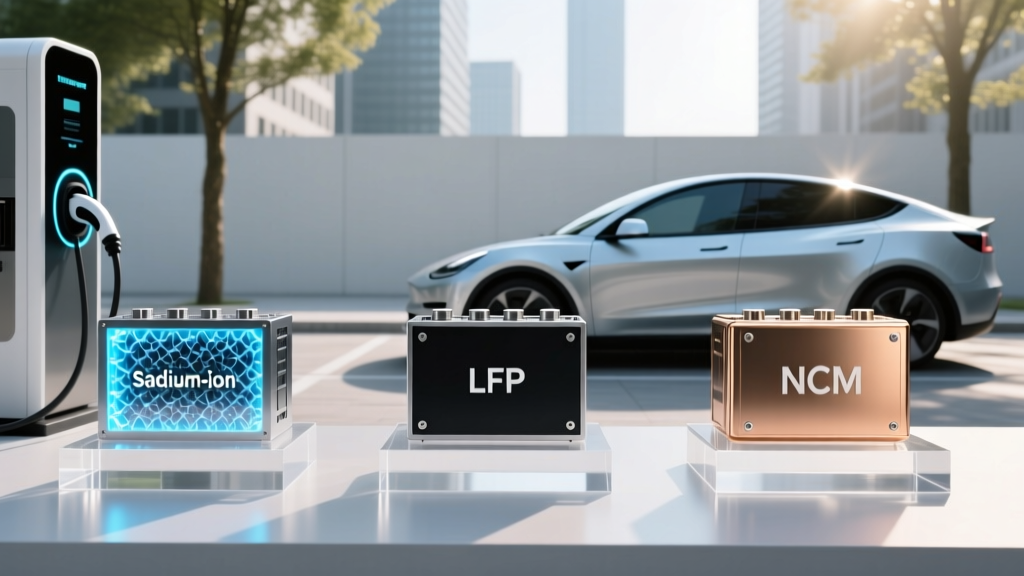
This guide breaks down the three major chemistries competing for your dollars in 2026 — NMC/NCA, LFP, and the emerging sodium-ion battery — with the hard numbers buyers actually need. We'll cover degradation data, warranty terms, replacement costs, daily care habits, and the forward-looking tech pipeline including solid-state and silicon-anode cells.
NMC/NCA, LFP, and Sodium-Ion: A Side-by-Side Chemistry Breakdown
The battery pack is the single most expensive component in any EV, and its chemistry determines range, charging behavior, lifespan, and ultimately total cost of ownership. Here's how the three main chemistries stack up on the metrics that matter:
| Attribute | NMC / NCA (Lithium) | LFP (Lithium Iron Phosphate) | Sodium-Ion (Na-ion) |
|---|---|---|---|
| Energy Density (cell-level) | 250–300 Wh/kg | 150–180 Wh/kg | 120–160 Wh/kg |
| Typical Cycle Life | 1,000–2,000 cycles | 3,000–6,000+ cycles | 2,000–4,000 cycles (est.) |
| Cold-Weather Performance (−20°C) | Moderate loss (~20–30%) | Higher loss (~30–40%) | Best retention (~10–15% loss) |
| Thermal Stability | Good; requires active BMS | Excellent; very resistant to thermal runaway | Excellent; inherently stable |
| Raw-Material Cost | High (cobalt, nickel) | Low (iron, phosphate) | Lowest (sodium is abundant) |
| State of Charge Sweet Spot | 20–80% daily; avoid 100% | Can charge to 100% regularly | Can charge to 100% regularly |
| Fast-Charging Tolerance | Good (peak 250–350 kW) | Good (peak 170–250 kW) | Moderate (peak ~100–150 kW est.) |
| Current EV Availability (US, 2026) | Widely available (Tesla, Hyundai, Ford, BMW, etc.) | Available (Tesla Model 3 RWD, base Model Y, some BYD imports) | Announced / limited production (CATL, HiNa); no US-market vehicles yet |
NMC/NCA: The Range Leader
Nickel Manganese Cobalt (NMC) and Nickel Cobalt Aluminum (NCA) chemistries dominate long-range EVs. Tesla's Model 3 Long Range, Hyundai Ioniq 5, and Ford Mustang Mach-E Extended Range all use variants of these cells. The payoff is clear: energy densities around 250–300 Wh/kg at the cell level translate into EPA ranges of 300+ miles without excessively heavy packs. The trade-off is higher raw-material cost, a shorter cycle life compared to LFP, and a daily charging recommendation of 20–80% to minimize calendar degradation.
LFP: The Durability Champion
Lithium Iron Phosphate cells sacrifice roughly 30–40% of NMC's energy density in exchange for dramatically longer cycle life (3,000–6,000+ full cycles), superior thermal stability, and lower cost. Tesla uses LFP in the Model 3 Rear-Wheel Drive and the base Model Y, recommending owners charge to 100% at least once per week for accurate battery management system (BMS) calibration. For buyers who prioritize decade-long ownership and don't need 350 miles of range, LFP is the strongest value proposition available today.
Sodium-Ion: The Upstart
Sodium-ion batteries replace lithium with sodium — an element thousands of times more abundant and cheaper to source. CATL and HiNa Battery in China have begun limited production, with cells reaching 120–160 Wh/kg. The standout advantage is cold-weather performance: sodium-ion cells retain roughly 85–90% of their capacity at −20°C, far outperforming both LFP and NMC. However, the lower energy density means a sodium-ion pack delivering 300 miles of range would be substantially heavier and larger than an equivalent NMC pack. As of early 2026, no sodium-ion EV is available for purchase in the United States. Announced applications target urban commuter vehicles and energy-storage systems where weight is less critical than cost and cold resilience.
How Long Do EV Batteries Actually Last?
The most persistent question from prospective EV buyers is battery lifespan. The data from millions of vehicles on the road tells a reassuring story — but with important nuances.
Real-World Degradation Data
Degradation is measured as the percentage of original capacity lost over time and use. Based on fleet data aggregated by Recurrent Auto and owner-reported telemetry:
- Year 1: 1–3% capacity loss (initial formation loss, common across all chemistries)
- Years 2–4: Degradation slows to roughly 1–2% per year
- Years 5–8: Cumulative loss typically 10–15% for NMC/NCA; 5–10% for LFP
- 100,000 miles: Most NMC packs retain 85–92% of original capacity; LFP packs often retain 90–95%
- 200,000 miles: NMC packs average 75–85% retention; LFP packs can exceed 85%
A Tesla Model 3 Long Range (NMC, 75 kWh usable) that started with an EPA-rated 341 miles might realistically show 290–310 miles of range at 100,000 miles — still ample for daily driving and road trips. An LFP-equipped Model 3 RWD (60 kWh usable, EPA 272 miles) could retain 250+ miles over the same distance.
The key insight: degradation is not linear. The steepest drop occurs in the first 12–18 months, then the curve flattens considerably. Most EV batteries will outlast the vehicle's body, suspension, and interior before reaching a point where range loss becomes impractical.
What the Battery Warranty Actually Covers
Federal regulations mandate a minimum 8-year / 100,000-mile warranty on EV battery packs (10 years / 150,000 miles in CARB states like California, New York, and Massachusetts). But the details of what "coverage" means vary by manufacturer.
| Manufacturer | Warranty Period | Mileage Limit | Capacity Retention Threshold |
|---|---|---|---|
| Tesla (Model 3/Y LFP) | 8 years | 100,000 miles | 70% |
| Tesla (Model 3/Y Long Range NMC) | 8 years | 120,000 miles | 70% |
| Hyundai / Kia (Ioniq 5, EV6, EV9) | 10 years | 100,000 miles | 70% |
| Ford (Mach-E, F-150 Lightning) | 8 years | 100,000 miles | 70% |
| BMW (i4, iX, i7) | 8 years | 100,000 miles | 70% |
| Volkswagen (ID.4) | 8 years | 100,000 miles | 70% |
| Rivian (R1T, R1S) | 8 years | 175,000 miles | 70% |
The 70% threshold is the industry standard: if your pack drops below 70% of its original usable capacity within the warranty period, the manufacturer will repair or replace it — typically by swapping in a refurbished pack with at least 70% capacity, not necessarily a brand-new unit. In practice, warranty claims remain rare. According to data from Recurrent Auto, fewer than 1–2% of EVs in their fleet of over 15,000 vehicles have required battery replacement under warranty.
How Much Does an EV Battery Cost to Replace?
Out-of-warranty battery replacement is the scenario that generates the most anxiety. Here are the actual numbers based on manufacturer service bulletins and third-party repair shops:
| Vehicle / Pack Size | Chemistry | Estimated Replacement Cost | Notes |
|---|---|---|---|
| Tesla Model 3 RWD (60 kWh) | LFP | $8,000 – $12,000 | Refurbished packs available at lower cost |
| Tesla Model 3 LR / Model Y (75–82 kWh) | NMC | $12,000 – $16,000 | Structural pack designs increase labor |
| Hyundai Ioniq 5 (77.4 kWh) | NMC | $14,000 – $18,000 | E-GMP platform; module-level repair possible |
| Ford F-150 Lightning (131 kWh) | NMC | $20,000 – $28,000 | Largest consumer pack; highest cost |
| Nissan LEAF (40–62 kWh) | NMC (passive cooling) | $6,500 – $9,000 | Older platform; third-party options exist |
| Chevrolet Bolt EV/EUV (65 kWh) | NMC | $9,000 – $14,000 | Post-recall packs; improved thermal management |
Two critical points of context. First, these costs have been declining steadily — down roughly 40–50% since 2018 — and are expected to continue falling as recycling infrastructure scales and cell prices drop. Second, full-pack replacement is increasingly rare. Most modern packs are modular: a technician can replace individual modules (groups of cells) rather than the entire pack, cutting costs by 50–70%. A single module replacement might run $1,500–$4,000 depending on the vehicle.
The bottom line: while the headline number is significant, the probability of needing an out-of-warranty replacement is low. The vast majority of EV batteries retain sufficient capacity for the vehicle's entire usable life.
Five Factors That Accelerate (or Slow) Battery Degradation
Battery chemistry sets the baseline, but your habits determine whether your pack degrades at the slow end or fast end of the range. Here are the five most impactful factors, ranked by effect size:
1. State of Charge Habits
For NMC/NCA batteries, routinely charging to 100% and leaving the vehicle parked at full charge accelerates calendar degradation. The electrolyte oxidizes faster at high voltages. Best practice: set your daily charge limit to 80% and only charge to 100% when you need the full range for a trip. LFP batteries are the exception — they tolerate (and benefit from) regular 100% charges for BMS cell-balancing accuracy.
2. Extreme Temperatures
Heat is the enemy of long-term battery health. Sustained exposure to ambient temperatures above 95°F (35°C), especially combined with high state of charge, accelerates chemical degradation. Cold weather doesn't cause permanent damage but temporarily reduces available capacity and slows charging speeds. Vehicles with active thermal management (liquid cooling/heating) — which includes virtually all modern EVs from Tesla, Hyundai, Ford, BMW, and Rivian — mitigate this significantly. If you live in a hot climate, parking in shade or a garage and avoiding 100% charges during heat waves meaningfully extends pack life.
3. DC Fast-Charging Frequency
Occasional DC fast charging (1–2 times per week) has a negligible effect on modern batteries with active thermal preconditioning. However, exclusive reliance on DC fast charging — daily 150–350 kW sessions — has been shown to increase degradation by 1–3% over a 5-year period compared to predominantly Level 2 home charging. Tesla's own data, referenced in their Impact Report, shows Model S/X vehicles with frequent Supercharging retain roughly 88% capacity at 150,000 miles versus 90%+ for primarily home-charged vehicles. The difference is real but modest.
4. Depth of Discharge
Regularly draining the battery to very low states of charge (below 10%) stresses the cells. Shallow cycles — say, charging from 30% to 80% — are gentler than deep cycles from 5% to 95%. For NMC owners, the 20–80% daily window is the longevity sweet spot.
5. Time at High or Low SoC
Leaving an EV parked at 100% charge for days or weeks causes more calendar degradation than driving it down promptly. Similarly, storing a vehicle at near-zero charge for extended periods risks cell imbalance. If you're traveling and leaving your EV parked for a week or more, set the charge limit to 50–60%.
Battery Longevity Checklist
- ✅ Set daily charge limit to 80% (NMC/NCA) or 100% (LFP)
- ✅ Avoid parking at 100% SoC for more than 24 hours
- ✅ Use Level 2 home charging as your primary method
- ✅ Precondition the battery before DC fast charging (most EVs do this automatically when a charger is set as your navigation destination)
- ✅ Park in shade or a garage during extreme heat
- ✅ Don't store the vehicle below 10% SoC for extended periods
- ✅ Keep tire pressure at spec — underinflated tires increase rolling resistance and energy draw
How to Monitor Your Battery's State of Health
State of Health (SoH) is the percentage of your battery's original usable capacity that remains available. A new EV starts at 100% SoH; at 70% SoH, the warranty threshold kicks in. Here's how to check it:
Built-In Vehicle Tools
- Tesla: The Service menu (hold the model badge on the touchscreen for 3 seconds, enter "Service" as the access code) shows estimated range at 100% — compare this to the original EPA figure to approximate SoH. Third-party apps like Tessie or TeslaFi provide more granular SoH estimates using charge-log data.
- Hyundai/Kia: The EV menu in the infotainment system displays a battery health indicator, though it's less granular than enthusiast owners would prefer.
- Ford: The FordPass app includes a battery health check feature that reports overall condition.
- BMW: The iDrive system provides a battery health report accessible through the service menu.
Third-Party and OBD-II Methods
For a more precise SoH reading, an OBD-II dongle paired with apps like OBDeleven (VW Group), LeafSpy (Nissan LEAF), or ABRP (A Better Route Planner) with live telemetry can report cell-level voltage variance and pack capacity estimates. Independent EV service shops can also perform a full capacity test — charging the pack from 0 to 100% under controlled conditions and measuring actual kWh delivered.
According to fueleconomy.gov, maintained by the U.S. Department of Energy, tracking your vehicle's actual miles per kWh over time provides a practical proxy for SoH: if your efficiency has dropped 10–15% from its original figure (after accounting for seasonal tire-pressure and temperature changes), your battery has degraded by a roughly equivalent amount.
Emerging Battery Tech: What's Next After Lithium-Ion?
Beyond sodium-ion, two technologies are frequently cited as the next leap in EV batteries. Here's where they actually stand:
Solid-State Batteries
Solid-state cells replace the liquid electrolyte with a solid material (ceramic, sulfide, or polymer), promising energy densities of 400–500 Wh/kg, faster charging, and near-zero fire risk. Toyota, Samsung SDI, and QuantumScape have all demonstrated prototype cells. Toyota has announced a 2027–2028 target for limited production in a flagship EV, with an initial goal of 750 km (~466 miles) of range. QuantumScape's cells have shown promising cycle-life data in lab testing but remain pre-production. Realistic timeline for broad consumer availability: 2029–2032 at the earliest, with initial applications in premium vehicles priced above $80,000.
Silicon-Anode Batteries
Replacing graphite anodes with silicon can boost energy density by 20–40%. Sila Nanotechnologies and Group14 Technologies are the leading developers. Mercedes-Benz has announced that the upcoming G-Class EV (expected 2027) will use silicon-anode cells from Sila, targeting a 20% range improvement over equivalent graphite-anode packs. This technology is closer to market than solid-state and may appear in production vehicles within 1–2 years, though at a cost premium.
Sodium-Ion's Realistic Timeline
CATL has announced that its second-generation sodium-ion cells (targeting 200 Wh/kg) are expected to reach mass production by 2027–2028, initially for the Chinese domestic market in sub-$20,000 city cars and energy storage. For US-market vehicles, sodium-ion adoption depends on supply-chain localization and trade-policy developments. The most likely first US application: commercial fleet vehicles and light-duty urban delivery vans where cost and cold-weather reliability outweigh the need for 300+ mile range.
Frequently Asked Questions
How long do EV batteries last in years and miles?
Most modern EV batteries are designed to last 15–20 years or 200,000+ miles before dropping below 70% of original capacity. Real-world fleet data shows NMC packs averaging 85–92% retention at 100,000 miles and LFP packs often retaining 90–95%. Catastrophic failure (sudden, total loss) is extremely rare — degradation is gradual and predictable.
How much does it cost to replace an EV battery?
Full pack replacement costs range from roughly $6,500 for a Nissan LEAF to $28,000 for a Ford F-150 Lightning Extended Range. However, most modern packs allow module-level repairs at $1,500–$4,000 per module. Under warranty (8 years / 100,000 miles minimum, 10 years / 150,000 miles in CARB states), replacement is free if capacity drops below 70%.
What does the EV battery warranty actually cover?
The warranty covers capacity loss below a defined threshold (typically 70% of original usable capacity) due to normal use, as well as manufacturing defects. It does not cover damage from accidents, flooding, aftermarket modifications, or use of non-approved charging equipment. Warranty terms are mandated by federal law at 8 years / 100,000 miles, with extended coverage in CARB states.
How do I check my EV's battery health?
Most EVs provide a battery health indicator in the infotainment system or companion app. For more precise readings, third-party apps (Tessie, TeslaFi, LeafSpy) analyze charge logs to estimate State of Health. An OBD-II scanner with EV-specific software can report cell-level voltage data. Your dealer can also perform a formal capacity test.
LFP vs NMC — which battery chemistry is better?
It depends on your priorities. Choose NMC/NCA if you need maximum range (300+ miles), frequently take long road trips, or want the fastest DC charging speeds (250–350 kW peak). Choose LFP if you prioritize long-term durability (3,000–6,000+ cycle life), lower upfront cost, the ability to charge to 100% daily without worry, and superior thermal safety. For most daily commuters who charge at home and drive under 250 miles per day, LFP is the stronger value. For road-trip-heavy drivers in cold climates, NMC's energy density advantage remains meaningful.
Will sodium-ion batteries replace lithium-ion?
Not entirely — they'll complement it. Sodium-ion's lower energy density (120–160 Wh/kg vs 250–300 Wh/kg for NMC) makes it unsuitable for long-range vehicles where pack weight and size are critical. Its strengths — low cost, cold resilience, and abundant materials — make it ideal for budget city cars, fleet vehicles, and stationary energy storage. Expect a multi-chemistry future where NMC powers long-range premium EVs, LFP dominates mid-range daily drivers, and sodium-ion captures the value segment.