Why Your Tesla Battery Type Matters More Than You Think
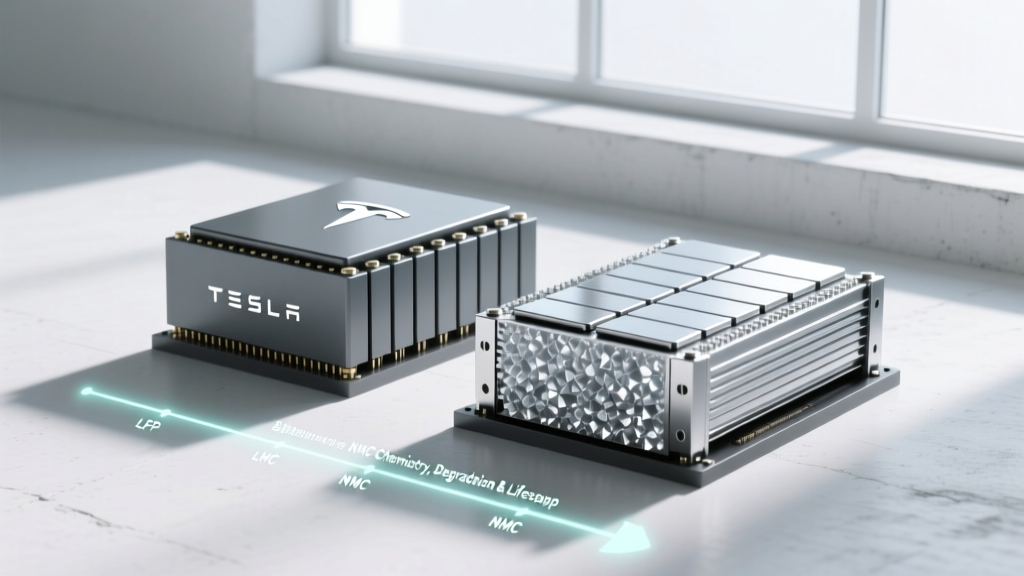
Not all Tesla batteries are created equal. Depending on which trim and model year you drive — or plan to buy — your Tesla could be equipped with one of two fundamentally different lithium-ion chemistries: lithium iron phosphate (LFP) or nickel-based chemistry (NMC/NCA). This isn't a minor spec-sheet detail. It dictates how you should charge your car, what range to expect in winter, how quickly the battery degrades over a decade, and even what the vehicle costs upfront.
Tesla has quietly shifted its strategy over the past several years. Standard Range (now often called "Rear-Wheel Drive") variants of the Model 3 and Model Y have used LFP cells primarily supplied by CATL, while Long Range and Performance variants rely on nickel-manganese-cobalt (NMC) or nickel-cobalt-aluminum (NCA) cells from Panasonic and LG Energy Solution. For 2025 and 2026 model years, this split remains largely in place, though cell sourcing continues to evolve.
This guide breaks down exactly what each Tesla battery type offers, backed by real degradation data, warranty specifics, and replacement cost figures — so you can buy and own with confidence.
LFP vs NMC/NCA: The Chemistry Comparison
Understanding the trade-offs between LFP and nickel-based chemistries is the single most important factor in how you'll live with your Tesla day to day. Here's how they stack up across the dimensions that matter most to owners:
| Attribute | LFP (Lithium Iron Phosphate) | NMC/NCA (Nickel-Based) |
|---|---|---|
| Energy Density | Lower (~160 Wh/kg cell-level) | Higher (~250–270 Wh/kg cell-level) |
| Typical Tesla Use | Model 3/Y RWD (Standard Range) | Model 3/Y Long Range & Performance; Model S/X |
| Recommended Daily Charge | 100% (Tesla recommends regular full charges) | 80–90% daily; 100% only for trips |
| Cycle Life | 3,000–5,000+ cycles to 80% capacity | 1,500–2,500 cycles to 80% capacity |
| Cold-Weather Performance | More range loss in freezing temps (15–30% reduction) | Better cold performance (10–20% reduction with preconditioning) |
| Cost | Lower — no cobalt or nickel | Higher — raw material costs are volatile |
| Thermal Stability | Superior — less prone to thermal runaway | Good but requires more active thermal management |
| State of Charge Estimation | Less accurate (flat voltage curve makes SoC harder to gauge) | More accurate voltage-based SoC estimation |
The headline takeaway: LFP is the durability and value play, while NMC/NCA is the range and performance play. If you're a daily commuter who charges at home and rarely needs 300+ miles in a single stretch, LFP's longer cycle life and 100% daily charging recommendation make it remarkably easy to live with. If you road-trip frequently or live in a cold climate where every mile of range counts, NMC's higher energy density and better cold-weather behavior justify the higher cost and more careful charging habits.
How Long Do Tesla Batteries Actually Last?
The fear that an EV battery will "die" at 100,000 miles is one of the most persistent myths in the transition to electric vehicles. The data tells a very different story.
Tesla's own Impact Report has stated that Model 3/Y drive units and batteries are designed to last the life of the vehicle — which Tesla defines as roughly 200,000 miles for the US average. Independent data aggregation from fleet operators, Teslascope, and owner forums paints a consistent picture:
Typical Tesla Battery Degradation Curve (Real-World Data)
| Mileage | Average Capacity Retained (NMC/NCA) | Average Capacity Retained (LFP) | Notes |
|---|---|---|---|
| 0–15,000 mi | ~95–97% | ~97–99% | Initial settling period; slight drop is normal |
| 30,000 mi | ~92–94% | ~95–97% | Degradation curve begins to flatten |
| 60,000 mi | ~89–92% | ~93–96% | Most owners notice minimal real-world range change |
| 100,000 mi | ~86–90% | ~90–94% | Still well above warranty threshold |
| 150,000 mi | ~82–87% | ~88–92% | Approaching warranty claim territory for NMC |
| 200,000 mi | ~78–85% | ~85–90% | Most vehicles are retired before reaching this |
Sources: Aggregated owner-reported data via Teslascope, Recurrent Auto fleet studies, and Tesla Impact Reports. Individual results vary based on charging habits, climate, and Supercharging frequency.
The critical insight: degradation is non-linear. Most capacity loss occurs in the first 15,000–20,000 miles, after which the curve flattens considerably. A Model 3 Long Range owner who loses 5% in year one may only lose another 5–8% over the next eight years. LFP batteries show even less drop-off, thanks to their inherently stable chemistry.
For context, the average American drives roughly 14,000 miles per year according to the FHWA. That means a 200,000-mile battery lifespan translates to approximately 14+ years of typical use — well beyond the ownership period of most buyers.
Tesla Battery Warranty: What's Actually Covered
Tesla's battery and drive unit warranty is one of the more straightforward in the industry, but the details matter — especially the capacity retention threshold.
| Model / Variant | Warranty Period | Mileage Limit | Minimum Capacity Retention |
|---|---|---|---|
| Model 3 RWD (LFP) | 8 years | 100,000 miles | 70% |
| Model Y RWD (LFP) | 8 years | 100,000 miles | 70% |
| Model 3 Long Range / Performance | 8 years | 120,000 miles | 70% |
| Model Y Long Range / Performance | 8 years | 120,000 miles | 70% |
| Model S / Model X | 8 years | 150,000 miles | 70% |
Source: Tesla New Vehicle Limited Warranty. Whichever comes first — time or mileage. Warranty covers defects and capacity below 70% of original.
The 70% retention threshold is the industry-standard benchmark also used by Hyundai, Kia, and most legacy automakers. What's worth noting: based on the degradation data above, very few Tesla batteries actually fall below 70% within the warranty period under normal use. Warranty claims tend to involve manufacturing defects or early cell failures rather than gradual wear-out.
The warranty covers the battery pack, drive unit(s), and associated power electronics. It does not cover damage from accidents, flooding, improper modifications, or use of the vehicle as a stationary power source outside of approved V2H/V2L configurations.
Battery Replacement Costs: The Numbers and the Reality
This is the question that keeps potential EV buyers up at night. Here's the honest answer: out-of-warranty battery replacement is expensive, but it's also increasingly rare.
| Model / Battery Size | Battery Capacity | Estimated Replacement Cost (Parts + Labor) | Typical Replacement Scenario |
|---|---|---|---|
| Model 3 RWD (LFP) | ~60 kWh (CATL) | $10,000–$13,000 | Post-warranty failure; rare before 200k mi |
| Model 3/Y Long Range (NMC) | ~75–82 kWh (Panasonic/LG) | $13,000–$18,000 | Post-warranty failure; rare before 180k mi |
| Model 3/Y Performance | ~75–82 kWh | $14,000–$19,000 | Same as Long Range; higher labor for AWD |
| Model S / Model X | ~95–100 kWh | $18,000–$25,000 | Older fleet; remanufactured packs available |
Costs are estimates based on service center reports, third-party EV repair shops, and owner community data. Actual costs vary by region, model year, and whether a new, remanufactured, or refurbished pack is used.
A few important nuances:
- Module-level repair is increasingly common. Rather than replacing the entire pack, many independent EV shops (and Tesla service centers) can diagnose and replace individual modules within the pack for $2,000–$5,000, depending on how many modules have failed.
- Remanufactured packs from Tesla's own refurbishment program are typically 20–35% cheaper than new packs and come with a limited warranty.
- Most Tesla batteries outlive the car. The vehicle's body, interior, and electronics will likely need attention long before the traction battery reaches end-of-life. According to data from Recurrent Auto, fewer than 1.5% of EVs in their study fleet required battery replacement outside of recalls.
What Affects Tesla Battery Life — and What You Can Control
Battery degradation is influenced by physics, chemistry, and your habits. Here are the factors ranked by impact, along with practical steps:
Battery Longevity Checklist
- Daily State of Charge (highest impact for NMC): Keep NMC/NCA batteries between 20–80% for daily use. Set the charge limit to 80% in the Tesla app. For LFP, Tesla specifically recommends charging to 100% at least once a week to allow the BMS to recalibrate — daily 100% charging is fine.
- Avoid prolonged storage at extreme SoC: Don't leave an NMC battery sitting at 100% or below 10% for days. If traveling, set the charge limit to 50% before leaving the car unused.
- Supercharging frequency (moderate impact): Occasional DC fast charging is fine. However, daily Supercharging — especially at 250 kW V3 stalls — accelerates degradation slightly. Tesla's own data suggests vehicles that Supercharge >90% of the time show 2–3% more degradation at 100,000 miles compared to primarily home-charged vehicles.
- Extreme heat exposure (moderate impact): Parking in direct sun in Arizona summers with a high SoC stresses cells. Use the Tesla app's cabin overheat protection and, ideally, park in shade or a garage.
- Cold-weather preconditioning (low impact on longevity, high on efficiency): Use Scheduled Departure to warm the battery before driving in freezing weather. This doesn't significantly affect degradation but dramatically improves regen braking and range.
- Software updates: Keep your Tesla updated. Tesla periodically refines BMS algorithms via OTA updates that can improve charge management and thermal regulation.
How to Check Your Tesla's Battery Health (State of Health)
Tesla doesn't expose a direct "State of Health" (SoH) percentage in the vehicle's native interface the way some competitors do. But there are several reliable methods owners use:
Method 1: The Range Calculation Method
Charge your Tesla to 100% (for LFP, do this regularly; for NMC, do it once for measurement purposes). Note the displayed range at 100%. Compare it to the original EPA-rated range for your specific model and year. For example, if your 2023 Model 3 Long Range originally showed 341 miles at 100% and now shows 315 miles, your approximate SoH is 315/341 = 92.4%.
Method 2: Third-Party Apps
Apps like Tessie, Stats (iOS), and Teslamate (self-hosted) pull data from Tesla's API and track estimated SoH over time. These tools log every charge session and calculate degradation trends far more precisely than a single snapshot.
Method 3: Service Center Diagnostic
Request a battery health check at a Tesla Service Center. They can run a full diagnostic that provides cell-level voltage variance, internal resistance readings, and an official capacity assessment — useful if you suspect a warranty claim or are buying a used Tesla and want documentation.
What's Next: Solid-State and Silicon Anode Batteries
The next frontier in battery technology is well-documented but not yet ready for your driveway. Here's where things stand as of 2026:
- Solid-state batteries — which replace the liquid electrolyte with a solid material for higher energy density and improved safety — remain in limited production for specific applications. Toyota has announced initial solid-state EV deployment for 2027–2028, but at very limited scale and likely in Japan-market vehicles first. Mass-market solid-state EVs in the US are realistically a 2029–2031 proposition.
- Silicon-dominant anodes — which boost energy density by replacing graphite with silicon — are closer to reality. Companies like Sila Nanotechnologies and Group14 are already supplying silicon-anode materials to battery manufacturers, and incremental silicon blending (5–10%) is appearing in next-generation NMC cells. Expect this to show up in Tesla and other EVs within the next 2–3 model years as an evolutionary improvement, not a revolution.
- LFP evolution — CATL and BYD continue to push LFP energy density higher. CATL's second-generation LFP cells and "Shenxing" ultra-fast-charging LFP cells are narrowing the gap with NMC on range while maintaining LFP's cost and longevity advantages.
For buyers today, the practical advice is simple: don't wait for solid-state. Current LFP and NMC chemistries are mature, well-understood, and backed by robust warranty coverage. The technology you can buy today will serve you well for a decade or more.
LFP vs NMC: Which Tesla Battery Type Should You Choose?
The decision framework is straightforward once you separate marketing from physics:
Choose LFP (Model 3/Y RWD) if:
- You charge primarily at home and want the simplicity of charging to 100% daily
- You plan to keep the car 8+ years and want maximum cycle life
- You're budget-conscious and the ~$5,000–$7,000 lower MSRP matters
- Your daily commute is under 100 miles round-trip
- You live in a moderate climate
Choose NMC/NCA (Model 3/Y Long Range or Performance) if:
- You regularly drive 250+ miles between charges (road trips, rural routes)
- You live in a cold climate where NMC's better low-temperature performance preserves range
- You want AWD and the performance that comes with dual-motor configurations
- You're willing to manage charge limits (20–80% daily) for long-term health
- Maximum EPA range (330–363 mi depending on model/year) is a priority
Frequently Asked Questions
How long do Tesla batteries last in years and miles?
Based on fleet data, most Tesla batteries retain 85–90%+ capacity at 150,000 miles. At the US average of 14,000 miles/year, that's over 10 years of driving before reaching even 80% capacity. Many will outlast 200,000 miles. The vehicle is more likely to be retired for other reasons before the battery fails.
How much does a Tesla battery cost to replace?
Out-of-warranty replacement ranges from roughly $10,000 for a Model 3 RWD LFP pack to $25,000 for a Model S/X pack, including labor. Module-level repairs can cost $2,000–$5,000. However, fewer than 1.5% of EVs require full battery replacement outside of recalls, making this a low-probability expense.
What does the Tesla battery warranty cover?
Tesla covers the battery pack and drive unit for 8 years / 100,000–150,000 miles (varies by model), guaranteeing at least 70% capacity retention. If your battery drops below 70% within the warranty period under normal use, Tesla will repair or replace it at no cost. Manufacturing defects are also covered.
How do I check and maximize my Tesla battery health?
Check SoH by comparing your 100% displayed range to original EPA range, or use third-party apps like Tessie or Teslamate for trend tracking. Maximize longevity by keeping NMC batteries at 20–80% daily, charging LFP to 100% regularly, avoiding prolonged storage at extreme SoC levels, minimizing daily Supercharging, and using Scheduled Departure for battery preconditioning in cold weather.
LFP vs NMC — which Tesla battery type is better?
Neither is universally "better." LFP wins on longevity (3,000–5,000+ cycles), cost, thermal safety, and charging simplicity (100% daily OK). NMC wins on energy density (more range per kWh), cold-weather performance, and power delivery. For daily commuters who charge at home, LFP is arguably the smarter long-term choice. For road-trippers and cold-climate drivers, NMC's range advantage is worth the trade-offs.
Does frequent Supercharging damage my Tesla battery?
"Damage" is too strong a word, but frequent DC fast charging does accelerate degradation slightly. Tesla's fleet data shows approximately 2–3% additional capacity loss at 100,000 miles for vehicles that Supercharge almost exclusively versus those that primarily use Level 2 home charging. For most owners who mix home and Supercharger use, the effect is negligible.
Can I upgrade my Tesla's battery to a larger or newer chemistry later?
Tesla does not offer official battery upgrades. Third-party swaps are technically possible but extremely rare, expensive, and will void any remaining warranty. Plan your battery size and chemistry choice at purchase time.