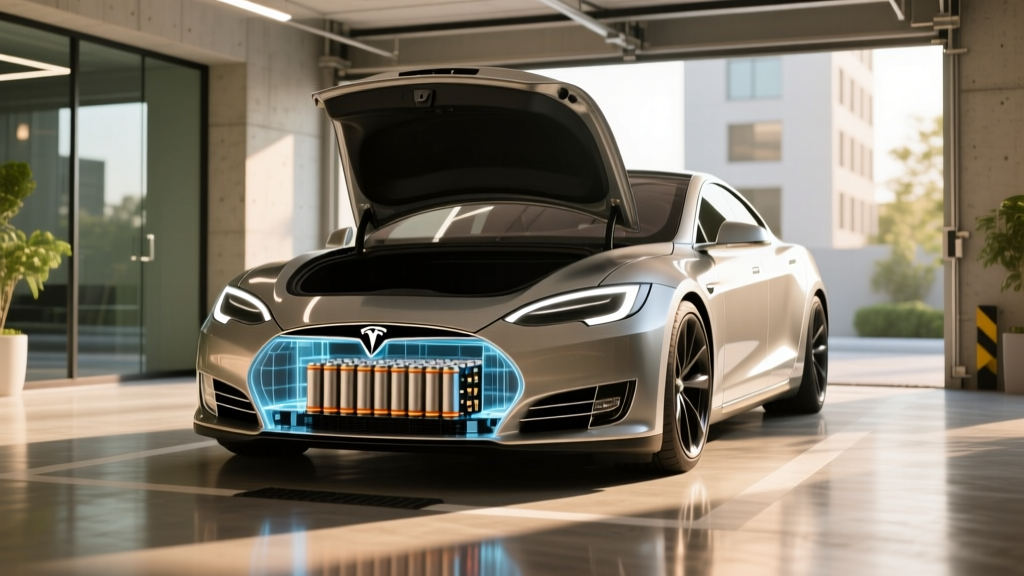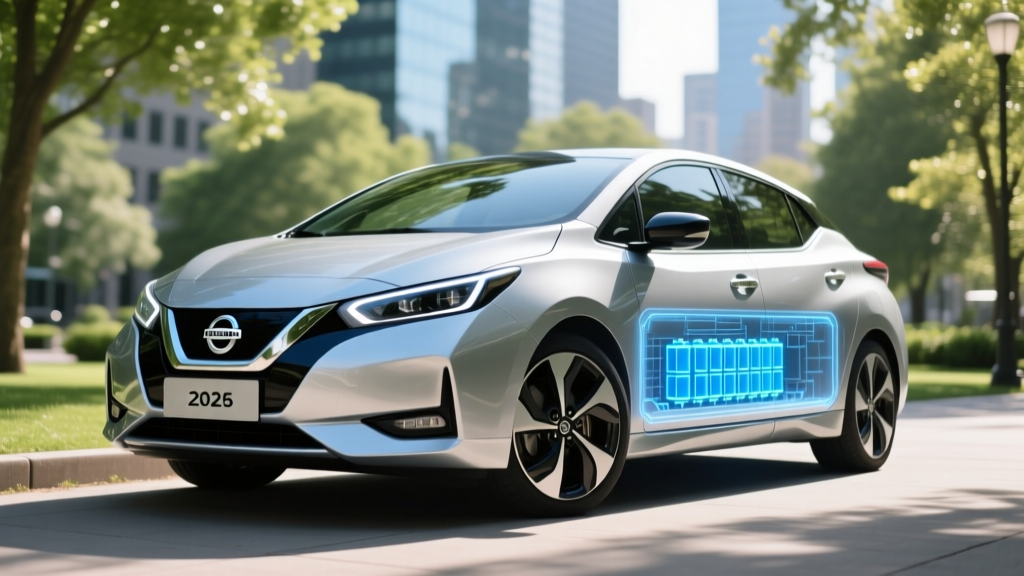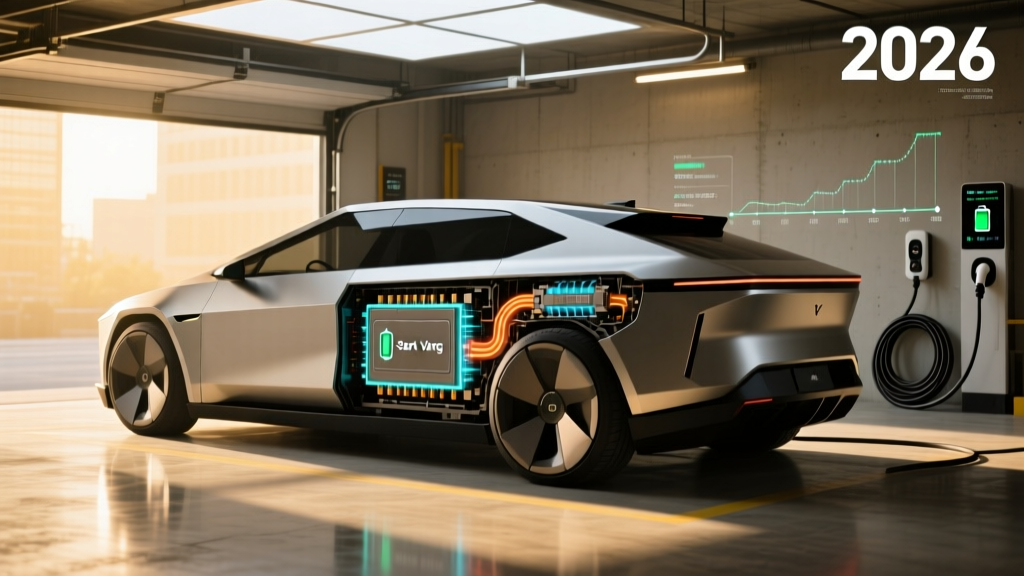
Searches for Stark Varg battery cost often stem from a broader anxiety: what happens when an EV battery degrades or fails, and what does replacement actually cost? The Stark Varg — a high-performance electric motocross bike from Sweden's Stark Future — packs a 6 kWh lithium-ion pack into a dirt-bike chassis, and while its battery economics differ from a full-size electric car, the underlying questions are universal. This guide uses the Varg as a starting point to map the entire EV battery landscape in 2026: chemistry trade-offs, real degradation data, warranty coverage, replacement pricing, and the habits that extend pack life.
Stark Varg Battery Cost: What Buyers Actually Pay
The Stark Varg EX and MX models ship with a proprietary 6 kWh (usable) battery pack using high-nickel NMC (nickel-manganese-cobalt) cells optimized for power density — critical when you need instant 800 Nm of torque at the rear wheel. As of early 2026, a full replacement pack from Stark Future lists at approximately €3,900–€4,500 (roughly $4,200–$4,900 USD) before labor, making it one of the costlier per-kWh replacements in the electrified-vehicle world at around $700–$815/kWh.
Why so high per kWh? Small production volumes, custom cell formats, and motorsport-grade discharge rates (the Varg can dump its entire pack in under 30 minutes of hard riding) all drive up cell cost. Compare that to a Tesla Model Y replacement at roughly $130–$160/kWh, and the economies of scale become obvious. That said, the Varg's total pack price is still far lower than a full-size EV replacement simply because the pack is small.
For most Varg owners, replacement isn't imminent. Stark Future rates the pack for approximately 500 full charge cycles before reaching 80% state of health (SoH) — which translates to roughly 15,000–20,000 miles of aggressive off-road use. Many riders won't hit that threshold for 5–8 years.
EV Battery Chemistry: LFP vs NMC vs NCA Explained
Understanding battery cost requires understanding chemistry. The two dominant chemistries in 2026 consumer EVs are LFP (lithium iron phosphate) and NMC/NCA (nickel-manganese-cobalt / nickel-cobalt-aluminum). The Stark Varg uses NMC for its power density; most Tesla Model 3 Standard Range vehicles now use LFP for cost and longevity.
| Attribute | LFP (Lithium Iron Phosphate) | NMC / NCA (Nickel-based) |
|---|---|---|
| Energy Density | ~160–180 Wh/kg (lower) | ~220–300 Wh/kg (higher) |
| Cycle Life | 3,000–5,000+ cycles to 80% SoH | 1,000–2,000 cycles to 80% SoH |
| Cold-Weather Performance | Weaker below 32°F; slower charging | Better low-temp discharge and charge acceptance |
| Cost per kWh (2026) | ~$90–$110 at cell level | ~$120–$160 at cell level |
| Safety / Thermal Runaway | Higher thermal stability; less prone | Requires more robust BMS and cooling |
| Typical Applications | Tesla Model 3 RWD, Ford Mustang Mach-E Select, BYD models | Tesla Model Y LR, Hyundai Ioniq 5, Rivian, Stark Varg |
| Recommended SoC Range | Can charge to 100% daily without harm | Best kept 20–80% for daily; 100% for trips only |
Which is better? It depends on your use case. If you want maximum range in a lighter package and charge to 80% daily, NMC delivers. If you want a battery that can endure thousands of 100% charges with minimal degradation and lower upfront cost, LFP wins. For the Stark Varg's motorsport application, NMC's power density is non-negotiable — you need maximum energy in minimum weight.
How Long Do EV Batteries Last? Real Degradation Data
The single most common battery question we field: how long before I need a replacement? The data in 2026 is reassuring — most modern EV batteries outlast the vehicle's useful economic life.
Typical degradation curves (fleet-averaged data):
- Year 1 / 15,000 mi: 2–4% capacity loss (initial SEI layer formation)
- Year 3 / 45,000 mi: 6–9% total loss; curve flattens
- Year 5 / 75,000 mi: 8–12% total loss (NMC); 5–8% (LFP)
- Year 8 / 120,000 mi: 12–18% total loss (NMC); 8–12% (LFP)
- Year 10 / 150,000 mi: 15–22% (NMC); 10–15% (LFP)
According to data aggregated by Recurrent Auto from over 15,000 EVs in real-world service, the average 2023–2025 model-year EV retains approximately 90–93% of its original capacity at 50,000 miles. LFP-equipped vehicles (like the Tesla Model 3 RWD) consistently outperform NMC vehicles in cycle-life benchmarks, though NMC packs from Hyundai/Kia and GM's Ultium platform have closed the gap significantly with improved thermal management.
For the Stark Varg, the smaller pack and high-discharge motorsport use accelerate wear relative to a commuter EV. Expect 85–90% SoH at 3 years of regular weekend riding — still entirely functional, just with proportionally reduced ride time per charge.
What Does the Battery Warranty Actually Cover?
Federal law in the United States mandates that EV batteries carry a minimum warranty of 8 years / 100,000 miles (in California Air Resources Board states, it's 10 years / 150,000 miles). But the details matter enormously.
| Manufacturer | Warranty Period | Capacity Threshold | Notes |
|---|---|---|---|
| Tesla (Model 3/Y LFP) | 8 yr / 120,000 mi | 70% retention | Includes drive unit |
| Tesla (Model S/X) | 8 yr / 150,000 mi | 70% retention | Longer mileage for larger packs |
| Hyundai / Kia | 10 yr / 100,000 mi | 70% retention | Among the longest coverage |
| GM (Ultium platform) | 8 yr / 100,000 mi | 70% retention | Covers battery and propulsion |
| Ford (Mach-E / F-150 Lightning) | 8 yr / 100,000 mi | 70% retention | Standard across BEV lineup |
| Rivian | 8 yr / 120,000 mi | 70% retention | Max pack has longer coverage |
| Stark Future (Varg) | 2 yr / unlimited | Not publicly specified | Motorsport use; check dealer terms |
The critical fine print: warranties cover defects and excessive degradation below the threshold — not gradual capacity loss above it. If your 8-year-old pack sits at 72% SoH, you're within spec and on your own. In practice, warranty claims are rare; most packs never dip below the threshold within the coverage period.
EV Battery Replacement Costs: The Full Picture
If your battery falls outside warranty — or you're buying a used EV with a degraded pack — here's what replacement costs look like in 2026:
| Vehicle / Pack Size | Battery kWh | Replacement Cost (parts + labor) | Cost per kWh |
|---|---|---|---|
| Stark Varg MX/EX | 6 kWh | $4,500–$6,000 | ~$750–$1,000 |
| Tesla Model 3 RWD (LFP) | 57.5 kWh | $8,000–$12,000 | ~$140–$210 |
| Tesla Model Y Long Range | 75 kWh | $12,000–$16,000 | ~$160–$215 |
| Hyundai Ioniq 5 (Standard Range) | 58 kWh | $9,000–$13,500 | ~$155–$235 |
| Ford F-150 Lightning (Extended) | 131 kWh | $18,000–$25,000 | ~$140–$190 |
| Chevrolet Bolt EV (older platform) | 65 kWh | $14,000–$16,500 | ~$215–$255 |
The Stark Varg's per-kWh cost is an outlier driven by low-volume motorsport production. For mainstream EVs, the trend is clear: replacement costs per kWh have dropped roughly 40% since 2020, driven by cell manufacturing scale and improved module-level repair. Many shops now replace individual modules (a pack may contain 4–24 modules) rather than the entire pack, cutting costs by 50–70% for localized cell failures.
Context that calms most buyers: according to data from fueleconomy.gov and long-term fleet studies, fewer than 2% of EVs from the 2018–2023 model years have required full battery replacement as of 2026. The vast majority of packs outlive the vehicle's trade-in cycle.
Factors That Accelerate (or Extend) Battery Life
Battery longevity isn't random — it's a function of how you treat the chemistry. Here's what the data shows matters most:
- State of Charge habits: Keeping NMC packs between 20–80% SoC for daily use can double cycle life vs. regular 0–100% cycling. LFP packs tolerate 100% daily charges far better.
- DC fast-charging frequency: Exclusive DCFC use (3+ times/week) correlates with ~2–3% additional degradation over 5 years vs. primarily Level 2 home charging, per Recurrent Auto data. Occasional road-trip fast charging has negligible impact.
- Extreme temperatures: Sustained exposure above 95°F accelerates calendar aging. Preconditioning (warming the pack before charging in cold weather) protects against lithium plating below 32°F.
- Storage conditions: Storing at ~50% SoC in moderate temperatures (60–70°F) minimizes calendar degradation. A pack stored at 100% SoC in a hot garage degrades 2–3× faster than one at 50%.
- Regenerative braking settings: Aggressive regen in cold weather without preconditioning can stress cells; most modern BMS systems limit regen automatically when the pack is cold.
For Stark Varg owners specifically: the high-discharge nature of motocross riding generates significant pack heat. Allowing the bike to cool for 15–20 minutes between motos and avoiding immediate fast-charging on a hot pack will meaningfully extend cycle life.
How to Check and Monitor Battery Health (SoH)
State of Health (SoH) is the percentage of original capacity your pack can still hold. A new battery is 100% SoH; at 70%, most manufacturers consider it warranty-eligible for replacement.
How to check SoH by platform:
- Tesla: Service mode (accessible via the software menu) shows pack capacity in kWh. Divide current capacity by original to calculate SoH. Third-party apps like Tessie or TeslaFi log this over time.
- Hyundai/Kia: The infotainment system's EV diagnostic page shows SoH percentage directly. Dealers can pull a detailed cell-balance report.
- GM Ultium vehicles: The myChevrolet/myCadillac app surfaces battery health; OnStar diagnostics provide deeper module-level data.
- OBD-II scanners: Tools like the OBDeleven or dedicated EV scanners (e.g., from Autel) can read SoH from the BMS on most 2020+ EVs.
- Stark Varg: The Stark app provides estimated SoH and cycle count. For precise measurement, a dealer diagnostic tool reads individual cell voltages and internal resistance.
Track SoH quarterly, not daily. Normal fluctuation of 1–2% based on temperature and recent charging patterns is expected and not a cause for concern.
What's Next: Solid-State, Silicon Anodes, and Realistic Timelines
The battery technology pipeline is real, but timelines matter. Here's where emerging chemistries actually stand in 2026:
Silicon-dominant anodes: Companies like Sila Nanotechnologies and Group14 are already shipping silicon-blend anodes in limited production (the Mercedes G-Class 580e uses a Group14 silicon-anode pack). Expect broader adoption by 2027–2028, offering 15–25% energy density improvement over graphite anodes.
Solid-state batteries: Toyota has announced a 2027–2028 production timeline for solid-state cells in limited models, targeting 750 km (466 mi) range and 10-minute fast charging. QuantumScape's cells are in Volkswagen validation testing. However, manufacturing scale and cost remain significant hurdles — solid-state is not expected to reach mainstream price parity before 2030–2032. These are forward-looking projections, not current availability.
Sodium-ion batteries: CATL and BYD have begun producing sodium-ion packs for low-cost, short-range EVs in China. Energy density (~140 Wh/kg) limits them to urban runabouts, but the cost advantage (no lithium, cobalt, or nickel) could make them relevant for budget EVs globally by 2027–2028.
For today's buyers — whether you're eyeing a Stark Varg or a Model Y — current lithium-ion technology is mature, well-warrantied, and cost-declining. Waiting for solid-state is waiting for a technology that won't be affordable for years.
Frequently Asked Questions
How long do EV batteries last in years and miles?
Most modern EV batteries (2020+ model years) retain 85–90% of original capacity at 100,000 miles and 80–85% at 150,000 miles. In practical terms, a well-maintained pack should deliver 15–20 years of usable service before degradation makes the vehicle impractical for its original purpose. LFP packs tend to outlast NMC by 20–30% in cycle-life benchmarks.
How much does an EV battery cost to replace?
Full replacements range from approximately $8,000 for a Tesla Model 3 LFP pack to $25,000 for a Ford F-150 Lightning extended-range pack, including labor. The Stark Varg's 6 kWh pack costs roughly $4,500–$6,000. Module-level repairs (replacing 1–2 failed modules rather than the full pack) can cut costs by 50–70%. Costs continue to decline as cell prices fall and third-party repair networks expand.
What does the EV battery warranty actually cover?
Federal minimum is 8 years / 100,000 miles (10/150,000 in CARB states) against defects and capacity loss below a specified threshold — typically 70% of original capacity. It does not cover gradual degradation above the threshold, physical damage, or modifications. Always read the specific warranty booklet for your vehicle; terms vary by manufacturer.
How do I check and maximize my EV battery health?
Check SoH through your vehicle's built-in diagnostics, mobile app, or an OBD-II scanner. To maximize longevity: keep NMC packs between 20–80% SoC daily, minimize exclusive DC fast-charging, precondition in cold weather, avoid prolonged storage at 100% SoC or in extreme heat, and maintain moderate charge rates when possible.
LFP vs NMC — which battery chemistry is better?
Neither is universally better. LFP offers longer cycle life (3,000–5,000 cycles), lower cost, better safety, and tolerance for 100% daily charging — but lower energy density and weaker cold-weather performance. NMC provides higher energy density (more range in a lighter pack) and better cold performance — but shorter cycle life and a preference for 20–80% daily SoC. Choose LFP for commuting and cost; choose NMC for maximum range and performance applications like the Stark Varg.
Is the Stark Varg battery covered by a federal tax credit?
No. The IRS §30D clean vehicle credit applies to four-wheeled vehicles with a gross vehicle weight rating under 14,000 lbs and a battery capacity of at least 7 kWh. The Stark Varg, as a two-wheeled motorcycle with a 6 kWh pack, does not qualify. Consult a tax professional for your specific situation.
Whether you're researching the Stark Varg battery cost for a motocross purchase or evaluating long-term ownership for a daily-driver EV, the 2026 data tells a consistent story: modern lithium-ion packs are lasting longer, costing less to replace, and degrading more slowly than early-generation EV batteries. The chemistry is proven, the warranties are robust, and the replacement-cost trajectory is firmly downward. Buy the vehicle that fits your needs — the battery will very likely outlast your ownership.