The Real Answer: Nissan Leaf Battery Lifespan by the Numbers
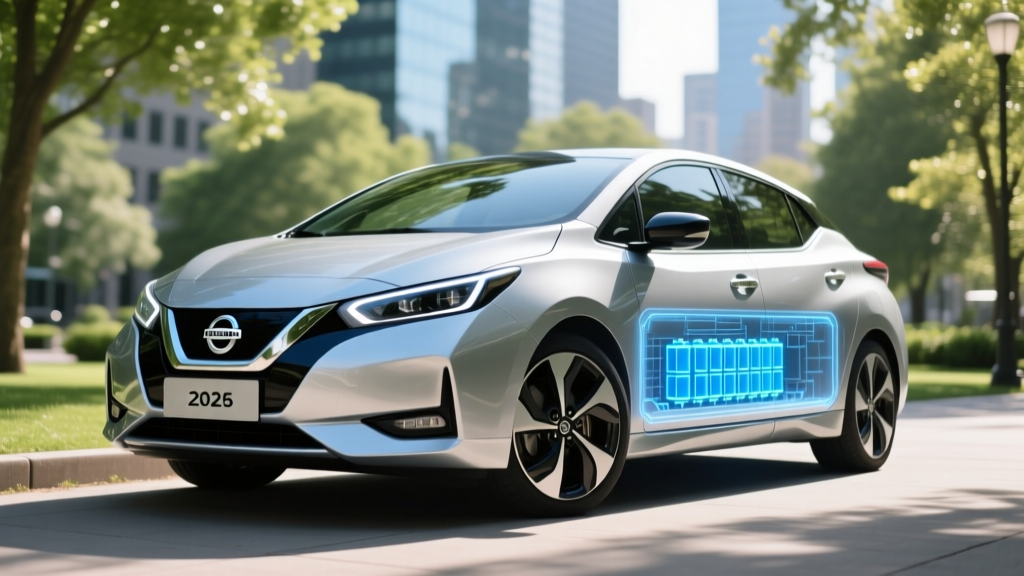
If you own a Nissan Leaf—or are considering one on the used EV market—the traction battery is the single most expensive component in the vehicle. The short answer to "how long do the batteries last in a Nissan Leaf" is that most 40 kWh and 60 kWh packs retain between 70% and 85% of original capacity after eight years, depending heavily on climate, charging habits, and whether the pack uses passive or active thermal management.
Nissan has sold the Leaf since 2011, giving us one of the longest real-world datasets of any EV battery in production. Early 24 kWh and 30 kWh packs from the 2011–2017 model years showed measurable degradation within 3–5 years, particularly in hot climates. The current-generation 40 kWh (introduced for the 2018 model year) and 60 kWh (introduced for 2019) packs use improved NMC (nickel manganese cobalt) chemistry and have demonstrated notably better longevity.
That means a 2020 Nissan Leaf with a 40 kWh battery (EPA-rated 149 miles of range) might realistically deliver 120–130 miles of range by year six, assuming moderate use and temperate climate conditions. In hot regions like Arizona or Texas, that figure may drop further.
Nissan Leaf Battery Specs: 40 kWh vs. 60 kWh Packs
| Specification | 40 kWh Pack (Leaf S/SV) | 60 kWh Pack (Leaf SV Plus/SL Plus) |
|---|---|---|
| Usable capacity | ~38 kWh | ~56 kWh |
| Chemistry | NMC (laminated lithium-ion) | NMC (laminated lithium-ion) |
| Thermal management | Passive air cooling | Passive air cooling |
| EPA range (new) | 149 miles | 212 miles |
| Max DC fast charge rate | 50 kW (CHAdeMO) | 100 kW (CHAdeMO) |
| 10–80% DC charge time | ~40 minutes (at 50 kW) | ~45 minutes (at 100 kW) |
| Level 2 charge rate | 6.6 kW | 6.6 kW |
| Motor output | 147 hp / 236 lb-ft | 214 hp / 250 lb-ft |
| 0–60 mph | ~7.9 seconds | ~6.5 seconds |
| Battery warranty | 8 yr / 100,000 mi | 8 yr / 100,000 mi |
Both packs share the same fundamental architecture: laminated NMC cells without active liquid cooling. This is the Leaf's most significant differentiator from competitors like the Chevrolet Bolt EV (liquid-cooled NMC) or Tesla Model 3 (liquid-cooled NMC/LFP). Passive cooling works adequately in moderate climates but struggles to shed heat during repeated DC fast charging or sustained high-temperature operation, accelerating degradation.
Degradation Data: What Leaf Owners Actually Experience
Nissan Leaf battery degradation follows a pattern common to most lithium-ion packs: a steeper initial drop in the first 1–2 years, followed by a long, gradual decline. Here is what the data shows across model years and pack sizes:
| Timeframe | 40 kWh Pack (Typical SoH) | 60 kWh Pack (Typical SoH) | Notes |
|---|---|---|---|
| Year 1 | 95–98% | 96–99% | Initial formation loss |
| Year 3 | 88–93% | 90–95% | Climate-dependent divergence begins |
| Year 5 | 82–88% | 85–91% | Hot-climate packs trend lower |
| Year 8 (warranty end) | 73–82% | 78–86% | Warranty threshold: 66% (9 bars of 12) |
| Year 10+ | 68–78% | 72–82% | Based on early 2018–2019 pack data |
The 60 kWh pack has shown marginally better retention rates partly because owners tend to use a smaller percentage of total capacity for daily driving, reducing depth-of-discharge stress. A 60 kWh Leaf owner commuting 30 miles round-trip is cycling roughly 15–20% of the pack daily, while a 40 kWh owner on the same commute cycles 25–35%.
Real-world reports on forums like My Nissan Leaf and data from fleet analytics firm Geotab corroborate these ranges. A 2019 Leaf Plus (62 kWh) in Seattle, for example, might show 91% State of Health (SoH) at 45,000 miles, while the same model year in Phoenix might read 84% at similar mileage.
Nissan Leaf Battery Warranty: What's Covered and What Isn't
Nissan provides an 8-year/100,000-mile lithium-ion battery capacity warranty on all Leaf models. The warranty guarantees that the battery will retain at least 66% of its original capacity—displayed as 9 out of 12 capacity bars on the dashboard—during the coverage period.
| Warranty Element | Nissan Leaf Terms |
|---|---|
| Duration | 8 years / 100,000 miles (whichever comes first) |
| Capacity threshold | 66% of original capacity (9 of 12 bars) |
| What triggers a claim | Dashboard shows fewer than 9 capacity bars |
| Remedy | Repair, replacement, or refurbished pack at Nissan's discretion |
| Defect coverage | 5 years / 60,000 miles for manufacturing defects |
| Exclusions | Damage from accidents, flooding, improper charging equipment, or unauthorized modifications |
| Transferable? | Yes — warranty follows the vehicle, not the owner |
The 66% threshold is notably lower than some competitors. Hyundai, for instance, warrants its Kona Electric battery at 70% retention over 10 years/100,000 miles. Tesla warrants the Model 3 Long Range battery at 70% retention over 8 years/120,000 miles. Nissan's bar-based display system is also less precise than the percentage-based SoH readouts available in most modern EVs, which has been a persistent frustration for Leaf owners seeking granular health data.
How Much Does a Nissan Leaf Battery Replacement Cost?
Battery replacement is the scenario most prospective Leaf owners worry about—and the one least likely to occur within the vehicle's typical ownership period. The vast majority of Leaf batteries outlast the car's economic life. That said, here is the current cost landscape:
| Pack Size | New OEM Pack (Parts + Labor) | Refurbished/Remanufactured | Typical When Needed |
|---|---|---|---|
| 24 kWh (2011–2017) | $6,500–$9,000 | $3,500–$5,500 | 10+ years / 120,000+ mi, if at all |
| 30 kWh (2016–2017) | $7,000–$10,000 | $4,000–$6,000 | 10+ years / 120,000+ mi |
| 40 kWh (2018–current) | $8,000–$12,000 | $5,000–$7,500 | 12+ years / 150,000+ mi (projected) |
| 60 kWh (2019–current) | $10,000–$15,000 | $6,500–$9,000 | 12+ years / 150,000+ mi (projected) |
These figures include estimated labor (typically 3–5 hours at $120–$180/hour for a certified EV technician). Prices vary by dealership and region. Third-party EV shops and companies like Greentec Auto offer refurbished packs at lower cost, though availability for newer 40 and 60 kWh packs remains limited as these vehicles have not yet reached high-mileage age in large numbers.
Context matters: a 2020 Leaf SV Plus with a 60 kWh pack has a current used-market value of roughly $14,000–$18,000 (as of early 2026). A $12,000+ replacement would approach total-loss territory for an insurance company, which is why most out-of-warranty battery failures on older Leafs result in the vehicle being scrapped or sold for parts rather than repaired with a new OEM pack. Refurbished packs make economic sense for owners who plan to keep driving.
Factors That Accelerate (or Preserve) Leaf Battery Life
The Leaf's passive thermal management makes it more sensitive to environmental and behavioral factors than liquid-cooled EVs. Here is what the data shows matters most:
- Minimize DC fast charging: Every CHAdeMO session generates significant heat with no active cooling to dissipate it. Frequent DCFC users (3+ sessions/week) see degradation rates 1.5–2x higher than Level 2-only chargers. Reserve fast charging for road trips.
- Avoid 100% State of Charge for storage: NMC chemistry degrades fastest at high SoC and high temperature. Charge to 80% for daily use unless you need full range. The Leaf's charge timer feature can help automate this.
- Don't let the pack sit at 0%: Extended periods at very low SoC stress the cells. If storing the vehicle for weeks, aim for 50–60% SoC.
- Park in shade or a garage in hot climates: Ambient temperatures above 95°F accelerate calendar degradation, especially at high SoC. A garage can reduce pack temperature by 15–25°F.
- Precondition while plugged in: Using the Leaf's climate pre-timer while connected to Level 2 power reduces the energy drawn from the battery and avoids deep discharge in cold weather.
- Drive moderately in extreme heat: Aggressive acceleration and sustained high speeds generate internal cell heat that passive cooling cannot manage efficiently.
The single biggest degradation risk for a Leaf owner in a hot climate who relies on DC fast charging is the combination of heat-on-heat: the cells get hot from rapid charging, and the passive system cannot shed that heat before the next cycle begins. This is why fleet data consistently shows Leaf taxis and high-mileage commuters in southern states losing capacity faster than the EV average.
How to Check Your Nissan Leaf's Battery Health (State of Health)
Nissan provides a basic capacity-bar display on the Leaf's dashboard—12 bars when new, with bars dropping as capacity degrades. However, this system is imprecise: each bar represents roughly 8.3% of capacity, and the display does not update in real time. Many owners report the bars "falling off a cliff" rather than declining smoothly, which is a display artifact rather than an actual sudden loss.
For more accurate SoH monitoring, Leaf owners have several options:
- Leaf Spy Pro (OBD-II app): The most widely used third-party tool for Leaf battery diagnostics. A $20 OBD-II Bluetooth adapter paired with the Leaf Spy app (available for iOS and Android) provides real-time State of Health percentage, individual cell voltages, pack temperature, and charge/discharge power. This is considered essential by the Leaf owner community.
- Nissan dealer diagnostic scan: Dealerships can run a battery health report during service visits, though the output is less granular than Leaf Spy and not always shared proactively with the owner.
- Dashboard bar count: Free but crude. A 12-bar reading indicates 85–100% SoH; 11 bars indicates roughly 78.5–85%; 10 bars roughly 72.5–78.5%; 9 bars (the warranty threshold) roughly 66–72.5%.
If you are evaluating a used Leaf, always request a Leaf Spy reading or ask the seller to provide one. A battery health report from a Nissan dealer is also acceptable, but Leaf Spy gives you more data—including cell balancing status, which can reveal early signs of a weak cell module.
NMC vs. LFP: Why the Leaf Uses NMC and What It Means for Longevity
The Nissan Leaf uses NMC (nickel manganese cobalt oxide) cathode chemistry across all trims and model years. This is a deliberate engineering choice with specific trade-offs compared to the LFP (lithium iron phosphate) chemistry used in vehicles like the Tesla Model 3 Standard Range and some BYD models.
| Attribute | NMC (Nissan Leaf) | LFP (e.g., Tesla Model 3 RWD) |
|---|---|---|
| Energy density | Higher (~160–220 Wh/kg cell-level) | Lower (~140–170 Wh/kg cell-level) |
| Cycle life | 1,000–2,000 full cycles to 80% SoH | 3,000–5,000+ full cycles to 80% SoH |
| Cold-weather performance | Better at low temperatures | Reduced range and charge speed in cold |
| Cost per kWh | Higher (cobalt and nickel pricing) | Lower (iron and phosphate are abundant) |
| Recommended daily SoC | 80% (to minimize degradation) | 100% is acceptable (LFP tolerates full charge) |
| Thermal stability | Good, but more sensitive to heat | Excellent — inherently more stable |
| Weight for same range | Lighter pack | Heavier pack required |
For the Leaf, NMC was the practical choice: the car's compact platform benefits from NMC's higher energy density, keeping the pack light enough to maintain the Leaf's efficiency and interior space. However, NMC's sensitivity to heat and high-SoC storage is amplified by the Leaf's lack of active cooling—a combination that explains why Leaf degradation rates exceed those of liquid-cooled NMC vehicles like the Hyundai Ioniq 5 or BMW i4.
If Nissan were to redesign the Leaf on a new platform (as has been rumored for a potential next-generation model), LFP chemistry with active thermal management would be a logical choice for the base trim, trading some energy density for dramatically improved cycle life and reduced cost.
What's Next: Solid-State Batteries and the Future Leaf
Nissan has been one of the most vocal automakers regarding solid-state battery development. The company has announced plans to bring solid-state cells to production vehicles by the late 2020s, with a pilot production line operational at its Yokohama plant. Solid-state batteries promise roughly double the energy density of current NMC cells, faster charging capability, and improved thermal stability—attributes that would directly address the Leaf's current limitations.
However, it is critical to separate announcement from availability. As of 2026, no mass-market EV uses solid-state cells. Nissan's timeline suggests a possible introduction in a premium or next-generation model around 2028–2030, with cost reductions enabling broader adoption in the 2030s. Current Leaf buyers should make purchasing decisions based on the NMC technology available today, not on speculative future chemistry.
Silicon-anode technology, which increases the anode's lithium-ion storage capacity, is closer to production reality. Companies like Sila Nanotechnologies and Group14 are already supplying silicon-dominant anode materials to some manufacturers. This technology could incrementally improve energy density in NMC cells within the next 2–3 model years without requiring a full chemistry change.
Frequently Asked Questions
How long do the batteries last in a Nissan Leaf in real-world use?
Based on fleet data and owner reports, most 40 kWh and 60 kWh Leaf batteries retain 73–86% of original capacity at the 8-year mark. In practical terms, this means a Leaf with 149 miles of EPA range when new will typically deliver 110–130 miles at year eight. The battery rarely "fails" catastrophically; it gradually holds less charge over time. Many Leafs exceed 150,000 miles on the original pack, albeit with reduced range.
Is the Nissan Leaf battery covered under warranty if it degrades?
Yes, but the threshold is specific. Nissan's battery capacity warranty covers 8 years or 100,000 miles and guarantees at least 66% of original capacity—shown as 9 of 12 bars on the dashboard. If your Leaf drops below 9 bars within the warranty period, Nissan will repair or replace the battery. The defect warranty covers manufacturing issues for 5 years/60,000 miles separately.
How much does it cost to replace a Nissan Leaf battery out of warranty?
A new OEM 40 kWh pack costs approximately $8,000–$12,000 installed; a 60 kWh pack runs $10,000–$15,000. Refurbished packs are available from third-party suppliers for $3,500–$9,000 depending on capacity. Most Leaf batteries do not require replacement within the vehicle's typical 10–15 year lifespan, making this a low-probability expense for most owners.
Does frequent DC fast charging hurt the Leaf battery?
Yes, measurably. The Leaf's passive air-cooling system cannot dissipate the heat generated during 50 kW or 100 kW DC fast charging as effectively as liquid-cooled systems. Data shows that Leaf owners who DC fast charge three or more times per week experience degradation rates 50–100% faster than those who primarily use Level 2 home charging. For daily charging, a 6.6 kW Level 2 home station is strongly recommended.
How do I check my Nissan Leaf battery health without going to a dealer?
The most reliable method is using an OBD-II Bluetooth adapter with the Leaf Spy Pro app, which provides exact State of Health percentage, individual cell voltages, and pack temperature readings. The dashboard's 12-bar capacity display offers a rough estimate but is not precise enough for evaluating a used Leaf purchase. Always request a Leaf Spy reading when buying a pre-owned Leaf.
Should I be worried about buying a used Nissan Leaf with high mileage?
Not necessarily, but due diligence is essential. A 2019 Leaf Plus with 60,000 miles in a temperate climate may show 90%+ SoH and have many years of useful life remaining. The same model year with 60,000 miles in Phoenix with heavy DCFC use might read 80% SoH. Always verify State of Health via Leaf Spy, check the vehicle's charging history if possible, and factor in remaining warranty coverage. A used Leaf with a verified SoH above 85% is generally a sound purchase for commuting and local driving.