The Battery Chemistry Landscape in 2026
If you've been following EV news, you've likely encountered the term sodium-ion battery — a chemistry that promises lower costs, abundant raw materials, and competitive cold-weather performance. Chinese automakers like BYD and CATL have begun deploying sodium-ion packs in affordable city EVs, and the technology is generating serious attention from global OEMs. But how does sodium-ion actually compare to the lithium-based chemistries dominating today's EV market — specifically LFP (lithium iron phosphate) and NMC/NCA (nickel manganese cobalt / nickel cobalt aluminum)?
This guide breaks down every chemistry you need to know about, including real degradation data, warranty structures, replacement economics, and what sodium-ion's emergence means for your next EV purchase.
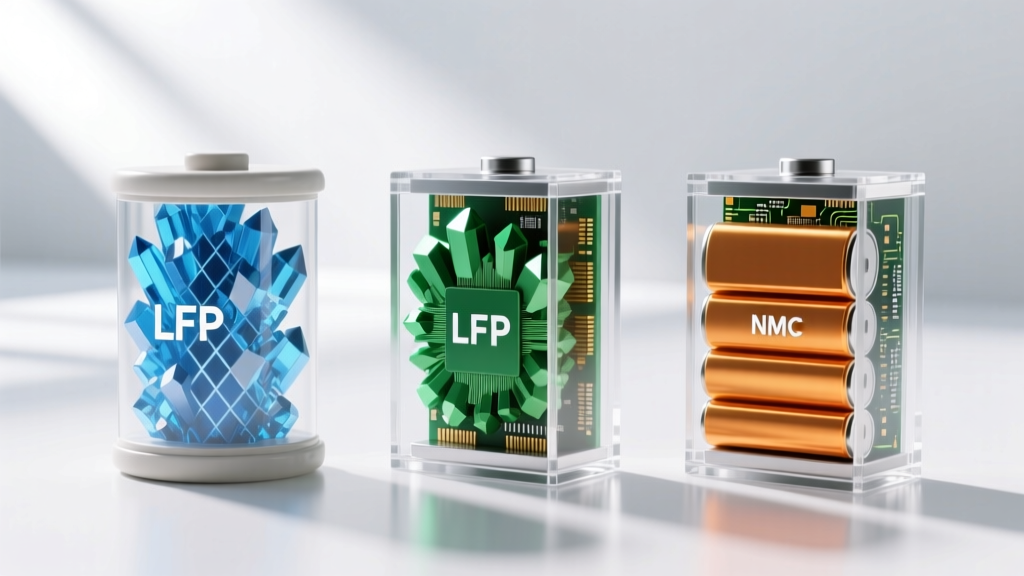
| Attribute | NMC/NCA | LFP | Sodium-Ion (Na-ion) |
|---|---|---|---|
| Energy Density (cell-level) | 250–300 Wh/kg | 160–200 Wh/kg | 140–170 Wh/kg (announced) |
| Typical Cycle Life | 1,000–2,000 cycles | 3,000–5,000+ cycles | 2,000–4,000 cycles (lab data) |
| Cold Performance (−20°C retention) | ~70–75% | ~60–65% | ~85–90% (CATL 1st-gen data) |
| Raw Material Cost Pressure | High (Ni, Co) | Moderate (Li, Fe, P) | Low (Na, Fe, Mn — no lithium) |
| Current EV Availability (US market) | Widespread | Widespread (Tesla, Ford, Rivian) | Not yet in US-market vehicles |
| Thermal Stability / Safety | Good (requires active management) | Excellent (inherently stable) | Excellent (similar to LFP) |
| Typical Use Case | Long-range, performance EVs | Standard-range, fleet, daily drivers | Budget city EVs, energy storage (announced) |
LFP vs NMC/NCA: Trade-Offs Every EV Buyer Should Know
The two dominant lithium-ion chemistries in today's EVs each serve distinct buyer profiles. Understanding the trade-offs is essential before we assess where sodium-ion fits.
NMC/NCA: Maximum Range, Higher Cost
NMC (nickel manganese cobalt) and NCA (nickel cobalt aluminum) chemistries prioritize energy density. This is why a Tesla Model 3 Long Range (75 kWh usable, NMC) achieves an EPA-estimated 341 miles while a similarly sized LFP-equipped Model 3 RWD (57.5 kWh usable) lands at 272 miles. NMC/NCA packs store more energy per kilogram, enabling longer range without adding prohibitive weight.
The trade-offs: cobalt and nickel are expensive and subject to supply-chain volatility. NMC cells also degrade faster than LFP under high-temperature and high-state-of-charge conditions, and they carry a slightly higher thermal runaway risk, requiring more robust battery management systems.
LFP: Longevity Champion, Daily-Driver Workhorse
LFP sacrifices energy density for cycle life and safety. LFP cells routinely exceed 3,000 full charge cycles before reaching 80% capacity — roughly double or triple NMC. They're also inherently more thermally stable, meaning less cooling infrastructure and lower fire risk.
Real-world impact: if you drive 12,000 miles per year in an LFP-equipped EV with a 250-mile range, you'd need about 48 full cycles per year. At 3,000+ cycle life, that's 60+ years of theoretical use — far exceeding the vehicle's structural lifespan. LFP is why Tesla, Ford, and Rivian confidently offer extended battery warranties on standard-range trims.
The downside: LFP's lower energy density means heavier packs for equivalent range, and LFP cells lose more capacity in extreme cold (often 35–40% range reduction at −20°C / −4°F) compared to NMC.
Where Sodium-Ion Batteries Fit In
Sodium-ion batteries replace lithium with sodium in the cathode structure, using abundant, inexpensive materials (sodium carbonate costs a fraction of lithium carbonate). First-generation sodium-ion cells from CATL and HiNA Battery have demonstrated:
- Energy density of 140–170 Wh/kg at the cell level — below LFP, significantly below NMC
- Cold-weather capacity retention above 85% at −20°C, outperforming both LFP and NMC
- 2,000–4,000 cycle life in laboratory testing
- 10-minute fast-charge to 80% capability (CATL first-gen claim, peak conditions)
The practical implication: sodium-ion is best suited for affordable, shorter-range EVs — think 150–220 mile city commuters — where low pack cost matters more than maximizing range. CATL has also developed hybrid LFP/sodium-ion packs (AB battery architecture) that interleave chemistries within a single pack to balance cost, range, and cold performance.
US market status as of 2026: No sodium-ion EVs are currently sold in the United States. BYD's Seagull and Changan's Lumin, which use sodium-ion packs in China, have not been imported. Sodium-ion's US arrival will likely come through energy storage systems first, with automotive applications following if and when OEMs localize production to meet IRS §30D critical-mineral sourcing requirements for the federal EV tax credit.
How Long Do EV Batteries Actually Last?
The fear of a $20,000 battery replacement at 100,000 miles persists, but real-world degradation data tells a different story.
Observed Degradation: Real Fleet Data
Based on aggregated fleet data from Recurrent Auto, Geotab, and manufacturer-reported figures:
| Mileage | NMC Avg. Capacity Retention | LFP Avg. Capacity Retention |
|---|---|---|
| 25,000 mi | 95–97% | 97–99% |
| 50,000 mi | 91–94% | 95–98% |
| 100,000 mi | 85–90% | 92–96% |
| 150,000 mi | 80–87% | 89–94% |
| 200,000 mi | 75–83% | 86–92% |
Note: Degradation is non-linear — most loss occurs in the first 10,000–20,000 miles, then the curve flattens significantly. Individual results vary with climate, charging habits, and thermal management quality.
Most modern EV batteries will outlast the vehicle's body, suspension, and interior. The 80% capacity threshold — the point at which manufacturers consider a battery "degraded" under warranty — typically isn't reached until 150,000–200,000+ miles for LFP and 120,000–180,000 miles for NMC under normal use.
What Does the Battery Warranty Actually Cover?
Federal law mandates a minimum 8-year / 100,000-mile battery warranty for EVs sold in the US (10 years / 150,000 miles in California and states adopting CARB standards). But the details matter.
| Manufacturer | Duration | Mileage | Capacity Threshold | Notes |
|---|---|---|---|---|
| Tesla (Model 3/Y LFP) | 8 years | 120,000 mi | 70% retention | LFP packs expected to exceed threshold by wide margin |
| Tesla (Model 3/Y Long Range NMC) | 8 years | 120,000 mi | 70% retention | Includes drive unit coverage |
| Hyundai / Kia (E-GMP) | 10 years | 100,000 mi | 70% retention | Among the longest duration in the industry |
| Ford (Mach-E, F-150 Lightning) | 8 years | 100,000 mi | 70% retention | Covers battery and electric powertrain components |
| Rivian (R1T/R1S) | 8 years | 175,000 mi | 70% retention | Highest mileage threshold among major OEMs |
| GM (Ultium-based) | 8 years | 100,000 mi | 70% retention | Includes Ultium battery and propulsion components |
What's covered: Capacity loss below the stated threshold, manufacturing defects, and cell/module failures. Some warranties also cover the battery management system (BMS) and related power electronics.
What's typically excluded: Damage from accidents, flooding, unauthorized modifications, or use outside normal operating parameters. Gradual capacity loss above the threshold (e.g., dropping from 100% to 75%) is considered normal wear and is not warrantable.
EV Battery Replacement Cost: What to Expect
Out-of-warranty battery replacement is the specter haunting prospective EV buyers. Here's the reality:
| Vehicle | Battery Size | Chemistry | Replacement Cost (Parts + Labor) | Typical Need Timeline |
|---|---|---|---|---|
| Tesla Model 3 RWD | 57.5 kWh | LFP | $12,000–$15,000 | 200,000+ mi (if ever) |
| Tesla Model Y Long Range | 75 kWh | NMC | $14,000–$18,000 | 150,000–200,000 mi |
| Hyundai Ioniq 5 | 77.4 kWh | NMC | $14,000–$17,000 | 150,000–200,000 mi |
| Ford F-150 Lightning Ext. Range | 131 kWh | NMC | $22,000–$28,000 | 150,000+ mi |
| Chevrolet Bolt EV/EUV | 65 kWh | NMC | $13,000–$16,000 | 150,000–200,000 mi |
Critical context: The vast majority of EV owners will never need a full battery replacement. By the time degradation reaches the point where range becomes impractical (below 70% capacity), the vehicle is typically 12–15+ years old and has depreciated to a fraction of its original value. Most batteries are recycled or repurposed for stationary storage. Module-level repairs (replacing individual degraded modules rather than the entire pack) are also increasingly available at $2,000–$5,000, depending on the vehicle.
Additionally, pack costs continue to decline. BloombergNEF reports average lithium-ion pack prices fell below $130/kWh in 2025, and sodium-ion packs are projected to hit $80–$100/kWh at scale — meaning future replacements will cost significantly less than today's estimates.
Factors That Accelerate (or Preserve) Battery Health
Battery degradation isn't random — it's driven by specific, controllable factors.
Battery Care Best Practices
- Avoid sustained 100% SoC: For NMC/NCA, charge to 80% daily and reserve 100% for road trips. LFP can tolerate regular 100% charges (and manufacturers like Tesla recommend periodic full charges for LFP BMS calibration).
- Minimize DC fast charging when possible: Frequent use of 150+ kW DCFC accelerates degradation due to heat and high C-rates. Home Level 2 (7–11 kW) is gentler. Occasional fast charging is fine — daily fast charging is what causes measurable harm.
- Precondition before fast charging: Most modern EVs do this automatically when you navigate to a charger. Preconditioning warms the battery to the optimal 30–40°C window, enabling faster charging and reducing lithium plating risk in cold weather.
- Park in moderate temperatures: Prolonged exposure to extreme heat (above 95°F / 35°C) accelerates calendar degradation more than any charging habit. A shaded or garaged parking spot matters.
- Don't store at extreme SoC: If leaving your EV unused for weeks, set the charge limit to 50–60%. Storing at 100% or below 10% for extended periods stresses the cells.
- Use regenerative braking moderately in cold weather: Some EVs limit regen when the battery is cold to prevent lithium plating — follow the vehicle's cues rather than overriding them.
How to Monitor Your Battery's State of Health
State of Health (SoH) is the percentage of your battery's original capacity that remains usable. Here's how to check it:
Built-In Vehicle Tools
- Tesla: The Service menu (accessible via the app or in-car diagnostics) shows estimated range at 100% SoC, which you can compare to the original EPA figure to approximate SoH.
- Hyundai/Kia: The EV dashboard in the infotainment system displays battery health metrics including estimated capacity.
- Ford: The FordPass app provides battery health indicators and range projections.
- GM (Ultium): The myChevrolet/myCadillac app includes battery condition monitoring.
Third-Party Diagnostics
- OBD-II scanners with EV support: Tools like the OBDeleven or Carly can read BMS-reported SoH on many models.
- Recurrent Auto: A free service that connects to your EV's telematics and provides detailed degradation tracking, fleet comparisons, and range projections over time.
- Dealer diagnostic reports: Request a battery health printout during scheduled service — this is the most authoritative source and is required for warranty claims.
Emerging Battery Technologies: What's Next
Beyond sodium-ion, several next-generation chemistries are in development. None are available in production US-market EVs as of 2026, but they're worth tracking:
Solid-State Batteries
Solid-state cells replace the liquid electrolyte with a solid conductor, promising energy densities of 400–500 Wh/kg, faster charging, and improved safety. Toyota, QuantumScape, and Samsung SDI have demonstrated prototypes, but mass production at automotive scale remains the primary bottleneck. Realistic timeline: limited production in premium vehicles by 2028–2030, broad availability not before 2032.
Silicon Anode Enhancements
Replacing graphite anodes with silicon can boost energy density by 20–40%. Sila Nanotechnologies and Group14 are supplying silicon-dominant anode materials to OEMs, with initial deployments in the Mercedes G-Class EV (2025). Expect this technology to spread across premium EVs through 2027–2028 as costs scale down.
Lithium-Sulfur (Li-S)
Li-S offers theoretical energy densities above 500 Wh/kg using cheap, abundant sulfur. However, cycle life remains the unsolved challenge — current prototypes degrade rapidly after 100–200 cycles. Realistic timeline: niche aerospace applications first; automotive use unlikely before 2033+.
Which Battery Chemistry Should You Choose?
The Practical Decision Framework
Choose NMC/NCA if: You need maximum range (300+ miles EPA), regularly take road trips, live in a moderate climate, and prioritize performance. You accept slightly faster degradation and higher pack cost.
Choose LFP if: You drive a daily commute under 200 miles, want maximum battery longevity, charge primarily at home on Level 2, and value lower cost. You accept reduced cold-weather range and a heavier pack.
Wait for sodium-ion if: You're shopping for an ultra-affordable city EV (sub-$25,000), live in a cold climate where LFP's winter losses frustrate you, and don't need more than 180–220 miles of range. Understand that US-market sodium-ion vehicles are not yet available and may take 2–4 years to arrive.
Frequently Asked Questions
How long do EV batteries last in years and miles?
Most modern EV batteries retain 80–90% capacity at 150,000 miles. In terms of years, 12–20 years is typical before degradation becomes practically limiting. LFP chemistries consistently outlast NMC in both metrics. Very few EVs have required full battery replacements under normal ownership.
How much does it cost to replace an EV battery?
Out-of-warranty replacement costs range from approximately $12,000 for a 57 kWh LFP pack (Tesla Model 3 RWD) to $28,000 for a 131 kWh NMC pack (F-150 Lightning Extended Range). Most owners never pay this — batteries typically outlive the vehicle. Module-level repairs are available for $2,000–$5,000. Costs are declining as pack prices fall.
What does the EV battery warranty cover?
Federal minimum is 8 years / 100,000 miles (10/150,000 in CARB states). Coverage applies when capacity drops below a stated threshold — typically 70% of original capacity. Manufacturing defects and cell failures are included. Damage from accidents, flooding, or misuse is excluded. Check your specific manufacturer's terms, as mileage limits and thresholds vary.
How do I check my EV battery's State of Health?
Use your vehicle's built-in battery health display (available in Tesla, Hyundai, Ford, and GM EVs), connect a compatible OBD-II scanner, subscribe to a service like Recurrent Auto for continuous monitoring, or request a dealer diagnostic report. Compare your current range at 100% SoC to the original EPA estimate for a quick SoH approximation.
Is LFP or NMC better for my EV?
Neither is universally better — they serve different needs. LFP wins on longevity (3,000–5,000 cycles vs 1,000–2,000), safety, and cost. NMC wins on energy density (250–300 Wh/kg vs 160–200), enabling longer range in a lighter pack. If you drive under 200 miles daily and charge at home, LFP is the pragmatic choice. If you need 300+ miles and road-trip frequently, NMC is the better fit.
Will sodium-ion batteries come to the US market?
Likely, but not immediately. Sodium-ion EVs are currently sold in China (BYD Seagull, Changan Lumin). US arrival depends on OEMs establishing local supply chains that can meet federal battery-sourcing requirements for tax credit eligibility. Expect initial US sodium-ion applications in stationary energy storage (2026–2027), with automotive use potentially arriving by 2028–2030 if cost advantages hold.