Search for "super battery" in EV circles and you'll find a tangle of promises: million-mile cells, solid-state breakthroughs, silicon anodes that double range overnight. Some of these technologies are real and already in production vehicles. Others remain in the lab or pilot phase. As an EV owner and analyst who tracks battery supply chains and real-world degradation data, I'll separate what's on your showroom floor today from what's genuinely coming — and give you the exact numbers you need to make smart decisions about the battery pack sitting under your car right now.
What People Mean by "Super Battery" — And What Actually Exists
The term "super battery" isn't a technical designation. It's a catch-all used in media and marketing to describe any significant leap in energy density, charging speed, cycle life, or cost reduction over conventional lithium-ion cells. In practice, three technologies are most often lumped under this label:
- Solid-state batteries — replacing the liquid electrolyte with a solid material for higher energy density and faster charging
- Silicon-dominant anodes — swapping graphite anodes for silicon to store more lithium ions per unit mass
- Advanced LFP (lithium iron phosphate) — improved cathode formulations that close the energy-density gap with NMC while retaining cost and longevity advantages
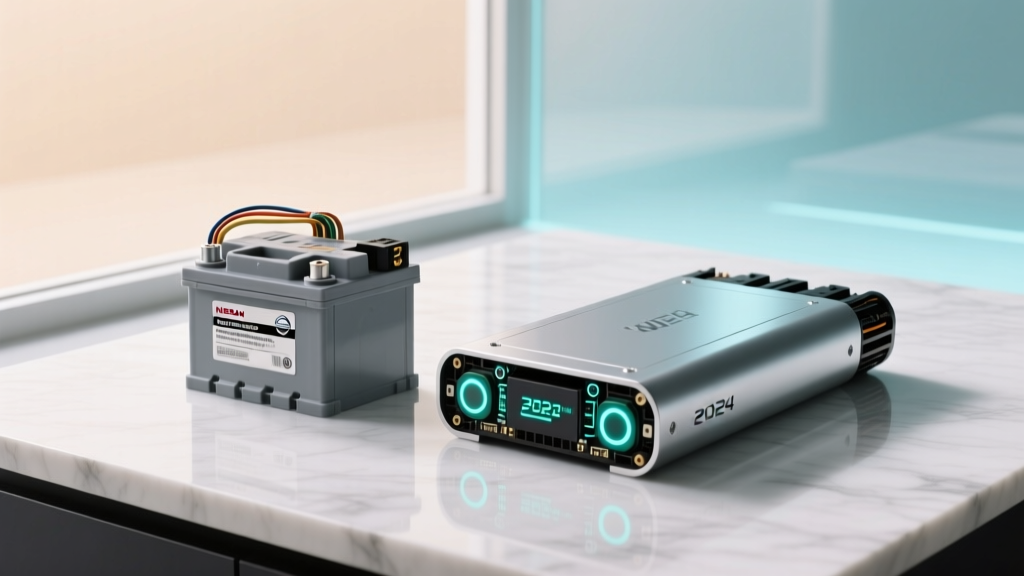
Of these, advanced LFP is the only one broadly available in 2026 production vehicles sold in the U.S. Solid-state cells are in limited production in China and Japan (notably by Nissan's pilot line and CATL's condensed-matter cells), but no solid-state EV is currently on sale at U.S. dealerships. Silicon-anode cells from companies like Sila Nanotechnologies and Group14 are entering production in small volumes, primarily for premium applications.
- 2026–2027: Silicon-anode cells in limited premium EV production (announced by Mercedes-Benz for the G-Class electric)
- 2028–2030: First solid-state EVs expected from Toyota, Nissan, and Samsung SDI — initially in high-end, low-volume models
- 2030+: Potential mass-market solid-state availability, pending manufacturing scale-up
All timelines are manufacturer-announced estimates and subject to delay.
For now, the battery decision that matters to actual buyers is the one already in production: LFP versus NMC/NCA. Let's break down exactly what each offers.
LFP vs NMC/NCA: The Chemistry Comparison That Matters Today
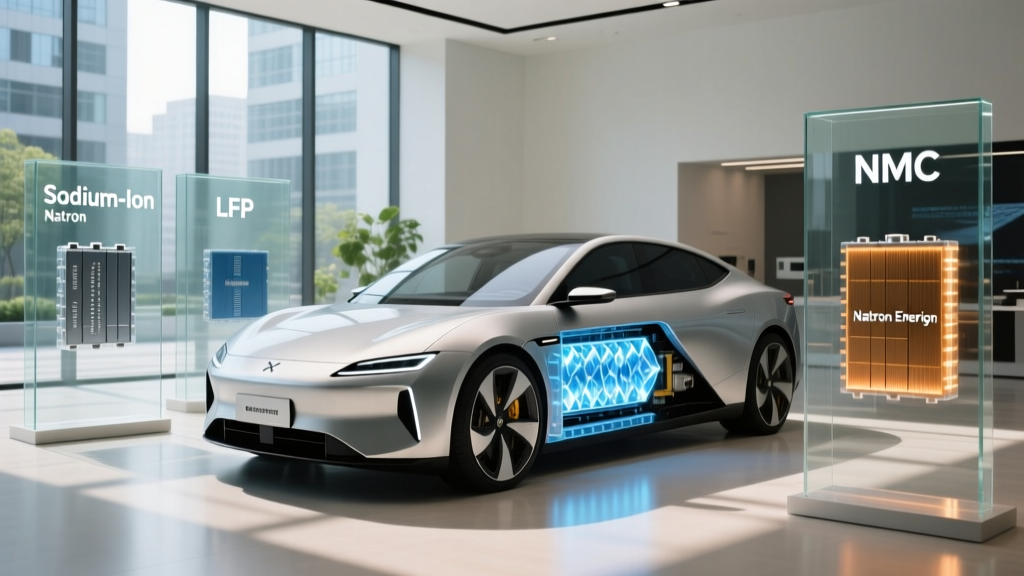
Every EV battery pack uses lithium-ion cells, but the cathode chemistry determines the pack's cost, energy density, longevity, and thermal behavior. The two dominant chemistries in 2026 U.S.-market EVs are:
- NMC (Nickel Manganese Cobalt) and NCA (Nickel Cobalt Aluminum) — used in most long-range and performance EVs
- LFP (Lithium Iron Phosphate) — used in standard-range and cost-optimized models
| Attribute | LFP (LiFePO₄) | NMC / NCA |
|---|---|---|
| Energy Density (cell-level) | ~160–180 Wh/kg | ~230–300 Wh/kg |
| Cycle Life | 3,000–5,000+ cycles to 80% SoH | 1,000–2,500 cycles to 80% SoH |
| Cold-Weather Performance | More range loss below freezing (~35–40% at 20°F) | Better cold performance (~25–30% loss at 20°F) |
| Thermal Stability | Excellent — less prone to thermal runaway | Good — requires more active thermal management |
| Cost (per kWh, pack-level) | ~$90–$110 | ~$120–$150 |
| Recommended Daily SoC | Can charge to 100% regularly | Best kept at 80% for daily use |
| Cobalt Content | None | Contains cobalt (supply-chain/ethical concerns) |
| Typical Use Case | Standard-range trims, fleet, high-mileage drivers | Long-range, performance, cold-climate drivers |
Which is better? It depends entirely on your use case. If you drive 200+ miles daily, live in a cold climate, or want maximum range from a single charge, NMC/NCA delivers the energy density you need. If you commute 40 miles round-trip, charge at home nightly, and want a pack that will outlast the car's body, LFP's superior cycle life and 100% daily charging tolerance make it the pragmatic choice. Tesla's Model 3 Standard Range, the base Chevrolet Equinox EV, and several BYD models (where available) use LFP; most long-range trims from Hyundai, Kia, Ford, BMW, and Rivian use NMC or NCA variants.
Real EV Battery Degradation: What the Data Shows
Battery degradation — the gradual loss of usable capacity over time and charge cycles — is the single biggest concern among prospective EV buyers. Fortunately, real-world data from high-mileage fleets and long-term owners paints a reassuring picture for modern packs.
- Tesla 2025 Impact Report: Model 3/Y packs retain ~88% capacity at 200,000 miles — averaging roughly 6% loss per 100,000 miles
- Geotab fleet study (10,000+ EVs): Average degradation rate of 1.8% per year across all brands, with most packs at ~87% SoH after 7 years
- Taxi/ride-share data (high-cycle use): Tesla Model 3 LFP packs showing ~85% SoH after 300,000 miles in warm climates; NMC packs at ~80% SoH at similar mileage
- Nissan Leaf (passive-cooled, older-gen): Higher degradation rates of 3–5% per year in hot climates — a cautionary example of why active thermal management matters
The degradation curve is not linear. Most packs experience a steeper drop in the first 1–2 years (roughly 3–5% as the cell chemistry stabilizes), then settle into a slow, linear decline of about 1–2% per year thereafter. This means a typical 2026 EV with an EPA range of 300 miles will likely deliver ~275–285 miles of range after 5 years and ~260–270 miles after 10 years — well within usable territory for most drivers.
What accelerates degradation? The data consistently points to three factors:
- Frequent DC fast charging to high SoC — daily 150+ kW sessions to 100% stress cells more than Level 2 charging to 80%
- Sustained high temperatures — packs in Phoenix or Dubai degrade faster than those in Portland or Minneapolis (cold is hard on range, but heat is hard on longevity)
- Prolonged storage at extreme SoC — leaving a pack at 100% or below 10% for weeks accelerates calendar aging
Battery Warranty Terms: What Manufacturers Guarantee
Federal law mandates a minimum 8-year/100,000-mile warranty on EV battery packs (with 10 years/150,000 miles required in CARB states like California, New York, and Massachusetts). Most manufacturers meet or exceed this baseline. Here's how major brands structure coverage:
| Manufacturer | Warranty Period | Mileage Cap | Capacity Retention Threshold |
|---|---|---|---|
| Tesla (Model 3/Y LFP) | 8 years | 120,000 miles | 70% |
| Tesla (Model S/X) | 8 years | 150,000 miles | 70% |
| Hyundai / Kia | 10 years | 100,000 miles | 70% |
| Ford (Mustang Mach-E) | 8 years | 100,000 miles | 70% |
| BMW (iX, i4) | 8 years | 100,000 miles | 70% |
| Rivian (R1T/R1S) | 8 years | 175,000 miles | 70% |
| GM (Ultium-based) | 8 years | 100,000 miles | 70% |
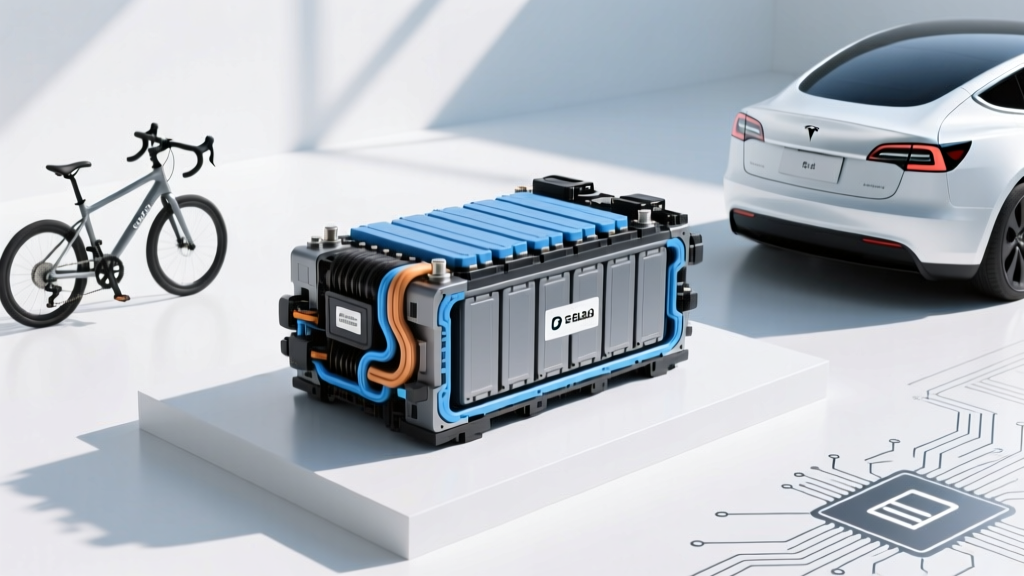
What "70% capacity retention" means in practice: If your 75 kWh pack degrades to below 52.5 kWh of usable capacity within the warranty period, the manufacturer is obligated to repair or replace it — typically by swapping in a refurbished pack that meets the threshold. Complete replacements are rare; most warranty claims involve replacing individual modules (a pack contains 4–12 modules depending on the platform).
Read the fine print: some warranties exclude degradation from repeated DC fast charging above a specified frequency, and nearly all require you to follow the manufacturer's recommended charging practices (e.g., not routinely charging NMC packs to 100% overnight). Documentation matters — keep charging logs if you anticipate a claim.
EV Battery Replacement Cost: The Numbers
This is where fear-mongering runs rampant, so let's anchor the discussion in actual data. Full battery pack replacement is uncommon — most EVs are scrapped or traded in before the pack requires it. But if you do face an out-of-warranty replacement, here's the current cost landscape:
| Vehicle / Pack Size | Battery Capacity | Estimated Pack Cost | Labor + Total |
|---|---|---|---|
| Tesla Model 3 Standard Range | 60 kWh (LFP) | $7,000–$9,000 | $9,000–$12,000 |
| Tesla Model Y Long Range | 82 kWh (NMC) | $11,000–$14,000 | $14,000–$18,000 |
| Hyundai Ioniq 5 | 77.4 kWh (NMC) | $10,000–$13,000 | $13,000–$17,000 |
| Ford F-150 Lightning Extended | 131 kWh (NMC) | $18,000–$25,000 | $22,000–$30,000 |
| Chevrolet Equinox EV | 85 kWh (NMC) | $10,000–$14,000 | $13,000–$18,000 |
| Rivian R1T (Large Pack) | 149 kWh (NMC) | $20,000–$28,000 | $25,000–$35,000 |
Context that matters: Pack costs have fallen from ~$200/kWh in 2020 to roughly $130–$150/kWh in 2026 at the replacement level (new-production packs for OEMs are lower, around $100–$120/kWh, but replacement pricing includes markup, logistics, and compatibility). More importantly, module-level repair — replacing 1 or 2 degraded modules rather than the full pack — typically costs $2,000–$5,000 and resolves most out-of-warranty degradation issues.
The likelihood of needing a full replacement during typical ownership (8–12 years, 100,000–150,000 miles) is low. Geotab's longitudinal fleet data shows that less than 2% of EVs required any battery warranty claim over a 7-year study period, and the vast majority of those were module replacements, not full pack swaps.
How to Check and Maximize Your EV Battery Health
Modern EVs provide tools for monitoring battery State of Health (SoH) — the percentage of original capacity remaining. Here's how to access and interpret the data:
Checking SoH
- In-vehicle displays: Tesla, Hyundai/Kia, and BMW include battery health readouts in the service or diagnostics menu. Tesla owners can access a SoH estimate via the "Service → Battery Health" path or through the Tesla app.
- OBD-II diagnostic tools: Third-party apps like Leaf Spy (Nissan), OBDeleven (VW/Audi/Porsche), and Scan My Tesla pull raw BMS (Battery Management System) data, including individual cell voltages and precise SoH.
- Dealer diagnostic reports: Request a battery health report during service visits — this creates a paper trail useful for warranty claims or resale.
- Third-party services: Companies like Recurrent Auto offer free battery health reports by connecting to your vehicle's telematics data, comparing your degradation to a fleet of identical models.
Battery Care Checklist for Maximum Longevity
- Set daily charge limit to 80% for NMC/NCA packs; 100% is fine for LFP daily use
- Use DC fast charging strategically — for road trips, not as your daily routine. Level 2 home charging at 7–11 kW is gentler on cells
- Precondition the battery before fast charging in cold weather (most EVs do this automatically when you navigate to a charger)
- Avoid prolonged storage below 20% or above 80% SoC — if leaving for a vacation, set the charge limit to ~50%
- Park in shade or a garage during extreme heat — sustained pack temperatures above 95°F accelerate calendar aging
- Don't obsess over occasional 100% charges — a full charge before a road trip is fine; it's daily 100% saturation that causes harm
- Keep tires properly inflated and alignment checked — higher rolling resistance forces the pack to work harder, generating more heat per mile
What's Coming: Solid-State, Silicon Anodes, and the Next Generation
The "super battery" promise isn't vapor — it's just slower than headlines suggest. Here's where next-generation technologies actually stand:
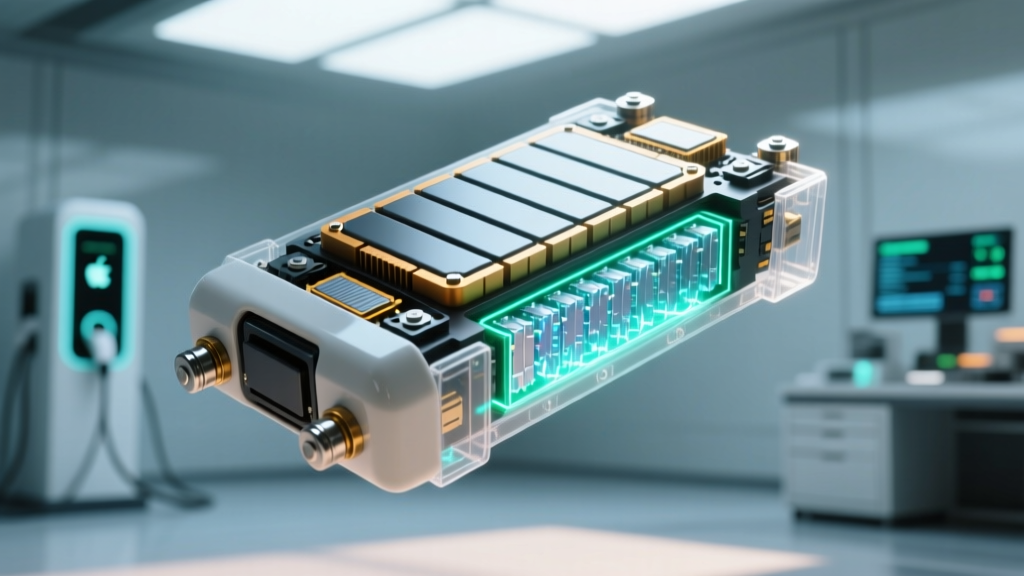
Solid-state batteries replace the flammable liquid electrolyte with a solid ceramic, polymer, or sulfide material. The theoretical advantages are substantial: 40–50% higher energy density (enabling 500+ mile ranges in existing vehicle platforms), 10–15 minute fast charging, and improved safety. Toyota has announced a solid-state EV for 2027–2028, and Samsung SDI is targeting 2027 production. The manufacturing challenge is immense — producing solid electrolyte layers at scale with consistent quality remains unsolved for automotive volumes. Expect initial applications in $80,000+ vehicles before any mass-market trickle-down.
Silicon-dominant anodes are closer to reality. Companies like Sila Nanotechnologies (partnered with Mercedes-Benz and Panasonic) and Group14 (partnered with Porsche and battery manufacturer Farasis) are producing silicon-carbon composite anode materials that boost cell-level energy density by 15–25% over graphite. The Mercedes G-Class electric (announced for 2025–2026 production) is among the first vehicles expected to use silicon-anode cells. The trade-off: silicon anodes expand significantly during charging (up to 300% volume change), requiring engineered composite structures that add cost.
Sodium-ion batteries are an emerging wildcard. CATL has begun mass production of sodium-ion cells in China, offering lower cost and excellent cold-weather performance at the expense of energy density (~140 Wh/kg). These are likely headed for budget EVs and stationary storage before appearing in U.S.-market vehicles.
Frequently Asked Questions
How long do EV batteries last in years and miles?
Based on fleet data from Geotab and manufacturer reports, modern EV batteries with active thermal management typically last 15–20 years or 200,000–300,000 miles before degrading below 70% capacity. Many packs outlast the vehicle's body, suspension, and electronics. The Nissan Leaf (which lacked active cooling in earlier generations) was the notable exception, with accelerated degradation in hot climates — a problem largely solved across the industry by liquid-cooled packs.
How much does an EV battery cost to replace?
Full pack replacement ranges from roughly $9,000–$12,000 for a 60 kWh LFP pack (Tesla Model 3 Standard Range) to $25,000–$35,000 for a 149 kWh pack (Rivian R1T Large). However, most out-of-warranty issues involve individual module failures costing $2,000–$5,000 to repair. Pack costs continue to decline ~8–12% annually, meaning a replacement in 2032 will cost significantly less than today's prices.
What does the EV battery warranty actually cover?
Federally mandated minimum coverage is 8 years/100,000 miles (10/150,000 in CARB states). The warranty guarantees the pack will retain at least 70% of its original capacity. If it falls below that threshold, the manufacturer repairs or replaces it at no cost. Coverage typically includes defects, premature degradation, and BMS failures — but may exclude damage from accidents, flooding, or unauthorized modifications. Always read your specific warranty booklet.
How do I check my EV battery's State of Health?
Most 2026 EVs include a battery health readout in the infotainment or service menu. For more granular data, OBD-II tools like OBDeleven or Scan My Tesla pull raw BMS data including cell-level voltages and precise SoH percentages. Services like Recurrent Auto provide free comparative reports by connecting to your vehicle's cloud data. A dealer diagnostic scan during routine service is the most authoritative option and creates documentation for potential warranty claims.
LFP vs NMC — which battery chemistry should I choose?
Choose LFP if: you drive under 200 miles daily, charge primarily at home, want maximum cycle life (3,000–5,000+ cycles), prefer the simplicity of charging to 100% daily, and live in a mild-to-warm climate. Choose NMC/NCA if: you need maximum range per charge (300+ miles), frequently drive in sub-freezing temperatures, take regular road trips where energy density matters, or want the fastest DC charging speeds. Neither chemistry is universally "better" — the right choice maps to your driving pattern and climate.
Does frequent DC fast charging damage the battery?
Exclusively relying on DC fast charging (150+ kW) accelerates degradation modestly — studies show roughly 0.5–1% additional capacity loss per year compared to Level 2-only charging. For most owners who fast-charge on road trips and use Level 2 at home, the impact is negligible. The bigger risk is frequent fast-charging to 100% SoC combined with high ambient temperatures. If DC fast charging is your only option, setting an 80% charge limit and preconditioning the pack mitigates most of the added stress.