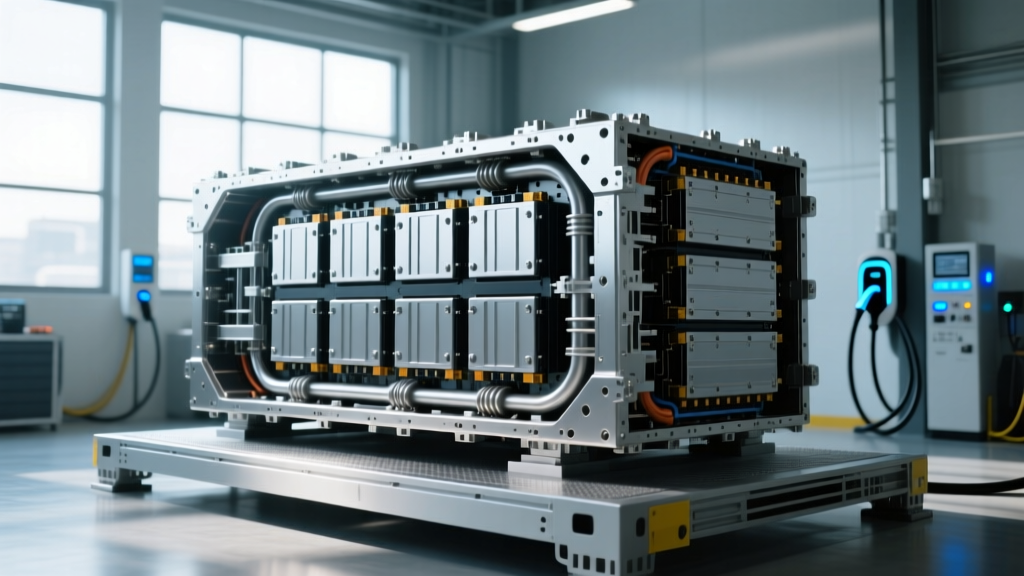
When people ask how much does a semi truck battery weigh, they are usually reacting to the sheer scale of electrifying a Class 8 tractor. The short answer: a current-production electric semi truck battery pack weighs between 8,000 and 15,000 pounds (roughly 3,600 to 6,800 kg), depending on pack capacity and chemistry. That is 100 to 200 times heavier than a passenger EV battery — and it highlights why battery energy density remains the single most important engineering constraint in the EV industry.
But weight is only one dimension of the battery conversation. Whether you are spec'ing a Tesla Semi, a Freightliner eCascadia, or a 2026 Hyundai Ioniq 5 for your driveway, the same physics apply: chemistry determines energy density, cycle life determines longevity, and thermal management determines real-world usability. This guide walks through every layer of EV battery technology in 2026 — from the cell chemistry inside a 60 kWh compact crossover to the 900 kWh packs hauling freight on Interstate 5.
How Much Does an EV Battery Weigh? From Cars to Class 8 Semis
Battery weight scales almost linearly with energy capacity, and energy capacity scales with vehicle mass and intended range. Here is how the numbers stack up across vehicle classes in 2026:
| Vehicle Class | Example Model | Pack Capacity (kWh) | Chemistry | Pack Weight (lbs) |
|---|---|---|---|---|
| Compact Sedan/Crossover | Chevrolet Equinox EV | 85 kWh (usable) | NMC | ~950 |
| Midsize Crossover | Tesla Model Y (Long Range) | 75 kWh (usable) | NMC / LFP (Standard) | ~1,060 (NMC) / ~1,200 (LFP) |
| Full-Size Pickup | Ford F-150 Lightning (Ext. Range) | 131 kWh (usable) | NMC | ~1,800 |
| Class 4–6 Box Truck | Ford E-Transit (not a semi, but commercial) | 68 kWh (usable) | NMC | ~900 |
| Class 8 Day-Cab Semi | Freightliner eCascadia | 291–475 kWh | NMC | ~5,500–8,500 |
| Class 8 Sleeper/Semi (Long Haul) | Tesla Semi (announced 500-mi variant) | ~900 kWh (est.) | NMC (4680 cells) | ~12,000–15,000 (est.) |
For context on why weight matters commercially: every pound of battery is a pound less payload. Federal bridge-law weight limits cap gross vehicle weight at 80,000 lbs (with some state exemptions for EVs adding 2,000 lbs). A 12,000-lb battery pack directly reduces revenue-generating freight capacity, which is why the trucking industry is watching energy-density improvements so closely.
Battery Chemistry in 2026: LFP vs NMC vs NCA
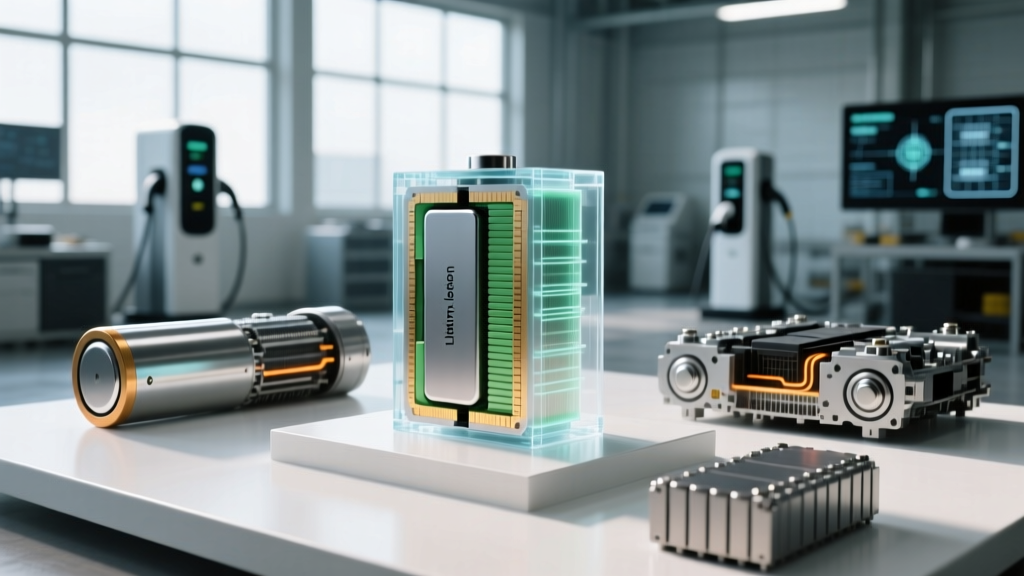
Every EV battery sold in 2026 uses one of three dominant lithium-ion cathode chemistries. The choice between them is a series of engineering trade-offs — there is no universally "best" option.
| Attribute | LFP (Lithium Iron Phosphate) | NMC (Nickel Manganese Cobalt) | NCA (Nickel Cobalt Aluminum) |
|---|---|---|---|
| Cell-Level Energy Density | 160–200 Wh/kg | 220–270 Wh/kg | 240–280 Wh/kg |
| Cycle Life (to 80% SoH) | 3,000–6,000 cycles | 1,000–2,500 cycles | 800–1,500 cycles |
| Cold-Weather Performance | Moderate (needs preconditioning) | Good | Good |
| Cost per kWh (cell level, 2026) | $70–$90 | $100–$130 | $110–$140 |
| Thermal Stability | Excellent (resists runaway) | Moderate (requires robust BMS) | Lower (requires aggressive cooling) |
| Typical 2026 Applications | Tesla Model 3/Y RWD, Ford Mustang Mach-E Select, commercial vans | Most long-range passenger EVs, Class 8 trucks | Tesla Model S/X, some luxury EVs |
| Cobalt Content | None | Low–moderate | Low |
Which is better — LFP or NMC?
It depends entirely on your use case. If you prioritize longevity, cost, and safety — for example, a daily commuter who charges to 100% every night — LFP is the stronger choice. Its cycle life is 2–4× longer than NMC, it contains no cobalt (eliminating a major supply-chain and ethical concern), and it is inherently more thermally stable. The trade-off is lower energy density, which means either less range or more pack weight.
If you need maximum range per pound — a road-trip-focused family, a long-haul semi truck, or a performance vehicle — NMC (or NCA) remains the default. The higher energy density means a 300+ mile passenger EV or a 400-mile semi is achievable without the pack weight becoming absurd. Just expect a shorter overall cycle life and a requirement to avoid sitting at 100% state of charge (SoC) for extended periods.
For semi trucks specifically, NMC dominates because weight is revenue. Every extra pound of LFP needed to match NMC range is a pound of freight lost. Until solid-state or silicon-anode cells close the energy-density gap, expect all Class 8 electric semis to use NMC-based chemistries.
How Long Do EV Batteries Last? Degradation Data
The fear that EV batteries need replacing every few years is not supported by fleet data. Modern liquid-cooled packs with sophisticated battery management systems (BMS) are lasting far longer than early 2010s EVs.
Here is what real-world degradation data shows across chemistries and mileages, based on aggregated fleet and owner-reported data from sources including Recurrent Auto and manufacturer warranty filings:
| Mileage | LFP Packs (Avg. Capacity Retained) | NMC Packs (Avg. Capacity Retained) | Notes |
|---|---|---|---|
| 30,000 mi / ~2 years | 97–99% | 94–97% | Initial "formation" loss; steepest early curve |
| 60,000 mi / ~4 years | 94–97% | 90–94% | Curve flattens; linear degradation phase |
| 100,000 mi / ~7 years | 90–95% | 85–91% | Most passenger EVs still well above warranty threshold |
| 150,000 mi / ~10 years | 86–92% | 80–87% | NMC packs may approach warranty replacement threshold |
| 200,000+ mi | 82–88% | 75–83% | LFP packs often still viable; NMC more variable |
A few patterns emerge from this data:
- Early degradation is the steepest. Most packs lose 2–5% capacity in the first 20,000–30,000 miles as the solid electrolyte interphase (SEI) layer forms on the anode. This is normal and expected.
- The curve flattens significantly. After the initial drop, degradation proceeds at roughly 0.5–1.5% per year for NMC and 0.3–0.8% for LFP under typical use.
- LFP's cycle-life advantage compounds over time. At 150,000 miles, the gap between LFP and NMC retention is typically 5–8 percentage points.
- Semi truck batteries degrade differently. Heavy-duty packs are designed for higher C-rates (faster discharge under load) and are thermally managed more aggressively, but the higher per-cycle stress means fleet operators should plan for 70–80% retention at ~500,000 miles, which aligns with the typical first-owner lifecycle of a Class 8 tractor.
What Does the Battery Warranty Cover?
Federal law mandates a minimum battery warranty of 8 years / 100,000 miles for all light-duty EVs sold in the United States, covering defects and excessive capacity loss. Many manufacturers exceed this baseline. Here is how major 2026 warranties compare:
| Manufacturer | Warranty Period | Mileage Limit | Capacity Retention Threshold | Chemistry |
|---|---|---|---|---|
| Tesla (Model 3/Y RWD — LFP) | 8 years | 120,000 mi | 70% | LFP |
| Tesla (Model 3/Y LR/Perf — NMC) | 8 years | 120,000 mi | 70% | NMC |
| Hyundai / Kia | 10 years | 100,000 mi | 70% | NMC |
| GM (Ultium-based) | 8 years | 100,000 mi | 70% (60% for Bolt-based) | NMC |
| Ford (F-150 Lightning) | 8 years | 100,000 mi | 70% | NMC |
| BMW / Mercedes (luxury) | 8 years | 100,000 mi | 70% | NMC/NCA |
| Freightliner eCascadia (Class 8) | 5–7 years (varies by contract) | 300,000–500,000 mi | Varies (often 70–75%) | NMC |
What is covered: Cell defects, BMS failures, thermal management system defects, and capacity loss below the stated threshold. If your pack drops below 70% of its original usable capacity within the warranty period, the manufacturer must repair or replace it — typically by swapping in a refurbished pack with equivalent capacity.
What is NOT covered: Damage from accidents, flooding, unauthorized modifications, or failure to follow maintenance guidelines (such as ignoring coolant service intervals). Also, gradual capacity loss above the threshold is considered normal wear — a pack at 72% capacity at year 7 is not a warranty claim.
How Much Does It Cost to Replace an EV Battery?
Battery replacement cost is the single most cited fear among prospective EV buyers. The numbers are significant — but context matters enormously.
| Vehicle / Pack Size | Pack Capacity | Out-of-Warranty Replacement Cost | Typical Replacement Trigger |
|---|---|---|---|
| Compact EV (e.g., Chevy Equinox EV) | 85 kWh | $10,000–$14,000 | Below 70% SoH, usually 150k+ mi |
| Midsize crossover (e.g., Tesla Model Y LR) | 75 kWh | $9,000–$13,000 | Below 70% SoH, usually 150k+ mi |
| Full-size pickup (e.g., F-150 Lightning) | 131 kWh | $18,000–$25,000 | Below 70% SoH, usually 150k+ mi |
| Luxury sedan (e.g., Mercedes EQS) | 108 kWh | $20,000–$30,000 | Below 70% SoH, usually 120k+ mi |
| Class 8 Semi (e.g., Freightliner eCascadia) | 475 kWh | $80,000–$150,000 | Below 70% SoH, usually 400k–600k mi |
Important context on these figures:
- Most EV batteries outlive the vehicle. According to data from Recurrent Auto and fueleconomy.gov, fewer than 2% of EVs have required a battery replacement outside of recalls. The vast majority of packs retain 80%+ capacity at 150,000 miles.
- Cell-level costs continue to decline. LFP cells averaged roughly $70–$90/kWh at the cell level in early 2026, down from $130+ in 2022. Pack-level costs (including BMS, cooling, housing) run 30–50% higher, but the trajectory is downward.
- Module-level repair is increasingly common. Many modern packs (especially GM Ultium and Tesla 4680 structural packs) allow individual module replacement rather than a full pack swap. A single failed module might cost $2,000–$5,000 to replace versus $15,000 for a full pack.
- For semi trucks, replacement is a fleet-level business decision. A $120,000 battery replacement on a Class 8 tractor is comparable to an engine overhaul on a diesel — expensive, but planned and budgeted over a 7–10 year depreciation cycle.
Factors That Affect Battery Life (and What You Can Control)
Not all miles are created equal. A battery that lives in Phoenix and charges daily to 100% via DC fast charging will degrade faster than one in Seattle that charges to 80% on Level 2. Here are the primary degradation drivers:
Battery Longevity: What Helps and What Hurts
- State of Charge habits: For NMC packs, keeping daily SoC between 20–80% significantly reduces cathode stress. LFP packs tolerate (and actually benefit from) regular 100% charges — this helps the BMS recalibrate cell balancing.
- DC fast charging frequency: Occasional road-trip fast charging is fine. Daily DCFC sessions at 150+ kW generate sustained heat that accelerates electrolyte decomposition. If you must fast-charge daily, precondition the battery (most EVs do this automatically when you navigate to a charger).
- Extreme temperatures: Sustained exposure to ambient temperatures above 95°F (35°C) accelerates degradation, especially if the pack is at high SoC. Cold weather does not permanently damage the battery, but charging a cold pack without preconditioning can cause lithium plating on the anode — a permanent capacity loss mechanism.
- Depth of Discharge: Shallow cycles (e.g., 40–70% SoC) are gentler than deep cycles (10–95%). For NMC, avoiding regular full discharges extends cycle life.
- Calendar aging: Even a parked EV battery degrades over time. Storing a vehicle at ~50% SoC in a cool environment minimizes calendar aging. Sitting at 100% in a hot garage for weeks is the worst-case scenario.
- Thermal management system maintenance: Most liquid-cooled packs require coolant service at specific intervals (typically every 5 years or 60,000–100,000 miles). Neglecting this can impair cooling and accelerate degradation.
How to Check and Monitor Battery Health (SoH)
State of Health (SoH) is the percentage of original usable capacity your pack currently holds. A new battery is at 100% SoH; a degraded pack at 85% SoH holds 85% of its original energy.
Methods to check SoH in 2026:
- In-vehicle displays: Many 2026 EVs (Tesla, Hyundai/Kia, BMW, Mercedes) now include a battery health indicator in the settings menu, showing SoH as a percentage or a bar graph.
- OBD-II diagnostic tools: Third-party tools like the OBDLink SX paired with apps such as EVNotify or LeafSpy (for Nissan) can read the BMS-reported SoH directly. This is the most accurate consumer-accessible method.
- Manufacturer service centers: A dealer can run a full pack diagnostic that measures individual cell voltages, internal resistance, and total capacity — often provided free under warranty or for a $50–$100 diagnostic fee out of warranty.
- Third-party battery health reports: Services like Recurrent offer battery health reports based on telematics data, which are increasingly used in the used-EV market to certify battery condition at sale time.
- Manual calculation: Charge to a known SoC (e.g., 100%), drive a measured distance, note the kWh consumed from the trip computer, and compare to the pack's rated capacity. If your 75 kWh pack only accepts 64 kWh on a full charge, your SoH is approximately 85%.
For semi truck fleet operators, SoH monitoring is typically integrated into telematics platforms (Geotab, Samsara) that track pack health continuously across hundreds of vehicles, flagging units approaching the 70–75% threshold for proactive replacement planning.
Emerging Battery Technology: Solid-State and Beyond
The next generational leap in battery technology is solid-state cells, which replace the liquid electrolyte with a solid ceramic, polymer, or sulfide-based conductor. The promised benefits are substantial:
- Energy density: 350–500 Wh/kg at the cell level (vs. ~260 Wh/kg for current NMC). For a semi truck, this could cut battery weight by 30–40% — potentially bringing a 500-mile Class 8 pack from ~13,000 lbs down to ~8,000–9,000 lbs.
- Safety: Solid electrolytes are non-flammable, eliminating thermal runaway risk.
- Charge speed: Potential for 10–80% charges in under 10 minutes due to higher tolerance for fast ion transport.
Realistic timeline (2026 perspective): Toyota has announced limited solid-state production for passenger EVs beginning in 2027–2028, initially in low volumes for luxury models. Nissan and Samsung SDI target 2028–2029. For heavy-duty applications like semi trucks, solid-state adoption will likely lag by 3–5 years due to the cost sensitivity of commercial fleets and the need for proven long-term durability data. Do not delay a purchase waiting for solid-state — current NMC and LFP chemistries are mature, well-warranted, and cost-competitive.
Other near-term improvements include silicon-anode cells (used in limited form in the 2026 GMC Hummer EV and Porsche Taycan), which boost energy density by 10–20% by replacing graphite with silicon on the anode. These are already in production and represent incremental but meaningful gains.
Frequently Asked Questions
How much does a Tesla Semi battery weigh?
Tesla has not published an official battery weight for the Semi. However, based on the announced ~500-mile range and an estimated consumption of ~1.7–2.0 kWh/mile under load, the pack likely holds 800–900 kWh of usable energy. At current 4680 NMC cell energy density (~260 Wh/kg at cell level, ~160–180 Wh/kg at pack level including structure and cooling), that translates to an estimated 10,000–13,000 lbs for the battery pack alone. This aligns with Tesla's published curb weight of approximately 26,000 lbs for the Semi tractor, compared to ~17,000–18,000 lbs for a diesel day-cab.
How long do EV batteries last in years and miles?
Based on 2026 fleet data, most modern liquid-cooled EV batteries retain 80–90% of original capacity at 150,000 miles / 10 years. LFP packs tend to last longer — often retaining 85%+ at 200,000 miles. The federal minimum warranty is 8 years / 100,000 miles, with many manufacturers offering 8 years / 120,000 miles (Tesla) or 10 years / 100,000 miles (Hyundai/Kia). In practice, most EV batteries outlive the vehicle they are installed in.
How much does an EV battery cost to replace?
Out-of-warranty replacement costs in 2026 range from roughly $9,000–$14,000 for compact/midsize passenger EVs, $18,000–$30,000 for large pickups and luxury sedans, and $80,000–$150,000 for Class 8 semi trucks. However, actual replacements are rare — fewer than 2% of EVs have required a battery swap outside of recalls, according to industry data. Module-level repairs (replacing individual cell groups rather than the entire pack) are increasingly common and cost $2,000–$5,000.
What does the battery warranty cover?
Federal law requires a minimum 8-year / 100,000-mile warranty on all light-duty EV batteries. This covers manufacturing defects, BMS failures, and capacity loss below a stated threshold (typically 70% of original capacity). It does not cover accident damage, flooding, unauthorized modifications, or normal wear above the threshold. Commercial vehicle warranties (semi trucks) are negotiated per fleet contract and typically run 5–7 years / 300,000–500,000 miles.
LFP vs NMC — which should I choose?
Choose LFP if you prioritize longevity (3,000–6,000 cycles vs. 1,000–2,500), lower cost, cobalt-free sourcing, and don't mind slightly less range per pound. Choose NMC if you need maximum range, frequently road-trip, or are spec'ing a heavy-duty vehicle where pack weight directly impacts payload. For semi trucks, NMC is currently the only viable option due to energy-density requirements.
Does fast charging damage the battery?
Occasional DC fast charging (road trips, a few times per month) has minimal impact on battery life. Daily fast charging at 150+ kW does accelerate degradation due to sustained heat generation. Modern BMS systems mitigate this with active cooling and charge-curve tapering (reducing kW above 80% SoC), but if you have home Level 2 access, daily charging at 7–11 kW is gentler on the pack and significantly cheaper per kWh.