Why Would an EV Owner Disconnect the High-Voltage Battery?
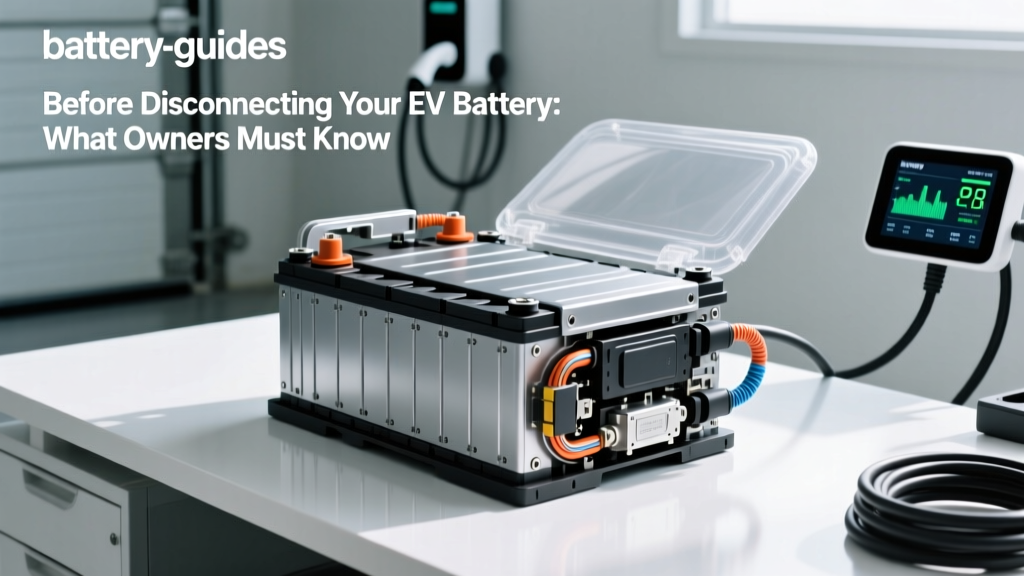
Most EV owners never need to physically disconnect the high-voltage traction battery — the large lithium-ion pack that powers the electric motor. But the question arises in a few real scenarios: long-term storage exceeding several months, major collision repair, aftermarket modifications, or end-of-life decommissioning. Before you touch anything, you need to understand what you're dealing with, because an EV traction battery is fundamentally different from the 12V auxiliary battery under a gas car's hood.
The high-voltage pack in a modern EV operates between 350V and 800V depending on the architecture. A Tesla Model 3 Long Range runs a ~346V nominal system; a Hyundai Ioniq 5 uses an 800V architecture. At these voltages, improper handling can be lethal. This guide covers what you need to know about EV battery chemistry, degradation, warranties, replacement costs, and health monitoring — all critical context if you're considering disconnecting the battery or simply want to maximize its lifespan.
Understanding EV Battery Chemistry: LFP vs NMC vs NCA
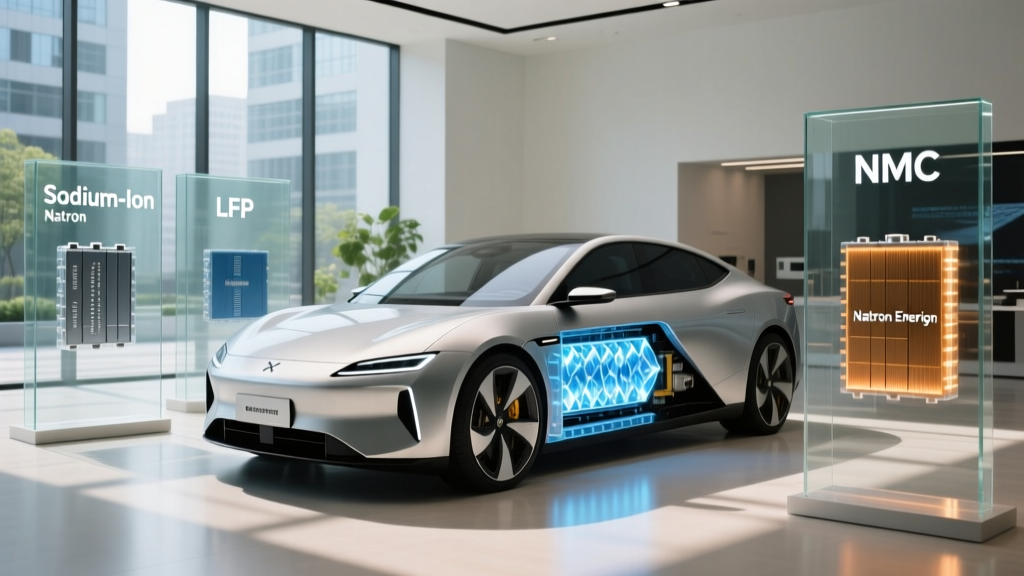
The chemistry inside your EV's battery pack determines its energy density, longevity, cold-weather behavior, and cost. Two dominant chemistries power nearly every EV on the road in 2026:
| Attribute | LFP (Lithium Iron Phosphate) | NMC/NCA (Nickel Manganese Cobalt / Nickel Cobalt Aluminum) |
|---|---|---|
| Energy Density | Lower (~160 Wh/kg cell-level) | Higher (~230–280 Wh/kg cell-level) |
| Cycle Life | 3,000–5,000+ cycles to 80% SoH | 1,000–2,000 cycles to 80% SoH |
| Cold-Weather Performance | Weaker — more range loss below freezing | Better — retains more capacity in cold |
| Charging to 100% Daily | Recommended (helps BMS calibration) | Not recommended (accelerates degradation) |
| Cost per kWh | Lower (~$90–110/kWh pack-level, 2026) | Higher (~$120–150/kWh pack-level, 2026) |
| Thermal Stability | Excellent — less prone to thermal runaway | Good — requires more active thermal management |
| Common Vehicles (2026) | Tesla Model 3 RWD, Model Y RWD, Ford Mustang Mach-E Select SR | Tesla Model 3 LR, Hyundai Ioniq 5, BMW i4, Rivian R1T |
Which is better? It depends on your use case. LFP wins on longevity and cost — ideal for daily commuters who charge at home and don't need maximum range. NMC/NCA wins on energy density and cold-weather usability — better for long-range models and drivers in northern climates. Neither is universally superior; the right choice aligns with your driving pattern.
How Long Do EV Batteries Actually Last?
The fear that EV batteries need replacing every few years is not supported by fleet data. According to analysis published by Geotab across over 10,000 EVs in real-world operation, the average EV battery loses approximately 2.3% of its capacity per year under typical driving conditions. That translates to roughly 88% State of Health (SoH) after five years and around 76–80% after ten years.
- Year 1: ~1–3% loss (initial formation loss)
- Year 3: ~5–8% total loss
- Year 5: ~10–13% total loss
- Year 8: ~15–18% total loss
- Year 10: ~20–24% total loss
- 150,000 miles (Tesla fleet data): ~85–90% SoH typical
Sources: Geotab fleet study, Tesla Impact Reports, Recurrent Auto battery data.
Most modern EV batteries are engineered to outlast the vehicle itself. A battery at 70% SoH still provides substantial range — a car originally rated at 310 EPA miles would still deliver ~217 miles, which covers most daily driving needs. Full replacement is rarely needed before 200,000+ miles under normal conditions.
What Does the Battery Warranty Actually Cover?
Federal regulation mandates that EV battery warranties cover at minimum 8 years or 100,000 miles (whichever comes first). In California Air Resources Board (CARB) states, the requirement extends to 10 years or 150,000 miles. Here's how major manufacturers structure their coverage in 2026:
| Manufacturer | Coverage Period | Capacity Retention Threshold | Notes |
|---|---|---|---|
| Tesla | 8 yr / 120,000 mi (Model 3/Y LR); 8 yr / 100,000 mi (RWD) | 70% minimum SoH | Transferable to subsequent owners |
| Hyundai / Kia | 10 yr / 100,000 mi | 70% minimum SoH | Among the longest coverage |
| Ford | 8 yr / 100,000 mi | 70% minimum SoH | Covers battery and hybrid/EV components |
| BMW | 8 yr / 80,000 mi | 70% minimum SoH | Module-level replacement when possible |
| Rivian | 8 yr / 175,000 mi | 70% minimum SoH | Highest mileage threshold in the segment |
What's covered: Defects in materials/workmanship and capacity loss below the stated threshold. What's not covered: Damage from collisions, flooding, unauthorized modifications (including improper disconnection), or use outside manufacturer guidelines. If you disconnect the battery yourself and cause damage, you will almost certainly void the warranty.
EV Battery Replacement Costs: What to Expect
If your battery does fall below the warranty threshold or sustains damage, replacement costs vary dramatically by vehicle and pack size. Here are realistic 2026 figures:
| Vehicle | Battery Size (usable kWh) | Estimated Replacement Cost | Typical Need Timeline |
|---|---|---|---|
| Tesla Model 3 RWD (LFP) | 57.5 kWh | $10,000–$14,000 | Rarely before 200,000+ mi |
| Tesla Model Y Long Range (NMC) | 75 kWh | $14,000–$18,000 | Rarely before 180,000+ mi |
| Hyundai Ioniq 5 (NMC) | 77.4 kWh | $15,000–$20,000 | Rarely before 180,000+ mi |
| Ford F-150 Lightning Ext. Range | 131 kWh | $25,000–$35,000 | Rarely before 150,000+ mi |
| Chevrolet Bolt EV | 65 kWh | $14,000–$16,000 | Rarely before 180,000+ mi |
These figures include parts and labor at dealership or authorized service center rates. Some manufacturers (BMW, Tesla) offer module-level repair, replacing only degraded modules rather than the entire pack, which can cut costs by 40–60%. Independent EV repair shops are increasingly offering refurbished pack swaps at 30–50% below OEM pricing.
When is replacement typically needed? Under normal use, almost never during the first owner's tenure. The vast majority of replacements occur due to collision damage, manufacturing defects caught under warranty, or extreme high-mileage fleet use (ride-hail, delivery). For personal-use vehicles, the battery typically outlasts other major components.
Factors That Accelerate Battery Degradation
Not all miles are equal when it comes to battery wear. Understanding these factors helps you protect your investment — and is especially relevant if you're considering disconnecting the battery for storage.
- Avoid sustained 100% SoC (NMC/NCA): Daily charge limit of 80–90% significantly extends cycle life. LFP owners should charge to 100% at least weekly for BMS calibration.
- Minimize DC fast charging frequency: Occasional road-trip fast charging is fine. Daily reliance on 150+ kW DC charging adds thermal stress. Data from Recurrent Auto shows vehicles that fast-charge more than 90% of the time show ~1–2% additional degradation over 4 years compared to predominantly Level 2 charging.
- Avoid extreme heat exposure: Prolonged parking in 100°F+ ambient without thermal management active accelerates calendar aging. Garage parking helps.
- Don't store at 0% or 100% SoC: If disconnecting for storage, target 40–60% SoC. This is the electrochemically stable range for lithium-ion.
- Use preconditioning: Warming the battery before fast charging (via navigation to a charger or manual preconditioning) reduces lithium plating risk in cold weather.
- Limit deep discharges: Try not to regularly run the pack below 10–15% SoC.
How to Monitor Your Battery's State of Health
State of Health (SoH) is a percentage representing your battery's current maximum capacity relative to its original capacity when new. A 100 kWh pack at 88% SoH can now store approximately 88 kWh of usable energy.
How to check SoH:
- In-vehicle displays: Some manufacturers (Tesla via service mode, Hyundai/Kia via dealer scan tool) provide SoH readings directly.
- OBD-II dongles + apps: Tools like OBDeleven, LeafSpy (Nissan Leaf), or Scan My Tesla can read battery management system data including SoH, cell voltage variance, and pack temperature.
- Dealer diagnostic: Requesting a battery health report during routine service is free at most dealerships and provides an official SoH number — important for warranty claims.
- Third-party services: Companies like Recurrent Auto offer free battery health reports that benchmark your degradation against a fleet of identical vehicles.
What to watch for: Sudden range drops (more than 5% in a short period), increasing cell voltage imbalance (visible via OBD tools), or charging speed reductions that aren't explained by temperature. These can signal a failing module rather than normal degradation.
If You Must Disconnect: Storage and Safety Protocol
If circumstances require disconnecting the high-voltage battery — typically for collision repair, long-term storage over 6 months, or vehicle decommissioning — follow these principles:
- Set SoC to 40–60%: This is the most chemically stable storage range. Storing at 100% accelerates calendar aging; storing near 0% risks falling below the minimum safe voltage, which can permanently damage cells.
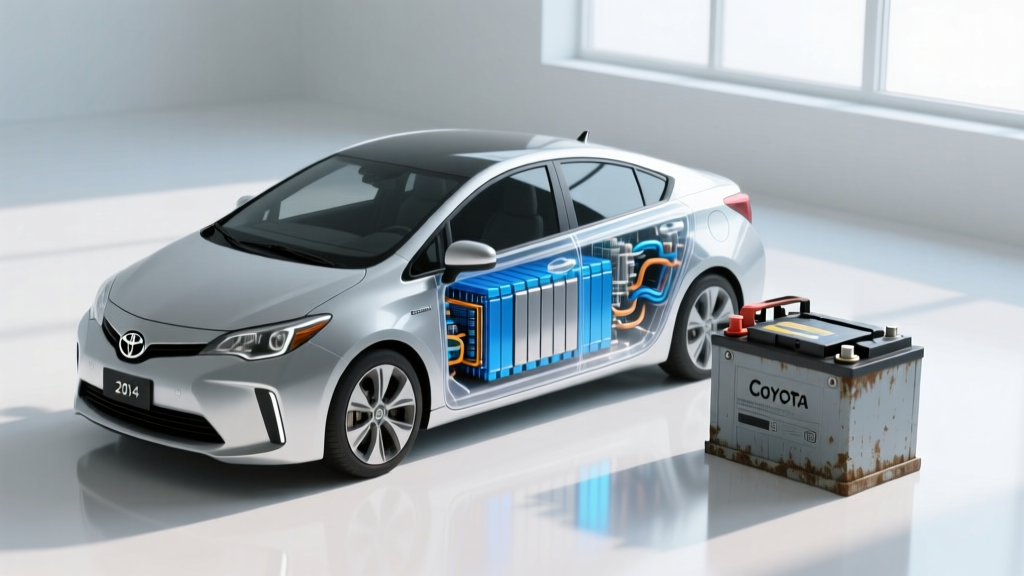
- Disconnect the 12V auxiliary battery first: This de-energizes the high-voltage contactors (relays) that connect the traction pack to the rest of the vehicle. Without the 12V system active, the HV system is typically isolated.
- Use the manufacturer's service disconnect: Most EVs have a designated HV service disconnect plug or loop, documented in the service manual. This physically breaks the HV circuit. Location varies — common placements include under the rear seat, in the trunk near the pack, or behind an access panel in the frunk area.
- Wait the prescribed time: After pulling the service disconnect, manufacturers specify a wait period (typically 5–15 minutes) for capacitors in the inverter and onboard charger to discharge.
- Verify zero voltage: A certified technician uses a CAT III/IV rated multimeter to confirm the HV bus reads 0V before touching any orange-sheathed cabling (the universal color code for high-voltage wiring in EVs).
What's Next: Solid-State and Silicon Anode Batteries
Looking ahead, two technologies promise to reshape EV batteries:
Solid-state batteries replace the liquid electrolyte with a solid ceramic, polymer, or sulfide material. Benefits include higher energy density (potentially 400+ Wh/kg at cell level), faster charging, and improved safety. Toyota has announced plans for a solid-state EV by 2027–2028, and Samsung SDI targets 2027 for mass production. However, manufacturing scale-up and cost remain significant hurdles. Realistic widespread availability: 2028–2030 at the earliest, initially in premium vehicles.
Silicon anode technology replaces graphite anodes with silicon-dominant materials, increasing energy density by 20–40%. Companies like Sila Nanotechnologies and Group14 are already supplying silicon anode materials for limited production applications. Expect incremental adoption starting 2026–2027 in select models, with broader rollout through 2028.
Both technologies are forward-looking and not currently available in production consumer EVs as of early 2026. If you're buying today, LFP and NMC remain proven, well-understood chemistries with extensive real-world track records.
Frequently Asked Questions
Is it safe to disconnect an EV battery at home?
Disconnecting the 12V auxiliary battery is safe and similar to any conventional vehicle. Disconnecting the high-voltage traction battery (350–800V) requires specialized training, insulated tools, and proper safety equipment. This should be done by a certified EV technician. Improper handling can result in severe electrical shock or death.
Will disconnecting the battery void my warranty?
If the disconnection is performed by an unauthorized person and causes damage to the battery management system, contactors, or pack, the manufacturer can deny warranty coverage for related issues. Always have HV work documented by a certified service center.
How should I store my EV if I'm not driving it for months?
Set the charge level to approximately 50% SoC, plug into a Level 1 or Level 2 charger if possible (most EVs will maintain the battery via vampire drain management), and keep the vehicle in a temperature-controlled environment if available. If you cannot leave it plugged in, a 50% SoC at moderate temperatures (50–75°F) will lose roughly 1–2% per month to self-discharge.
Does fast charging really damage the battery?
"Damage" is too strong — but frequent DC fast charging does accelerate degradation slightly. The effect is approximately 1–2% additional capacity loss over 4 years compared to predominantly Level 2 charging, per Recurrent Auto data. For road trips, fast charging is perfectly fine. For daily use, Level 2 home charging is gentler on the cells.
Can I replace just one battery module instead of the whole pack?
It depends on the vehicle. BMW, Tesla, and some other manufacturers design packs with individually serviceable modules. A single module replacement can cost $1,500–$3,000 versus $15,000+ for a full pack. However, many newer structural packs (like Tesla's 4680-based structural battery pack) are not designed for module-level service and require full-pack replacement.
What happens to old EV batteries?
Most retired EV batteries still hold 70–80% capacity and are repurposed for stationary energy storage (grid buffering, home solar storage) for another 10–15 years. At true end-of-life, recycling facilities like Redwood Materials and Li-Cycle recover 95%+ of critical minerals (lithium, cobalt, nickel) for use in new battery production.
Sources referenced: Geotab EV Battery Health Study, Recurrent Auto Battery Research, EPA Fuel Economy. Warranty terms and pricing reflect 2026 model year data and are subject to change. Consult your vehicle's owner's manual and a certified EV technician before performing any high-voltage service.