Understanding EV Battery Thermal Management Systems (TMS)
The longevity, charging speed, and daily range of your electric vehicle rely heavily on a hidden but vital component: the Battery Thermal Management System (TMS). Lithium-ion batteries operate best within a narrow temperature window, typically between 68°F and 86°F (20°C to 30°C). When batteries get too cold, internal resistance spikes, reducing range and charging speed. When they get too hot, chemical degradation accelerates, permanently shrinking your battery's total capacity.
According to the U.S. Department of Energy's Alternative Fuels Data Center, maintaining optimal battery temperature is critical for maximizing both the lifespan and the immediate range of an electric vehicle. However, not all automakers approach thermal management equally. Some use advanced liquid cooling integrated with cabin HVAC, while others rely on older, passive air-cooling methods. This comprehensive how-to guide will break down the thermal systems used by major EV brands and provide actionable steps to optimize your specific vehicle for maximum battery health.
Brand-by-Brand Breakdown: How to Manage Your Specific TMS
Before diving into optimization techniques, it is crucial to understand what hardware your EV utilizes. Below is a comparison of the thermal management architectures across major platforms.
| Brand / Platform | Cooling Type | Heat Pump | Key Thermal Feature |
|---|---|---|---|
| Tesla (Model 3/Y/S/X) | Active Liquid | Yes (Octovalve) | Integrated cabin/battery thermal routing |
| Hyundai/Kia (E-GMP) | Active Liquid | Yes (Standard) | Multi-mode heat pump with battery heating |
| GM (Ultium Platform) | Active Liquid | Yes (Ultium Platform) | Wavy cooling plates between cell modules |
| Nissan (Leaf) | Passive Air | No | Natural convection (no active cooling) |
1. Tesla: Mastering the Octovalve and Liquid Cooling
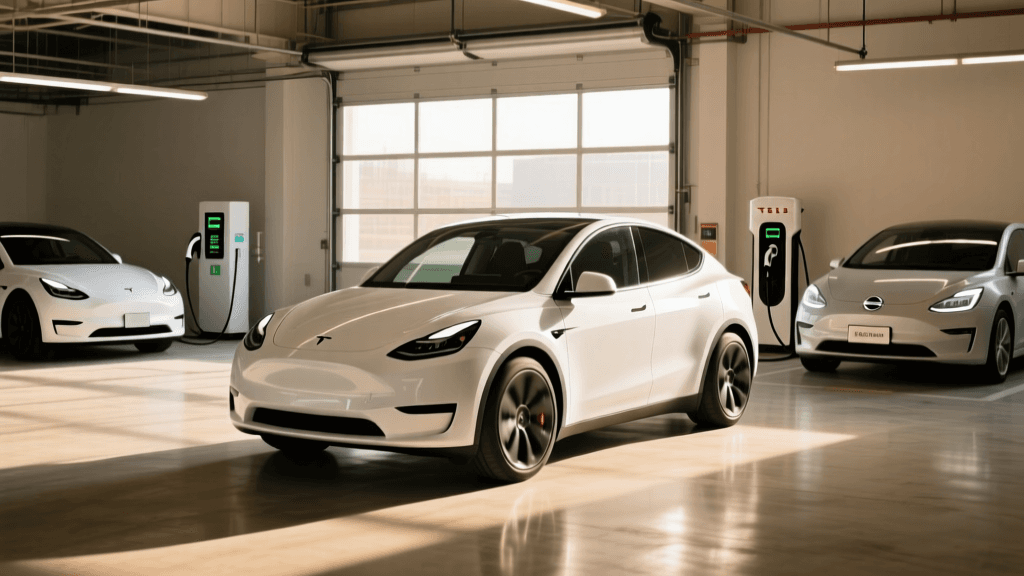
Tesla’s modern fleet (Model 3 and Model Y) utilizes the "Octovalve," a highly complex thermal manifold that integrates the battery pack, drive unit, and cabin HVAC into a single liquid loop. This allows the car to scavenge waste heat from the motors to warm the battery in winter, or reject battery heat to the cabin in summer.
How to optimize: Never manually precondition your battery via the app in extreme cold. Instead, use the Scheduled Departure feature or input a Supercharger into the navigation system. The car's TMS requires up to 45 minutes in freezing weather to heat the glycol loop to the optimal 95°F (35°C) required for peak DC fast charging. Relying on the car's automated navigation routing ensures the Octovalve begins routing heat precisely when needed.
2. Hyundai and Kia (E-GMP): Leveraging the Heat Pump
The E-GMP platform (Ioniq 5, Ioniq 6, EV6) features a robust liquid cooling system paired with a highly efficient heat pump. Data from Recurrent Auto's extensive fleet studies shows that EVs equipped with active liquid cooling and heat pumps experience significantly less range loss and degradation in extreme climates. Hyundai’s system excels at pulling ambient heat to warm the battery without draining the high-voltage pack.
How to optimize: Ensure the "Battery Heating" or "Winter Mode" setting is toggled ON in your EV's infotainment system during cold months. When approaching a DC fast charger, use the vehicle's native route planner to trigger the battery preconditioning sequence. If you are charging at home in winter, set your climate and battery preconditioning timers to finish exactly at your departure time to avoid wasting energy keeping the battery warm while parked.
3. General Motors (Ultium): Wavy Plate Cooling
GM’s Ultium architecture uses a unique liquid cooling approach. Instead of cooling plates at the bottom of the pack, GM places wavy liquid cooling plates directly between the battery modules. This provides more uniform temperature distribution across the cells, reducing thermal stress during high-amperage charging.
How to optimize: Because Ultium’s thermal mass is highly uniform, it responds exceptionally well to steady-state Level 2 charging. To prolong the life of an Ultium pack, utilize the "Target Charge Level" settings in the MyChevy or Cadillac app to cap daily charging at 80%. Only enable the "Conditioning" feature via the infotainment screen when you are actively navigating to a public fast charger.
4. Nissan (Leaf): Surviving with Passive Air Cooling
The Nissan Leaf is the most notable exception in the modern EV market, relying on passive air cooling. Without liquid glycol loops or active fans, the Leaf’s battery relies on ambient airflow. As detailed by Battery University, the chemical reactions within lithium-ion cells generate heat during charging, and without adequate thermal dissipation, this accelerates capacity fade. This phenomenon is colloquially known among owners as "Rapidgate," where consecutive DC fast charges cause the battery to overheat and charging speeds to plummet.
How to optimize: If you drive a Leaf, your habits must drastically adapt to the lack of TMS. Never perform two DC fast charges in a single day during summer months. Charge primarily via Level 1 or Level 2 overnight when ambient temperatures are lowest. Avoid fast charging immediately after aggressive highway driving; park in the shade and allow the pack to passively shed heat for at least an hour before plugging into a DCFC.
How-To: 3 Steps to Optimize Your Battery Thermals
Regardless of the badge on the hood, you can take proactive steps to manage your battery's thermal environment and reduce long-term degradation.
Step 1: Automate Your Preconditioning Routine
Preconditioning is not just about having a warm cabin; it is about bringing the battery's internal temperature to the optimal chemical operating range before you demand high power from it.
- For Liquid-Cooled EVs: Set a daily "Departure Time" in your vehicle's settings. This allows the car to pull power from the grid (rather than the battery) to run the TMS and warm the cells.
- For Grid-Limited Users: If you cannot leave your car plugged in, precondition the car 15 minutes before leaving using the mobile app. The battery will heat up using its own stored energy, which is still better than drawing massive current from a cold, highly resistant battery while driving.
Step 2: Adapt DC Fast Charging Habits to Your Hardware
DC Fast Charging (DCFC) introduces massive electrical current into the battery, generating significant heat.
- Navigate to Charge: Always add the charging station to your car's built-in navigation. This is the universal trigger across Tesla, Hyundai, Ford, and GM to activate the TMS preconditioning sequence.
- The 80% Rule: Battery cooling systems work hardest at the highest states of charge due to increased internal resistance. To reduce thermal stress, unplug at 80% or 85% on road trips unless you absolutely need the range to reach your destination.
Step 3: Monitor Cell Temperatures via OBD2 Diagnostics
For the advanced DIYer, monitoring actual cell temperatures can help you understand how your specific TMS is performing in real-world conditions. By plugging an OBD2 Bluetooth dongle into your car's diagnostic port, you can read live sensor data.
- Tesla Owners: Use the ScanMyTesla app with a compatible OBD2 adapter to monitor "Battery Inlet Temperature" and "Cell Max Temp."
- Nissan Leaf Owners: The LeafSpy Pro app is essential. It allows you to monitor the battery's internal temperature gauge and the number of temperature sensor pairs, ensuring your passive cooling is at least uniform across the pack.
- Hyundai/Kia/GM Owners: Apps like Car Scanner ELM OBD2 can access specific EV PIDs (Parameter IDs) to display battery coolant inlet and outlet temperatures, allowing you to verify that the liquid cooling loop is actively flowing during a fast charge.
Conclusion
Your EV's Battery Thermal Management System is the unsung hero of electric mobility. While a Tesla's Octovalve or a Hyundai's heat pump operates mostly in the background, understanding the specific hardware limitations and advantages of your brand allows you to adjust your charging and driving habits accordingly. By utilizing automated preconditioning, respecting the thermal limits of passive air-cooled systems, and monitoring your battery's health, you can ensure your EV retains maximum range and resale value for hundreds of thousands of miles.