The Great Battery Divide: LFP vs. NMC
As the electric vehicle (EV) market matures, a significant bifurcation is occurring under the floorboards of our cars. The days of a single, monolithic lithium-ion battery chemistry dominating the market are over. Today, the industry is split between two primary cathode chemistries: Nickel Manganese Cobalt (NMC) and Lithium Iron Phosphate (LFP). Understanding the distinction between these two chemistries is no longer just an exercise in chemical engineering; it is a critical financial and practical decision for modern EV buyers.
From a future trends and industry outlook perspective, the battle between LFP and NMC is reshaping global supply chains, vehicle pricing strategies, and long-term total cost of ownership (TCO). While NMC has historically been the gold standard for premium, long-range EVs, LFP is rapidly capturing the standard-range and commercial sectors. In this comprehensive guide, we will break down the chemistry, analyze future market trajectories, and provide actionable advice to help you determine which battery chemistry best aligns with your specific driving needs.
Understanding the Chemistry: NMC vs. LFP
NMC (Nickel Manganese Cobalt)
NMC batteries utilize a cathode made of varying proportions of nickel, manganese, and cobalt. Nickel provides high energy density, manganese offers structural stability, and cobalt enhances thermal stability and longevity. According to the U.S. Department of Energy's Argonne National Laboratory, NMC chemistries are prized for their ability to pack a massive amount of energy into a relatively small and lightweight footprint. This makes NMC the undisputed king of long-range luxury sedans, heavy-duty electric trucks, and high-performance sports cars where maximizing range per kilogram is paramount.
LFP (Lithium Iron Phosphate)
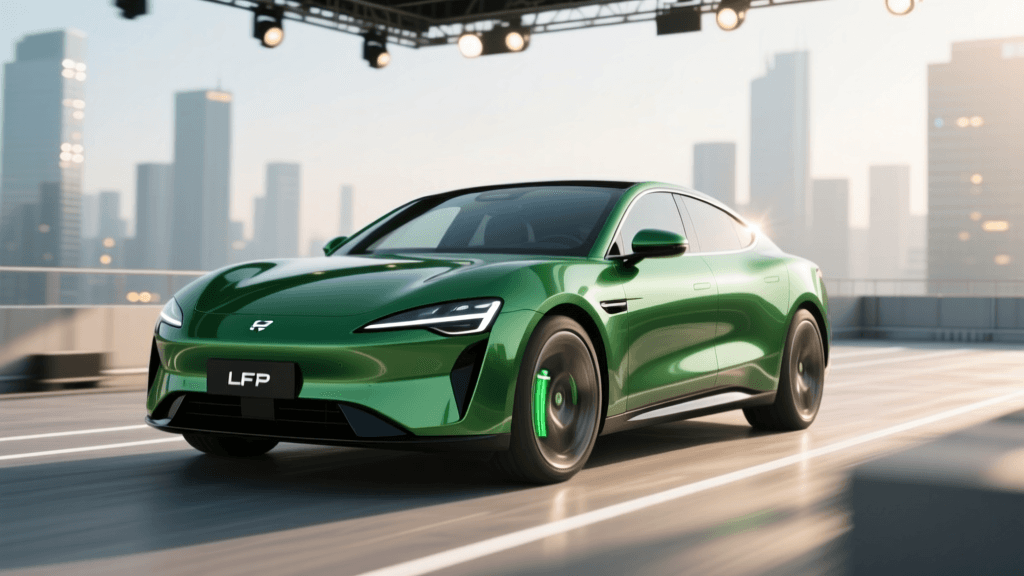
LFP batteries replace the expensive and ethically fraught cobalt and nickel with abundant, inexpensive iron and phosphate. While LFP cells are inherently heavier and less energy-dense than their NMC counterparts, they offer monumental advantages in safety, cycle life, and manufacturing cost. LFP cells are highly resistant to thermal runaway (battery fires) and can endure significantly more charge-discharge cycles before noticeable degradation occurs.
Future Trends & Industry Outlook (2024 and Beyond)
The LFP Surge in Standard-Range EVs
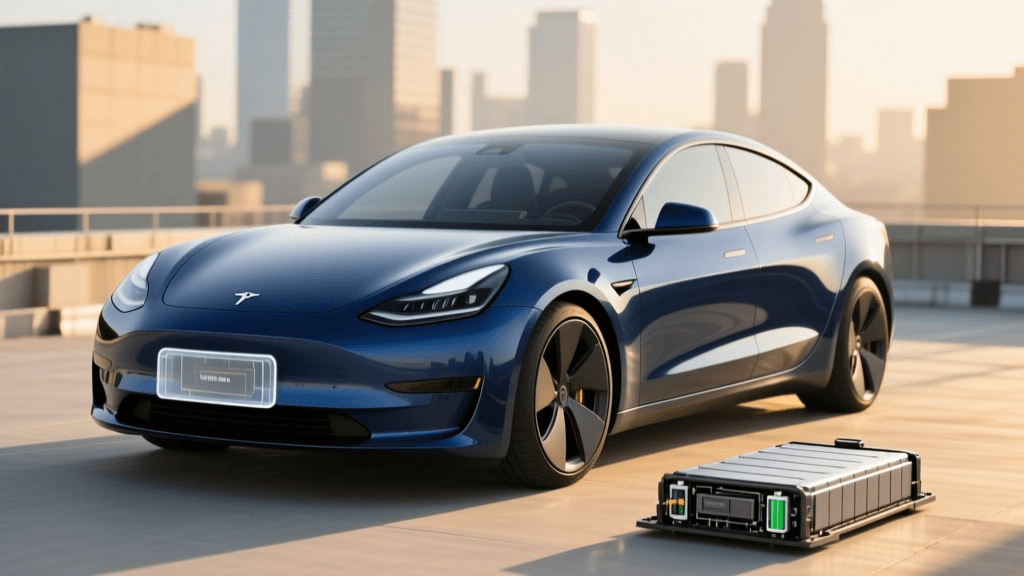
The most defining trend of the current decade is the aggressive market share expansion of LFP batteries. According to the International Energy Agency (IEA) Global EV Outlook, LFP batteries have surged to account for over 40% of global EV battery demand, driven largely by the massive scale of Chinese manufacturers like BYD and CATL, and subsequently adopted by Western automakers like Tesla and Ford. Tesla now uses LFP batteries in all of its standard-range Model 3 and Model Y vehicles globally. Ford has integrated LFP into the standard-range F-150 Lightning. The industry outlook suggests that LFP will become the default chemistry for all entry-level and mid-tier EVs as automakers fight to achieve price parity with internal combustion engine (ICE) vehicles.
Cell-to-Pack (CTP) and LMFP Innovations
To mitigate LFP's lower energy density, the industry is pioneering Cell-to-Pack (CTP) architectures. By eliminating intermediate modules and packing cells directly into the structural battery tray, engineers are increasing the volumetric efficiency of LFP packs, allowing standard-range EVs to achieve 250+ miles of range without the weight penalty. Furthermore, the horizon is bright for LMFP (Lithium Manganese Iron Phosphate), a hybrid chemistry that adds manganese to the LFP cathode to boost energy density by up to 20% while retaining the low cost and high safety profile of traditional LFP.
NMC's Push Toward High-Nickel and Solid-State
Conversely, NMC is evolving toward high-nickel formulations (like NMC 811 or NCMA) to squeeze out every last watt-hour for premium applications. The U.S. Department of Energy notes that ongoing research into advanced lithium-ion and solid-state batteries heavily relies on nickel-rich cathodes to achieve the 400-to-500-mile ranges demanded by luxury buyers and long-haul commercial transport.
Data Comparison: LFP vs. NMC at a Glance
| Feature | LFP (Lithium Iron Phosphate) | NMC (Nickel Manganese Cobalt) |
|---|---|---|
| Energy Density | Moderate (Heavier, bulkier) | High (Lightweight, compact) |
| Cycle Life | Exceptional (3,000 - 5,000+ cycles) | Good (1,000 - 2,000 cycles) |
| Thermal Stability | Excellent (Highly fire-resistant) | Moderate (Requires robust cooling) |
| Cost to Manufacture | Low (No cobalt/nickel) | High (Tied to volatile commodity markets) |
| Daily Charging Limit | 100% (Recommended weekly) | 80% (To preserve lifespan) |
| Cold Weather Performance | Poor to Moderate (Faster range loss) | Good (Better chemical resilience) |
| Best Use Case | Daily commuting, fleet, standard-range | Road trips, premium, luxury, heavy towing |
Actionable Guide: Which Battery Fits Your Driving Needs?
Choosing between LFP and NMC should not be about finding the objectively 'superior' chemistry, but rather aligning the chemistry's strengths with your personal driving profile and local climate.
Scenario 1: The Daily Commuter and Urban Driver
The Verdict: Choose LFP.
If your daily commute is under 60 miles and you have access to home charging, an LFP-powered EV (like the Tesla Model 3 RWD or base BYD Dolphin) is the undisputed champion of total cost of ownership. Because LFP batteries can handle thousands of deep discharge cycles, you can treat the battery like a smartphone—plugging it in and charging it to 100% every night without fear of premature degradation. In fact, LFP battery management systems (BMS) require regular 100% charges to accurately calibrate the state-of-charge estimation. Furthermore, the lack of cobalt makes LFP vehicles cheaper upfront, and their extended lifecycle means the battery will likely outlast the physical chassis of the car.
Scenario 2: The Frequent Road Tripper and Cold Climate Driver
The Verdict: Choose NMC.
If you frequently drive 300+ miles between charging stops, live in a region with harsh, freezing winters, or require an EV for heavy towing (like the Rivian R1T or Ford F-150 Lightning Extended Range), NMC is mandatory. NMC's superior energy density translates directly to more range on a single charge and faster DC fast-charging speeds on the highway. Additionally, NMC chemistry suffers less severe range degradation in sub-freezing temperatures compared to LFP. However, you must adopt disciplined charging habits: set your daily charge limit to 80% and only charge to 100% immediately before embarking on a long road trip to prevent cathode oxidation and capacity loss.
Total Battery Lifecycle Cost Analysis
When analyzing the long-term financial outlook, LFP holds a distinct advantage in battery replacement probability. While modern EV batteries of both chemistries are designed to last the 8-year/100,000-mile federally mandated warranty period, LFP's degradation curve is remarkably flat. An LFP pack may retain 90% of its capacity after 200,000 miles, whereas an NMC pack might dip to 80-85% in the same timeframe. For second-hand EV buyers, an LFP vehicle represents a lower risk of catastrophic out-of-warranty battery replacement costs, which can easily exceed $15,000 for large NMC packs.
Conclusion
The future of the EV industry is not a one-size-fits-all paradigm. The market is intelligently segmenting: LFP is democratizing EV ownership by driving down costs and offering unparalleled longevity for the masses, while NMC continues to push the boundaries of physics for premium, long-range applications. By evaluating your daily mileage, local climate, and charging discipline, you can confidently select the battery chemistry that will deliver the most value, safety, and reliability for your specific journey into the electric era.