The Contenders: Liquid vs. Air Cooling Architectures
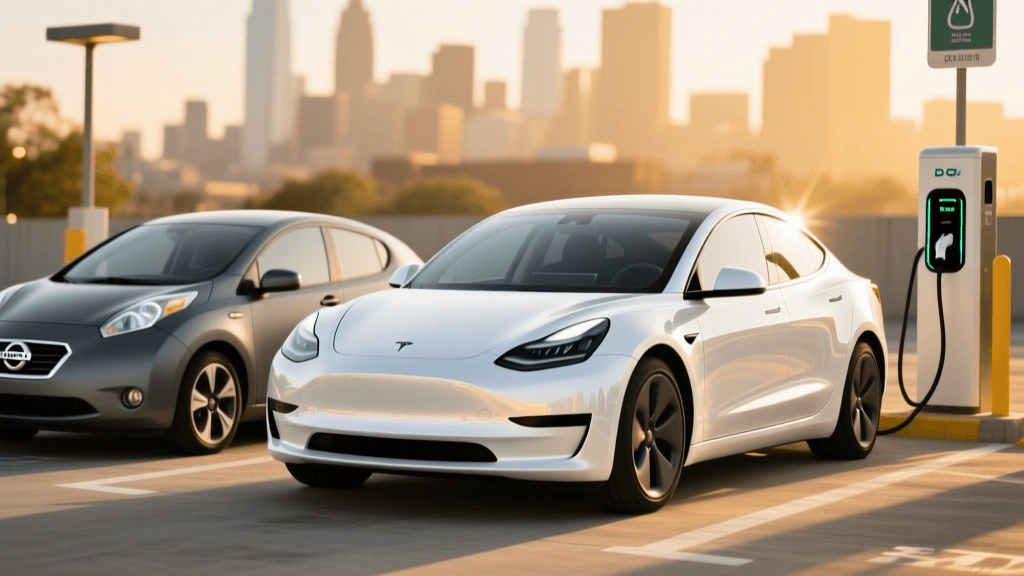
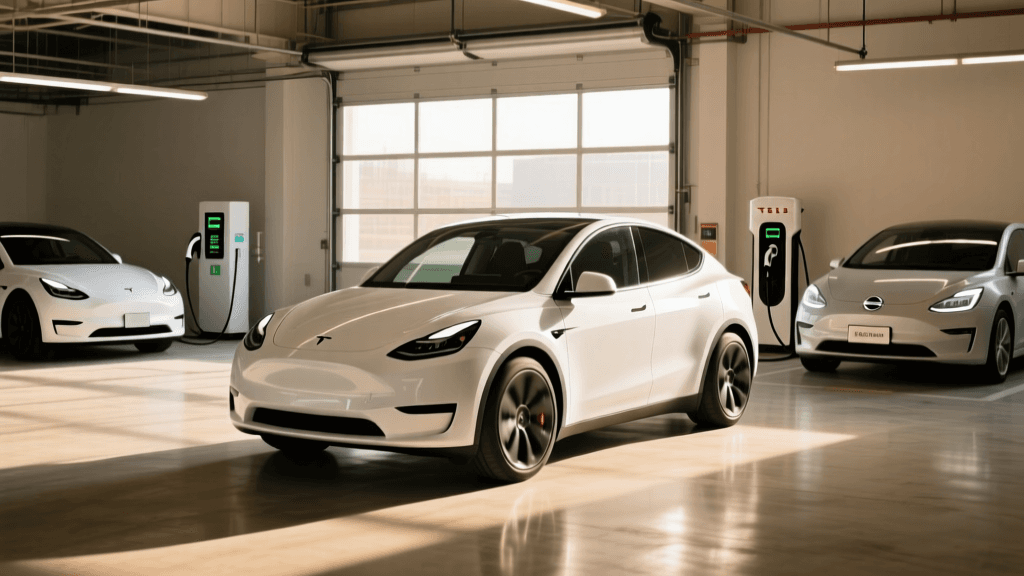
The promise of the electric vehicle revolution hinges on two critical factors: range and charging speed. While modern EVs can replenish hundreds of miles of range in under twenty minutes using Direct Current Fast Charging (DCFC), a persistent anxiety lingers among prospective buyers and long-term owners alike. Does regularly utilizing high-power fast chargers destroy your battery? To answer this, we are putting two of the most iconic EVs in history into a head-to-head product showdown. We will examine how exclusive DC fast charging affects long-term battery degradation by comparing the liquid-cooled pioneer, the Tesla Model 3, against the passive air-cooled veteran, the Nissan Leaf. This is the ultimate battle of thermal management architectures and a masterclass in how fast charging affects EV battery degradation long-term.
To understand how fast charging impacts battery health, we must first look under the floorboards. The Nissan Leaf, introduced in 2010, relies on a passive air-cooling system. It lacks active liquid cooling loops, meaning the battery pack must shed heat through natural convection, conduction to the chassis, and cabin air circulation. While this design keeps manufacturing costs low and reduces mechanical complexity, it severely limits the pack's ability to absorb the massive thermal load generated during high-speed charging.
Conversely, the Tesla Model 3 utilizes a highly sophisticated active liquid thermal management system. A network of micro-channels runs directly between the cylindrical battery cells, circulating a water-glycol mixture. During a DC fast charging session, the vehicle's chiller and compressor system actively pull heat away from the cells, maintaining them in their optimal temperature sweet spot, typically between twenty and thirty degrees Celsius. This fundamental difference in engineering dictates how each vehicle handles the stress of the fast-charging gauntlet.
The Chemistry of DCFC Stress and Heat Generation
When you plug into a 150kW or 350kW DC fast charger, you are forcing lithium ions to migrate rapidly from the cathode to the anode. This rapid intercalation process generates significant internal resistance and heat. In battery physics, heat generation is proportional to the square of the current. Therefore, doubling the charging speed quadruples the heat produced if not properly managed.
If battery temperatures exceed forty degrees Celsius for extended periods, the liquid electrolyte begins to break down, and the Solid Electrolyte Interphase (SEI) layer on the anode thickens prematurely. This thickening traps active lithium, resulting in permanent capacity loss. Furthermore, charging a cold or overheated battery at high C-rates can cause lithium plating, a phenomenon where metallic lithium deposits on the anode surface instead of intercalating. This not only degrades capacity but can also lead to internal short circuits. According to the U.S. Department of Energy's Alternative Fuels Data Center, maintaining optimal battery temperature is the single most critical factor in preserving long-term EV battery health and mitigating the harsh effects of rapid electron transfer.
Head-to-Head Data: Degradation Milestones
Let us look at the projected State of Health (SOH) for both vehicles over a five-year period, assuming the owner relies on DC fast charging for eighty percent of their charging needs, averaging thirty thousand miles per year in a mixed climate with hot summers.
| Milestone | Nissan Leaf (Air-Cooled) | Tesla Model 3 (Liquid-Cooled) | Primary Degradation Factor |
|---|---|---|---|
| 1 Year / 15,000 mi | 94% SOH | 96% SOH | Calendar aging / Initial SEI formation |
| 3 Years / 50,000 mi | 86% SOH | 92% SOH | Heat accumulation / DCFC thermal stress |
| 5 Years / 100,000 mi | 78% SOH | 89% SOH | Lithium plating / Cell imbalance |
As the data illustrates, the divergence in battery health becomes stark after year three. The Nissan Leaf's passive cooling struggles to dissipate the heat accumulated during consecutive fast-charging sessions, leading to accelerated SEI layer growth. The Tesla Model 3's active cooling system effectively flattens the degradation curve, proving that the speed of the charge is less important than the temperature at which the charge occurs.
Real-World Fleet Data and Climate Variables
Theoretical chemistry is only half the story; real-world telematics provide the definitive verdict. Extensive fleet data reveals that climate plays an aggressive role in the fast-charging degradation equation. A comprehensive analysis by Geotab's EV battery degradation study demonstrates that vehicles operating in hot climates without robust thermal management suffer degradation rates nearly double those in temperate zones. For the Nissan Leaf, a phenomenon colloquially known as Rapidgate occurs when the battery management system intentionally throttles charging speeds to protect the overheating pack. While this prevents immediate catastrophic failure, the prolonged exposure to elevated ambient and internal temperatures still exacts a toll on long-term capacity.
Interestingly, a massive study analyzing thousands of vehicles found that frequent fast charging does not inherently destroy modern, thermally managed batteries. Recurrent Auto research on fast charging concluded that EVs charged primarily via DCFC showed virtually no statistical difference in long-term range degradation compared to those charged exclusively on Level 2 home chargers, provided the vehicle had active liquid cooling. This is a massive victory for the Tesla Model 3's engineering philosophy and a harsh indictment of passive cooling systems in the era of high-speed charging.
Actionable Advice for the Road Warrior
If your lifestyle demands frequent reliance on DC fast charging, how you manage your specific vehicle's limitations is paramount. Here is actionable advice tailored to our two contenders.
Surviving in the Nissan Leaf
- Avoid Mid-Day Summer Charges: Schedule your highway travel for early mornings or late evenings when ambient temperatures are lower, giving the passive air-cooling system a fighting chance.
- Rest Before Charging: Never fast charge immediately after aggressive highway driving. Allow the vehicle to sit in the shade for fifteen minutes to let surface heat dissipate.
- Accept the Throttle: If the car slows its charge rate, do not unplug and move to another stall; the battery is protecting itself from thermal damage.
Optimizing the Tesla Model 3
- Use Navigation: Always route to Superchargers via the vehicle's native navigation. This triggers the battery preconditioning routine, warming or cooling the pack to the exact optimal temperature before you even plug in.
- The 80% Rule: Avoid charging to one hundred percent on DCFC unless absolutely necessary for reaching your destination. The final ten percent of the charge generates disproportionate heat and stress due to cell balancing requirements.
- Monitor Supercharger V3 Speeds: While V3 stalls offer 250kW, the thermal management system will handle the load. However, if you are stopping for an extended break, set your charge limit to 80% to prevent the battery from sitting at a high state of charge while hot.
The Final Verdict
The head-to-head showdown between the Tesla Model 3 and the Nissan Leaf reveals a fundamental truth about electric mobility: it is not the speed of the electrons that degrades your battery, but the heat generated by their journey. The Tesla Model 3's active liquid thermal management system renders the traditional fears of DC fast charging largely obsolete, allowing road warriors to utilize the Supercharger network with minimal long-term penalty. The Nissan Leaf, while a pioneer of the EV movement, showcases the severe limitations of passive air cooling when subjected to the rigors of modern high-power charging. If your daily routine demands exclusive reliance on fast charging, investing in a vehicle with active liquid cooling is not just a luxury; it is an absolute necessity for preserving your battery's lifespan and your vehicle's residual value.