Understanding EV Battery Degradation: Calendar vs. Cyclic Aging
When evaluating the total cost of ownership for an electric vehicle, battery degradation is the most critical variable. Unlike internal combustion engines that suffer from mechanical wear, EV batteries experience electrochemical aging. This aging manifests in two distinct ways: capacity fade (reduction in total range) and power fade (reduction in maximum charging and discharging rates). To truly understand how long your EV battery will last, we must look past manufacturer warranties and analyze real-world degradation data across different battery chemistries, climates, and charging behaviors.
EV batteries degrade through two primary mechanisms: cyclic aging and calendar aging. Cyclic aging occurs as lithium ions shuttle back and forth between the anode and cathode during charging and discharging. Over time, this physical movement causes micro-cracking in the cathode structure and the buildup of a Solid Electrolyte Interphase (SEI) layer on the anode, which permanently traps active lithium. Calendar aging, on the other hand, happens simply as time passes, regardless of whether the vehicle is driven. High states of charge and elevated ambient temperatures accelerate the chemical reactions that drive calendar aging.
Data-Driven Chemistry Comparison: NMC vs. LFP
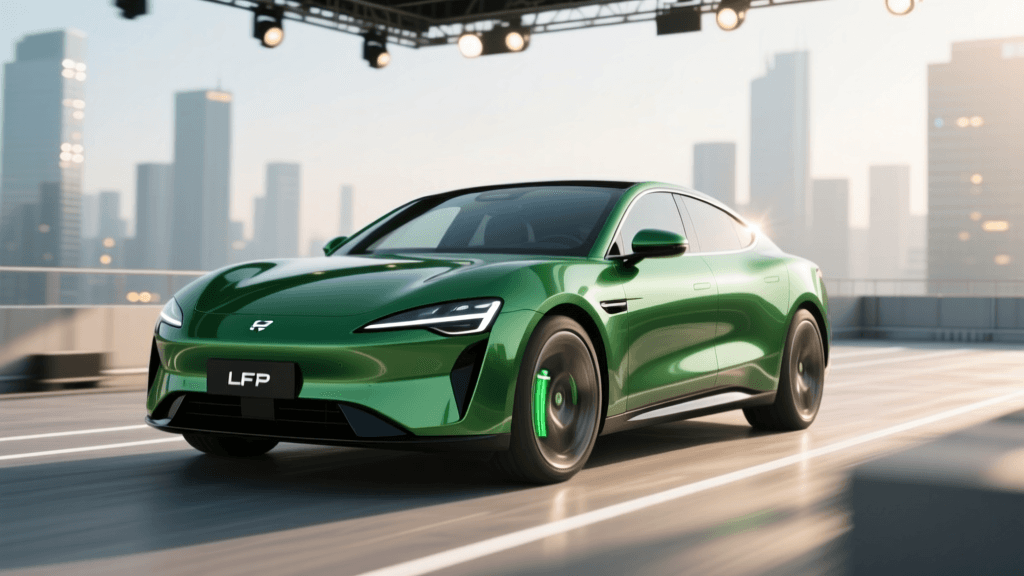
The two dominant lithium-ion chemistries in today's EV market are Nickel Manganese Cobalt (NMC) and Lithium Iron Phosphate (LFP). Their molecular structures dictate vastly different degradation curves and operational lifespans. NMC batteries, found in vehicles like the Tesla Model Y Long Range and Ford F-150 Lightning, prioritize energy density. LFP batteries, utilized in the Tesla Model 3 Rear-Wheel Drive and many BYD models, prioritize longevity and thermal stability.
| Metric | NMC (Nickel Manganese Cobalt) | LFP (Lithium Iron Phosphate) |
|---|---|---|
| Typical Cycle Life | 1,000 - 2,000 cycles | 3,000 - 5,000+ cycles |
| Energy Density | High (220-260 Wh/kg) | Moderate (140-180 Wh/kg) |
| Thermal Runaway Risk | Moderate to High | Extremely Low |
| Recommended Daily Charge Limit | 80% | 100% (with periodic calibration) |
| Avg. Degradation at 100k Miles | 8% - 12% | 4% - 7% |
As the data illustrates, LFP chemistry offers a distinct advantage in pure cycle life. The iron-phosphate cathode is structurally more robust than the nickel-rich NMC cathode, meaning it resists the micro-cracking that plagues high-density cells over thousands of cycles. However, NMC's superior energy density makes it the necessary choice for long-range and heavy-duty applications where minimizing vehicle weight is paramount.
The Climate Factor: Temperature Extremes and Capacity Fade
Ambient temperature is arguably the most aggressive environmental factor influencing EV battery health. According to Geotab's comprehensive multi-year study on EV battery health, which analyzed data from over 6,300 electric vehicles, cars operating in extremely hot climates experience degradation rates up to 1.5 times faster than those in temperate zones. Heat accelerates the parasitic chemical reactions within the electrolyte, thickening the SEI layer and increasing internal resistance.
Conversely, extreme cold does not necessarily cause permanent calendar degradation, but it severely impacts temporary performance and introduces risks during charging. Charging an EV battery when the core temperature is below freezing (32°F / 0°C) can cause lithium plating—a phenomenon where lithium ions deposit as metallic lithium on the surface of the anode rather than intercalating into it. This permanently reduces capacity and can create dendrites that risk internal short circuits. Modern EVs mitigate this via active thermal management systems, but the energy cost of heating the battery in winter still impacts overall efficiency.
Charging Variables: Depth of Discharge and DC Fast Charging
How you charge your vehicle matters just as much as where you drive it. Depth of Discharge (DoD) refers to the percentage of the battery's capacity that is used before recharging. Data consistently shows that shallow cycles dramatically extend battery life. Discharging an NMC battery from 80% to 20% (a 60% DoD) yields exponentially more total lifetime energy throughput than cycling it from 100% to 0%.
The impact of DC Fast Charging (DCFC) on degradation has been heavily debated. Real-world telemetry analyzed by Recurrent Auto's battery degradation database suggests that frequent DCFC use does not inherently destroy battery health, provided the vehicle's thermal management system is functioning correctly. Vehicles that fast-charged more than 90% of the time showed statistically similar degradation curves to those that primarily used Level 2 home charging. The caveat is heat: DCFCing in extreme ambient heat without adequate preconditioning forces the battery to endure high currents while simultaneously fighting thermal saturation, which is where the real damage occurs.
Actionable Blueprint: Maximizing Your EV Battery Lifespan
Based on the aggregated telemetry and electrochemical data, EV owners can implement specific, data-backed habits to minimize capacity fade and delay the need for costly out-of-warranty replacements.
- Chemistry-Specific Charge Limits: If your EV has an NMC battery, set your daily charge limit to 80%. Only charge to 100% immediately before a long road trip. If your EV has an LFP battery, manufacturers recommend charging to 100% at least once a week to allow the Battery Management System (BMS) to balance the cells and accurately calibrate the state-of-charge estimation.
- Precondition for Fast Charging: Always use your vehicle's built-in navigation to route to DC Fast Chargers. This triggers the thermal management system to precondition the battery, bringing it to the optimal temperature window (typically 95°F - 115°F internally) to accept high currents safely without lithium plating or excessive heat generation.
- Avoid Prolonged High-State Storage: If you are leaving your vehicle parked at an airport or in a driveway for more than two weeks, do not leave it at 100% state of charge. For NMC batteries, store the vehicle at roughly 50% charge. Calendar aging accelerates exponentially when a battery sits at maximum voltage in warm environments.
- Minimize Micro-Cycles in Extreme Heat: During peak summer months, try to park in shaded areas or garages. If you must drive in extreme heat, avoid aggressive regenerative braking settings, as this forces high discharge and charge C-rates into a battery that is already thermally stressed.
Total Lifecycle Cost Implications
When analyzing battery degradation through a financial lens, the cost per kilowatt-hour of degraded capacity becomes a vital metric. Replacing an EV battery pack currently costs between $10,000 and $20,000 depending on the vehicle model and pack size. However, data shows that less than 2% of EV batteries require replacement due to catastrophic failure outside of warranty. The more common scenario is gradual capacity fade. If an NMC battery degrades by 10% over eight years, the financial impact is essentially the cost of lost range, which translates to slightly more frequent charging stops on road trips rather than an immediate capital expenditure. By contrast, an LFP battery retaining 95% of its capacity over the same period preserves the vehicle's resale value significantly better. Fleet operators and high-mileage drivers must factor in these degradation curves when calculating total cost of ownership, as the longevity of LFP chemistry can yield thousands of dollars in retained equity at the time of resale or lease return.
Conclusion
EV battery degradation is not a matter of if, but how slowly it occurs. By understanding the fundamental differences between NMC and LFP chemistries, respecting the electrochemical limits imposed by temperature, and adopting data-driven charging habits, drivers can easily push their battery lifespans well beyond the 150,000-mile mark. The data proves that mindful ownership dramatically reduces total lifecycle costs, ensuring your electric vehicle remains a reliable and economical asset for years to come.