The Great EV Debate: To Lease or Own the Battery?
When electric vehicles first entered the mainstream market, the battery was viewed as a ticking time bomb of financial liability. Early automakers experimented with battery leasing models to soothe consumer anxieties about degradation and replacement costs. Today, the landscape has shifted dramatically, yet the debate between outright EV battery ownership and Battery-as-a-Service (BaaS) leasing models remains fiercely contested.
As a senior analyst for AutoEdgeView, I frequently encounter buyers paralyzed by the fear of a $20,000 battery replacement bill. This fear has given rise to a cottage industry of myths surrounding battery leasing. Is leasing always a financial trap? Does ownership guarantee peace of mind? In this comprehensive guide, we are busting the most pervasive myths about EV battery leasing versus ownership, analyzing real-world total cost of ownership (TCO), and highlighting the common mistakes buyers make when structuring their EV purchases.
Myth 1: Modern EV Batteries Degrade So Fast You Must Lease to Stay Safe
The most common argument for battery leasing is the fear of rapid degradation. The myth suggests that after five years, your EV will lose half its range, leaving you with a useless brick and a massive replacement bill. Therefore, leasing transfers this risk to the manufacturer.
The Reality: Modern lithium-ion battery management systems (BMS) and thermal management architectures have made catastrophic degradation incredibly rare. According to extensive fleet data analyzed by Recurrent Auto, the average EV battery retains roughly 90% of its original capacity after five years and 80% after eight years. Furthermore, federal mandates and manufacturer warranties typically cover the battery for 8 years or 100,000 miles against defects and excessive capacity loss (usually defined as dropping below 70% state of health).
Leasing a battery to protect against a degradation event that is statistically unlikely—and already covered by a robust manufacturer warranty—is a costly insurance policy for a risk that barely exists in modern chemistries like LFP (Lithium Iron Phosphate) and advanced NMC (Nickel Manganese Cobalt).
Myth 2: Battery Leasing is Always Cheaper in the Long Run
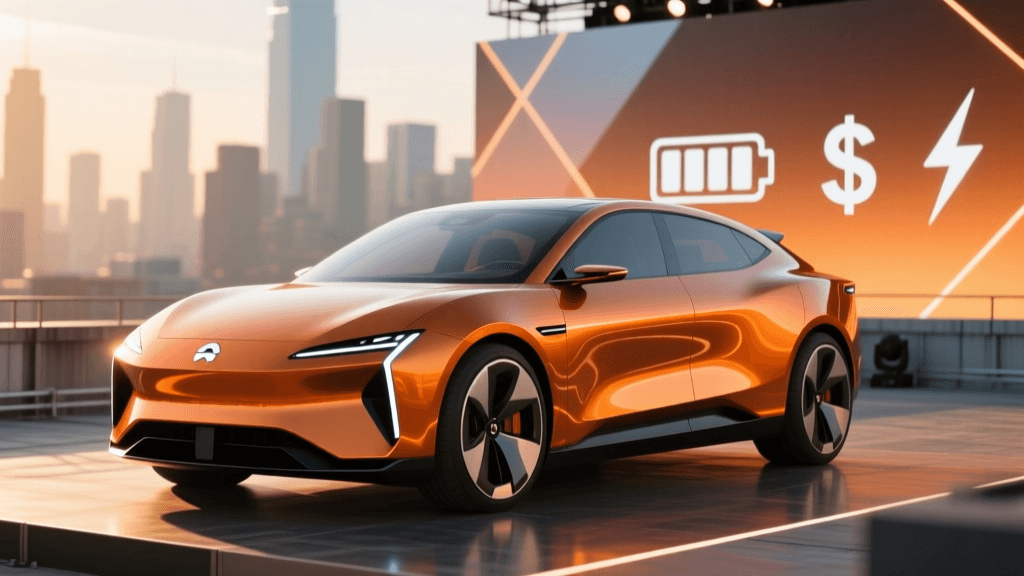
Proponents of BaaS, most notably Nio with its highly successful Battery as a Service program, highlight the massive upfront savings. By separating the battery from the vehicle chassis, buyers can shave $10,000 to $20,000 off the initial purchase price of the car. However, many buyers mistakenly extrapolate this upfront discount into long-term savings.
The Reality: Leasing is almost always more expensive over a standard 10-year vehicle lifecycle. To understand why, we must look at the break-even mathematics of a real-world BaaS model compared to outright ownership.
Cost Comparison: Nio ET5 (75 kWh Battery) Over 10 Years
Let us examine the financial reality of purchasing a vehicle with a 75 kWh battery outright versus utilizing a BaaS subscription. (Note: Figures are approximate USD conversions based on global pricing structures and standard subscription rates).
| Cost Factor | Outright Ownership (75 kWh) | BaaS Leasing Model (75 kWh) |
|---|---|---|
| Upfront Battery Cost | $14,000 (Included in vehicle price) | $0 |
| Monthly Subscription Fee | $0 | $140 / month |
| Cost at Year 3 (36 Months) | $14,000 (Sunk cost) | $5,040 (Paid in subscriptions) |
| Cost at Year 5 (60 Months) | $14,000 (Sunk cost) | $8,400 (Paid in subscriptions) |
| Cost at Year 8 (96 Months) | $14,000 (Sunk cost) | $13,440 (Paid in subscriptions) |
| Cost at Year 10 (120 Months) | $14,000 (Sunk cost) | $16,800 (Paid in subscriptions) |
| End of Term Asset Value | Own the battery (adds to resale) | Own nothing (zero equity) |
The Break-Even Point: In this scenario, the break-even point occurs at roughly 100 months (8.3 years). If you plan to keep your EV for less than eight years, the BaaS model preserves your cash flow and may be financially advantageous, especially when factoring in the time-value of money. However, if you are a long-term owner who drives cars for a decade or more, outright ownership saves you nearly $3,000 in pure subscription fees, not to mention the residual value the battery adds to the car at trade-in time.
Myth 3: Leasing Protects Your Resale Value
A pervasive myth is that because battery technology evolves rapidly, owning an older battery will tank your car's resale value, whereas a leased battery ensures the car always has a 'fresh' or guaranteed power source.
The Reality: While battery swapping networks (like Nio's) do allow users to swap older batteries for newer ones, the secondary used car market views battery leases with deep suspicion. When you sell a BaaS vehicle, the buyer must qualify for and assume the monthly battery lease. This drastically shrinks your pool of potential buyers. Many used car buyers want a simple, single-transaction purchase without the burden of a perpetual monthly subscription tied to the vehicle's VIN.
We only need to look at the historical misstep of the Renault Zoe in Europe. Renault initially mandated battery leasing on the Zoe, which led to massive confusion and depressed resale values in the secondary market. Buyers were terrified of inheriting a monthly debt, and dealers struggled to move used inventory. Renault eventually had to pivot, offering battery buyout programs to appease the market. As noted by the U.S. Department of Energy, standardizing battery lifecycle expectations is key to consumer confidence, and the market has largely voted that outright ownership provides the cleanest path to resale.
Common Mistakes Buyers Make When Choosing
If you are currently weighing a BaaS option against a traditional EV purchase, avoid these critical financial mistakes:
Mistake 1: Ignoring the Financing Implications
When you finance an EV outright, the battery is included in the auto loan. Auto loans typically feature lower interest rates (often subsidized by manufacturers) and terms of 60 to 72 months. Once the loan is paid off, your transportation costs drop significantly. Conversely, a battery lease is a perpetual operating expense. It does not build equity, and you cannot 'pay it off.' Buyers often fail to model their cash flow beyond the first five years, resulting in payment fatigue when the car is paid off but the battery subscription continues indefinitely.
Mistake 2: Overlooking Insurance and Accident Liabilities
In an outright ownership model, if your EV is totaled in an accident, the insurance company pays out the full value of the car, including the battery, and you walk away to buy a new vehicle. In a BaaS model, the battery is not your property. If the vehicle is totaled, the insurance settlement can become a complex tri-party negotiation between you, the insurer, and the battery leasing company. Some buyers have reported difficulties in closing out the lease agreement and securing final payouts after a total loss event.
Mistake 3: Confusing Maintenance with Battery Health
Some buyers conflate general EV maintenance with battery replacement. According to Consumer Reports, EVs cost significantly less to maintain over their lifetimes compared to internal combustion engine vehicles due to fewer moving parts, regenerative braking saving brake pads, and no fluid changes. Buyers sometimes opt for a battery lease thinking it covers 'all EV maintenance,' but BaaS strictly covers the battery pack's health and swap access. You are still responsible for tires, suspension, cabin filters, and software-related hardware repairs.
The Verdict: Who Should Lease and Who Should Own?
Busting the myths reveals that neither option is universally superior; rather, they serve entirely different financial profiles and driving habits.
- Choose Outright Ownership If: You plan to keep the vehicle for more than 8 years, you want to maximize your resale value by appealing to the broadest used-car market, and you prefer the psychological peace of mind that comes with zero monthly subscriptions once your auto loan is paid off.
- Choose Battery Leasing (BaaS) If: You change vehicles every 3 to 5 years, you want to minimize your initial down payment and monthly auto loan burden, or you live in a dense urban area with robust battery-swap infrastructure that allows you to upgrade to larger capacity batteries for road trips without buying a new car.
Ultimately, the fear of battery degradation is a relic of the early 2010s EV era. Modern batteries are engineered to outlast the physical chassis of the car. By understanding the true break-even points and avoiding the common resale and financing traps, you can confidently choose the powertrain acquisition model that best protects your wallet.