If you are shopping for an electric vehicle in 2026, the single most expensive component under the floor is also the one most buyers understand the least. A new lithium ion battery pack determines your range, your charging speed, your long-term ownership cost, and even whether you qualify for the federal tax credit. Yet the terminology alone — NMC, NCA, LFP, kWh, State of Health — can feel like a barrier to making a confident purchase.
This guide breaks down exactly what goes into modern EV battery packs, how long they actually last based on fleet data, what it costs to replace one if you need to, and the practical steps you can take to maximize longevity. No hype, no fear-mongering — just the numbers and chemistry you need to know.
LFP vs NMC vs NCA: Which Battery Chemistry Powers Your EV?
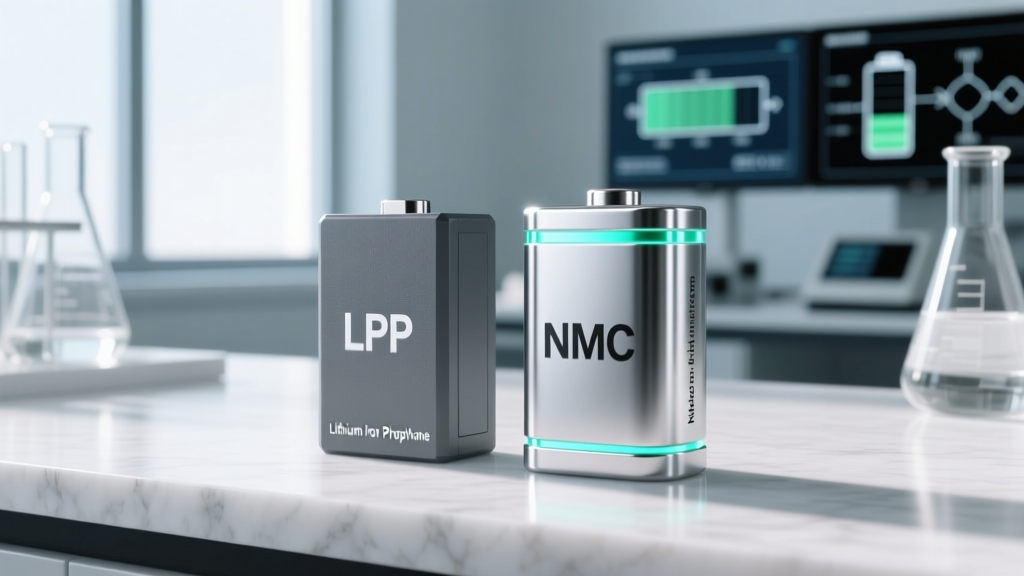
Not all lithium ion batteries are the same. The cathode chemistry — the material that stores and releases lithium ions during charge and discharge cycles — defines the pack's energy density, lifespan, cold-weather behavior, and manufacturing cost. In 2026, three chemistries dominate the US EV market:
- NMC (Nickel Manganese Cobalt): Used in most long-range EVs including the Hyundai Ioniq 5, Ford Mustang Mach-E Extended Range, and BMW i4. Offers the best energy density (more range per kilogram) but relies on cobalt and nickel, which are costlier and carry supply-chain concerns.
- NCA (Nickel Cobalt Aluminum): Tesla's chemistry of choice for its Long Range and Performance trims (Model 3, Model Y, Model S). Similar energy density advantages to NMC with slightly different thermal characteristics.
- LFP (Lithium Iron Phosphate): Found in the Tesla Model 3 RWD, Model Y RWD, and an increasing number of entry-level trims from BYD and other manufacturers entering global markets. Lower energy density but significantly longer cycle life, no cobalt or nickel, and lower cost.
| Attribute | LFP | NMC | NCA |
|---|---|---|---|
| Energy Density | Moderate (~160 Wh/kg cell) | High (~250 Wh/kg cell) | High (~260 Wh/kg cell) |
| Typical Cycle Life | 3,000–5,000 cycles | 1,000–2,000 cycles | 1,000–1,500 cycles |
| Cold-Weather Performance | More range loss below 32°F | Better low-temp discharge | Better low-temp discharge |
| Charging to 100% Daily | Recommended by OEMs | Not recommended (80% daily) | Not recommended (80% daily) |
| Cost per kWh (pack-level) | ~$90–$110 | ~$120–$145 | ~$120–$145 |
| Cobalt Content | None | Yes (reduced in newer cells) | Yes |
| Thermal Stability | Excellent (higher runaway temp) | Good | Good |
The practical takeaway: If you want maximum range in a single charge and don't mind charging to 80% for daily use, NMC or NCA is the better fit. If you commute shorter distances, want to charge to 100% daily without degradation worry, and prioritize long-term durability, LFP is the stronger choice. Tesla explicitly recommends charging LFP-equipped vehicles to 100% at least weekly to keep the battery management system calibrated.
How Long Do EV Batteries Actually Last?
The most common question from prospective EV buyers is whether the battery will outlast the car. The short answer: in most cases, yes. But the data tells a more nuanced story.
Degradation in a lithium ion battery is measured as a percentage of original capacity lost over time. A brand-new 75 kWh pack that has degraded 10% now holds 67.5 kWh of usable energy, which translates directly to reduced range.
Typical EV Battery Degradation Curve (Fleet Data)
Based on aggregated fleet data from sources including Recurrent Auto and Tesla's own impact reports, here is what real-world degradation looks like across major EV platforms:
- Year 1 / 15,000 miles: 2–4% capacity loss (initial formation loss, normal)
- Year 3 / 45,000 miles: 5–8% total capacity loss
- Year 5 / 75,000 miles: 7–12% total capacity loss
- Year 8 / 120,000 miles: 10–15% total capacity loss
- Year 10 / 150,000 miles: 12–18% total capacity loss (varies significantly by chemistry and usage)
LFP packs consistently show lower degradation rates — often staying above 90% State of Health (SoH) past 100,000 miles. NMC/NCA packs tend to lose capacity faster in the first two years, then the curve flattens significantly.
Tesla's 2024 Impact Report (the most recent published fleet data) stated that Model 3 and Model Y vehicles retained approximately 85% of their original battery capacity after 200,000 miles. That aligns with independent testing and suggests that a well-maintained EV battery will remain functional well past the typical ownership period.
The critical number to understand: most EVs become uneconomical to repair or are totaled in accidents long before the battery reaches end-of-life. Catastrophic battery failure (sudden, complete loss of function) remains extremely rare — well under 1% of vehicles in major fleets according to Recurrent's data.
EV Battery Warranty Terms: What's Covered and What Isn't
Federal law mandates that EV battery warranties cover a minimum of 8 years or 100,000 miles. In California and states that follow CARB (California Air Resources Board) emissions standards, the requirement extends to 10 years or 150,000 miles. Most manufacturers meet or exceed these minimums.
| Manufacturer | Warranty Period | Mileage Cap | Capacity Retention Threshold |
|---|---|---|---|
| Tesla (Model 3/Y RWD, LFP) | 8 years | 100,000 miles | 70% |
| Tesla (Model 3/Y LR, NCA) | 8 years | 120,000 miles | 70% |
| Hyundai / Kia | 10 years | 100,000 miles | 70% |
| Ford (Mach-E, F-150 Lightning) | 8 years | 100,000 miles | 70% |
| Chevrolet (Equinox EV, Blazer EV) | 8 years | 100,000 miles | 70% |
| BMW (i4, iX) | 8 years | 100,000 miles | 70% |
| Rivian (R1T, R1S) | 8 years | 120,000 miles | 70% |
The 70% capacity retention threshold is the industry standard. If your battery drops below 70% of its original capacity within the warranty period, the manufacturer is obligated to repair or replace it at no cost to you. In practice, very few owners hit this threshold under normal use — which is precisely why manufacturers can offer it.
What's NOT covered: Cosmetic damage, damage from collisions, flooding, or improper charging equipment. Gradual capacity loss above the 70% threshold is considered normal wear and is not a warranty claim. Some manufacturers also void the warranty if the vehicle is used commercially (ride-share, delivery) beyond certain mileage limits — check your specific terms.
How Much Does an EV Battery Replacement Cost?
This is the question that generates the most anxiety — and the most misleading headlines. Let's ground it in actual numbers.
| Vehicle / Pack Size | Battery Cost (Parts) | Labor | Total Estimated Cost |
|---|---|---|---|
| Tesla Model 3 RWD (~60 kWh, LFP) | $6,000–$8,000 | $1,500–$2,500 | $7,500–$10,500 |
| Tesla Model Y LR (~82 kWh, NCA) | $10,000–$14,000 | $2,000–$3,000 | $12,000–$17,000 |
| Hyundai Ioniq 5 (~77.4 kWh, NMC) | $11,000–$15,000 | $2,000–$3,000 | $13,000–$18,000 |
| Ford F-150 Lightning Ext. Range (~131 kWh) | $18,000–$25,000 | $3,000–$5,000 | $21,000–$30,000 |
| Chevrolet Bolt EV (~65 kWh, NMC) | $8,000–$11,000 | $1,500–$2,500 | $9,500–$13,500 |
These numbers look large in isolation. But context matters enormously:
- Most EV batteries never need replacement. Based on fleet data, fewer than 2–3% of EVs require a battery swap within the first 10 years. The vast majority of packs outlast the vehicle's useful economic life.
- Battery costs are declining. Pack-level pricing has fallen from over $1,200/kWh in 2010 to roughly $100–$145/kWh in 2026, according to BloombergNEF. By the time you might actually need a replacement in 2035 or 2040, costs will likely be significantly lower.
- Module-level repair is increasingly common. Many packs can be serviced by replacing individual modules (sections of cells) rather than the entire pack, reducing costs by 50–70%.
- The warranty covers early failures. If a battery degrades below 70% within 8 years / 100,000 miles, you pay nothing.
When is replacement typically needed? In practice, most traction battery replacements occur after collision damage or, rarely, due to a manufacturing defect caught outside the warranty window. Routine degradation-driven replacement within 15 years of ownership remains uncommon.
Factors That Accelerate Battery Degradation
A new lithium ion battery doesn't degrade at a fixed rate — your habits and environment significantly influence the pace. Here are the primary factors, ranked by impact:
Battery Longevity Checklist
- Extreme State of Charge (SoC): Regularly sitting at 100% or near 0% stresses NMC/NCA cells. For daily driving, set your charge limit to 80% (or 100% if you have LFP). Only charge to 100% when you need the full range for a trip.
- DC Fast Charging Frequency: Occasional DC fast charging (1–2 times per week) has minimal impact. But daily use of 150+ kW chargers generates sustained heat that accelerates degradation. If you have home Level 2 charging, use it for daily needs and save DCFC for road trips.
- Extreme Heat Exposure: Prolonged exposure to ambient temperatures above 95°F — especially at high SoC — is the single biggest environmental risk. Park in shade or a garage when possible. Modern thermal management systems (liquid cooling) mitigate this significantly, but physics still applies.
- Extreme Cold: Cold temperatures temporarily reduce range (15–30% loss below 20°F is typical) but don't cause permanent degradation if the battery is allowed to warm before charging. Preconditioning — warming the battery before plugging in — is critical in winter climates.
- High-Discharge Loads: Frequent aggressive acceleration and sustained high-speed driving (above 85 mph) generate internal heat. Occasional performance driving is fine; daily track use is not what these packs are designed for.
- Storage at Low SoC: If you store your EV for weeks without driving, leave it plugged in at 50–60% SoC. Storing at near-0% for extended periods can cause irreversible cell damage.
How to Monitor Your Battery's State of Health (SoH)
State of Health is the metric that tells you what percentage of your battery's original capacity remains usable. A new pack is at 100% SoH; at 70%, you'd trigger a warranty claim.
How to check SoH by brand:
- Tesla: The in-car service menu (accessed via the software screen) shows estimated range at 100% SoC. Third-party apps like Tessie or TeslaFi calculate SoH more precisely using OBD-II data.
- Hyundai / Kia: The dealer can pull a battery health report during service visits. Some models display SoH in the infotainment engineering menu.
- Ford: FordPass app provides battery health status. Dealers can run a full diagnostic.
- Universal method: OBD-II dongles paired with apps like Car Scanner or ABRP (A Better Route Planner) can read battery management system (BMS) data on most EVs to estimate SoH.
A practical rule: check your SoH every 6 months or every 10,000 miles. If you notice range dropping faster than the typical degradation curve suggests (more than 3–4% per year after the first year), schedule a dealer diagnostic to rule out a defective module.
What's Next: Solid-State, Silicon Anodes, and Beyond
The lithium ion chemistry in today's EVs is mature and reliable, but the industry is actively developing next-generation technologies. Here's where things stand — with realistic timelines, not concept-car promises.
Solid-State Batteries: These replace the liquid electrolyte with a solid material, potentially offering 30–50% more energy density, faster charging, and improved safety. Toyota has announced a solid-state battery targeting 2027–2028 production, initially in limited volumes for premium models. Samsung SDI and QuantumScape are also pursuing solid-state cells, but mass production at automotive scale remains unproven. Expect solid-state to appear in low-volume, high-end EVs by 2028 and reach mainstream pricing no earlier than 2030–2032.
Silicon Anode Technology: Replacing graphite anodes with silicon can increase energy density by 20–40%. Companies like Sila Nanotechnologies and Group14 are already shipping silicon-dominant anode materials to battery manufacturers. Mercedes-Benz and GM have announced partnerships for silicon-anode cells. Expect this technology in production EVs starting in 2026–2027, initially in premium trims.
Sodium-Ion Batteries: CATL and BYD are producing sodium-ion cells for lower-cost, shorter-range EVs (primarily in China). Sodium-ion packs are heavier and less energy-dense than lithium ion but significantly cheaper and free of lithium, cobalt, and nickel. US market availability remains uncertain and is unlikely before 2028 for passenger vehicles.
The realistic outlook: today's NMC, NCA, and LFP lithium ion batteries will remain the dominant EV chemistry through at least 2030. Next-generation technologies will supplement, not replace, them — starting in premium and specialty applications before reaching mainstream price points.
Frequently Asked Questions
How long do EV batteries last in years and miles?
Based on fleet data, most EV batteries retain 85–90% of their original capacity after 100,000 miles and 8 years of use. Many packs remain functional well past 200,000 miles with 80%+ capacity remaining. LFP chemistries tend to outlast NMC/NCA in cycle life. The battery will typically outlast the vehicle's economic lifespan.
How much does an EV battery cost to replace?
Replacement costs range from roughly $7,500 for a smaller LFP pack (Tesla Model 3 RWD) to $30,000 for a large pack (Ford F-150 Lightning Extended Range). However, the vast majority of EV batteries never need replacement during normal ownership. Battery costs continue to decline, and module-level repairs can reduce costs by 50–70% versus full pack replacement.
What does the EV battery warranty actually cover?
Federal law mandates a minimum of 8 years / 100,000 miles. Most manufacturers guarantee the battery will retain at least 70% of its original capacity during that period. If it falls below that threshold, the manufacturer repairs or replaces it at no cost. Damage from accidents, flooding, or misuse is not covered. CARB states extend coverage to 10 years / 150,000 miles.
How do I check my EV battery health?
Most EVs provide battery health information through the infotainment system, manufacturer app (Tesla app, FordPass, Hyundai Bluelink), or dealer diagnostics. For more precise readings, OBD-II dongles with apps like Tessie, TeslaFi, or Car Scanner can read State of Health directly from the battery management system. Check every 6 months or 10,000 miles.
LFP vs NMC — which battery chemistry is better for me?
Choose LFP if you want maximum longevity, plan to charge to 100% daily, and don't need the absolute longest single-charge range. LFP is common in RWD/base trims. Choose NMC or NCA if you need maximum range per charge (Long Range and Performance trims), drive in very cold climates frequently, and are comfortable setting an 80% daily charge limit. Both chemistries are proven and reliable.
Does DC fast charging damage my EV battery?
Occasional DC fast charging has minimal impact on battery health. However, daily use of high-power chargers (150+ kW) generates sustained heat that accelerates degradation over time. For daily charging, a home Level 2 charger (7–11 kW) is optimal. Use DC fast charging primarily for road trips. Preconditioning your battery before fast charging also reduces thermal stress.
Can I qualify for the federal EV tax credit based on battery sourcing?
Under the current IRS §30D clean vehicle credit rules, eligibility depends on where the battery components and critical minerals are sourced. Vehicles must meet progressively stricter domestic-content thresholds each year. MSRP caps ($55,000 for sedans, $80,000 for SUVs/trucks) and buyer income limits also apply. Consult a tax professional and check the latest IRS guidance, as sourcing requirements tighten annually.
Understanding your EV's battery — its chemistry, its realistic lifespan, and how your habits affect it — is the single highest-value knowledge you can have as an electric vehicle owner. The data consistently shows that modern lithium ion packs are more durable than most buyers assume, replacement costs are declining, and the warranty safety net is robust. Buy the chemistry that fits your driving pattern, follow basic care practices, and the battery will take care of the rest.