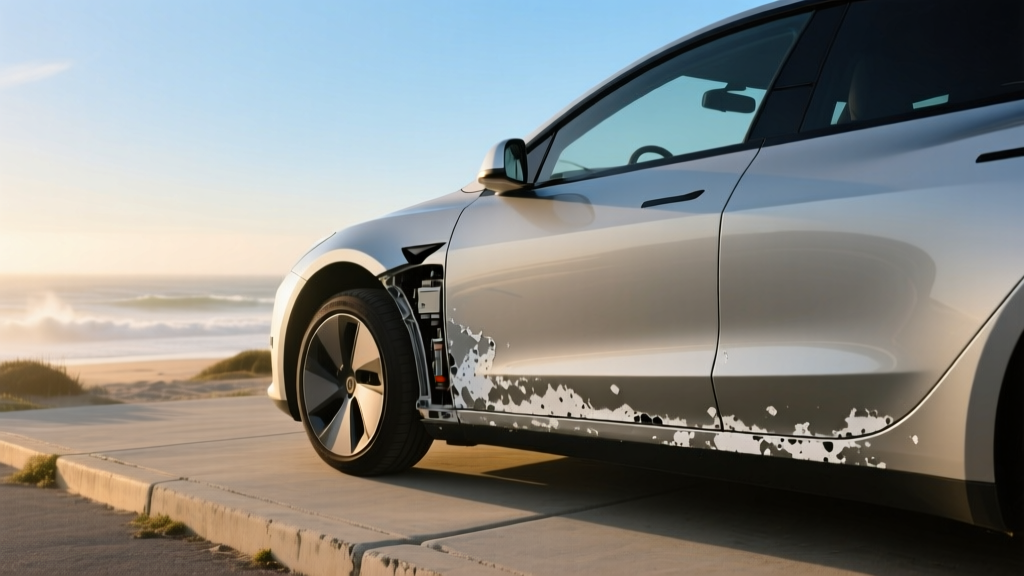
If you live within a few miles of the coast, you already know salt air is tough on cars. Rusty brake lines, pitted chrome, and corroded undercarriages are the norm for gas vehicles parked near the ocean. But what about your EV's high-voltage traction battery? The keyword on many coastal EV owners' minds is salt air battery durability — and the answer involves more than just the battery pack itself.
EV battery packs are sealed, liquid-cooled, and engineered to withstand significant environmental abuse. The real threat from salt air isn't to the battery cells directly, but to the high-voltage connectors, cooling lines, charging ports, and structural fasteners that support the pack. In this guide, we break down exactly what coastal exposure does to an EV's battery system, how long EV batteries actually last, what degradation data shows, and how to protect your investment whether you drive a Tesla Model Y, a Hyundai Ioniq 5, or a Ford F-150 Lightning in a beach town.
How Salt Air Interacts With EV Battery Systems
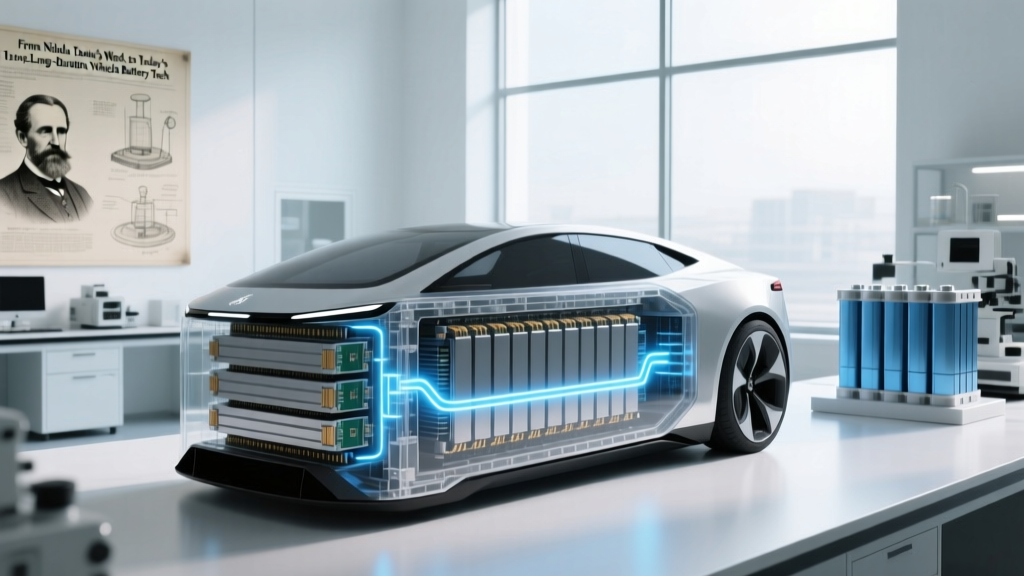
Modern EV battery packs are housed in sealed aluminum or steel enclosures rated to IP67 or higher — meaning they're protected against dust ingress and temporary water immersion. The cells themselves (whether LFP or NMC chemistry) are not directly exposed to ambient air. So salt air doesn't "get inside" the battery in normal operation.
The vulnerability lies at the interfaces:
- High-voltage cable connectors where the pack meets the power electronics — salt residue can accelerate galvanic corrosion on connector housings
- Coolant line fittings — the battery thermal management system uses glycol loops with aluminum fittings that are susceptible to chloride-induced pitting
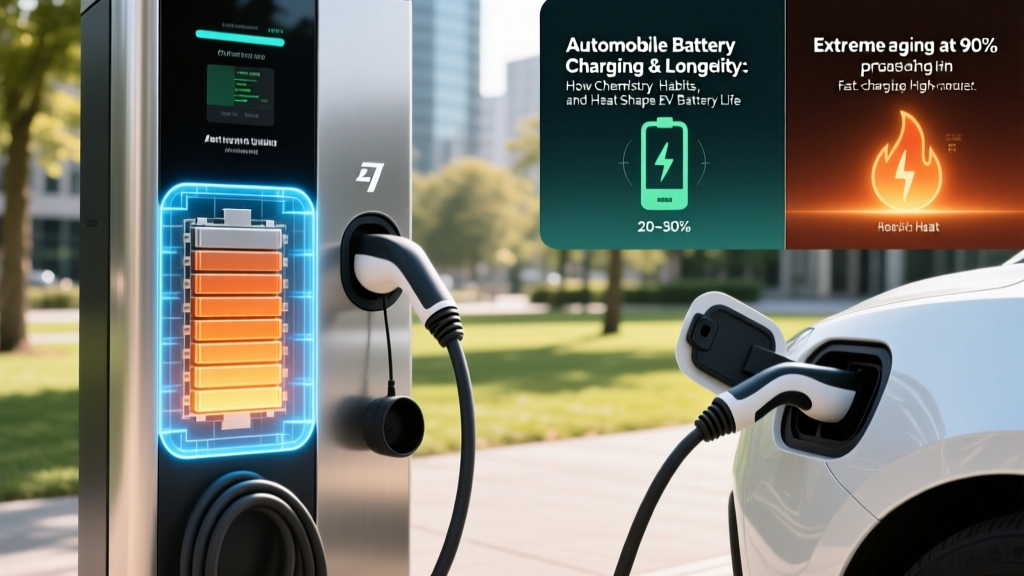
- Charging port assemblies — exposed to ambient air every time you plug in, and salt deposits can accumulate on CCS or NACS contacts over time
- Pack mounting hardware — structural bolts securing the pack to the vehicle floor are exposed to road spray and salt aerosol
- 12V battery terminals — the auxiliary battery (which powers electronics, not propulsion) is often in a less-sealed area and corrodes faster in coastal environments
Real-world data from fleet operators in coastal regions suggests that EVs driven within 5 miles of saltwater for 5+ years show measurably higher corrosion on external HV connectors compared to inland vehicles — though this rarely causes functional failure within typical ownership periods when basic maintenance is performed.
LFP vs NMC: Which Battery Chemistry Handles Coastal Life Better?
Before addressing salt air specifically, it's worth understanding the two dominant chemistries in 2026 EVs and how they differ in overall longevity — because chemistry determines cycle life, degradation rate, and ultimately how many years your pack will serve you regardless of where you live.
| Attribute | LFP (Lithium Iron Phosphate) | NMC/NCA (Nickel Manganese Cobalt / Nickel Cobalt Aluminum) |
|---|---|---|
| Energy Density | Lower (~160 Wh/kg cell-level) | Higher (~250-300 Wh/kg cell-level) |
| Typical Cycle Life | 3,000-5,000+ cycles to 80% SoH | 1,000-2,000 cycles to 80% SoH |
| Cold-Weather Performance | Weaker below 32°F; slower charging | Better low-temp discharge and charge acceptance |
| Thermal Stability | Superior; higher runaway threshold (~518°F) | Lower thermal runaway threshold (~410°F) |
| Cost per kWh | Lower (~$80-100/kWh at pack level) | Higher (~$110-140/kWh at pack level) |
| Recommended Daily SoC | 100% OK; benefits from periodic full charge | 80% daily; 100% only for trips |
| Notable 2026 Applications | Tesla Model 3/Y RWD, Ford Mustang Mach-E Select, Rivian Standard | Tesla Long Range, Hyundai Ioniq 5/6, BMW iX, GMC Sierra EV |
| Salt Air Vulnerability | No direct difference — pack sealing is identical | No direct difference — pack sealing is identical |
The takeaway for coastal buyers: chemistry doesn't change salt air exposure. Both LFP and NMC packs are sealed identically within a given automaker's platform. Where LFP holds an advantage is in total lifespan — its longer cycle life means the pack will likely outlast the vehicle's body, even if coastal corrosion eventually claims other components. If you plan to keep an EV 10+ years near the ocean, LFP's longevity edge is meaningful.
EV Battery Degradation: What the Data Actually Shows
One of the most persistent myths is that EV batteries "die" after a few years. The data tells a different story. According to aggregated fleet data and manufacturer reports, most EV batteries lose between 5-10% of their original capacity in the first 100,000 miles, then degrade more slowly afterward.
Typical Degradation Curve (NMC and LFP averaged across major OEMs):
- Year 1 / 15,000 mi: ~2-3% capacity loss (initial "break-in" drop)
- Year 3 / 45,000 mi: ~5-7% total loss
- Year 5 / 75,000 mi: ~7-9% total loss
- Year 8 / 120,000 mi: ~10-14% total loss
- Year 10 / 150,000 mi: ~12-18% total loss (varies significantly by usage)
Source: Geotab fleet battery health study, analyzing data from 10,000+ EVs across multiple model years.
For a 2026 Tesla Model Y Long Range with an EPA-rated 320 miles of range and a ~75 kWh usable NMC battery, 12% degradation at year 10 means roughly 282 miles of range — still eminently usable for daily driving and road trips with minimal DC fast charging.
For an LFP-equipped 2026 Tesla Model 3 RWD with an EPA 272-mile range and ~57.5 kWh usable battery, degradation is typically even slower. Fleet data shows LFP packs averaging just 8-10% loss at 150,000 miles when charged to 100% regularly — because LFP chemistry tolerates high SoC without the accelerated wear that NMC experiences at full charge.
Factors That Accelerate Battery Degradation (Coastal or Not)
Salt air is a corrosion concern, but the factors that actually degrade battery cells are largely universal. Here's what matters most, ranked by impact:
Battery Longevity Checklist:
- Avoid sustained high SoC on NMC: Daily charging to 100% on NMC/NCA chemistry accelerates electrolyte decomposition. Set your charge limit to 80% for daily use; 100% only before long trips. (LFP owners: charge to 100% at least weekly for BMS calibration.)
- Minimize DC fast charging above 150 kW when possible: Sustained high-C-rate charging generates internal heat. Occasional Supercharger stops are fine; daily 350 kW sessions add up. According to fueleconomy.gov, frequent DCFC can add 1-3% additional degradation over 100,000 miles versus Level 2-only charging.
- Precondition in extreme heat and cold: Battery thermal management works hardest at temperature extremes. Use your EV's preconditioning feature (scheduled departure or app-based) to bring the pack to optimal temperature before driving or charging.
- Don't let SoC sit at 0% or 100% for extended periods: If storing your EV for weeks, aim for ~50% SoC. Leaving an NMC pack at 100% in a hot garage for a month causes more calendar degradation than a year of normal cycling.
- Coastal-specific: Rinse the undercarriage monthly: Fresh water spray on the underbody, charging port area, and wheel wells removes salt accumulation. This protects HV connectors and coolant fittings from chloride corrosion.
- Coastal-specific: Inspect charging port contacts quarterly: Look for green/white corrosion deposits on CCS or NACS pins. Clean with electrical contact cleaner if deposits appear.
- Keep up with coolant service: Battery thermal management fluid should be checked per manufacturer intervals (typically every 4-5 years). Corroded coolant from neglected service is a bigger internal threat than salt air.
EV Battery Warranty Coverage: What's Protected and What Isn't
Federal law (EPA emissions warranty requirements) effectively mandates that EV battery packs carry at minimum an 8-year/100,000-mile warranty. Most automakers exceed this baseline. Here's how major 2026 warranties compare:
| Manufacturer | Battery Warranty | Capacity Retention Threshold | What's Covered |
|---|---|---|---|
| Tesla (Model 3/Y) | 8 yr / 120,000 mi (LR/AWD); 8 yr / 100,000 mi (RWD) | 70% of original capacity | Defects, excessive degradation below threshold |
| Hyundai / Kia | 10 yr / 100,000 mi | 70% of original capacity | Defects, capacity loss below threshold |
| Ford | 8 yr / 100,000 mi | 70% of original capacity | Defects, excessive degradation |
| General Motors (Ultium) | 8 yr / 100,000 mi | 70% of original capacity | Defects, capacity loss below threshold |
| BMW | 8 yr / 100,000 mi | 70% of original capacity | Defects, degradation below threshold |
| Rivian | 8 yr / 175,000 mi | 70% of original capacity | Defects, capacity loss below threshold |
Key nuance for coastal owners: Battery warranties cover cell degradation and manufacturing defects. They do not cover external corrosion damage to connectors, wiring harnesses, or coolant lines caused by environmental exposure. If salt air corrodes a high-voltage connector and causes a fault, that repair falls under the vehicle's general corrosion warranty (typically 5 years/unlimited miles for perforation on most brands) or may be classified as environmental damage. Check your specific warranty booklet — and document maintenance if you plan to make a claim.
EV Battery Replacement Cost: When and How Much
Here's the number every prospective EV buyer wants: what happens if the battery actually needs replacing? The honest answer is that the vast majority of EV batteries never need full replacement during typical ownership. But costs are real for the edge cases.
| Vehicle / Battery Size | Chemistry | Estimated Replacement Cost (2026) | Typical Replacement Trigger |
|---|---|---|---|
| Tesla Model 3 RWD (~57.5 kWh) | LFP | $10,000 - $13,000 | Rare before 200,000+ mi; physical damage more common |
| Tesla Model Y LR (~75 kWh) | NMC | $13,000 - $16,000 | Typically 150,000-250,000 mi if degradation-related |
| Hyundai Ioniq 5 (~77.4 kWh) | NMC | $14,000 - $18,000 | Warranty usually covers within 10 yr/100k mi |
| Ford F-150 Lightning Ext. Range (~131 kWh) | NMC | $22,000 - $30,000 | Large pack = higher cost; typically needed only after physical damage |
| Chevrolet Bolt EV (~65 kWh) | NMC | $14,000 - $16,000 | Post-recall replacement packs have shown strong longevity |
| Rivian R1T / R1S (~128 kWh Max) | NMC | $20,000 - $28,000 | Module-level repair may reduce cost; full pack rare |
Important context: most EV batteries outlive the vehicle. According to data from Recurrent Auto, fewer than 3% of EVs in their tracked fleet of 15,000+ vehicles have required battery replacement outside of recall campaigns. When replacements do happen, they're usually due to manufacturing defects caught under warranty, physical damage from collisions or flooding, or — rarely — degradation beyond the warranty threshold at very high mileage.
For coastal owners, the more realistic cost concern isn't the battery pack itself but the ancillary components: a corroded HV connector might cost $500-$1,500 to replace; a damaged charging port assembly runs $800-$2,000. These are manageable repairs, not total-loss scenarios.
How to Monitor Your EV Battery's State of Health (SoH)
State of Health (SoH) is the metric that tells you how much capacity your battery retains compared to when it was new. A brand-new pack is at 100% SoH; a pack that can only hold 85% of its original energy is at 85% SoH. Here's how to check it:
Manufacturer Apps and In-Vehicle Displays
Most 2026 EVs provide SoH estimates through the infotainment system or companion app. Tesla displays battery health percentage in the vehicle settings menu (added in 2024 software updates). Hyundai's Bluelink app shows estimated battery health. Ford's Pass app provides a similar metric. These readings are derived from the Battery Management System (BMS) and are based on coulomb counting and voltage curve analysis.
Third-Party Diagnostics
For a more independent assessment, services like Recurrent and Geotab offer battery health reports based on telematics data. Some independent EV shops can pull detailed BMS logs via OBD-II adapters (such as the OBDLink SX combined with apps like LeafSpy for Nissan or ABRP-linked tools for other brands). These logs show individual module voltages, internal resistance trends, and temperature variance — all indicators of pack health.
DIY Range Tracking
The simplest method: track your real-world efficiency (kWh/100mi or mi/kWh) over consistent routes at similar temperatures. If your 2024 Ioniq 5 was averaging 3.2 mi/kWh in 70°F weather when new and now averages 2.8 mi/kWh in the same conditions, that's roughly a 12% capacity decline. This isn't as precise as BMS data but gives you a practical sense of degradation.
Emerging Battery Tech: Solid-State and Beyond
If you're concerned about long-term battery durability — whether from salt air, degradation, or replacement cost — it's worth understanding what's coming next. But it's critical to separate announced timelines from available products.
Solid-state batteries replace the liquid electrolyte with a solid ceramic, polymer, or sulfide material. The promised benefits include higher energy density (potentially 400+ Wh/kg at cell level), faster charging, improved safety (no flammable electrolyte), and longer cycle life. Toyota has announced plans for commercial solid-state EV production targeting 2027-2028, with initial deployment in limited-run vehicles. Samsung SDI and QuantumScape are also advancing prototype cells. However, as of 2026, no mass-production vehicle uses solid-state batteries, and cost remains a significant barrier — early cells are estimated at 3-5x the cost of current lithium-ion.
Silicon anode technology is closer to market. Companies like Sila Nanotechnologies and Group14 are supplying silicon-dominant anode materials that increase energy density by 20-40% over traditional graphite anodes. The 2026 Mercedes-Benz G-Class electric (announced) is expected to feature silicon anode cells from Group14. This technology improves energy density but doesn't fundamentally change degradation patterns or salt air vulnerability.
Sodium-ion batteries are emerging as a low-cost alternative for shorter-range applications, using abundant sodium instead of lithium. CATL has begun production of sodium-ion cells for urban EVs in China. These offer lower energy density but excellent cycle life and cold-weather performance. U.S. availability in passenger vehicles is not expected before 2028 at the earliest.
For coastal buyers today, these technologies are forward-looking context — not purchasing factors. The sealed LFP and NMC packs in 2026 vehicles are mature, well-understood, and warrantied for the long haul.
Coastal EV Ownership: Practical Salt Air Battery Protection
Here's a summary action plan for EV owners in salt-air environments, distilled from fleet maintenance best practices and corrosion engineering principles:
- Wash the undercarriage bi-weekly during winter months (if your coastal area salts roads) and monthly year-round. Focus on the battery pack underside, charging port, and rear subframe.
- Apply dielectric grease to the 12V battery terminals and any accessible low-voltage connectors every 6 months. This is a $5 tube that prevents hundreds in corrosion-related electrical gremlins.
- Park in a garage when possible. Salt aerosol concentration drops dramatically indoors. Even a carport reduces deposition by 60-80% versus open-air parking.
- Inspect HV cable routing annually. Have a qualified EV technician check the high-voltage cables running from the pack to the inverter and charger for any signs of jacket cracking or connector corrosion.
- Use a ceramic coating or paint protection film on the lower body and rocker panels. While this doesn't directly protect the battery, it preserves the structural mounting points and reduces overall vehicle corrosion that could complicate future battery service.
- Don't skip coolant flushes. Battery thermal management coolant degrades over time and becomes acidic, which is a far greater internal corrosion threat than external salt air. Follow your manufacturer's coolant service interval exactly.
Frequently Asked Questions
How long do EV batteries last in years and miles?
Most EV batteries retain 80-88% of their original capacity at 150,000 miles and 10 years of typical use. LFP chemistry packs often exceed 90% retention at that mileage. Full failure before 200,000 miles is rare — fewer than 3% of tracked fleet vehicles have needed replacement outside of recalls. The battery will likely outlast the rest of the car, especially in coastal environments where body corrosion claims vehicles before powertrains fail.
How much does an EV battery cost to replace?
Replacement costs range from approximately $10,000 for smaller LFP packs (Tesla Model 3 RWD) to $30,000 for large NMC packs (Ford F-150 Lightning Extended Range). However, the vast majority of EVs never need a full battery replacement during normal ownership. Most degradation-related replacements are covered under the 8-year/100,000-mile minimum warranty. Out-of-pocket replacement is typically only necessary after physical damage or at very high mileage well beyond warranty.
What does the EV battery warranty actually cover?
Battery warranties cover manufacturing defects and capacity loss below a defined threshold — typically 70% of original capacity over 8 years/100,000 miles (10 years/100,000 for Hyundai/Kia). They do not cover external corrosion damage, physical damage from accidents or flooding, or degradation caused by abuse (though defining "abuse" is often contested). Environmental corrosion from salt air on external connectors is generally not covered under the battery warranty but may fall under the vehicle's corrosion perforation warranty.
How do I check and maximize my EV battery health?
Check SoH through your vehicle's app or settings menu, third-party telematics services, or by tracking real-world efficiency over consistent routes. Maximize longevity by: charging NMC to 80% daily (100% for LFP), minimizing daily DC fast charging, preconditioning in temperature extremes, avoiding prolonged storage at 0% or 100% SoC, and keeping up with coolant service. For coastal owners, add regular undercarriage rinsing and connector inspections.
LFP vs NMC — which is better for coastal, long-term ownership?
For a 10+ year coastal ownership plan, LFP has a slight edge due to its superior cycle life (3,000-5,000 cycles vs 1,000-2,000), tolerance for 100% daily charging, and lower replacement cost. However, NMC offers better range per kWh, stronger cold-weather performance, and faster DC charging — which may matter more depending on your driving patterns. Neither chemistry is more or less vulnerable to salt air, since the pack sealing is identical within a given platform.
Does salt air void my EV battery warranty?
No. Simply living near the coast or driving in salt air does not void your battery warranty. However, if a failure is directly caused by environmental corrosion (e.g., salt-crusted connectors causing a short) rather than a cell defect or normal degradation, the manufacturer may classify it as environmental damage. Documenting regular maintenance — undercarriage washes, connector inspections — strengthens any warranty claim.