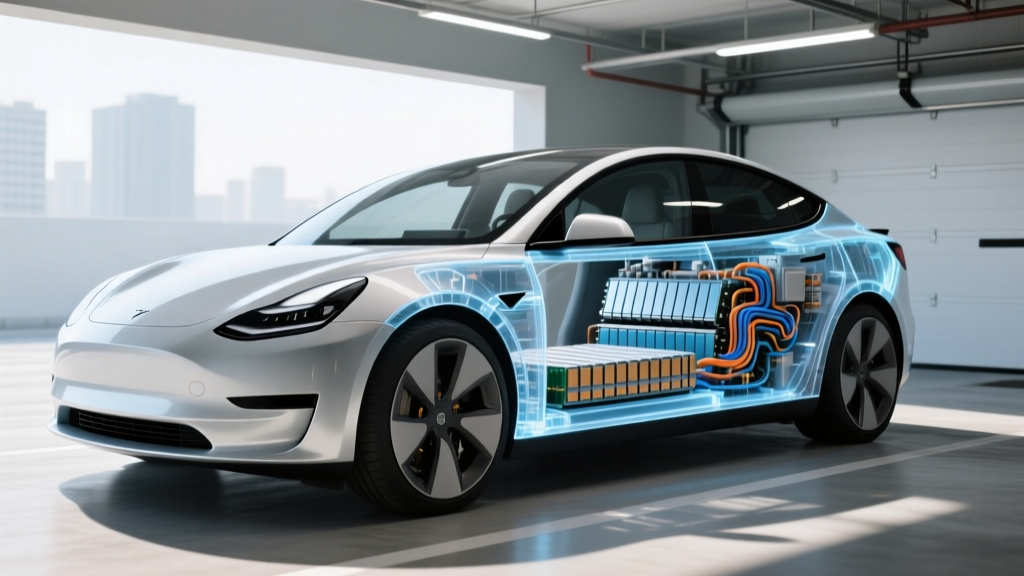
If you're researching whether you'll eventually need a new battery for electric cars, you're not alone. Battery longevity remains one of the most searched — and most misunderstood — topics in EV ownership. The short answer: most modern EV traction batteries will outlast the vehicle itself. But when replacement is necessary, understanding the chemistry, cost, and coverage beforehand makes all the difference.
This guide breaks down the real data on EV battery degradation, replacement economics, and the care habits that maximize pack life — all from a 2026 ownership perspective.
How Long Do EV Batteries Actually Last?
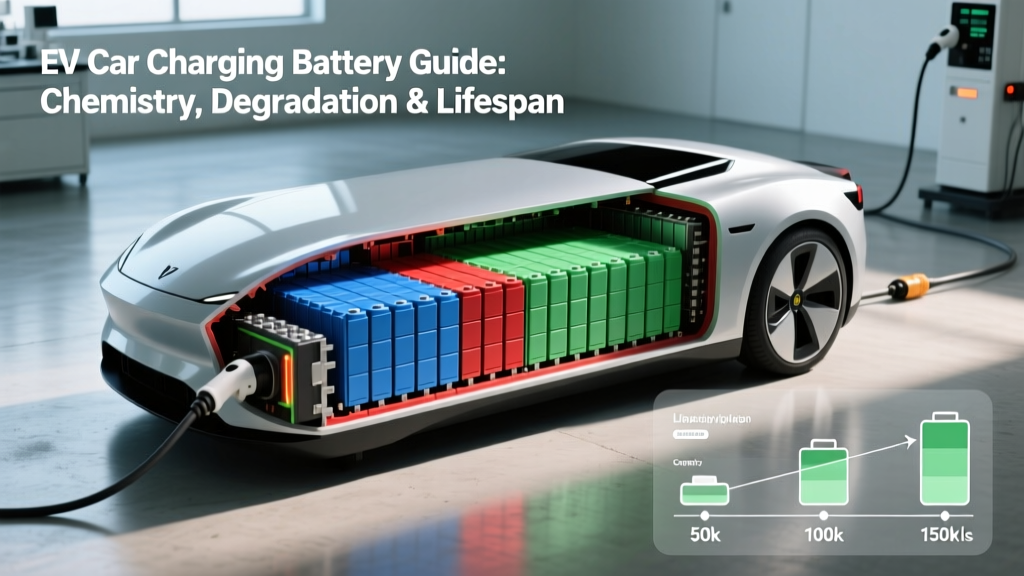
Most lithium-ion traction batteries in current-production EVs are engineered for 1,500 to 3,000 full charge cycles before reaching 70–80% of original capacity. Translated to mileage, that's roughly 150,000 to 300,000 miles depending on chemistry, thermal management, and usage patterns.
Real-world fleet data supports this. Tesla's 2025 Impact Report showed Model 3/Y packs retaining approximately 85% capacity at 150,000 miles. Hyundai-Kia's E-GMP platform vehicles (Ioniq 5, EV6) have shown similar trajectories in independent fleet sampling. The Nissan Leaf — with its older passive-air-cooled packs — historically degraded faster, losing 10–15% in the first five years, which is why active liquid cooling is now the industry standard.
Typical Degradation Curve (Liquid-Cooled NMC Pack):
- Year 1 / 15,000 mi: ~2–4% loss (initial formation drop)
- Year 3 / 45,000 mi: ~6–8% total loss
- Year 5 / 75,000 mi: ~8–10% total loss
- Year 8 / 120,000 mi: ~10–14% total loss
- Year 10 / 150,000 mi: ~12–17% total loss
Source: Tesla Impact Report, Geotab fleet battery health study (2024–2025 data).
The curve isn't linear. Most packs lose 2–4% in the first year (electrolyte formation and SEI layer stabilization), then degradation slows considerably. A well-maintained pack at 100,000 miles may only be losing 1% per year.
LFP vs NMC/NCA: Which Battery Chemistry Is Right for You?
Not all EV batteries are built the same. The two dominant cathode chemistries in 2026 — lithium iron phosphate (LFP) and nickel manganese cobalt / nickel cobalt aluminum (NMC/NCA) — offer fundamentally different trade-offs.
| Attribute | LFP (LiFePO₄) | NMC / NCA |
|---|---|---|
| Energy Density | Lower (~160–180 Wh/kg cell-level) | Higher (~230–280 Wh/kg cell-level) |
| Cycle Life | 3,000–5,000+ cycles | 1,500–2,500 cycles |
| Cost per kWh | ~$85–$100 (cell-level) | ~$110–$140 (cell-level) |
| Cold-Weather Performance | More range loss below 32°F | Better low-temp efficiency |
| Recommended SoC Range | Can charge to 100% daily | Best kept 20–80% daily; 100% for trips |
| Thermal Stability | Higher — less prone to thermal runaway | Good, but requires robust BMS |
| Typical Applications | Tesla Model 3 RWD, base Model Y, Ford Mustang Mach-E Select | Long-range and performance trims, luxury EVs |
Bottom line: If you prioritize maximum range and cold-weather performance, NMC/NCA is the stronger pick. If you want a longer-lasting pack you can charge to 100% without anxiety — and you don't need the last 30 miles of range — LFP is the more durable, cost-effective choice.
How Much Does a New Battery for Electric Cars Cost?
Out-of-warranty battery replacement is the scenario most owners fear. Here's what it actually costs in 2026, based on manufacturer service bulletins and independent EV repair shops:
| Vehicle / Pack Size | Battery Cost (Parts) | Labor | Total Estimate |
|---|---|---|---|
| Tesla Model 3 RWD (~60 kWh LFP) | $6,500–$8,500 | $1,500–$2,500 | $8,000–$11,000 |
| Tesla Model Y LR (~82 kWh NMC) | $10,000–$13,000 | $1,800–$3,000 | $12,000–$16,000 |
| Hyundai Ioniq 5 (~77.4 kWh NMC) | $9,000–$12,000 | $1,500–$2,500 | $10,500–$14,500 |
| Ford F-150 Lightning Ext. Range (~131 kWh) | $18,000–$24,000 | $2,500–$4,000 | $20,500–$28,000 |
| Chevrolet Equinox EV (~85 kWh NMC) | $9,500–$12,500 | $1,500–$2,500 | $11,000–$15,000 |
Context that matters: The vast majority of EV owners will never pay these costs. Federal law mandates a minimum battery warranty of 8 years / 100,000 miles for EVs sold in the US, and many manufacturers exceed this. Most packs reach end-of-vehicle life before they need replacement. When they do, refurbished and remanufactured packs are increasingly available at 40–60% of new-pack pricing.
Cell-level pricing has also continued its downward trajectory. According to BloombergNEF, average lithium-ion pack prices fell below $115/kWh at the pack level in late 2025, and further declines are expected through 2027 as LFP adoption and manufacturing scale increase.
What Does the EV Battery Warranty Actually Cover?
Every new EV sold in the United States carries a federally mandated battery warranty: minimum 8 years / 100,000 miles (whichever comes first). In California Air Resources Board (CARB) states, the requirement extends to 10 years / 150,000 miles for PZEV/EZEV classifications.
| Manufacturer | Warranty Term | Capacity Retention Threshold |
|---|---|---|
| Tesla (Model 3/Y) | 8 yr / 120,000 mi (LR/AWD); 8 yr / 100,000 mi (RWD) | 70% |
| Hyundai / Kia | 10 yr / 100,000 mi | 70% |
| Ford | 8 yr / 100,000 mi | 70% |
| General Motors (Ultium) | 8 yr / 100,000 mi | 70% (most models) |
| BMW | 8 yr / 100,000 mi | 70% |
| Rivian | 8 yr / 175,000 mi | 70% |
The key number is the capacity retention threshold — typically 70%. If your battery degrades below 70% of its original usable capacity within the warranty period, the manufacturer must repair or replace it at no cost. In practice, this means a vehicle that originally had 250 miles of EPA range would be covered if it dropped below ~175 miles.
Important nuance: warranties cover defects and abnormal degradation. Damage from collisions, flooding, or aftermarket modifications is excluded. Some manufacturers also require you to follow recommended charging practices — routinely charging an NMC pack to 100% and leaving it in extreme heat could theoretically complicate a claim, though this is rarely enforced.
Factors That Accelerate (or Slow) Battery Degradation
Battery longevity isn't random. It's driven by a handful of well-understood electrochemical stressors:
Habits That Maximize Battery Life:
- Stay in the 20–80% SoC window for NMC/NCA daily driving. LFP owners can charge to 100% regularly (Tesla recommends at least weekly 100% charges for LFP calibration).
- Limit DC fast charging to road trips. Frequent 150+ kW sessions increase cell temperature and accelerate electrolyte decomposition. Level 2 home charging at 7–11 kW is ideal for daily use.
- Precondition your battery before fast charging. Most modern EVs do this automatically when you navigate to a charger — it warms the cells to the optimal ~95°F for lithium intercalation, reducing plating risk.
- Avoid prolonged storage at 100% or below 10%. If storing for weeks, target 50% SoC and a cool environment.
- Park in shade or a garage during extreme heat. Sustained cell temps above 104°F (40°C) accelerate calendar aging even when the car is off.
- Use regenerative braking instead of friction brakes — it reduces overall energy throughput and generates less heat in the pack.
Habits That Accelerate Degradation:
- Daily DC fast charging (especially above 150 kW without preconditioning)
- Routinely draining below 10% or sitting at 0% SoC
- Leaving an NMC pack at 100% SoC for extended periods in hot climates
- Repeated high-C-rate discharges (e.g., frequent launch-mode acceleration)
The single biggest factor within your control is charge rate and SoC range. A 2024 study by Geotab analyzing over 10,000 EVs found that vehicles that DC fast-charged more than three times per month showed measurably higher degradation rates than those primarily using Level 2 charging — though the difference was roughly 1–2% over five years, not catastrophic.
How to Monitor Your EV Battery's State of Health (SoH)
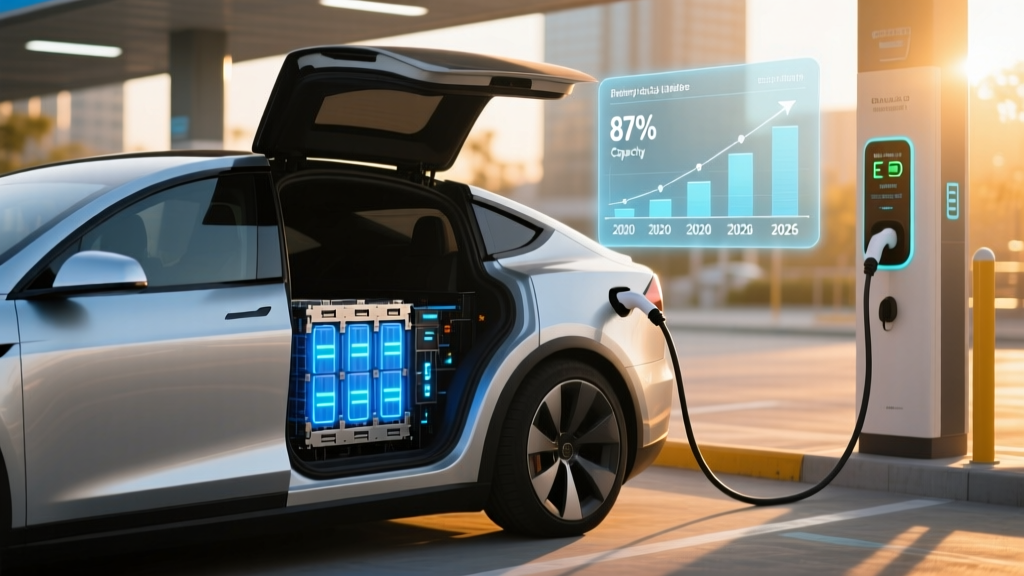
State of Health (SoH) is the percentage of your battery's original usable capacity that remains available. A brand-new pack is 100% SoH; a pack that's degraded 12% sits at 88% SoH.
In-vehicle tools: Most modern EVs display SoH or remaining capacity in the settings or battery menu. Tesla shows it under Service > Battery Health. Hyundai/Kia includes it in the EV battery diagnostics screen. BMW iDrive displays a battery health percentage.
OBD-II and third-party apps: For more granular data, an OBD-II Bluetooth adapter paired with apps like Leaf Spy (Nissan Leaf), TeslaFi, or Car Scanner can pull real-time cell voltage deltas, pack temperature, and precise SoH figures directly from the BMS.
Dealer diagnostics: If you suspect abnormal degradation — or you're approaching a warranty claim — a dealer can run a full capacity test. This typically involves a controlled discharge cycle and takes 1–3 hours.
What to watch for: A sudden jump in degradation rate (e.g., losing 3% in a single month after years of 1% annual loss) could indicate a failing cell module or BMS issue. Uneven cell voltages (visible through OBD apps) are also an early warning sign.
Emerging Battery Tech: Solid-State, Silicon Anodes, and What's Real
The battery landscape is evolving rapidly, but it's critical to separate shipping technology from lab promises:
Silicon-dominant anodes: Companies like Sila Nanotechnologies and Group14 are shipping silicon-blend anodes in limited production as of 2025–2026, boosting energy density by 15–25%. Expect to see broader adoption in 2027–2028 model-year vehicles. This is real but early.
Semi-solid-state batteries: NIO's 150 kWh semi-solid pack is in limited deployment in China. Toyota, Samsung SDI, and QuantumScape have announced solid-state pilot production timelines of 2027–2029, with commercial-scale availability unlikely before 2030. These promise 2–3x energy density and faster charging, but manufacturing yield and cost remain significant hurdles.
Sodium-ion batteries: CATL and BYD are deploying sodium-ion packs in entry-level Chinese-market EVs. Energy density is ~20% lower than LFP, but cost is significantly lower and cold-weather performance is superior. US-market availability is projected for 2028–2029 in budget segments.
What this means for today's buyers: Current NMC and LFP batteries are mature, well-understood, and backed by extensive warranty coverage. Waiting for solid-state is not a practical strategy — the technology won't reach mainstream US vehicles for at least 4–5 years, and early adoption will carry a premium.
Frequently Asked Questions
How long do EV batteries last in years and miles?
Most modern liquid-cooled EV batteries last 150,000–300,000 miles (roughly 12–20 years for average drivers) before degrading below 70–80% capacity. Fleet data from Tesla and Geotab confirms that typical degradation is 10–15% over the first 150,000 miles.
How much does an EV battery cost to replace in 2026?
Out-of-warranty replacement ranges from approximately $8,000 for a Tesla Model 3 RWD LFP pack to $20,000–$28,000 for a Ford F-150 Lightning extended-range pack. Most owners never pay this — the federal 8-year/100,000-mile warranty covers abnormal degradation, and many packs last the life of the vehicle.
What does the EV battery warranty cover?
Federal law requires a minimum 8-year/100,000-mile warranty on EV batteries. If your pack degrades below the manufacturer's threshold (typically 70% of original capacity) within that period, the automaker repairs or replaces it free of charge. CARB states extend this to 10 years/150,000 miles.
LFP or NMC — which battery chemistry is better?
It depends on your priorities. LFP offers longer cycle life (3,000–5,000+ cycles), lower cost, and the ability to charge to 100% daily, but sacrifices range and cold-weather efficiency. NMC/NCA delivers higher energy density and better cold performance but degrades faster and should be kept between 20–80% for daily use.
How do I check my EV battery health?
Most EVs display State of Health (SoH) in the battery or service settings menu. For detailed cell-level data, use an OBD-II adapter with apps like TeslaFi, Leaf Spy, or Car Scanner. Dealers can also run a full capacity test if you suspect abnormal degradation.
Does fast charging damage my EV battery?
Occasional DC fast charging is fine and expected. However, frequent high-power sessions (150+ kW) without proper preconditioning accelerate degradation by roughly 1–2% over five years compared to primarily Level 2 charging. Use Level 2 at home for daily needs and reserve DC fast charging for road trips.
Will solid-state batteries make current EVs obsolete?
Not anytime soon. Solid-state batteries remain in pilot production as of 2026, with commercial-scale US-market availability unlikely before 2030. Current NMC and LFP packs are mature, well-warrantied, and cost-effective. Waiting for solid-state is not a practical purchase strategy.
The bottom line for EV shoppers and owners: a new battery for electric cars is a last-resort expense that very few will ever face. Between robust federal warranties, declining cell costs, and mature chemistry platforms, the battery is the least likely major component to strand you. Focus on smart charging habits, monitor your SoH periodically, and let the data — not the fear — guide your ownership decisions.