The Truth About Your EV's Car Charging Battery
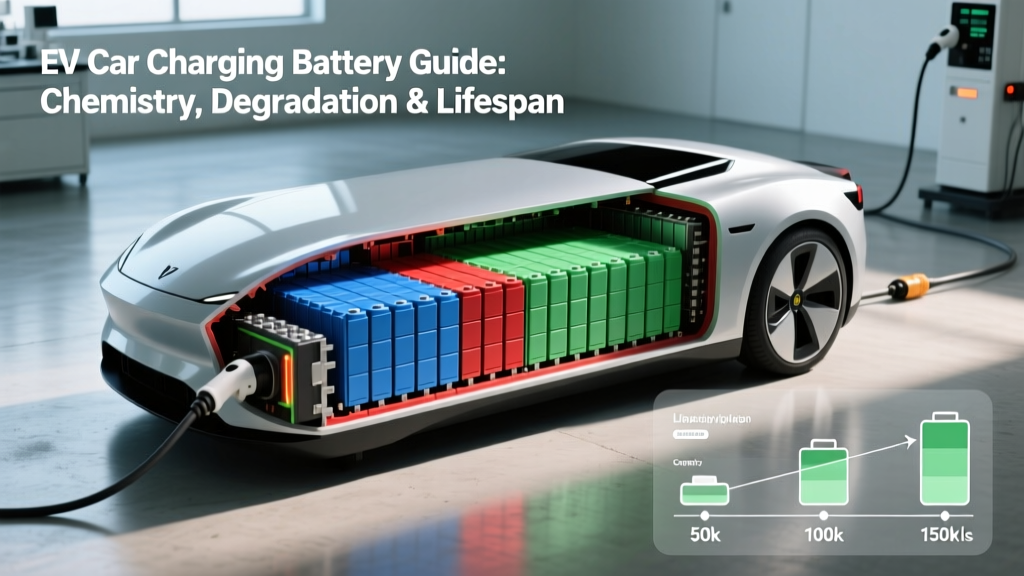
The high-voltage traction battery is the single most expensive component in any electric vehicle — and the one buyers worry about most. Unlike the 12V auxiliary battery that powers your lights and infotainment (which still exists in every EV), the traction battery is the massive lithium-ion pack that actually propels the car. It typically accounts for 25–40% of a new EV's MSRP and stores anywhere from 50 to 130+ kWh of usable energy.
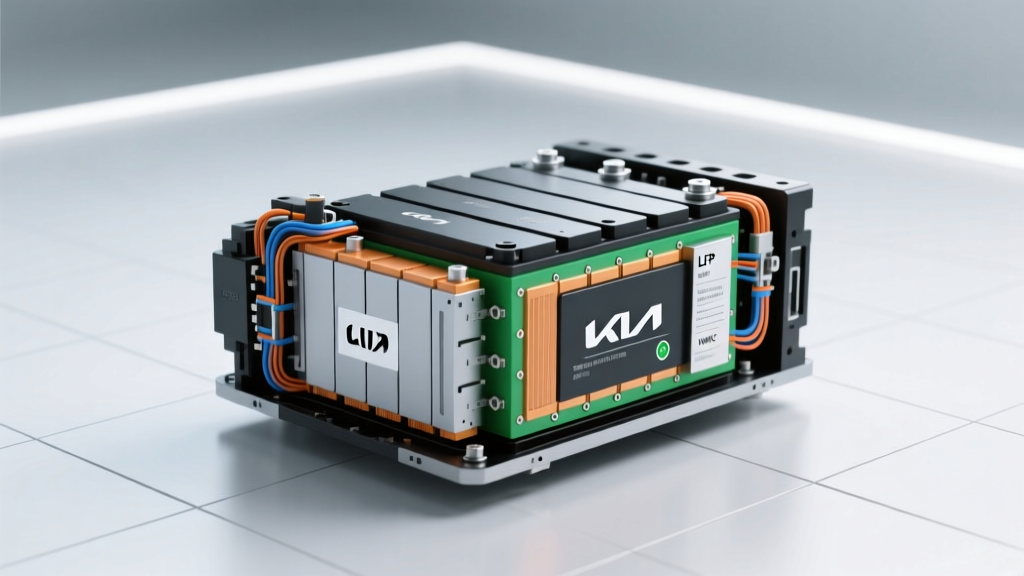
For 2026 model-year vehicles, the two dominant chemistries are NMC (nickel manganese cobalt) and LFP (lithium iron phosphate). Each has distinct trade-offs in energy density, longevity, cold-weather behavior, and cost — and knowing which pack is in the EV you're considering changes how you should charge, maintain, and think about long-term ownership.
This guide breaks down exactly what's inside today's EV car charging battery systems, how they degrade over real-world use, what warranties actually cover, and what replacement costs look like if you ever need one.
LFP vs NMC/NCA: Which Battery Chemistry Is in Your EV?
Battery chemistry determines how much energy the pack stores per kilogram, how many charge cycles it tolerates before meaningful degradation, how it behaves in freezing weather, and what it costs to manufacture. In 2026, nearly every mainstream EV uses one of two lithium-ion variants:
| Attribute | LFP (Lithium Iron Phosphate) | NMC / NCA (Nickel-based) |
|---|---|---|
| Energy density | ~160–180 Wh/kg (cell level) | ~230–280 Wh/kg (cell level) |
| Typical vehicles | Tesla Model 3/Y RWD, base BYD models, some Ford F-150 Lightning trims | Tesla Long Range/Performance, Hyundai Ioniq 5/6, Rivian, most premium EVs |
| Cycle life | 3,000–5,000+ cycles to 80% capacity | 1,000–2,500 cycles to 80% capacity |
| Cold performance | More range loss below 32°F; slower charge acceptance when cold | Better low-temp performance; preconditioning still critical |
| Recommended daily SoC | 100% is fine — manufacturers recommend periodic full charges for BMS calibration | 80% daily; 100% only for road trips |
| Cobalt content | Zero cobalt, zero nickel | Contains cobalt and nickel (sourcing varies) |
| Cost advantage | ~15–25% cheaper per kWh to produce | Higher material cost |
| Weight penalty | Heavier pack for equivalent range | Lighter pack enables longer EPA range in same footprint |
Which is better? It depends on your use case. If you charge at home daily, drive under 250 miles between charges, and want maximum cycle life, LFP is the pragmatic pick — you can charge to 100% without guilt, and the pack will likely outlast the vehicle. If you need 320+ miles of EPA range, frequently road-trip, or live in a cold climate where every kWh matters, NMC's superior energy density and cold-weather charge acceptance make it the stronger choice.
How Long Do EV Batteries Actually Last?
The short answer: far longer than most buyers assume. Data from fleet operators, manufacturer reports, and independent testing consistently shows that modern liquid-cooled EV batteries retain 85–95% of original capacity after 100,000 miles. Complete failure before 150,000 miles is rare in liquid-cooled packs.
Observed Degradation Data Points
- Tesla 2025 Impact Report: Model 3/Y packs retain an average of ~88% capacity at 200,000 miles. Model S/X (older NCA packs) retain ~85% at the same mileage.
- Geotab fleet study (2024 update, 10,000+ EVs): Average annual degradation across all models was 1.8% per year, with liquid-cooled packs averaging 1.3% and passively cooled packs averaging 2.9%.
- Recurrent Auto data (2025): Chevrolet Bolt EV (NMC, liquid-cooled, 65 kWh pack) showed median 93% State of Health at 50,000 miles and 87% at 100,000 miles.
- Taxi fleet Tesla Model 3 data: Vehicles driven 100,000+ miles/year with frequent DC fast charging showed ~80% SoH at 300,000 miles — still functional, but with noticeable range reduction.
Most EV owners will sell or trade the vehicle before the battery reaches 70% capacity — the threshold at which range loss becomes genuinely inconvenient on longer trips. For a 300-mile EPA-rated EV, 70% capacity means ~210 miles of usable range, which remains viable for daily commuting.
What Does the Battery Warranty Actually Cover?
Federal law mandates a minimum 8-year/100,000-mile warranty on EV battery packs for emissions-related compliance, and every major automaker meets or exceeds this baseline. California and states adopting CARB rules (the "Section 177 states") require 10 years/150,000 miles. Here's how the major warranties stack up for 2026 models:
| Manufacturer | Warranty Period | Mileage Limit | Capacity Threshold |
|---|---|---|---|
| Tesla (Model 3/Y RWD — LFP) | 8 years | 100,000 miles | 70% retention |
| Tesla (Model 3/Y LR — NMC) | 8 years | 120,000 miles | 70% retention |
| Hyundai / Kia | 8 years | 100,000 miles | 70% retention |
| Ford (F-150 Lightning, Mustang Mach-E) | 8 years | 100,000 miles | 70% retention |
| Rivian | 8 years | 175,000 miles | 70% retention |
| BMW (iX, i4) | 8 years | 100,000 miles | 70% retention |
| GM (Ultium platform) | 8 years | 100,000 miles | 70% retention (some models 60%) |
Critical nuance: Warranty coverage triggers only when capacity drops below the stated threshold — not when you notice any degradation. If your pack measures 71% SoH at 7 years and 90,000 miles, you don't qualify for a replacement. The warranty also typically excludes damage from accidents, flooding, improper modifications, or using non-approved charging equipment. Always read the specific warranty booklet for your model year.
How Much Does an EV Battery Replacement Cost?
This is the question that generates the most fear — and the most misinformation. Yes, a full pack replacement is expensive. But context matters: the vast majority of EV batteries never need replacement during the vehicle's useful life, and costs have been declining steadily.
| Vehicle / Pack Size | Battery Chemistry | Estimated Replacement Cost |
|---|---|---|
| Tesla Model 3 RWD (~57 kWh) | LFP | $8,000–$12,000 |
| Tesla Model Y Long Range (~75 kWh) | NMC | $12,000–$16,000 |
| Hyundai Ioniq 5 (~77.4 kWh) | NMC | $11,000–$15,000 |
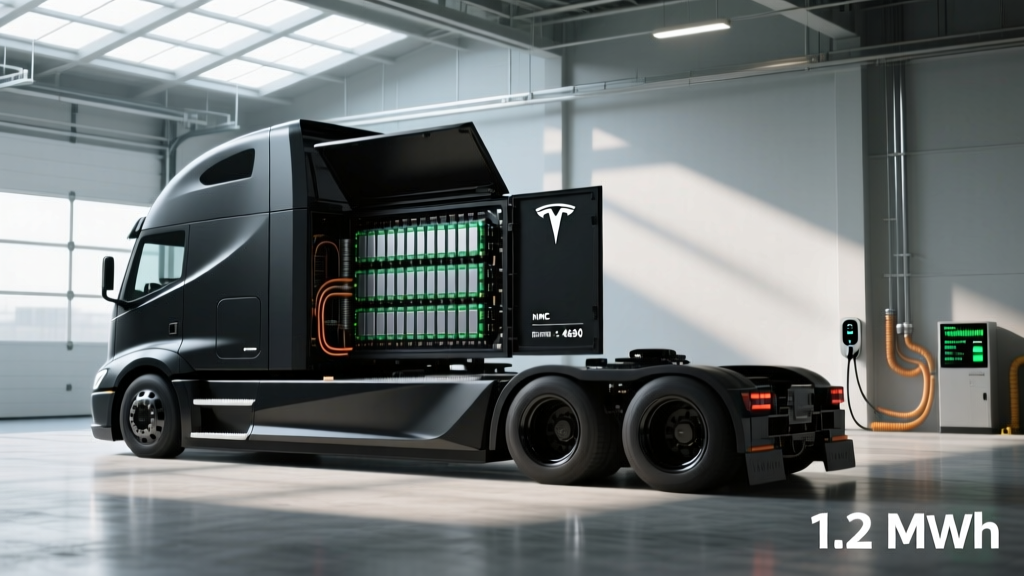
| Ford F-150 Lightning Extended (~131 kWh) | NMC | $20,000–$28,000 |
| Chevrolet Equinox EV (~85 kWh) | NMC (Ultium) | $13,000–$18,000 |
| Nissan Leaf (40 kWh, passively cooled) | NMC | $6,500–$9,000 |
These figures represent out-of-warranty replacements at a dealership or authorized service center. Independent EV shops and refurbished packs can reduce costs by 30–40%. Module-level repair — replacing individual degraded modules rather than the entire pack — is increasingly available for packs like the Bolt, Leaf, and older Tesla models, often for $2,000–$6,000 depending on how many modules need swapping.
For perspective: a $15,000 battery replacement at 200,000 miles still nets an EV owner significantly lower total fuel and maintenance costs compared to a gas vehicle over the same distance. And by the time today's EVs need a new pack, next-generation cells will likely cost substantially less.
What Affects Battery Life — and What You Can Control
Not all miles are equal when it comes to degradation. A battery charged gently at home on Level 2 in moderate temperatures will age far more gracefully than one DC fast-charged daily in Phoenix summers. Here are the factors that matter most, ranked by impact:
Battery Longevity Factors (Ranked by Impact)
- Heat exposure (highest impact): Sustained pack temperatures above 95°F accelerate chemical degradation. Liquid-cooled packs mitigate this significantly, but parking in direct sun in Arizona summers still takes a toll. Garage parking and preconditioning while plugged in help.
- State of charge habits: For NMC packs, regularly sitting at 100% SoC stresses the cathode. Keeping daily charge between 20–80% is the well-documented sweet spot. LFP packs are more tolerant of 100% SoC and manufacturers actually recommend periodic full charges for cell balancing.
- DC fast charging frequency: Occasional DC fast charging (1–2x per week) shows negligible extra degradation in modern liquid-cooled packs. Daily DC fast charging — especially to high SoC — does measurably accelerate wear. Tesla's own data shows taxi fleets fast-charging multiple times daily saw ~5% additional loss at 100,000 miles vs. home-charged vehicles.
- Depth of discharge: Running the battery to very low SoC (below 10%) and letting it sit there stresses cells. Charge soon after reaching low states.
- Cold charging without preconditioning: Forcing high kW into a freezing pack causes lithium plating on the anode — a permanent capacity loss mechanism. Always precondition before DC fast charging in cold weather. Most EVs do this automatically when you navigate to a charger.
The practical takeaway: if you charge at home on Level 2 (7–11 kW), set NMC packs to 80% daily, use DC fast charging for road trips rather than daily commuting, and avoid leaving the car at very low or very high SoC for extended periods, your battery will almost certainly outlast your ownership.
How to Check and Monitor Your Battery's State of Health
State of Health (SoH) is a percentage representing your battery's current maximum capacity relative to its original capacity when new. A 90% SoH on a 75 kWh pack means it can now store about 67.5 kWh when fully charged. Here's how to check it:
In-vehicle methods:
- Tesla: The 2025+ software includes a Battery Health screen under Service mode showing SoH percentage, cycle count, and degradation curve. Access by holding the model name on the About screen for 3 seconds.
- Hyundai/Kia: The EV-specific menu in the instrument cluster shows battery conditioning status. For detailed SoH, a dealer scan tool reads the BMS directly.
- Ford: The FordPass app provides a battery health indicator. A full diagnostic report requires a dealer visit.
Third-party tools:
- OBD-II dongles + apps: Tools like OBDLink MX+ paired with apps such as EVNotify or LeafSpy (for Nissan Leaf) can read SoH, cell voltages, and pack temperature directly from the BMS.
- Recurrent Auto: A free service that connects to your EV's telematics and provides ongoing SoH tracking, degradation projections, and comparisons to similar vehicles in their fleet.
- Dealer diagnostic: Any authorized service center can pull a full battery health report, usually during routine service visits. Request a printout for your records — it's valuable for resale.
Track SoH every 6–12 months. If you see a sudden drop (more than 2–3% in a short period), it may indicate a failing module or thermal management issue worth investigating under warranty.
What's Next: Solid-State and Silicon-Anode Batteries
Next-generation battery technologies are in active development and limited production, but none are available in consumer vehicles you can buy today. Here's a realistic timeline based on current manufacturer roadmaps:
Silicon-anode batteries: Companies like Sila Nanotechnologies and Group14 are already supplying silicon-dominant anode materials for select 2025–2026 model-year vehicles (notably the Mercedes G-Class EV). Silicon anodes offer 20–40% higher energy density than graphite. Expect broader adoption across premium EVs by 2027–2028, with mainstream vehicles following by 2029–2030.
Solid-state batteries: Toyota, Samsung SDI, and QuantumScape have demonstrated prototype cells with 500+ mile range potential and 10-minute charging. Toyota has announced a 2027–2028 limited production target. However, manufacturing scale-up remains the critical bottleneck. Realistic volume production for mainstream EVs is 2029–2032, not earlier. Any claims of solid-state EVs "coming next year" should be treated with skepticism.
Sodium-ion batteries: CATL and BYD are producing sodium-ion packs for lower-cost, shorter-range EVs in China. Energy density (~140 Wh/kg) limits these to city cars and budget models. US-market availability is uncertain and likely post-2028.
For buyers deciding today: current lithium-ion technology (both LFP and NMC) is mature, well-understood, and backed by extensive degradation data. Waiting for solid-state means waiting 3–6+ years for vehicles that will initially carry a significant price premium.
Frequently Asked Questions
How long do EV car charging batteries last in years and miles?
Based on fleet data and manufacturer reports, modern liquid-cooled EV batteries typically retain 85–90% capacity at 150,000 miles and 80–85% at 200,000 miles. In years, that translates to 12–20 years for average drivers covering 10,000–15,000 miles annually. Most packs will function (with reduced range) well beyond 250,000 miles.
Is it bad to charge my EV to 100% every night?
For NMC/NCA packs, yes — sustained 100% SoC accelerates cathode degradation. Set your daily limit to 80% and charge to 100% only when you need full range. For LFP packs, manufacturers actually recommend charging to 100% at least weekly for proper cell balancing and BMS accuracy. Check your owner's manual for your specific chemistry.
Does DC fast charging damage my battery?
Occasional DC fast charging (a few times per week) causes negligible additional degradation in modern liquid-cooled packs. Daily exclusive use of DC fast charging does measurably increase wear — Tesla's fleet data shows roughly 3–5% additional capacity loss at 100,000 miles for vehicles that rarely use Level 2. The biggest risk is fast charging a cold pack without preconditioning, which can cause permanent lithium plating.
What happens if my EV battery fails out of warranty?
You have several options: full pack replacement at a dealer ($8,000–$28,000 depending on vehicle), module-level repair at an independent EV shop ($2,000–$6,000), or a refurbished/remanufactured pack from third-party suppliers. Some owners of older models (Leaf, early Model S) opt for a used pack from a salvage vehicle for $3,000–$7,000. The vehicle is not totaled by a battery failure — it's a replaceable component, like an engine or transmission in a gas car.
Can I upgrade my EV's battery to a larger capacity later?
In most cases, no. EV battery packs are engineered for specific vehicle architectures, and the BMS, thermal management, and structural integration are pack-specific. Exceptions exist: some older Nissan Leaf owners have upgraded from 24 kWh to 40 kWh packs through specialized shops, and Tesla has occasionally offered upgrade paths for older Model S vehicles. For current-generation EVs, plan your battery size at purchase.
How does cold weather affect my car charging battery?
Cold temperatures reduce both range and charging speed. Expect 20–40% range loss in sub-freezing conditions due to increased cabin heating demand and reduced battery efficiency. DC fast charging speeds drop dramatically when the pack is cold — a pack that charges at 250 kW at 70°F may accept only 40–60 kW at 20°F without preconditioning. Always use your EV's navigation-based preconditioning when heading to a fast charger in cold weather.
Sources: fueleconomy.gov for EPA range and efficiency data; IRS §30D for current federal tax credit rules affecting EV purchase economics; manufacturer warranty documentation from Tesla, Hyundai, Ford, and Rivian official press sites.