If a battery warning light illuminates on your EV's dashboard, it's natural to feel a spike of concern. Unlike a gas car's check-engine light—which can mean anything from a loose fuel cap to a failing catalytic converter—an EV's battery-related warning is almost always tied to the high-voltage traction battery, the single most expensive component in your vehicle. Understanding what that light means, how long your battery is engineered to last, and what it actually costs to replace one separates informed ownership from unnecessary anxiety.
This guide covers everything a current or prospective EV owner needs to know about battery longevity, degradation data, warranty coverage, chemistry trade-offs, and the habits that preserve—or erode—your pack's State of Health (SoH) over time.
What Does a Battery Warning Light in Your Car Actually Signal?
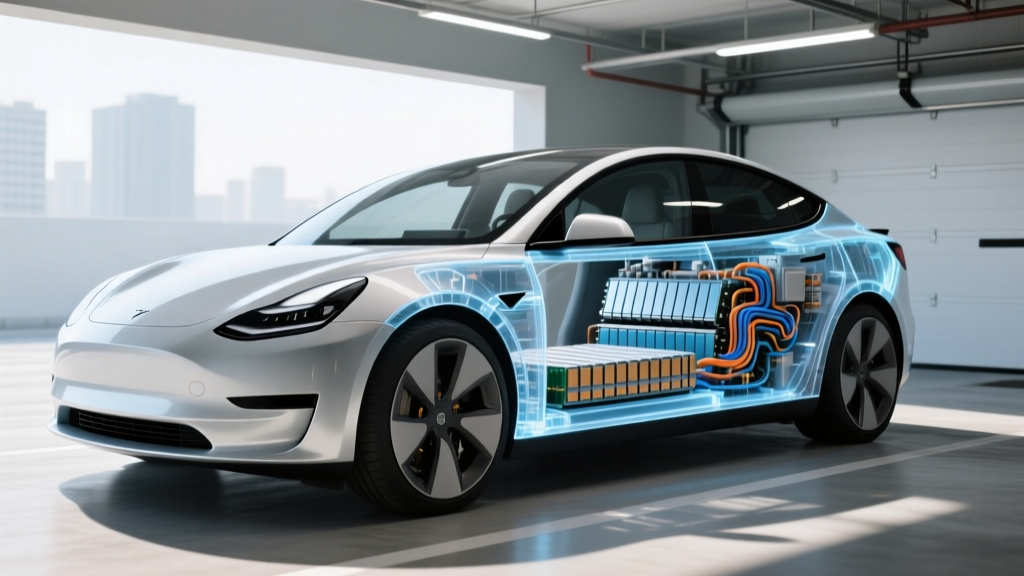
Modern EVs have two batteries: a conventional 12-volt auxiliary battery (which powers electronics, lighting, and the onboard computer) and the high-voltage traction battery (typically 400V or 800V architecture) that propels the vehicle. A battery warning light can refer to either, but the severity differs enormously.
12V auxiliary battery warning: Usually appears as a standard battery icon. This means the small lead-acid or lithium 12V battery is low or failing. The car may still drive, but you could lose accessory functions or fail to start the vehicle next time. Replacement runs $150–$400 and is routine maintenance, similar to a gas car.
High-voltage traction battery warning: This often appears as a battery icon with an exclamation mark, a "Check EV System" message, or a specific fault code. It signals an issue with the main battery pack—ranging from a single weak cell module to a thermal management fault or isolation problem. This warrants immediate professional diagnosis at an authorized service center.
How Long Do EV Batteries Last? Real-World Degradation Data
The short answer: far longer than most buyers assume. Data aggregated from fleets and long-term owner studies shows that the average modern EV battery loses roughly 10–15% of its original capacity over 150,000 miles. Many packs reach 200,000+ miles with 80% or more of their original capacity intact.
Recurrent Auto's 2024 battery degradation study, which analyzed data from over 15,000 EVs in real-world use, found that median range loss across popular models plateaued around 10–12% after the first 100,000 miles, with degradation curves flattening significantly after the initial break-in period.
Here's what typical degradation looks like across major models based on aggregated fleet and owner data:
| Model | Chemistry | Avg. Loss at 50k mi | Avg. Loss at 100k mi | Avg. Loss at 150k mi |
|---|---|---|---|---|
| Tesla Model 3 (NMC) | NMC | ~5–7% | ~9–12% | ~12–15% |
| Tesla Model 3 RWD (LFP) | LFP | ~3–5% | ~5–8% | ~7–10% |
| Chevrolet Bolt EV/EUV | NMC | ~4–6% | ~7–10% | ~10–13% |
| Hyundai Ioniq 5 | NMC | ~4–6% | ~8–11% | ~11–14% |
| Ford Mustang Mach-E | NMC | ~5–7% | ~9–12% | ~12–16% |
| BYD Seal (LFP Blade) | LFP | ~2–4% | ~4–7% | ~6–9% |
Sources: Recurrent Auto, Geotab fleet data, owner community reports. Individual results vary based on climate, charging habits, and usage patterns.
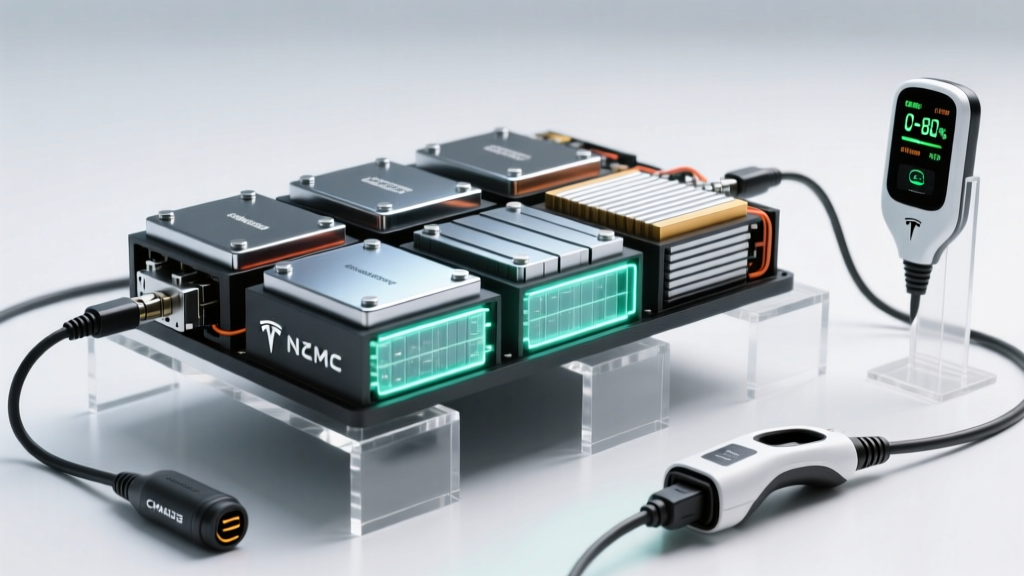
The pattern is clear: most degradation occurs in the first 20,000–30,000 miles (the "break-in" phase), after which the curve flattens considerably. LFP (lithium iron phosphate) chemistries consistently show lower degradation rates than NMC (nickel manganese cobalt) packs, which we'll explore below.
LFP vs. NMC: Which Battery Chemistry Is Better for You?
The two dominant lithium-ion chemistries in today's EVs serve different priorities. Neither is universally "better"—the right choice depends on your driving patterns, climate, and budget.
| Attribute | LFP (Lithium Iron Phosphate) | NMC (Nickel Manganese Cobalt) |
|---|---|---|
| Energy density | Lower (~160–180 Wh/kg cell-level) | Higher (~220–260 Wh/kg cell-level) |
| Range per pack size | Less range for same weight/volume | More range for same weight/volume |
| Cycle life | 3,000–5,000+ cycles to 80% SoH | 1,500–2,500 cycles to 80% SoH |
| Cold-weather performance | Weaker in extreme cold; greater range loss | Better cold-weather discharge capability |
| Thermal stability / safety | Excellent; very resistant to thermal runaway | Good with active thermal management |
| Cost | Lower (no cobalt or nickel) | Higher (cobalt/nickel price exposure) |
| Recommended SoC for daily use | Can charge to 100% regularly | Best kept 20–80% for daily; 100% for trips |
| Typical vehicles | Tesla Model 3 RWD, BYD models, base Ford Mach-E | Tesla Long Range, Ioniq 5, Rivian, most premium EVs |
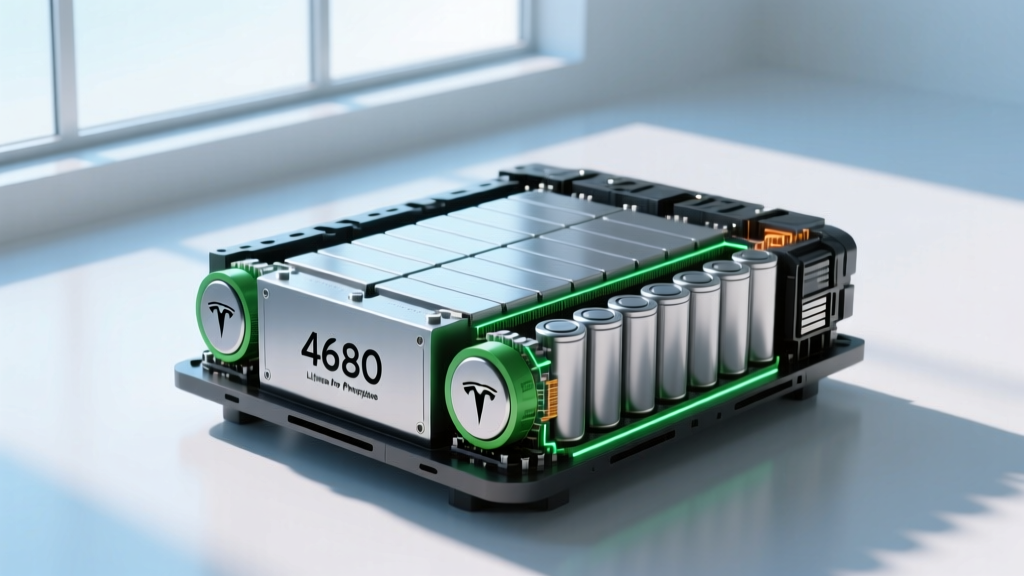
Choose LFP if: You prioritize longevity, can charge to 100% daily without worry, live in a moderate climate, and don't need maximum range from a given pack size. LFP is the durability champion.
Choose NMC if: You need maximum range, regularly drive in cold weather, or want the lightest possible pack for performance. NMC is the energy-density leader but requires more mindful charging habits.
EV Battery Warranty: What's Covered and for How Long
Federal law mandates that EV battery warranties cover a minimum of 8 years or 100,000 miles (whichever comes first). In California Air Resources Board (CARB) states, that minimum extends to 10 years/150,000 miles. Most manufacturers meet or exceed these floors. Here's how major warranties compare for 2025–2026 model-year vehicles:
| Manufacturer | Coverage Period | Capacity Retention Threshold | Notes |
|---|---|---|---|
| Tesla | 8 yr / 100k–120k mi (varies by model) | 70% | Model 3/Y RWD: 100k; LR/Performance: 120k |
| Hyundai / Kia | 10 yr / 100,000 mi | 70% | Among the longest coverage periods |
| Ford | 8 yr / 100,000 mi | 70% | Covers battery and hybrid/EV components |
| Chevrolet (Bolt) | 8 yr / 100,000 mi | 60% (Bolt); 70% (newer models) | Bolt threshold notably lower; check specific MY |
| Rivian | 8 yr / 175,000 mi | 70% | Highest mileage threshold among mainstream OEMs |
| BMW | 8 yr / 100,000 mi | 70% | i4, iX, i7 coverage |
What triggers a warranty claim? If your battery's usable capacity drops below the stated threshold (typically 70% of original) within the warranty period, the manufacturer must repair or replace it at no cost. This is measured via the battery management system's State of Health (SoH) reading, which dealerships can pull during service visits.
What's excluded: Damage from accidents, improper modifications, flooding, or using non-approved charging equipment. Normal degradation above the threshold is not a warranty event—a pack at 72% capacity at year 7 is functioning within spec.
How Much Does an EV Battery Replacement Cost?
This is the question that generates the most anxiety—and the most misinformation. Let's anchor the discussion with actual numbers.
| Vehicle | Pack Size | Est. Parts Cost | Est. Total (Parts + Labor) |
|---|---|---|---|
| Nissan Leaf (40 kWh) | 40 kWh | $6,500–$9,000 | $8,000–$12,000 |
| Chevrolet Bolt EV (65 kWh) | 65 kWh | $9,000–$14,000 | $12,000–$17,000 |
| Tesla Model 3 (75 kWh) | 75 kWh | $10,000–$16,000 | $13,000–$20,000 |
| Hyundai Ioniq 5 (77.4 kWh) | 77.4 kWh | $12,000–$18,000 | $15,000–$22,000 |
| Ford F-150 Lightning (131 kWh) | 131 kWh | $18,000–$28,000 | $22,000–$35,000 |
| Rivian R1T (135 kWh Max) | 135 kWh | $20,000–$30,000 | $25,000–$38,000 |
Important context: Full battery replacements are rare. Data from Consumer Reports and Recurrent indicate that fewer than 5% of EVs require a full pack replacement during the warranty period. When failures do occur, they're more often isolated module or cell-group replacements, which cost a fraction of a full pack swap—typically $2,000–$6,000 depending on the number of modules affected.
Battery costs per kWh have fallen from over $1,000/kWh in 2010 to roughly $100–$130/kWh at the cell level in 2025–2026, according to BloombergNEF. Pack-level costs (including BMS, cooling, housing) run higher, but the trend is decisively downward. A replacement that costs $18,000 today may cost $12,000–$14,000 by 2030.
What Affects Your EV Battery's Lifespan? Five Critical Factors
Not all miles are created equal when it comes to battery wear. These five factors have the most measurable impact on long-term State of Health:
1. State of Charge (SoC) Habits
Lithium-ion cells experience the most stress at the extremes—below 10% and above 90% SoC. For NMC packs, the daily sweet spot is 20–80%. LFP packs tolerate 100% daily charging far better (and manufacturers like Tesla and BYD actually recommend periodic 100% charges for LFP to allow the BMS to recalibrate cell balancing). Storing any EV at 100% for extended periods accelerates degradation regardless of chemistry.
2. DC Fast-Charging Frequency
Occasional DC fast charging (150–350 kW) has minimal impact. But daily fast-charging, especially at 250+ kW rates without adequate preconditioning, generates sustained heat that accelerates cell wear. Studies from the Idaho National Laboratory found that vehicles fast-charged exclusively showed roughly 2–4% more degradation at 50,000 miles compared to Level 2-charged counterparts. The practical takeaway: use Level 2 (7–11 kW) at home for daily needs; reserve DC fast charging for road trips.
3. Extreme Temperatures
High ambient heat (sustained 95°F+) is harder on battery chemistry than cold. Active liquid cooling—standard on nearly all modern EVs except the base Nissan Leaf—mitigates this significantly. Cold weather doesn't cause permanent damage, but it does reduce available range by 20–40% in sub-freezing conditions because the battery must divert energy to heating itself and the cabin. Preconditioning your battery while plugged in (using grid power rather than pack energy) preserves both range and battery health.
4. Depth of Discharge
Regularly draining the battery from 90% to 10% (an 80% depth of discharge) causes more cumulative wear than shallower cycles. Topping up from 40% to 70% daily is gentler than letting the pack swing through wide arcs. Think of it as preferring many small sips over a few deep gulps.
5. Calendar Aging
Even a parked EV battery degrades over time—this is "calendar aging." A vehicle sitting at 50% SoC in moderate temperatures will lose roughly 1–2% capacity per year from chemistry alone. This is unavoidable but minor compared to cycling degradation.
- Set daily charge limit to 80% (NMC) or 100% (LFP, per manufacturer guidance)
- Use Level 2 home charging as your primary method
- Precondition the battery before fast charging and in cold weather
- Avoid leaving the vehicle at 100% SoC for more than a few hours
- Don't let the pack sit below 10% for extended periods
- Park in shade or a garage during sustained high-heat periods when possible
- Update vehicle firmware—manufacturers regularly refine BMS algorithms
How to Check and Monitor Your EV Battery's State of Health
State of Health (SoH) is a percentage representing your battery's current maximum capacity relative to its original factory capacity. A new battery sits at 100% SoH; one that can hold only 65 kWh of its original 77.4 kWh is at roughly 84% SoH.
OEM apps and in-car displays: Some manufacturers provide SoH data directly. Tesla owners can request a battery health report through the service menu. Hyundai/Kia's Bluelink and UVO apps show estimated range trends. However, many OEMs don't surface a direct SoH percentage to the owner—only indirect indicators like estimated range at full charge.
Third-party diagnostics: Services like Recurrent and Geotab offer battery health reports by analyzing your charging and driving data over time. The OBD-II port on most EVs can be queried with tools like OBDeleven or manufacturer-specific diagnostic software to pull raw BMS data, including individual cell voltage deltas, which reveal pack balance and health.
The manual method: Track your vehicle's displayed range at 100% charge over time. If your Ioniq 5 showed 303 miles at 100% when new and now shows 272 miles at 100% under similar temperature conditions, that's roughly a 10% degradation. This method isn't perfectly precise (displayed range factors in recent driving efficiency), but it gives a reliable trend line when tracked consistently.
Emerging Battery Tech: Solid-State and Silicon Anodes
Next-generation battery technologies promise step-change improvements, but realistic timelines matter more than headline promises.
Solid-state batteries: These replace the liquid electrolyte with a solid ceramic or polymer, potentially doubling energy density and enabling 10-minute fast charges. Toyota has announced solid-state prototypes targeting 2027–2028 production, initially in limited-run vehicles. Samsung SDI and QuantumScape are also in advanced testing phases. However, manufacturing scale-up remains the critical bottleneck. Realistic expectation: solid-state EVs will appear in low-volume premium models by 2028–2030 and won't reach mainstream pricing until the early 2030s.
Silicon anode technology: Companies like Sila Nanotechnologies and Group14 are replacing graphite anodes with silicon-dominant composites, boosting energy density by 20–40%. Mercedes-Benz's next-generation G-Class EV is expected to feature silicon anode cells. This technology is closer to mass production than solid-state—expect it in premium EVs starting in 2026–2027 model years.
Sodium-ion batteries: CATL and BYD are producing sodium-ion packs for lower-cost, shorter-range applications. These eliminate lithium entirely, reducing cost and supply-chain risk, but sacrifice energy density. They're best suited for urban EVs and energy storage. Don't expect them in long-range American-market vehicles soon, but they may appear in entry-level models globally.
EV Battery Questions, Answered
How long do EV batteries last in years and miles?
Most modern EV batteries are designed to last 15–20 years or 150,000–200,000+ miles while retaining 70–85% of their original capacity. Fleet data from Recurrent and Geotab confirms that catastrophic battery failure is rare—fewer than 5% of packs are replaced under warranty. Many early Nissan Leafs from 2011–2013 are still on their original packs at 12+ years, albeit with 20–30% capacity loss, reflecting the less advanced chemistry and passive cooling of that era.
How much does an EV battery cost to replace?
Out-of-warranty replacement costs range from roughly $8,000 for a smaller pack (Nissan Leaf 40 kWh) to $35,000+ for the largest packs (Ford F-150 Lightning Extended Range, Rivian Max Pack). However, full replacements are uncommon. Most out-of-warranty failures involve individual module replacements at $2,000–$6,000. And battery cell costs continue declining—roughly 8–12% per year—meaning future replacements will cost less.
What does the EV battery warranty actually cover?
Manufacturer battery warranties cover defects and excessive capacity loss—typically defined as falling below 70% of original capacity within 8 years/100,000 miles (or 10 years/100,000 miles for Hyundai/Kia, 8 years/175,000 miles for Rivian). The warranty covers parts and labor for repair or replacement. It does not cover damage from accidents, misuse, flooding, or unauthorized modifications. See the IRS clean vehicle credit page for related federal incentive information that factors battery sourcing requirements into eligibility.
How do I check my EV battery's health?
Three approaches: (1) Check your OEM app or in-car service menu for a battery health report—availability varies by brand. (2) Use an OBD-II diagnostic tool to pull BMS data including SoH percentage and cell voltage spread. (3) Manually track your vehicle's estimated range at 100% SoC under consistent temperature conditions and note the trend over months. For a professional assessment, any authorized dealer can run a full battery diagnostic during a service visit.
Is LFP or NMC better for battery longevity?
LFP chemistry demonstrably outperforms NMC in cycle life and calendar longevity. LFP cells routinely achieve 3,000–5,000+ charge cycles before reaching 80% SoH, compared to 1,500–2,500 cycles for NMC. LFP also tolerates daily 100% charging and is inherently more thermally stable. The trade-off: LFP packs are heavier and bulkier for the same energy capacity, yielding less range, and they perform worse in extreme cold. If longevity is your top priority and you don't need maximum range, LFP is the stronger choice.
Will a battery warning light always mean an expensive repair?
No. A battery-related warning can stem from a 12V auxiliary battery issue ($150–$400 fix), a sensor fault, a thermal management system glitch, or a software issue resolvable with a firmware update. Even when it involves the high-voltage pack, the fix is often a single module replacement or a BMS recalibration rather than a full pack swap. The key is prompt diagnosis—don't ignore the light, but don't assume the worst case either.