Is a Lithium Shortage Coming for Your EV Battery?
Search "lithium shortage" and you'll find headlines warning of supply crunches, price spikes, and stalled EV adoption. The reality in 2026 is more nuanced. Lithium prices have swung wildly — from under $10,000 per metric ton in 2021 to over $80,000 in late 2022, then crashing below $15,000 by mid-2024 before stabilizing. The EV industry hasn't ground to a halt; it has adapted. The most significant adaptation is the rapid shift toward LFP (lithium iron phosphate) chemistry, which reduces reliance on nickel and cobalt while using lithium more efficiently per cell.
For buyers and owners, the real question isn't whether lithium supply will constrain the market next quarter — it's what battery chemistry sits under your seats, how long it will last, what degradation actually looks like in real-world data, and what happens in the rare event you need a replacement. This guide covers all of that with hard numbers.
LFP vs NMC vs NCA: The Chemistry That Defines Your EV
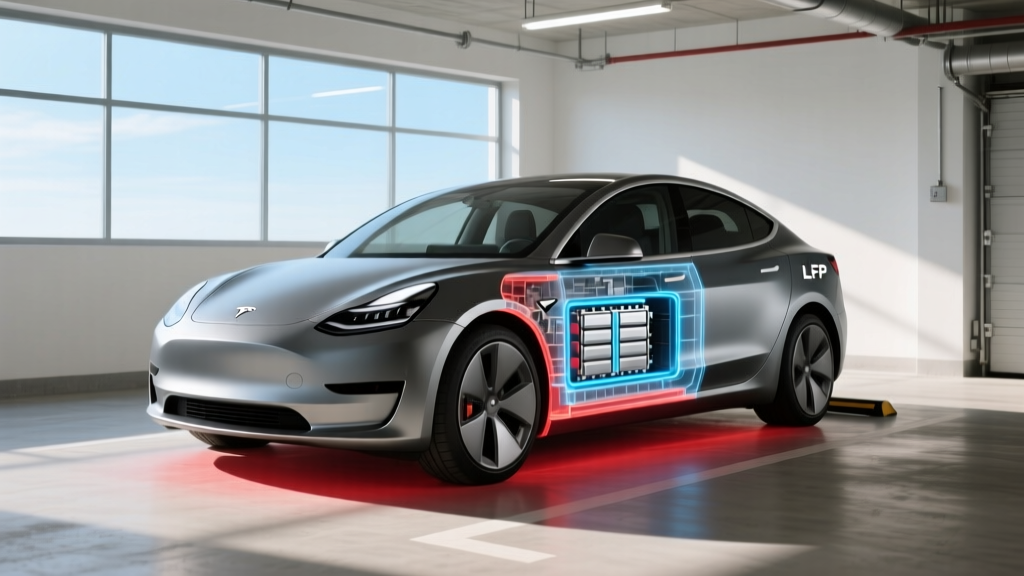
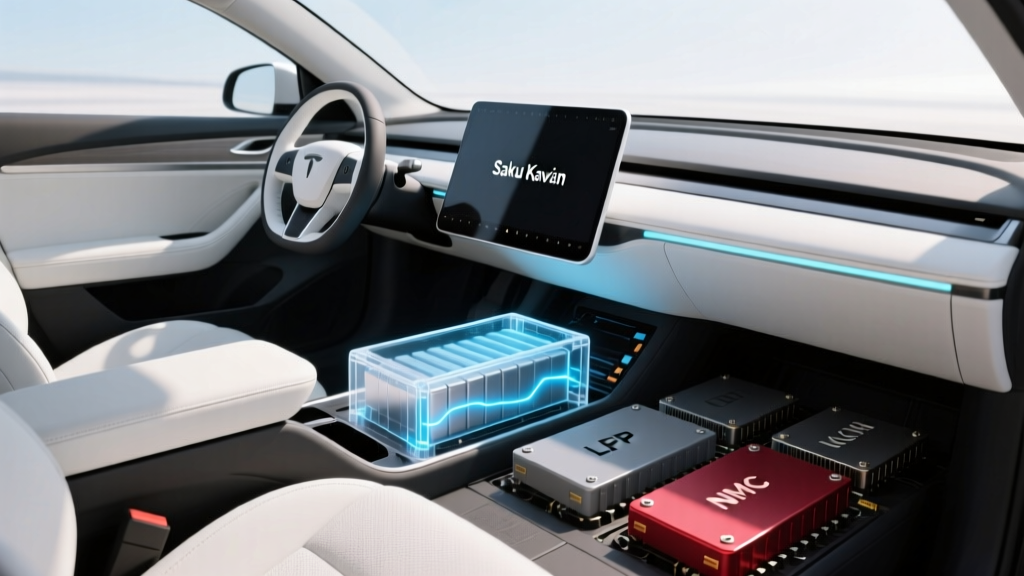
Every EV battery uses lithium, but not every battery uses the same cathode chemistry. The two dominant types in 2026 are LFP (lithium iron phosphate) and NMC/NCA (nickel manganese cobalt / nickel cobalt aluminum). The choice between them affects your range, charging habits, longevity, and even how much your vehicle costs.
| Attribute | LFP (Lithium Iron Phosphate) | NMC / NCA |
|---|---|---|
| Energy Density | Lower (~160–180 Wh/kg cell-level) | Higher (~220–300 Wh/kg cell-level) |
| Typical Use | Standard-range models, city commuters, fleet | Long-range, performance, AWD, towing |
| Cycle Life | 3,000–5,000+ full cycles to 80% SoH | 1,000–2,000 full cycles to 80% SoH |
| Cold-Weather Performance | Weaker — more range loss below 32°F | Better low-temp discharge, less range penalty |
| Charging to 100% | Recommended regularly for cell balancing | Best kept 20–80% daily; 100% for trips only |
| Cost (cell-level) | ~$70–90/kWh (2026) | ~$100–130/kWh (2026) |
| Critical Minerals | No nickel, no cobalt — less supply-chain risk | Nickel and cobalt exposure; sourcing matters for §30D credit |
| Examples (2026) | Tesla Model 3 RWD, Ford Mustang Mach-E Select, Rivian Standard | Tesla Model Y LR, Hyundai Ioniq 5 LR, BMW i4 eDrive40 |
Which Is Better — LFP or NMC?
Neither is universally superior. Choose LFP if you mostly drive under 250 miles per day, want maximum cycle life (this chemistry can outlast the vehicle itself), prefer charging to 100% without guilt, and want to minimize exposure to nickel/cobalt supply-chain volatility — the very volatility that drives "lithium shortage" headlines. Choose NMC/NCA if you need maximum range per charge, regularly drive in freezing climates, tow, or want the fastest DC charging speeds (NMC cells typically accept higher peak kW rates). For most US commuters covering 30–40 miles daily, LFP is the pragmatic longevity play.
How Long Do EV Batteries Actually Last?
The short answer: almost certainly longer than you'll own the car. Data from fleet operators, manufacturer reports, and independent testing consistently shows that modern liquid-cooled EV batteries lose roughly 5–10% capacity over the first 100,000 miles, then degradation slows considerably.
Real-World Degradation Data Points:
- Tesla 2025 Impact Report: Model 3/Y batteries retain approximately 85% capacity at 200,000 miles — meaning most original batteries will outlast the vehicle's structural and mechanical life.
- Geotab fleet study (13,000+ EVs): Average annual degradation of 1.8% per year across all chemistries, with LFP vehicles showing slower decline curves after year 3.
- Taxi fleet data (high-cycle use): Hyundai Kona Electric and Kia Niro EV fleet vehicles in Seoul retained 88–91% SoH after 180,000 miles of daily fast-charging use over 4 years.
What kills batteries prematurely isn't age or mileage — it's heat exposure, repeated 0–100% cycling on NMC chemistry, and frequent DC fast charging in extreme temperatures without preconditioning. A well-cared-for pack routinely exceeds 300,000 miles before hitting the 70% capacity threshold that triggers warranty replacement.
Battery Warranty Terms: What's Actually Covered
Federal law mandates a minimum EV battery warranty of 8 years / 100,000 miles (10 years / 150,000 miles in CARB states like California, New York, and Massachusetts). Most manufacturers meet or exceed this baseline.
| Manufacturer | Warranty Term | Capacity Retention Threshold | Notes |
|---|---|---|---|
| Tesla (Model 3/Y) | 8 yr / 120,000 mi (LR/AWD), 8 yr / 100,000 mi (RWD) | 70% | Transferable to second owner |
| Hyundai / Kia | 10 yr / 100,000 mi | 70% | Among the longest in the industry |
| Ford (Mach-E, F-150 Lightning) | 8 yr / 100,000 mi | 70% | Covers battery and hybrid/electric components |
| Rivian | 8 yr / 175,000 mi | 70% | Higher mileage cap reflects adventure-use positioning |
| BMW (i4, iX) | 8 yr / 100,000 mi | 70% | Includes battery conditioning system |
| GM (Ultium platform) | 8 yr / 100,000 mi | 70% (60% on some commercial) | Varies by model — verify on window sticker |
The critical number is the capacity retention threshold — typically 70%. If your battery's usable capacity falls below 70% of its original kWh within the warranty period, the manufacturer must repair or replace it at no cost. In practice, very few owners hit this threshold within the warranty window. According to fueleconomy.gov, the vast majority of EV batteries outlast their warranty periods with 75–85% capacity remaining.
EV Battery Replacement Cost: The Numbers Behind the Fear
Replacement cost is the most anxiety-inducing number in EV ownership — and the most misunderstood. Headlines cite $20,000+ figures without context. Here's the actual landscape in 2026:
| Vehicle / Battery Size | Battery kWh | Replacement Cost Range | When Typically Needed |
|---|---|---|---|
| Tesla Model 3 RWD (LFP) | ~60 kWh | $8,000–$12,000 | Rarely — LFP cycle life exceeds 300k+ mi |
| Tesla Model Y Long Range (NMC) | ~75 kWh | $12,000–$16,000 | Typically 200k+ mi if at all |
| Hyundai Ioniq 5 (77.4 kWh) | 77.4 kWh | $11,000–$15,000 | Rare within vehicle lifetime |
| Ford F-150 Lightning Extended | ~131 kWh | $18,000–$25,000 | Large pack; highest absolute cost |
| Chevrolet Equinox EV | ~85 kWh | $10,000–$14,000 | Ultium modular design allows partial replacement |
| Nissan LEAF (40/62 kWh) | 40–62 kWh | $6,500–$9,000 | Older air-cooled packs degrade faster |
Key context: most EVs are totaled, traded, or retired before the battery needs replacement. The average age of a scrapped vehicle in the US is approximately 16 years. At 12,000 miles/year, that's 192,000 miles — well within the proven life of modern liquid-cooled packs. Module-level repair (replacing individual cell modules rather than the entire pack) is increasingly available and can cost $2,000–$5,000 for a targeted fix. GM's Ultium platform and BMW's Neue Klasse architecture are specifically designed for modular service.
What Actually Degrades an EV Battery — and How to Prevent It
Battery degradation is driven by chemistry, not just mileage. Here are the factors that matter most, ranked by impact:
Battery Longevity Checklist
- Avoid sustained high State of Charge (NMC/NCA): If your EV has NMC chemistry, set the daily charge limit to 80%. Charge to 100% only when you need the full range for a trip. LFP owners should charge to 100% at least once a week for cell balancing.
- Minimize DC fast charging in extreme heat: Occasional DC fast charging is fine — modern thermal management handles it well. But daily 350 kW sessions in 100°F+ ambient temperatures without preconditioning accelerates degradation. Use preconditioning (navigating to a charger in your EV's nav system triggers battery preheating/precooling) every time.
- Don't let the battery sit at 0% or 100% for days: Store your EV between 30–60% SoC if it will sit unused for more than a week. Extreme SoC states stress the electrolyte.
- Cold weather doesn't damage the battery — it temporarily reduces range: A 20–30% range loss at 20°F is normal and reversible. The battery isn't degrading; the chemistry is simply less efficient at low temperatures. Use seat/steering wheel heaters instead of cabin heat to preserve range.
- Level 2 home charging is ideal for daily use: A 7–11 kW Level 2 charger adds 25–44 miles of range per hour and is gentler on the pack than daily DC fast charging.
How to Check Your Battery's State of Health (SoH)
State of Health (SoH) is the percentage of your battery's original usable capacity that remains. A new EV has 100% SoH; a battery at 85% SoH has lost 15% of its original capacity. Here's how to monitor it:
- In-vehicle displays: Tesla shows battery health estimates in the service menu (varies by model year). Hyundai/Kia displays SoH percentage in the EV settings menu on models from 2024 onward. Ford's MyFordPass app shows estimated range trends over time.
- OBD-II diagnostic tools: Devices like the OBDLink SX paired with apps such as EV Bat Life or LeafSpy (for Nissan LEAF) can read the battery management system's (BMS) internal SoH estimate. Cost: $40–$80 for the adapter.
- Dealer diagnostic reports: Request a battery health printout during any service visit. Dealers can pull the BMS log showing capacity retention, charge cycles, and thermal events. This is especially valuable before buying a used EV.
- Third-party services: Companies like Recurrent Auto offer free battery health reports based on connected-car telemetry. They compare your degradation curve against a database of thousands of identical vehicles.
If your SoH drops below 70% within the warranty period, contact the manufacturer for a warranty claim. Outside warranty, a certified EV technician can assess whether module-level repair is viable before considering full pack replacement.
Beyond Lithium Scarcity: Solid-State, Silicon Anodes, and Sodium-Ion
The lithium supply conversation is evolving alongside battery technology. Several next-generation chemistries are in development, each with realistic — not hype-driven — timelines:
- Solid-state batteries (Toyota, Samsung SDI, QuantumScape): Promise 30–40% more energy density and faster charging. Toyota has announced limited production in select 2027–2028 models, but mass-market availability remains 2029–2030 at the earliest. These are not available in any 2026 production vehicle.
- Silicon-dominant anodes (Sila Nanotechnologies, Group14): Replace graphite anodes with silicon to boost energy density 20–40%. Already appearing in limited applications (Porsche has tested silicon-anode cells). Expect broader adoption in premium EVs by 2027–2028.
- Sodium-ion batteries (CATL, BYD): Use sodium instead of lithium entirely. Lower energy density but dramatically cheaper and free from lithium supply constraints. Currently deployed in Chinese-market micro-EVs and energy storage. US-market vehicles with sodium-ion chemistry are announced for 2027+ but not yet available.
The lithium shortage narrative is being neutralized not by a single breakthrough but by diversification — LFP adoption, sodium-ion alternatives, improved recycling (Redwood Materials, Li-Cycle recover 95%+ of battery-grade lithium from retired packs), and new mining operations in Nevada, North Carolina, and Quebec coming online through 2027.
Frequently Asked Questions
How long do EV batteries last in years and miles?
Modern liquid-cooled EV batteries (both LFP and NMC) typically last 15–20 years or 200,000–300,000+ miles before reaching the 70% capacity threshold. Tesla's fleet data shows approximately 85% capacity retention at 200,000 miles. Most batteries outlast the vehicle they're installed in.
How much does it cost to replace an EV battery?
Full pack replacement ranges from $6,500 (Nissan LEAF 40 kWh) to $25,000 (Ford F-150 Lightning Extended Range 131 kWh) in 2026. Most mainstream EVs fall in the $10,000–$16,000 range. Module-level repair can cost $2,000–$5,000. However, the vast majority of EVs never need a battery replacement during their usable life.
What does the EV battery warranty cover?
Federal law requires a minimum 8 years / 100,000 miles of battery coverage (10 yr / 150,000 mi in CARB states). The warranty covers capacity loss below a specified threshold — typically 70% of original capacity. If your battery degrades below that level within the warranty period, the manufacturer replaces or repairs it at no cost. See IRS.gov for how battery sourcing also affects §30D tax credit eligibility.
How do I maximize my EV battery's health?
For NMC/NCA batteries: keep daily SoC between 20–80%, avoid leaving the car at 100% or 0% for extended periods, use preconditioning before DC fast charging, and favor Level 2 home charging over daily DC fast charging. For LFP batteries: charge to 100% at least weekly for cell balancing, and follow the same thermal management practices. Cold-weather range loss is temporary and does not indicate degradation.
LFP vs NMC — which battery chemistry is better for me?
LFP offers longer cycle life (3,000–5,000 cycles), lower cost, and no nickel/cobalt supply-chain risk — ideal for daily commuters who don't need 300+ miles of range. NMC/NCA delivers higher energy density, better cold-weather performance, and faster peak charging speeds — ideal for long-distance drivers, cold climates, and towing. The "lithium shortage" concern applies more to NMC (which also requires nickel and cobalt) than to LFP, which uses more abundant iron and phosphate.
Will a lithium shortage make my EV more expensive?
Lithium prices have stabilized after the 2022 spike, and the industry's shift to LFP chemistry, sodium-ion alternatives, and domestic recycling has reduced supply-chain vulnerability. According to the US Department of Energy, average battery pack prices fell below $130/kWh in 2025. A lithium supply crunch could slow price declines but is unlikely to reverse them given the diversification underway.