The Great Battery Divide: LFP vs. NMC in the Modern EV Era
The electric vehicle revolution is no longer just about whether you should buy an EV; it is about what powers it under the floorboards. As we navigate through the mid-2020s, the automotive industry has largely coalesced around two dominant lithium-ion battery chemistries: Nickel Manganese Cobalt (NMC) and Lithium Iron Phosphate (LFP). For consumers, this bifurcation means that choosing an EV is no longer just about picking a brand or a body style—it requires a fundamental understanding of battery chemistry to match your specific driving needs, budget, and long-term ownership goals.
Historically, NMC batteries were the undisputed kings of the EV world, prized for their high energy density and ability to deliver massive range in heavy vehicles. However, the future trends and industry outlook point toward a massive paradigm shift. Driven by supply chain constraints, the ethical and financial costs of cobalt mining, and rapid advancements in cell-to-pack structural designs, LFP batteries have surged in popularity. Today, understanding the trajectory of these two chemistries is essential for any prospective EV buyer looking to make a future-proof investment.
Decoding the Chemistry: What Powers Your EV?
NMC (Nickel Manganese Cobalt) Explained
NMC batteries utilize a cathode made from varying ratios of nickel, manganese, and cobalt. Nickel provides the high energy density required for long-range driving, manganese offers structural stability, and cobalt helps maintain the battery's thermal integrity. NMC cells typically boast an energy density ranging from 250 to 300 Wh/kg at the cell level. This makes them the default choice for premium, long-range, and performance-oriented vehicles like the Lucid Air, Tesla Model S, and high-trim Ford F-150 Lightnings. However, the reliance on cobalt and nickel makes NMC batteries more expensive to produce and more susceptible to global supply chain volatility.
LFP (Lithium Iron Phosphate) Explained
LFP batteries replace the expensive and controversial cobalt and nickel with abundant, inexpensive iron and phosphate. According to research highlighted by Argonne National Laboratory, the olivine crystal structure of LFP cathodes provides exceptional atomic stability, making them highly resistant to thermal runaway (battery fires). While LFP cells traditionally suffer from lower energy density (roughly 160 to 200 Wh/kg), innovative structural packaging—such as BYD's Blade Battery and CATL's Cell-to-Pack (CTP) technology—has largely mitigated this disadvantage at the vehicle level. LFP is now the standard for entry-level and mid-range models, including the Tesla Model 3 Standard Range, Rivian R1T Standard, and base Ford Mustang Mach-E.
Head-to-Head Comparison: LFP vs. NMC
To visualize how these chemistries stack up against each other in real-world metrics, review the comparison table below:
| Feature | LFP (Lithium Iron Phosphate) | NMC (Nickel Manganese Cobalt) |
|---|---|---|
| Energy Density | Moderate (160-200 Wh/kg) | High (250-300 Wh/kg) |
| Cycle Life | Exceptional (3,000 - 5,000+ cycles) | Good (1,000 - 2,000 cycles) |
| Cost per kWh | Lower (~$100 - $115) | Higher (~$130 - $150) |
| Thermal Stability | Extremely High (Very low fire risk) | Moderate (Requires robust BMS cooling) |
| Cold Weather Performance | Poorer (Requires preconditioning) | Better (More resilient in freezing temps) |
| Daily Charge Limit | 100% (Recommended weekly) | 80% (To preserve longevity) |
Future Trends & Industry Outlook (2025 and Beyond)
The battery landscape is evolving at a breakneck pace. According to the International Energy Agency's Global EV Outlook, LFP market share has surged dramatically, now accounting for nearly 40% of global EV battery demand, up from virtually zero outside of China just a few years ago. But the industry is not standing still.
The Rise of LMFP
The most significant near-term trend is the development of LMFP (Lithium Manganese Iron Phosphate). By adding manganese to the LFP cathode, manufacturers are boosting the cell voltage and energy density by 15% to 20% without reintroducing expensive cobalt or nickel. This hybrid chemistry aims to bridge the gap between LFP's low cost and NMC's high range, potentially making 400-mile EVs affordable for the mass market by 2027.
NMC's Push Toward High-Nickel and Cobalt-Free
On the NMC side, the trend is heavily skewed toward high-nickel formulations (like NMC 811 or NCA) to maximize range while systematically reducing or entirely eliminating cobalt. Furthermore, the industry is laying the groundwork for solid-state batteries, which will eventually utilize lithium-metal anodes paired with advanced cathodes to double energy density, though commercial viability at scale remains a late-2020s prospect.
Which Battery is Better for Your Specific Driving Needs?
Choosing between LFP and NMC requires an honest assessment of your daily habits, local climate, and budget. As detailed by the U.S. Environmental Protection Agency, battery management systems and chemistry dictate how an EV performs in the real world.
Choose LFP If:
- You are a city or suburban commuter: If your daily drive is under 100 miles, the lower total range of an LFP battery is irrelevant, and the cost savings are substantial.
- You want maximum longevity and low maintenance: LFP batteries can endure thousands more charge cycles than NMC. If you plan to keep your EV for 10+ years or 150,000+ miles, LFP will show significantly less degradation.
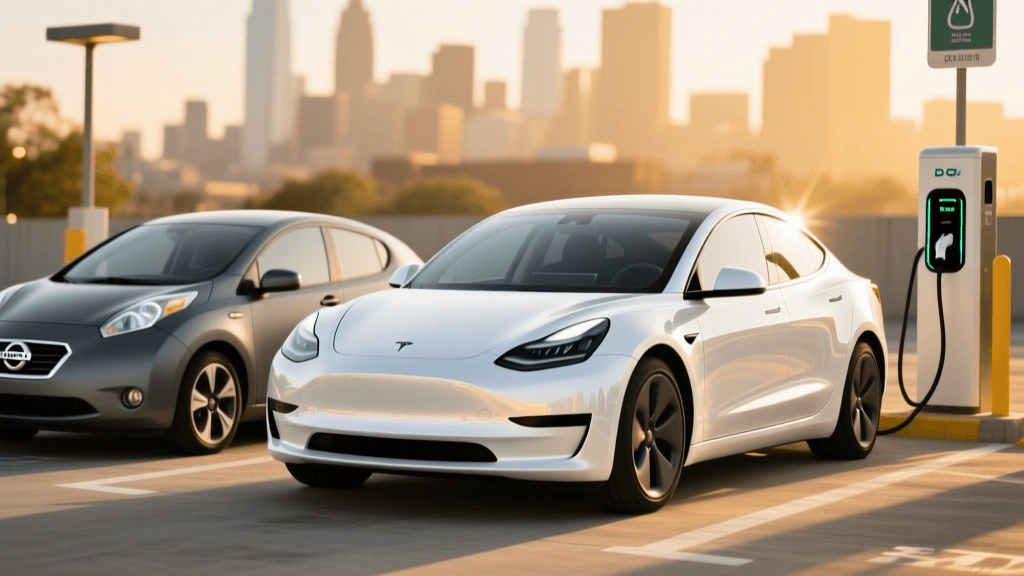
- You have home charging: Because LFP batteries should be charged to 100% regularly to keep the Battery Management System (BMS) calibrated, having a Level 2 home charger makes this a seamless overnight routine.
- You live in a mild climate: LFP chemistry struggles more with internal resistance in freezing temperatures. If you live in Southern California, Texas, or Florida, LFP is the undisputed champion of value.
Choose NMC If:
- You frequently take road trips or tow: The superior energy density of NMC means more range in a smaller, lighter package. Towing a trailer or driving cross-country requires the 300+ mile real-world range that NMC provides.
- You live in extreme cold climates: NMC batteries handle freezing temperatures better than LFP, suffering less immediate range loss during winter commutes (though preconditioning is still vital for both).
- You rely on public DC Fast Charging: While both chemistries fast-charge well, NMC's higher energy density often pairs with more aggressive thermal management systems in premium vehicles, allowing for sustained fast-charging speeds on long highway corridors.
Actionable Charging Habits for Maximum Longevity
The most critical mistake EV buyers make is applying the same charging habits to an LFP battery as they would to an NMC battery. To protect your investment and minimize degradation, follow these strict rules:
- For LFP Owners: Set your daily charge limit to 100%. LFP cells have a very flat voltage curve, meaning the car's computer struggles to guess the exact state of charge unless it hits the absolute top. Charge to 100% at least once a week to calibrate the BMS. Never leave an LFP battery sitting at 10% or lower for extended periods.
- For NMC Owners: Set your daily charge limit to 80%. NMC cells experience accelerated chemical degradation when held at high states of voltage (above 90%). Only charge to 100% immediately before embarking on a long road trip, and try to drive the vehicle shortly after it reaches full capacity to bring the voltage back down to a safe storage level.
Conclusion
The future of EV batteries is not a one-size-fits-all scenario. NMC will continue to dominate the premium, long-range, and heavy-duty segments where energy density is paramount. Meanwhile, LFP is rapidly democratizing EV ownership, offering an incredibly durable, safe, and cost-effective solution for the vast majority of daily drivers. By aligning your battery chemistry choice with your actual driving patterns and adopting chemistry-specific charging habits, you can ensure your EV remains reliable, efficient, and financially sound well into the next decade.