What Is a Kepler Dual Battery System — and Why It Matters for EV Owners
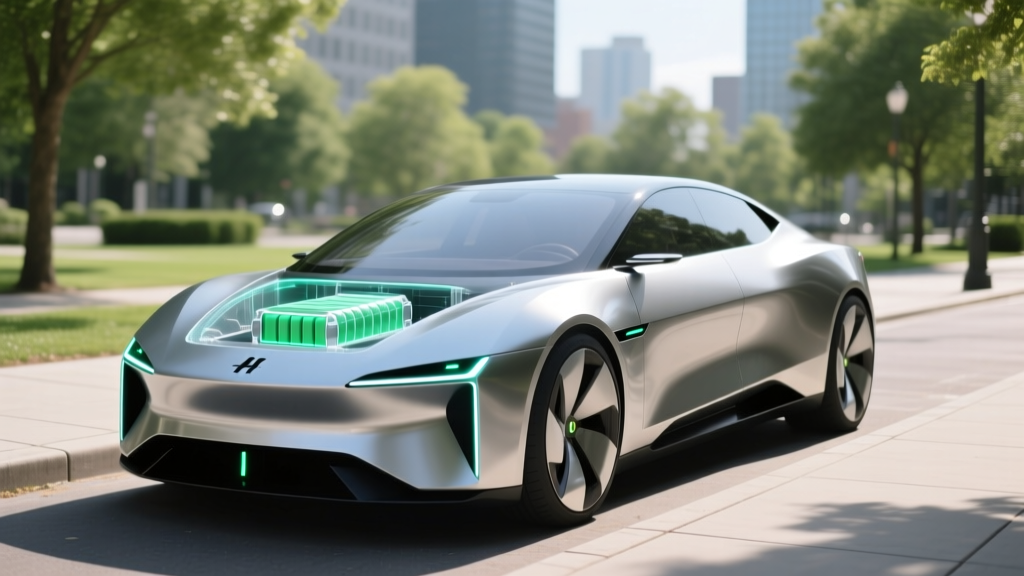
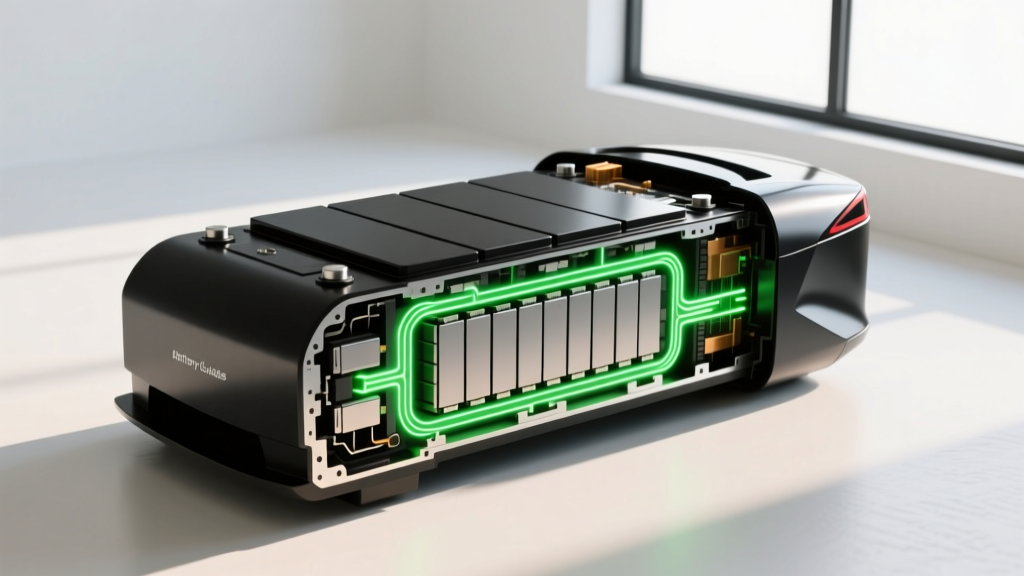
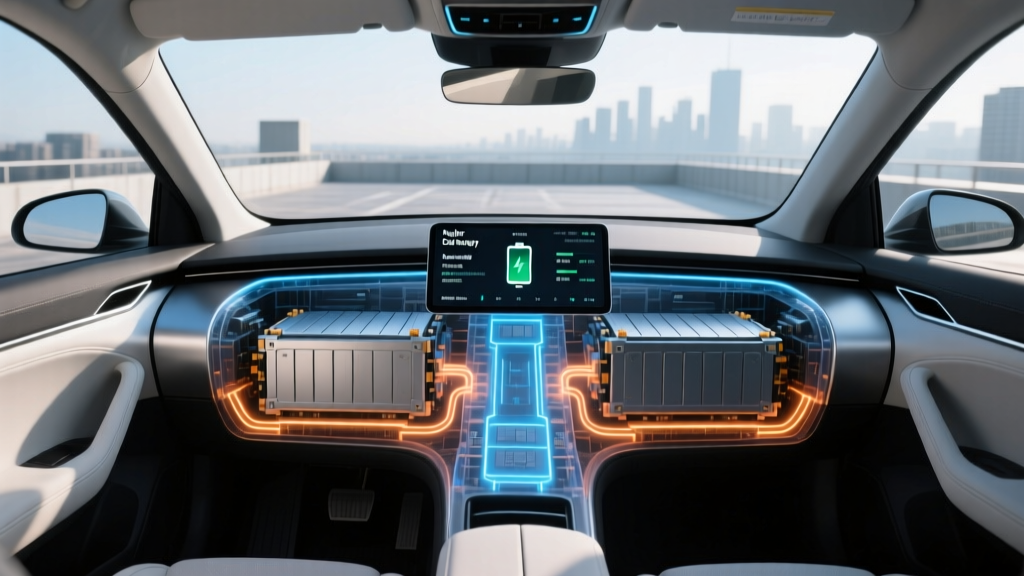
If you've been researching next-generation EV powertrains, you may have encountered the term Kepler dual battery. While not a mainstream production system as of early 2026, the "dual battery" architecture concept refers to vehicles that split energy storage into two separate modules — often pairing different chemistries or thermal zones to optimize range, longevity, and charging behavior. Think of it as an evolution beyond the single monolithic pack found in most battery-electric vehicles today.
Whether you're evaluating a future dual-battery EV or simply trying to understand the battery in your current car, the fundamentals remain the same: chemistry, degradation behavior, warranty coverage, and daily care habits determine how long your pack lasts and what it costs when it doesn't. This guide covers every angle with real numbers.
EV Battery Chemistry: LFP vs NMC vs NCA Explained
Every EV battery pack is built from lithium-ion cells, but the cathode chemistry inside those cells varies — and that choice drives trade-offs in range, lifespan, cold-weather behavior, and price. The two dominant families in 2026 are LFP (lithium iron phosphate) and NMC/NCA (nickel manganese cobalt / nickel cobalt aluminum).
| Attribute | LFP (LiFePO₄) | NMC / NCA |
|---|---|---|
| Energy Density | ~160 Wh/kg (lower) | ~250-300 Wh/kg (higher) |
| Cycle Life | 3,000-5,000+ cycles | 1,000-2,000 cycles |
| Cold Performance | Moderate — greater range loss below 32°F | Better low-temp discharge |
| Cost per kWh | ~$80-100 (lower) | ~$110-140 (higher) |
| Thermal Stability | Excellent — less prone to thermal runaway | Good, requires robust BMS |
| Recommended SoC | Can charge to 100% daily | Best kept 20-80% for daily use |
| Common In (2026) | Tesla Model 3/Y RWD, Ford F-150 Lightning Pro, BYD models | Tesla Long Range, Hyundai Ioniq 5/6, Rivian, Lucid |
Which is better? Neither is universally superior. NMC/NCA wins on energy density — you get more EPA range in a lighter, smaller pack, which matters for long-range and performance trims. LFP wins on longevity and cost; its cycle life is roughly 2-3× that of NMC, and manufacturers increasingly recommend 100% daily charging, which simplifies ownership. If you plan to keep a vehicle 10+ years or drive high annual miles, LFP's slower degradation curve is a tangible advantage. If you need maximum range or tow frequently, NMC's density is hard to beat.
A Kepler dual battery concept could theoretically pair these chemistries — using an LFP module for daily commuting cycles and an NMC module for extended-range trips — capturing the best of both. While no mass-market vehicle has shipped this exact configuration as of 2026, dual-chemistry packs are an active area of R&D at several cell manufacturers.
How Long Do EV Batteries Actually Last?
The short answer: longer than most buyers expect. Data from fleet operators, manufacturer reports, and independent testing consistently show that modern liquid-cooled lithium-ion packs retain the vast majority of their capacity well past 100,000 miles.
Typical Degradation Data Points (2020-2026 Models)
| Source / Dataset | Mileage | Avg. Capacity Retained |
|---|---|---|
| Tesla 2025 Impact Report (Model 3/Y fleet) | 200,000 mi | ~85% (NMC/NCA packs) |
| Geotab fleet study (6,300 EVs, multi-brand) | 100,000 mi | ~90% average across chemistries |
| Recurrent Auto (15,000+ vehicles tracked) | 80,000 mi | ~92% median retention |
| Taxi fleet (Tesla Model 3, LFP) | 150,000 mi | ~91% retention |
Sources: Tesla Impact Report, Geotab EV Battery Health Study, Recurrent Auto fleet data.
Most EV batteries degrade rapidly in the first 10,000-20,000 miles (typically losing 2-5% as the solid-electrolyte interface stabilizes), then settle into a slow, near-linear decline of roughly 0.5-1.5% per year under normal use. A 2026 EV with an EPA range of 310 miles that loses 10% over 8 years still delivers ~279 miles — more than adequate for the vast majority of drivers.
Real-world caveat: Degradation is not just about capacity. Internal resistance increases over time, which can reduce peak charge rates and slightly soften acceleration. Most owners notice capacity loss before they notice power loss.
What Does the EV Battery Warranty Cover?
Federal law mandates a minimum battery warranty of 8 years / 100,000 miles for all EVs sold in the US (10 years / 150,000 miles in CARB states like California, New York, and Massachusetts). Most manufacturers set the capacity-retention threshold at 70% of original capacity — meaning the warranty kicks in only if your pack falls below that level within the term.
| Manufacturer (2026 Models) | Warranty Term | Capacity Threshold |
|---|---|---|
| Tesla (Model 3/Y) | 8 yr / 100,000-120,000 mi (trim-dependent) | 70% |
| Hyundai / Kia (Ioniq 5/6, EV6/EV9) | 10 yr / 100,000 mi | 70% |
| Ford (F-150 Lightning, Mustang Mach-E) | 8 yr / 100,000 mi | 70% |
| Rivian (R1T / R1S) | 8 yr / 175,000 mi | 70% |
| GM (Ultium-based: Blazer EV, Equinox EV, Silverado EV) | 8 yr / 100,000 mi | 70% |
| BMW (i4, iX, i7) | 8 yr / 100,000 mi | 70% |
Key nuance: Warranties cover defects and abnormal degradation, not gradual capacity loss that stays above the threshold. If your pack is at 75% after 8 years, the manufacturer owes you nothing — even though you've lost 25% of range. This is why tracking State of Health (SoH) matters.
EV Battery Replacement Cost: What to Budget
Battery replacement remains the single biggest fear among prospective EV buyers. Here's the reality: most EV batteries outlive the vehicles they're installed in. Total-loss replacement is rare before 200,000+ miles, and module-level repairs (replacing only degraded sections) are increasingly common and far cheaper.
| Vehicle Class / Example | Pack Size | Full Replacement Cost (2026) | Typical Need Timeline |
|---|---|---|---|
| Compact (Chevrolet Equinox EV, Nissan Leaf successor) | 60-75 kWh | $8,000 - $14,000 | Rarely before 200k mi |
| Midsize sedan/crossover (Tesla Model 3, Ioniq 6) | 75-85 kWh | $12,000 - $18,000 | Rarely before 200k mi |
| Large SUV / truck (F-150 Lightning, Rivian R1T) | 100-135 kWh | $16,000 - $28,000 | Rarely before 180k mi |
| Luxury / performance (Lucid Air, Porsche Taycan) | 90-118 kWh | $20,000 - $35,000 | Rarely before 150k mi |
Cell prices have fallen from ~$140/kWh in 2022 to roughly $80-100/kWh for LFP and $110-130/kWh for NMC in 2026, according to BloombergNEF tracking. Labor and diagnostics add $1,500-$4,000 on top. Module-level repair — swapping individual degraded cell groups — typically runs $3,000-$7,000 and is the more common procedure when degradation is uneven.
When is replacement actually needed? Usually only when a pack drops below ~60-65% capacity (making the vehicle impractical for its intended use), suffers physical damage, or develops an internal fault the BMS cannot isolate. For the average owner driving 12,000-15,000 miles/year, this is a 15-20 year horizon — longer than most people keep any car.
Factors That Accelerate (or Slow) Battery Degradation
Battery Care Checklist: Maximize Pack Life
- Limit DC fast charging to road trips. Frequent 150+ kW sessions stress cells thermally. Level 2 home charging (7-11 kW) is gentler and should be your daily norm.
- Avoid sitting at 100% SoC for extended periods. For NMC/NCA packs, set your daily charge limit to 80%. LFP packs are an exception — manufacturers like Tesla recommend periodic 100% charges to calibrate the BMS.
- Don't let SoC drop below 10% regularly. Deep discharges stress the anode. Plug in when you hit 15-20%.
- Precondition before fast charging. Most 2026 EVs do this automatically when you navigate to a charger. A warm battery (65-85°F) charges faster and with less degradation.
- Park in shade or a garage during extreme heat. Sustained pack temperatures above 100°F accelerate calendar aging. Cold is less damaging long-term but reduces range temporarily.
- Use scheduled charging. Set your car to finish charging right before you leave — this minimizes time spent at high SoC.
The three biggest degradation accelerators are high sustained temperatures, frequent high-SoC storage, and aggressive DC fast charging. A 2024 study by the Idaho National Laboratory found that vehicles fast-charged exclusively showed roughly 2-3× the degradation of vehicles charged primarily on Level 2 over 50,000 miles. That said, modern thermal management systems have narrowed this gap considerably compared to early EVs.
How to Check and Monitor Battery State of Health (SoH)
State of Health (SoH) is expressed as a percentage: a new battery is 100%, and it declines over time. Most 2026 EVs expose SoH data through the vehicle's infotainment system or companion app, but the depth of information varies by brand.
- Tesla: No native SoH display in-car. Use third-party tools like Tessie or Scan My Tesla (OBD-II dongle + app) to pull detailed cell-level data from the BMS.
- Hyundai / Kia: SoH percentage visible in the EV settings menu on most 2024+ models via the infotainment system.
- Ford: Available through the FordPass app under vehicle health reports.
- GM (Ultium): Battery health viewable in the myChevrolet / myCadillac app.
- Universal method: An OBD-II scanner paired with apps like ABRP (A Better Route Planner), Car Scanner, or EV-specific diagnostic tools can read BMS data including individual cell voltages, pack voltage, and estimated SoH.
When to be concerned: If SoH drops more than 3-4% in a single year after the initial break-in period, or if you notice sudden range loss that doesn't correlate with temperature, schedule a dealer diagnostic. Uneven cell voltages (a delta > 50 mV between highest and lowest cell) can signal a failing module that may be covered under warranty.
Emerging Battery Tech: Solid-State, Silicon Anode, and Dual-Chemistry Packs
The next generation of EV batteries is in active development, but timelines matter. Here's where the technology actually stands as of 2026:
- Solid-state batteries: Toyota has announced limited production in select 2027-2028 models, targeting 750+ km (WLTP) range and 10-minute fast charging. QuantumScape's cells are in validation with Volkswagen. Samsung SDI and Nissan are targeting 2028-2029 production. These remain announced/preliminary — no mass-market solid-state EV is on sale today.
- Silicon anode cells: Companies like Sila Nanotechnologies and Group14 are shipping silicon-dominant anode materials that boost energy density by 20-40% over graphite. Early adoption is in premium and performance applications (Mercedes G-Class EV, Porsche). Expect broader availability by 2028.
- Dual-chemistry / dual-battery architectures: The Kepler dual battery concept and similar designs propose splitting a pack into two modules with different chemistries — for example, a smaller LFP module for daily commuting and a larger NMC module for long trips. This could optimize cycle life (the LFP module handles most daily cycles) while preserving total range. BYD's Blade Battery architecture and CATL's Shenxing cells hint at this direction, but no production vehicle has shipped a true dual-chemistry pack as of early 2026.
- Sodium-ion batteries: CATL and BYD have begun limited deployment in Chinese-market vehicles. Lower energy density (~120-140 Wh/kg) limits them to city cars and budget segments, but cost is significantly lower. US availability is not yet announced.
Realistic timeline: Expect incremental improvements (5-10% density gains, faster charging curves) through 2028-2029 from existing lithium-ion platforms. Solid-state and silicon-anode step-changes are most likely in the 2029-2032 window for mainstream vehicles. Current 2026 buyers should purchase based on today's proven tech — it's already excellent.
Frequently Asked Questions
How long do EV batteries last in years and miles?
Most modern EV batteries (2020-2026 models with liquid cooling) retain 85-92% of their original capacity at 100,000-150,000 miles. In calendar terms, that's typically 8-12 years of average driving. Many packs reach 200,000+ miles before dropping below 70% capacity. The battery usually outlasts the rest of the vehicle.
How much does an EV battery cost to replace?
Full pack replacement ranges from roughly $8,000 for a compact EV to $28,000-$35,000 for a large truck or luxury sedan, including labor. However, most replacements are module-level repairs at $3,000-$7,000. Full replacement is rare before 200,000 miles. Cell pricing continues to decline, making future replacements cheaper.
What does the battery warranty cover?
All US-market EVs carry a minimum 8-year / 100,000-mile battery warranty (10/150k in CARB states). Coverage applies if capacity drops below ~70% of original or if a manufacturing defect causes failure. Normal gradual degradation above the threshold is not covered. Check your specific manufacturer's terms — Hyundai/Kia offer 10 years, Rivian covers 175,000 miles.
How do I check and maximize my EV battery health?
Monitor SoH through your vehicle's app or an OBD-II diagnostic tool. Maximize longevity by: charging primarily on Level 2, limiting DC fast charging to road trips, keeping NMC packs between 20-80% SoC for daily use (LFP can go to 100%), avoiding prolonged storage at full charge or near-empty, and preconditioning before fast charging.
LFP vs NMC — which battery chemistry is better?
It depends on your use case. LFP offers longer cycle life (3,000-5,000+ cycles), lower cost, better thermal stability, and the ability to charge to 100% daily — ideal for high-mileage drivers and long-term ownership. NMC/NCA offers higher energy density (more range in a lighter pack) and better cold-weather performance — ideal for long-range needs, towing, and performance trims. Neither is universally superior.
What is a Kepler dual battery system?
The Kepler dual battery concept refers to an architecture that splits energy storage into two separate modules, potentially pairing different chemistries (e.g., LFP for daily use, NMC for extended range). While no mass-market EV has shipped this exact configuration as of 2026, the concept is part of broader industry R&D into optimized multi-module packs. It represents a potential future direction rather than a currently purchasable system.