Why JCI Battery Brands Matter in the EV Conversation
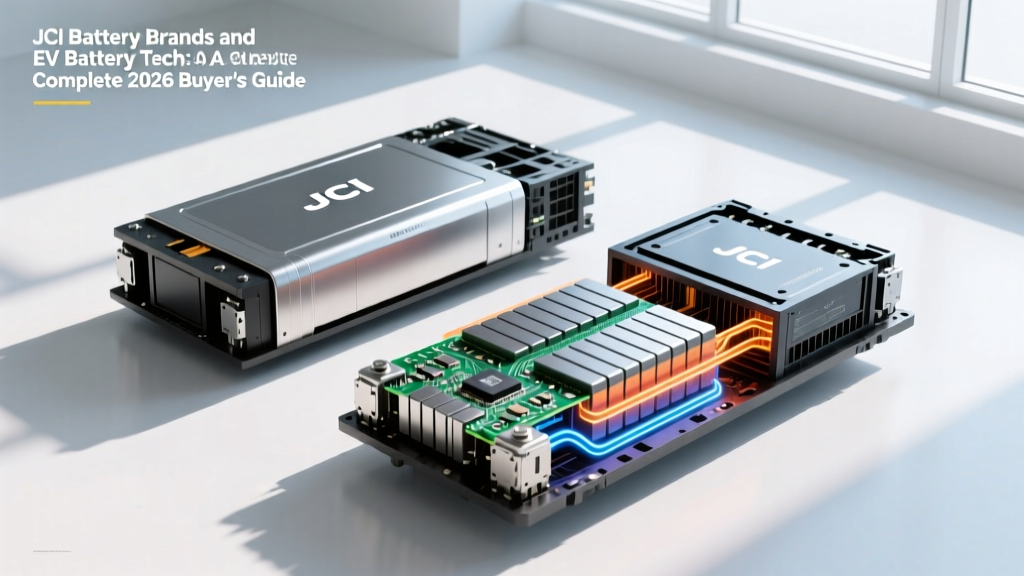
When shoppers search for JCI battery brands, they're typically tracing the legacy of Johnson Controls International — a company whose 12V automotive batteries powered millions of gas cars for decades. But in the electric-vehicle era, the high-voltage traction battery is an entirely different animal, built by cell manufacturers like CATL, LG Energy Solution, Panasonic, SK On, and BYD. Understanding this distinction is the first step toward making an informed EV purchase in 2026.
This guide covers everything you need to know about the lithium-ion (and lithium iron phosphate) batteries that actually propel modern EVs: chemistry trade-offs, real-world degradation data, warranty protections, replacement costs, and the habits that maximize longevity.
LFP vs NMC vs NCA: Which Battery Chemistry Is Right for You?
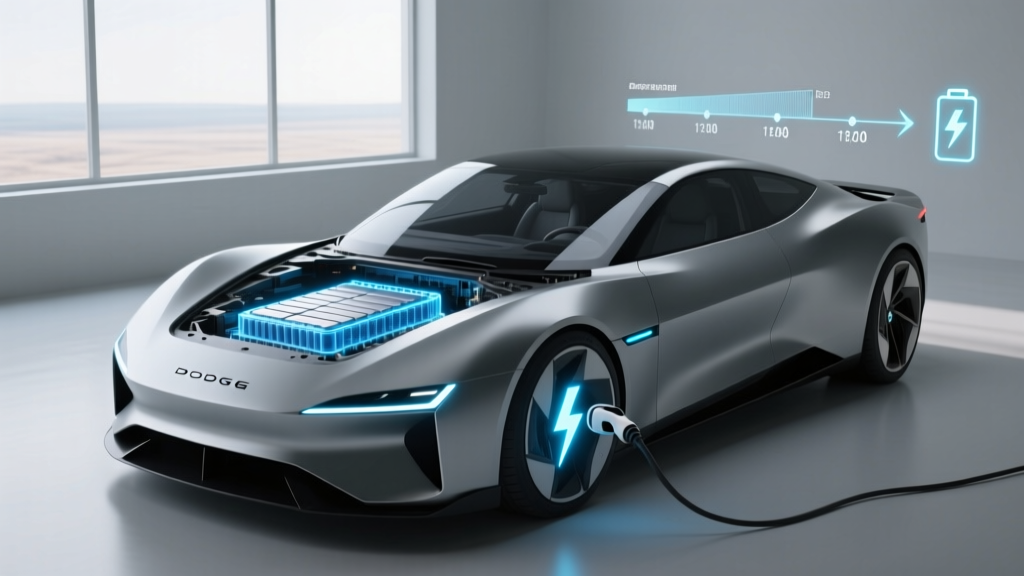
Every EV sold in 2026 uses one of three dominant lithium-ion chemistries for its traction pack. The choice affects range, longevity, cold-weather behavior, and price.
| Attribute | LFP (Lithium Iron Phosphate) | NMC (Nickel Manganese Cobalt) | NCA (Nickel Cobalt Aluminum) |
|---|---|---|---|
| Energy Density | ~160–180 Wh/kg (lower) | ~220–260 Wh/kg (higher) | ~250–270 Wh/kg (highest) |
| Cycle Life | 3,000–5,000+ cycles | 1,000–2,000 cycles | 1,000–1,500 cycles |
| Cold Performance | Moderate; greater range loss below 32°F | Good; ~20–30% loss in deep cold | Good; similar to NMC |
| Cost | Lowest (no cobalt/nickel) | Mid-range | Higher |
| Thermal Stability | Excellent (less prone to thermal runaway) | Good with active management | Good with active management |
| Common in (2026) | Tesla Model 3 RWD, Model Y RWD, BYD, Rivian Standard | Hyundai Ioniq 5, Kia EV6, Ford Mustang Mach-E, VW ID.4 | Tesla Long Range/Performance, Lucid Air |
LFP is the pragmatic pick for daily commuters who charge at home and want maximum cycle life. You can (and should) charge LFP to 100% regularly — unlike NMC, which prefers an 80% daily ceiling. NMC offers more range per kilogram, making it ideal for road-trip-heavy drivers who need every EPA mile. NCA pushes energy density further, favored in performance-oriented trims.
How Long Do EV Batteries Actually Last?
The short answer: almost certainly longer than you'll own the car. Data aggregated from fleet operators, owner surveys, and manufacturer reports paints a reassuring picture.
Degradation Data Points (Real-World)
- Tesla 2025 Impact Report: Model 3/Y batteries retained ~88% capacity at 200,000 miles on average.
- Geotab fleet study (2024 update): Across 10,000+ EVs, average annual degradation was ~1.8% per year, meaning roughly 82% State of Health (SoH) at the 10-year mark.
- Recurrent Auto data (2025): Chevy Bolt EV owners showed ~92% SoH after 5 years / 60,000 miles.
- Taxi/ride-share fleets: Hyundai Kona Electric taxis in South Korea logged 250,000+ km (~155,000 mi) with ~85% SoH on NMC packs.
Most EV batteries will outlast 150,000–200,000 miles before dropping below the 70% capacity threshold that triggers a warranty claim. Catastrophic failure (sudden death) is exceedingly rare — degradation is gradual and linear for the first ~8–10 years, then may accelerate slightly.
What Does the EV Battery Warranty Actually Cover?
Federal law in the United States mandates a minimum of 8 years / 100,000 miles for EV battery warranties (10 years / 150,000 miles in California Air Resources Board states). Most automakers meet or exceed this floor.
| Automaker | Battery Warranty | Capacity Retention Threshold |
|---|---|---|
| Tesla | 8 yr / 120,000 mi (Long Range); 8 yr / 100,000 mi (RWD) | 70% |
| Hyundai / Kia | 10 yr / 100,000 mi | 70% |
| Ford | 8 yr / 100,000 mi | 70% |
| GM (Chevrolet, Cadillac) | 8 yr / 100,000 mi | 60–70% (varies by model) |
| Rivian | 8 yr / 175,000 mi (R1T/R1S) | 70% |
| BMW | 8 yr / 100,000 mi | 70% |
The warranty covers capacity loss below the stated threshold and defects. It does not cover damage from accidents, flooding, or improper modification. If your battery falls below 70% SoH within the warranty window, the manufacturer will repair or replace modules (not always the full pack) to bring it back above the threshold.
How Much Does an EV Battery Replacement Cost in 2026?
Out-of-warranty battery replacement is the number-one fear among prospective EV buyers. Here's what the numbers actually look like, based on service-center estimates and manufacturer pricing as of early 2026.
| Vehicle (Battery Size) | Full Pack Replacement (Parts + Labor) | Typical Need Timeline |
|---|---|---|
| Tesla Model 3 RWD (~60 kWh LFP) | $8,000–$12,000 | Rarely before 200,000+ mi |
| Tesla Model Y LR (~82 kWh NCA) | $12,000–$16,000 | Rarely before 200,000+ mi |
| Hyundai Ioniq 5 (~77.4 kWh NMC) | $10,000–$15,000 | Rarely before 180,000+ mi |
| Ford F-150 Lightning Ext. Range (~131 kWh NMC) | $18,000–$25,000 | Rarely before 150,000+ mi |
| Chevrolet Bolt EV (~65 kWh NMC) | $9,000–$14,000 | Rarely before 170,000+ mi |
Context matters: by the time a battery needs replacement outside warranty, the vehicle is typically 10–15 years old. Many owners will have sold or traded the car long before. Battery cell prices have also continued to decline — BloombergNEF reports pack-level prices near $110/kWh in 2025, down from $140/kWh in 2023 — meaning replacement costs will likely be lower by the time you actually need one.
Additionally, module-level repair is increasingly common. Many packs are composed of 8–16 modules; a single degraded or failed module can be swapped for $1,500–$4,000 rather than replacing the entire pack.
Factors That Accelerate (or Preserve) Battery Health
Not all miles age a battery equally. Here's what the data shows about the habits that matter most.
Battery Longevity Checklist
- Avoid chronic DC fast charging: Occasional road-trip fast charging is fine, but daily use of 150+ kW DC chargers accelerates degradation by ~0.5–1% per year vs. Level 2 home charging (data from Geotab).
- Keep State of Charge between 20–80% for NMC/NCA: Storing at 100% stresses the cathode. LFP is the exception — charge to 100% at least weekly for accurate BMS calibration.
- Use preconditioning: Warm the battery before fast charging (most EVs do this automatically when you navigate to a charger). Cold batteries charged at high power suffer lithium plating.
- Minimize extreme heat exposure: Parking in shade or a garage in 100°F+ climates reduces calendar degradation. Active thermal management helps, but ambient heat still matters.
- Don't let SoC sit at 0%: A fully depleted battery left for weeks can suffer copper-dissolution damage. If storing, leave at ~50%.
- Regenerative braking is fine: One-pedal driving does not meaningfully accelerate degradation; charge input from regen is low-power and well within C-rate limits.
How to Monitor Your EV's Battery State of Health
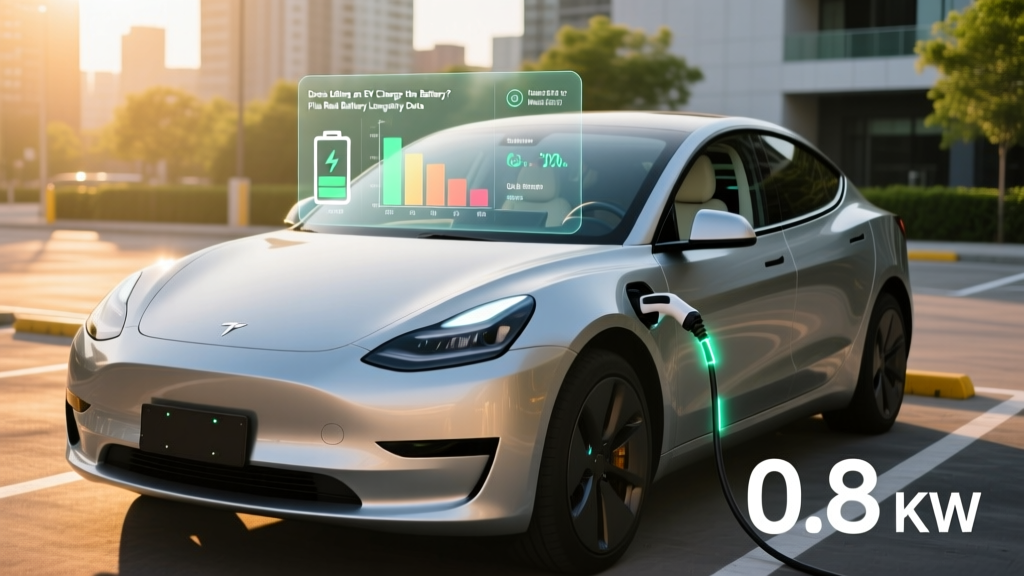
State of Health (SoH) is the percentage of original capacity your battery retains. A new EV starts at 100% SoH; at 70–80% SoH, you'll notice meaningful range reduction.
Built-in tools:
- Tesla: Service menu → Battery Health (available in 2024+ software updates). Displays SoH percentage and projected range at 100%.
- Hyundai/Kia: EV-specific menu in the instrument cluster shows battery health grade (A/B/C).
- BMW: iDrive → Vehicle Status → Battery State of Health (percentage shown on iX and i4 models).
- GM (Ultium platform): myChevrolet/myCadillac app displays battery health indicator.
Third-party tools:
- OBD-II dongles + apps: Tools like OBDeleven, Car Scanner ELM OBD2, or Leaf Spy (Nissan Leaf) can read BMS-reported SoH directly from the CAN bus.
- Recurrent Auto: A free service that connects to your EV's telematics and provides monthly SoH reports benchmarked against similar vehicles.
Check SoH every 3–6 months. A sudden drop (more than 2–3% in a month) may indicate a module imbalance worth a service visit.
What About JCI/Clarios Batteries in EVs?
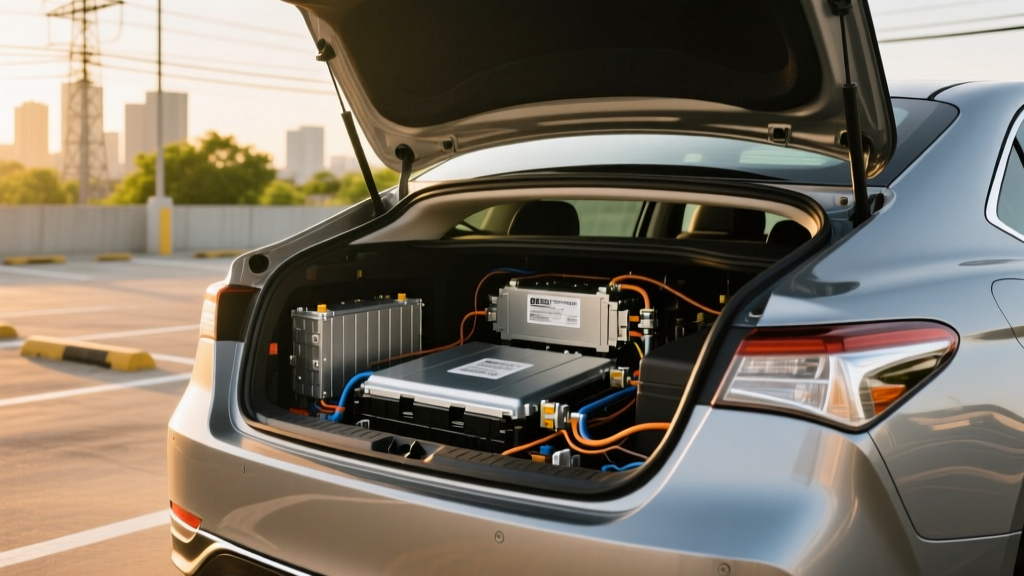
Johnson Controls spun off its battery division into Clarios in 2019. Clarios remains the world's largest 12V automotive battery supplier (brands like Optima, Interstate, and Duralast). In the EV context, Clarios supplies 12V auxiliary batteries for several EV models and is developing low-voltage lithium-ion replacements for the traditional lead-acid 12V unit.
However, Clarios does not manufacture the high-voltage traction batteries that determine your EV's range and longevity. Those come from dedicated cell manufacturers:
- CATL (China) — LFP and NMC; supplies Tesla, Ford, BMW, and others
- LG Energy Solution (South Korea) — NMC; supplies GM, Hyundai, Ford, VW
- Panasonic (Japan) — NCA; primary Tesla supplier
- SK On (South Korea) — NMC; supplies Ford and Hyundai
- BYD (China) — LFP Blade Battery; used in BYD vehicles and supplied to Tesla for some markets
- Samsung SDI (South Korea) — NMC; supplies BMW, Rivian, Stellantis
If you're cross-shopping EVs and want to know which cell supplier is under the floor, the manufacturer's spec sheet or a VIN decoder often reveals it — and it's a more meaningful data point than the JCI/Clarios brand name on the 12V battery under the hood.
Emerging Battery Tech: Solid-State and Beyond
Next-generation battery chemistries promise step-change improvements, but realistic timelines matter.
Solid-state batteries replace the liquid electrolyte with a solid ceramic or polymer, enabling lithium-metal anodes and energy densities above 400 Wh/kg. Toyota has announced a solid-state EV for 2027–2028 (preliminary, limited production). Samsung SDI targets 2027 for mass production. Expect initial availability in luxury vehicles at premium prices, with mainstream adoption not before 2030.
Silicon-dominant anodes (from companies like Sila Nanotechnologies and Group14) boost energy density by 20–40% over graphite anodes. These are already appearing in limited applications — the Mercedes G-Class 580e uses a silicon-anode battery from Sila — and will proliferate through 2026–2028 model years.
Sodium-ion batteries (CATL, BYD) offer lower cost and excellent cold performance at the expense of energy density (~140 Wh/kg). Expect these in budget-oriented EVs and urban runabouts, primarily in Chinese-market vehicles initially.
None of these technologies are available in mainstream 2026 EVs at scale. If an automaker advertises "solid-state" today, it's a concept or limited pilot — not a production vehicle you can buy.
Frequently Asked Questions
How long do EV batteries last in years and miles?
Based on fleet data from Geotab, Recurrent Auto, and manufacturer reports, most modern EV batteries retain 80–90% capacity at 10 years / 150,000 miles. Many will exceed 200,000 miles before dropping below the 70% warranty threshold. The battery is likely to outlast other major vehicle components.
How much does an EV battery cost to replace?
Full pack replacements range from $8,000 for a ~60 kWh pack (Tesla Model 3 RWD) to $25,000 for a ~131 kWh pack (F-150 Lightning Extended Range). However, most EVs will not need a full replacement within typical ownership periods, and module-level repairs cost $1,500–$4,000.
What does the EV battery warranty cover?
Federally mandated minimums are 8 years / 100,000 miles (10/150,000 in CARB states). Warranties cover capacity loss below ~70% of original and manufacturing defects. They do not cover accident damage, misuse, or unauthorized modifications. See IRS.gov for related tax-credit information on battery sourcing requirements.
How do I check and maximize my EV's battery health?
Use your vehicle's built-in battery health display or a third-party tool like Recurrent Auto. Maximize longevity by favoring Level 2 home charging over daily DC fast charging, keeping NMC/NCA packs between 20–80% SoC, preconditioning before fast charging, and avoiding prolonged storage at 0% or 100%.
LFP vs NMC — which is better and why?
Neither is universally better. LFP wins on cycle life (3,000–5,000 cycles vs 1,000–2,000), cost, and thermal safety — ideal for daily commuters who charge at home. NMC wins on energy density (~220–260 Wh/kg vs ~160–180 Wh/kg), giving more range per kilogram — better for road-trip-heavy drivers or those in cold climates where LFP's cold-weather losses are more pronounced.
Does frequent DC fast charging damage my battery?
Occasional DC fast charging (road trips, a few times a month) has negligible impact. Daily DC fast charging at 150+ kW can add ~0.5–1% extra annual degradation compared to Level 2 charging. Modern BMS and thermal management mitigate much of the stress, but electrons moving fast through a cell always generate more heat and wear than slow charging.
Will my EV battery need replacing before I sell the car?
Statistically, no. The average EV ownership period is 6–8 years, and the average annual mileage is ~12,000–15,000 miles. At that rate, you'll accumulate 72,000–120,000 miles — well within the warranty period and well before meaningful degradation. Battery replacement is a real cost, but it's a tail-end-of-vehicle-life event, not a mid-ownership surprise.
Sources: EPA fueleconomy.gov, Geotab EV Battery Degradation Study, Tesla 2025 Impact Report, Recurrent Auto battery data, BloombergNEF Battery Price Survey. Battery specifications and warranty terms are based on 2026 model-year information and are subject to change. Consult your vehicle's owner's manual and manufacturer for the most current details.