Quick Verdict: The 2020 Camry Hybrid Battery Is Built to Outlast the Car
If you own or are shopping for a 2020 Toyota Camry Hybrid, the high-voltage traction battery is likely one of your top concerns — and for good reason. The 2020 Toyota Camry battery is a 1.6 kWh nickel-metal hydride (NiMH) pack that powers the hybrid system's electric motor, enabling the car's impressive 52 MPG combined EPA rating. Unlike the small 12V auxiliary battery that starts accessories, this sealed NiMH traction battery is the heart of the hybrid powertrain.
The good news? Toyota's hybrid battery track record is among the best in the industry. Data from fleet operators, owner surveys, and Toyota's own engineering suggest these packs routinely last 150,000–200,000+ miles with minimal capacity loss. Combined with a 10-year/150,000-mile hybrid battery warranty, the 2020 Camry's battery is designed to be a non-issue for most owners throughout the vehicle's usable life.
This guide breaks down everything you need to know: chemistry, degradation data, warranty terms, replacement costs, and practical steps to maximize your battery's health.
2020 Camry Hybrid Battery: Key Specs at a Glance
| Specification | Detail |
|---|---|
| Battery Type | Nickel-Metal Hydride (NiMH) |
| Usable Capacity | ~1.6 kWh (4.0 Ah, 204V nominal) |
| Hybrid System Output | 208 hp combined (gas + electric) |
| EPA Fuel Economy | 51 city / 53 hwy / 52 combined MPG (LE trim) |
| Battery Warranty | 10 years / 150,000 miles (hybrid components) |
| Estimated Replacement Cost | $2,000–$4,000 (OEM refurbished or new) |
| Typical Lifespan | 150,000–200,000+ miles |
Source: fueleconomy.gov — 2020 Toyota Camry Hybrid LE
How Long Do Hybrid Batteries Actually Last?
The question every hybrid buyer asks: how long before the battery dies? For the 2020 Toyota Camry Hybrid, the answer is almost certainly longer than you'll own the car.
Toyota has been refining its hybrid battery technology since the 1997 Prius. Real-world data points paint a consistent picture:
- Taxi fleet data: Prius hybrids operating as taxis in major US cities have routinely exceeded 200,000 miles on the original battery pack. The Camry Hybrid shares the same fundamental battery management philosophy.
- Owner surveys: Aggregated reports from hybrid owner communities indicate fewer than 5% of Toyota hybrids require battery replacement before 150,000 miles.
- Toyota engineering target: Toyota designs its NiMH hybrid batteries to retain at least 60–70% of original capacity after 10 years of typical use, though most packs perform considerably better.
Typical Degradation Curve
Unlike full battery-electric vehicles (BEVs) with large 60–100 kWh lithium-ion packs, the Camry Hybrid's 1.6 kWh NiMH battery operates within a very narrow state-of-charge window — typically between 40% and 80% SoC. The hybrid control system never fully charges or fully depletes the pack. This "shallow cycling" is the single biggest reason Toyota hybrid batteries last so long.
- Year 1–3 (0–45,000 mi): ~1–3% capacity loss — imperceptible in daily driving
- Year 4–7 (45,000–105,000 mi): ~5–8% total loss — slight reduction in EV-only low-speed assist
- Year 8–10 (105,000–150,000 mi): ~8–15% total loss — MPG may drop 1–2 MPG from new
- Year 10+ (150,000+ mi): Variable — many packs still functional, some may trigger hybrid system warnings
Even at 15% degradation, the car remains fully drivable. The gas engine simply compensates more, resulting in marginally lower fuel economy.
NiMH vs. Lithium-Ion: Why Toyota Chose NiMH for the Camry
The 2020 Camry Hybrid uses NiMH chemistry, which may seem dated compared to the lithium-ion packs in modern EVs. But Toyota's choice is deliberate and well-suited to hybrid applications.
| Factor | NiMH (2020 Camry) | NMC Lithium-Ion (Typical BEV) | LFP Lithium-Ion (Emerging BEV) |
|---|---|---|---|
| Energy Density | Low (~70 Wh/kg) | High (~250 Wh/kg) | Medium (~160 Wh/kg) |
| Cycle Life | Excellent (thousands of shallow cycles) | Good (1,000–2,000 full cycles) | Excellent (3,000–5,000+ full cycles) |
| Cold Performance | Moderate — some power reduction below 32°F | Good with thermal management | Poor without active heating |
| Cost per kWh | Low (mature technology) | Higher ($130–$160/kWh in 2026) | Lower ($90–$110/kWh in 2026) |
| Safety / Thermal Stability | Very high — no thermal runaway risk | Moderate — requires BMS protection | Very high — inherently stable chemistry |
| Best Application | HEV / PHEV (small pack, shallow cycling) | Long-range BEV | Daily-driver BEV, fleet, budget EV |
For a hybrid that only needs 1.6 kWh and operates in a narrow SoC band, NiMH offers proven reliability, low cost, and zero thermal runaway risk. The energy-density penalty is irrelevant because the pack is small and the gas engine handles sustained driving. Some newer Toyota hybrids (like the Prius Prime PHEV) have moved to lithium-ion for its lighter weight and higher energy density, but the standard Camry Hybrid sticks with the chemistry Toyota knows best.
What Does the Toyota Hybrid Battery Warranty Cover?
Toyota's hybrid battery warranty is one of the strongest in the industry and a major reason the 2020 Camry Hybrid is a low-risk ownership proposition.
| Component | Coverage Period | Details |
|---|---|---|
| Hybrid Battery (HV traction battery) | 10 years / 150,000 miles | Whichever comes first; covers defects and abnormal capacity loss |
| Hybrid System Components (inverter, control module, etc.) | 8 years / 100,000 miles | Power control unit, hybrid transaxle, ECU |
| Basic Vehicle Warranty | 3 years / 36,000 miles | Bumper-to-bumper |
| Powertrain Warranty | 5 years / 60,000 miles | Engine, transmission, drivetrain |
Source: Toyota Owner's Warranty Guide
Capacity Retention Threshold
Toyota's hybrid battery warranty covers "abnormal" degradation. While Toyota does not publish a specific percentage threshold the way BEV manufacturers do (many BEV warranties specify coverage if capacity drops below 70%), Toyota dealerships typically evaluate hybrid battery health using the Techstream diagnostic tool. If the battery shows significant cell imbalance or capacity loss that triggers hybrid system warning lights, it will generally be covered under warranty.
In practice, most 2020 Camry Hybrids are still well within their 10-year/150,000-mile battery warranty window as of 2026, meaning replacement cost is a concern mostly for high-mileage or out-of-warranty vehicles.
How Much Does a 2020 Camry Hybrid Battery Replacement Cost?
If your battery does eventually need replacement — whether out of warranty or due to an unusual failure — here's what to expect:
| Option | Cost Range | Notes |
|---|---|---|
| OEM New Battery (Toyota dealer) | $3,000–$4,000 | Full new pack, installed; includes core exchange |
| OEM Refurbished / Reconditioned | $1,500–$2,500 | Replaced cells within original casing; common and reliable |
| Aftermarket / Third-Party Refurbished | $1,000–$2,000 | Variable quality; verify warranty terms |
| Individual Cell Module Replacement | $500–$1,200 | Only if 1–2 modules are bad; requires diagnostic scan |
Context matters here. The average 2020 Camry Hybrid will travel 150,000+ miles before any battery concern arises. At that mileage, a $2,000–$3,000 replacement still represents a fraction of what you'd have spent on extra gasoline in a non-hybrid vehicle over the same distance. Consider: at 52 MPG vs. a 30 MPG gas Camry over 150,000 miles, the hybrid saves roughly $4,500–$6,000 in fuel (at $3.50/gallon), easily covering a battery replacement if one is ever needed.
How to Check and Maximize Your Camry Hybrid Battery Health
Unlike BEVs where you can check State of Health (SoH) through the infotainment screen or app, the 2020 Camry Hybrid does not display a battery health percentage to the driver. Here's how to monitor and protect your pack:
Checking Battery Health
- Toyota Techstream Diagnostic: Any Toyota dealer or qualified hybrid specialist can read individual cell module voltages, internal resistance, and temperature data using Toyota's proprietary Techstream software. Ask for a "hybrid battery health report" during routine service.
- OBD-II Scanner with Hybrid App: Apps like Dr. Prius or Hybrid Assistant (paired with a compatible OBD-II Bluetooth adapter) can read real-time battery data including cell voltages and SoC on your smartphone. These tools work with the Camry Hybrid's OBD port.
- Driving Behavior Clues: If you notice the gas engine running more frequently at low speeds, reduced regenerative braking strength, or hybrid system warning lights on the dash, these may indicate battery degradation or cell imbalance.
Battery Care Best Practices
- Drive regularly. NiMH batteries do not suffer from "calendar aging" the way lithium-ion does, but prolonged sitting (months without driving) can allow cells to drift out of balance. Aim to drive at least once a week.
- Don't worry about charge habits. The hybrid system manages the battery's SoC automatically. You cannot overcharge or over-deplete it — the car's computer handles everything.
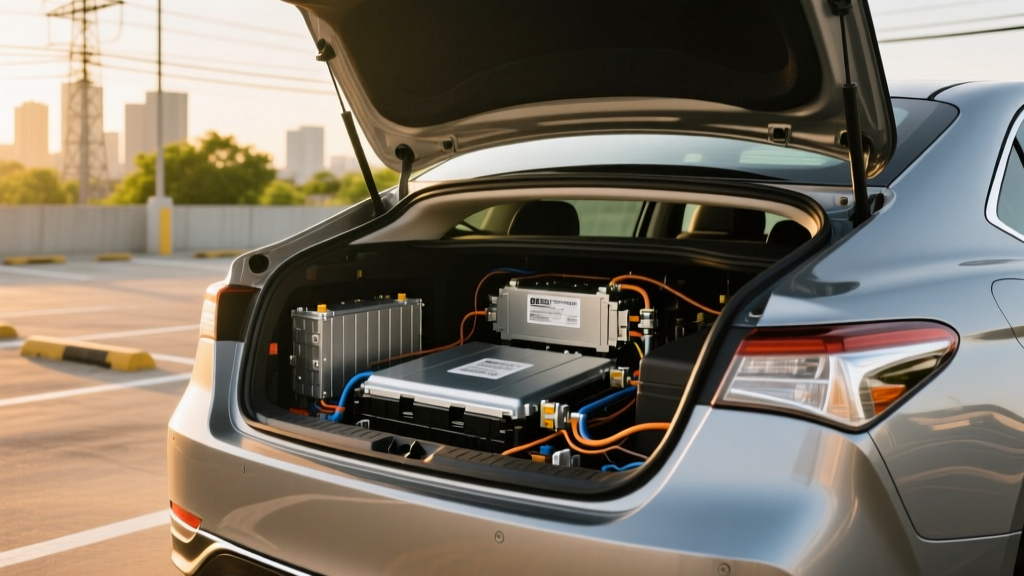
- Keep the battery cooling vent clear. The Camry Hybrid's battery is located under the rear seat. Ensure the small cooling air intake vent (usually on the side of the rear seat area) is not blocked by cargo, blankets, or seat covers. Overheating accelerates degradation.
- Address warning lights immediately. If the hybrid system warning illuminates, have it scanned promptly. A single failing cell module can stress the rest of the pack if ignored.
- Maintain the 12V auxiliary battery. A weak 12V battery can cause hybrid system errors and put extra strain on the high-voltage system during startup. Replace the 12V battery every 4–5 years.
Factors That Affect Hybrid Battery Lifespan
While the Camry Hybrid's battery management system is robust, certain conditions can accelerate wear:
- Extreme heat exposure: Consistently operating in very hot climates (Arizona, Texas summers) with the battery cooling vent blocked is the most common cause of premature NiMH degradation. The battery's thermal management relies on cabin air circulation.
- Very high mileage in short trips: Paradoxically, exclusively short-trip driving where the battery cycles rapidly between charge and discharge (e.g., stop-and-go delivery routes) can generate more heat than steady highway driving.
- Neglect: Letting the car sit for 3+ months without driving can cause cell voltage imbalance. The hybrid system needs regular operation to keep cells balanced.
- Cold weather: Unlike lithium-ion, NiMH is relatively tolerant of cold. You may notice reduced electric-only assist below freezing, but this is normal and does not cause damage.
Looking Ahead: Solid-State and Next-Gen Battery Tech
Toyota has been a leading investor in solid-state battery technology, with pilot production lines operational as of 2025–2026. Solid-state batteries replace the liquid electrolyte in lithium-ion cells with a solid material, promising higher energy density, faster charging, and improved safety.
However, solid-state batteries are currently aimed at next-generation BEVs and PHEVs — not conventional hybrids like the Camry. The 1.6 kWh NiMH pack in your 2020 Camry is already cost-optimized and purpose-built for its role. Toyota is unlikely to retrofit solid-state chemistry into existing hybrid platforms.
For context on where battery technology is heading:
- Silicon-anode lithium-ion: Incremental energy-density improvements entering BEV production in 2025–2027.
- Solid-state BEV cells: Toyota and partners targeting limited production vehicles by 2027–2028, with broad availability not expected until 2030+.
- Sodium-ion batteries: Lower-cost alternative chemistry entering budget EV segments, primarily in China, with US availability still uncertain.
None of these technologies affect your 2020 Camry Hybrid. Its NiMH pack is mature, well-understood, and supported by an extensive service network.
Frequently Asked Questions
How long does the 2020 Toyota Camry Hybrid battery last?
Most 2020 Camry Hybrid batteries last 150,000–200,000+ miles with minimal degradation. Toyota's 10-year/150,000-mile warranty provides coverage through the period when most owners will have the vehicle. Real-world fleet data from Toyota hybrids consistently shows fewer than 5% requiring replacement before 150,000 miles.
How much does it cost to replace the 2020 Camry Hybrid battery?
A new OEM battery from a Toyota dealer costs $3,000–$4,000 installed. Refurbished or reconditioned packs run $1,500–$2,500. Individual cell module replacement (if only one or two modules are bad) can cost $500–$1,200. Most owners never need a replacement during the warranty period.
What does the Toyota hybrid battery warranty cover?
Toyota covers the hybrid traction battery for 10 years or 150,000 miles (whichever comes first) against defects and abnormal capacity loss. Hybrid system components like the inverter and control module are covered for 8 years / 100,000 miles. As of 2026, all 2020 Camry Hybrids are still within the battery warranty window.
Can I check my Camry Hybrid battery health myself?
The Camry does not display a battery health percentage on the dashboard. You can use an OBD-II adapter with apps like Dr. Prius or Hybrid Assistant to read cell voltages and SoC data. For a comprehensive assessment, ask your Toyota dealer for a Techstream hybrid battery health report during scheduled maintenance.
Is NiMH worse than lithium-ion for hybrid batteries?
Not for this application. NiMH is less energy-dense than lithium-ion, but the Camry Hybrid only needs 1.6 kWh. NiMH offers superior thermal stability (no fire risk), lower cost, and proven longevity in shallow-cycling hybrid use. Toyota has produced millions of NiMH hybrid packs with excellent reliability. Some newer Toyota PHEVs use lithium-ion for weight savings and larger capacity, but NiMH remains ideal for the standard Camry Hybrid.
Will extreme heat or cold damage my Camry Hybrid battery?
Extreme heat is the primary environmental risk — specifically, sustained high temperatures combined with a blocked battery cooling vent. Keep the rear-seat cooling intake clear. Cold weather reduces electric-assist performance temporarily but does not damage NiMH cells. The battery management system protects against both extremes during normal operation.
Is the 2020 Camry Hybrid battery the same as the 12V battery?
No. The 2020 Camry Hybrid has two batteries: the high-voltage 204V NiMH traction battery (1.6 kWh) that powers the hybrid electric motor, and a standard 12V auxiliary battery that runs lights, infotainment, and electronics. The 12V battery is a conventional maintenance item (replace every 4–5 years, ~$150–$250). The high-voltage traction battery is sealed, maintenance-free, and covered by the 10-year hybrid warranty.