The Battery Chemistry Landscape in 2026
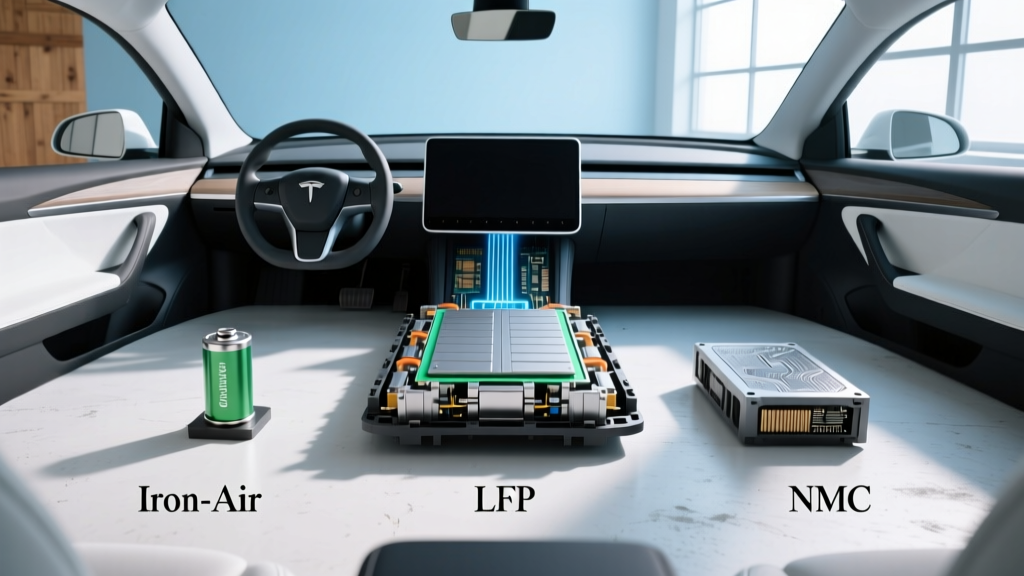
If you have shopped for an EV in the last two years, you have probably encountered the LFP versus NMC decision. Now a third option is entering the conversation: iron-air batteries. Companies like Form Energy have demonstrated multi-day energy storage using iron-air cells, and the automotive sector is watching closely. But before you wait for the next chemistry revolution, it helps to understand exactly what each battery type delivers today — and what the data says about longevity, cost, and real-world performance.
This guide breaks down the three chemistries competing for your next EV's battery pack, grounds every claim in published data, and gives you a practical framework for maximizing the battery you already own.
Iron-Air Batteries: What They Are and Where They Stand
Iron-air batteries generate electricity through the reversible oxidation of iron — essentially rusting and un-rusting iron particles in an aqueous electrolyte. The appeal is raw material cost: iron is abundant, cheap, and domestically sourced, avoiding the geopolitical supply-chain risks tied to lithium, cobalt, and nickel.
Form Energy, the most prominent iron-air developer, has targeted grid-scale multi-day storage (100-hour duration) at costs below $20/kWh at the cell level. That figure is transformative for utilities but comes with trade-offs that matter for vehicles:
- Energy density: Iron-air cells are heavy and bulky. Current prototypes deliver roughly 50–80 Wh/kg at the cell level, compared to 200–300 Wh/kg for NMC and 140–180 Wh/kg for LFP. A 75 kWh iron-air pack could weigh over 900 kg — impractical for passenger vehicles.
- Power density: Charge and discharge rates are slow, suited for multi-day cycling rather than the 150–350 kW bursts EVs demand at DC fast chargers.
- Cycle life: Early data suggests 5,000+ cycles, competitive with LFP, but automotive-grade validation is still underway.
Bottom line for car buyers: Iron-air batteries are a grid-storage technology in 2026, not a vehicle technology. No production EV uses iron-air cells, and none are announced for near-term sale. If you are buying an EV this year, your choice remains LFP or NMC/NCA. The sections below cover what that decision actually means.
LFP vs NMC/NCA: Chemistry Trade-Offs That Matter
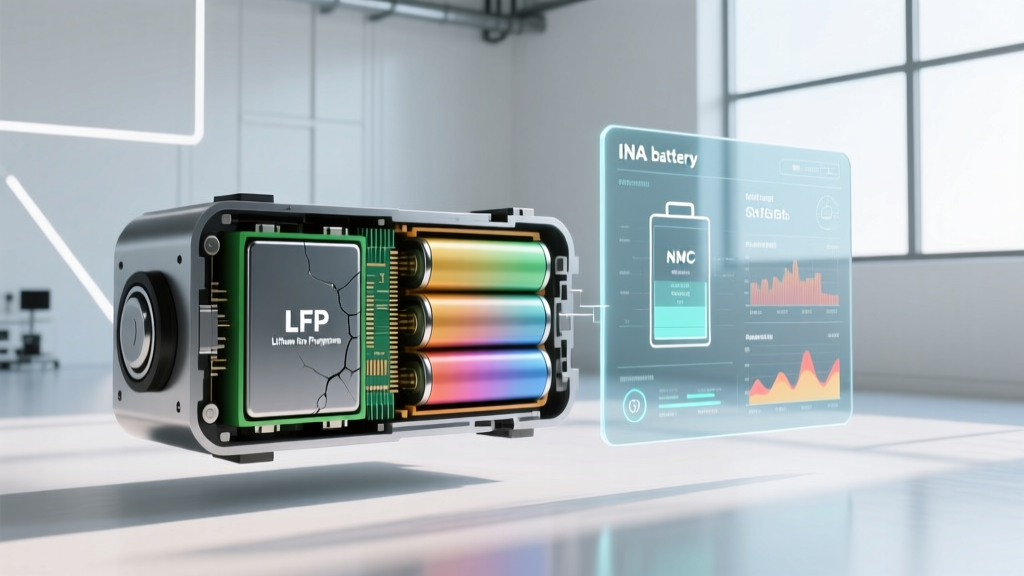
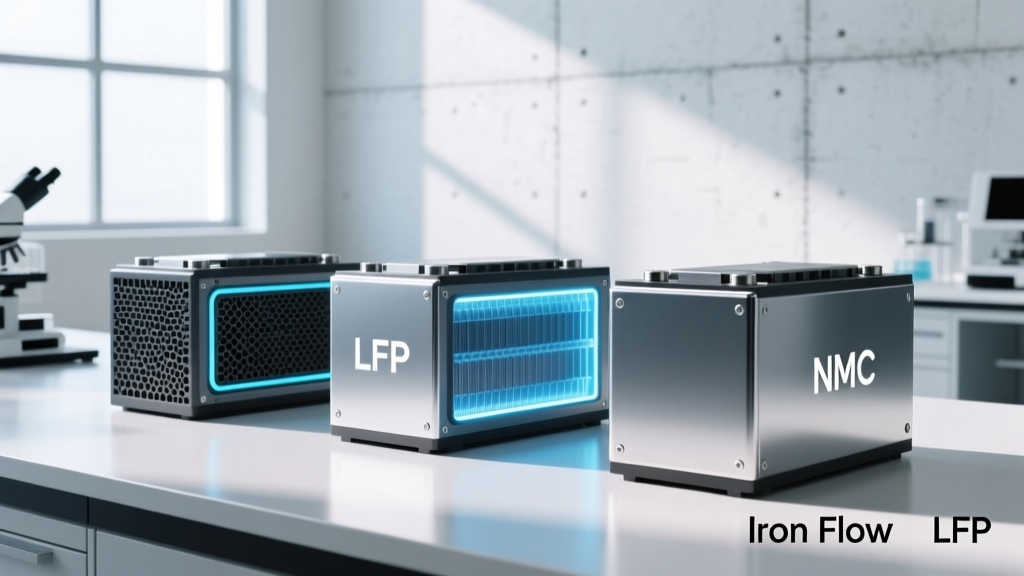
Lithium iron phosphate (LFP) and nickel manganese cobalt (NMC) or nickel cobalt aluminum (NCA) dominate the EV market. Each has distinct strengths. Here is how they compare on the metrics that affect ownership:
| Attribute | LFP (LiFePO₄) | NMC / NCA |
|---|---|---|
| Cell energy density | 140–180 Wh/kg | 200–300 Wh/kg |
| Typical pack size (2026 EVs) | 50–82 kWh | 60–130 kWh |
| Cycle life (to 80% capacity) | 3,000–6,000 cycles | 1,000–2,500 cycles |
| Cold-weather range loss (20°F) | ~25–35% loss | ~20–30% loss |
| Thermal stability | Excellent — less prone to thermal runaway | Good — requires robust BMS and cooling |
| Cell cost (2026 est.) | $60–80/kWh | $85–120/kWh |
| Cobalt/nickel content | None | Significant — supply-chain and ESG risk |
| Charging to 100% regularly | Recommended by OEMs (helps cell balancing) | Not recommended — 80% daily limit advised |
| Notable 2026 vehicles using | Tesla Model 3 RWD, Ford Mustang Mach-E Select (LFP option), BYD Seal, Rivian R1S Standard | Tesla Model Y Long Range, Hyundai Ioniq 5, BMW iX, Chevy Silverado EV |
Choose LFP if: You prioritize long cycle life, lower cost, and plan to keep the vehicle well past 150,000 miles. LFP's lower energy density means shorter EPA range for the same pack weight, but the chemistry's durability is exceptional.
Choose NMC/NCA if: You need maximum range per charge, frequently drive in cold climates, or tow heavy loads. The higher energy density delivers 300+ mile EPA ranges in lighter packages, though cycle life is shorter and you must manage state-of-charge habits more carefully.
How Long Do EV Batteries Actually Last?
The short answer: almost certainly longer than you will own the car. The long answer requires looking at degradation data.
Real-World Degradation Numbers
Multiple fleet studies and owner datasets converge on a consistent picture:
- Year 1–2: 2–5% capacity loss is typical as the battery undergoes initial formation losses.
- Year 3–5: Degradation slows to roughly 1–2% per year under normal use.
- Year 8 (warranty threshold): Most packs retain 85–92% of original capacity. A Geotab fleet study of over 10,000 EVs found average degradation of 2.3% per year across all chemistries, meaning a typical pack retains ~82% after eight years.
- Year 10–15: LFP packs commonly exceed 90% retention at 150,000 miles. NMC packs typically sit at 75–85% retention at the same mileage.
Degradation trajectory (illustrative): An NMC pack starting at 75 kWh usable capacity typically drops to ~72 kWh by year 2, ~68 kWh by year 5, and ~64 kWh by year 8 — still well above the 70% warranty threshold. LFP packs degrade more slowly, often retaining 70+ kWh of an original 75 kWh pack at the eight-year mark.
The critical insight: battery degradation is nonlinear. The steep early drop levels off, and most packs will outlast the vehicle's chassis, suspension, and interior before reaching 70% capacity.
What the Battery Warranty Actually Covers
Federal law in the United States mandates a minimum battery warranty of 8 years / 100,000 miles for EVs sold in the country (10 years / 150,000 miles in California Air Resources Board states). Most manufacturers exceed this floor. Here is what the major warranties look like for 2026 models:
| Manufacturer | Warranty Period | Capacity Retention Threshold | What Triggers a Claim |
|---|---|---|---|
| Tesla (Model 3/Y LFP) | 8 yr / 120,000 mi | 70% | Measured capacity below threshold via BMS diagnostic |
| Tesla (Model 3/Y Long Range NMC) | 8 yr / 120,000 mi | 70% | Same diagnostic process |
| Hyundai / Kia | 10 yr / 100,000 mi | 70% | Dealer battery health scan |
| Ford (Mustang Mach-E, F-150 Lightning) | 8 yr / 100,000 mi | 70% | Capacity below threshold confirmed by Ford diagnostic |
| Rivian (R1T / R1S) | 8 yr / 175,000 mi | 70% | Capacity measurement at service center |
| GM (Ultium-based: Equinox EV, Silverado EV) | 8 yr / 100,000 mi | 70% (some trims 60%) | OnStar diagnostic or dealer scan |
| BMW (iX, i4) | 8 yr / 100,000 mi | 70% | BMW battery diagnostic tool |
What is covered: Capacity loss below the stated threshold, manufacturing defects, and cell/module failures. The manufacturer will repair, replace modules, or replace the full pack at their discretion to bring capacity above the threshold.
What is not covered: Gradual degradation above the threshold (e.g., losing 15% over eight years is "normal"), damage from accidents, flooding, or unauthorized modifications, and range reduction caused by tire changes, accessory loads, or environmental factors.
EV Battery Replacement Cost: What to Expect
Battery replacement is the scenario most feared and least likely. The vast majority of EV batteries never need replacement during the vehicle's life. When they do, costs vary dramatically by pack size, chemistry, and whether modules can be replaced individually.
| Vehicle (2026) | Pack Size | Chemistry | Full Pack Replacement (parts + labor) | Module-Level Repair (if available) |
|---|---|---|---|---|
| Tesla Model 3 RWD | ~57 kWh | LFP | $10,000–$14,000 | $2,000–$4,000 per module section |
| Tesla Model Y Long Range | ~75 kWh | NMC | $14,000–$18,000 | $3,000–$5,000 per module |
| Hyundai Ioniq 5 | 77.4 kWh | NMC | $15,000–$22,000 | Module repair available; $3,000–$6,000 |
| Ford F-150 Lightning Extended Range | ~131 kWh | NMC | $25,000–$35,000 | Limited module service; often full-pack swap |
| Chevy Equinox EV | ~85 kWh | NMC (Ultium) | $16,000–$22,000 | Ultium modules individually replaceable; $2,500–$5,000 |
| Rivian R1S Max Pack | ~149 kWh | NMC | $28,000–$38,000 | Module-level service in development |
When is replacement actually needed? Typically only after a manufacturing defect causes premature cell failure, physical damage from a collision or ground strike, or — rarely — when capacity drops below 70% well outside the warranty period (year 12+). For context, the U.S. Department of Energy notes that modern EV battery packs are designed to last the lifetime of the vehicle, and full replacements remain uncommon.
Costs are trending downward. LFP cell prices fell below $60/kWh in some 2025 contracts, and module-level repair capability (pioneered by GM's Ultium platform) means a single failed module can be swapped for $3,000–$5,000 rather than replacing a $20,000 pack.
Factors That Accelerate (or Slow) Battery Degradation
Not all miles age a battery equally. The following factors have the largest measurable impact on long-term capacity retention:
1. Fast-Charging Frequency
DC fast charging at 150–350 kW generates significant heat and stresses cell chemistry. Occasional road-trip fast charging has negligible impact, but daily DCFC use can add 1–2% additional degradation per year compared to Level 2 home charging. Tesla's own fleet data has shown that vehicles charging primarily on Superchargers degrade roughly 3–4% more over 100,000 miles than those charging predominantly at home.
2. State of Charge Habits
For NMC/NCA packs, consistently charging to 100% and letting the battery sit at full charge accelerates calendar degradation. The recommendation from nearly every OEM: set your daily charge limit to 80% and only charge to 100% when you need the full range for a trip. LFP packs are the exception — Tesla, Ford, and BYD all recommend periodic 100% charges for LFP to allow the battery management system (BMS) to recalibrate cell balancing.
3. Temperature Extremes
Operating in sustained heat above 95°F accelerates electrolyte decomposition. Vehicles in Phoenix, Las Vegas, or the Middle East show slightly higher degradation rates than those in temperate climates. Conversely, extreme cold does not permanently damage the battery but temporarily reduces available capacity — your 310-mile EPA range may read 220 miles at 10°F, but that capacity returns as temperatures rise. Preconditioning the battery (warming it before driving or charging) protects against lithium plating during cold-weather regenerative braking.
4. Depth of Discharge
Regularly draining the battery to 0% or near-0% stresses cells more than shallow cycles. Keeping the pack between 20% and 80% for daily driving (the "middle 60%" rule) is the single most effective habit for NMC longevity.
Battery Care Checklist for Maximum Longevity
- ✅ Charge primarily on Level 2 (home or workplace) — reserve DCFC for road trips
- ✅ Set daily charge limit to 80% for NMC/NCA; 100% is fine for LFP
- ✅ Avoid leaving the car at 100% SoC for extended periods (more than 24 hours)
- ✅ Avoid letting the battery sit below 10% SoC for days — plug in if possible
- ✅ Use preconditioning in cold weather before fast charging
- ✅ Keep the vehicle plugged in during extreme heat so the thermal management system can cool the pack using grid power
- ✅ Monitor State of Health (SoH) quarterly via the vehicle app or OBD-II tools
How to Check Your Battery's State of Health
State of Health (SoH) is a percentage representing your battery's current maximum capacity relative to its original capacity. A new battery is 100% SoH; a battery that can only hold 65 kWh of its original 75 kWh is at 86.7% SoH.
Here is how to check it in 2026:
- In-vehicle displays: Tesla, Hyundai, BMW, and Rivian now include SoH or estimated degradation metrics in the vehicle settings or app. Tesla's service menu (accessible via the software screen) shows a "Battery Health" percentage.
- OBD-II diagnostic tools: Devices like the OBDeleven (for VW Group), Carista, or the more advanced CAN bus readers from A Better Route Planner integrations can pull detailed BMS data including individual cell voltages, internal resistance, and calculated SoH.
- Dealer diagnostic scans: Any authorized service center can run a full battery health report. This is recommended annually after year 5, or before purchasing a used EV.
- Third-party services: Companies like Recurrent Auto provide battery health reports based on connected-car telemetry data, often free for owners who share their charging data.
When to be concerned: If your SoH drops more than 3% in a single year after the initial break-in period, or if individual cell voltage variance exceeds 100 mV (visible via OBD-II tools), schedule a dealer diagnostic. Uneven cell degradation can signal a module-level issue that warranty may cover.
Emerging Battery Technologies: Solid-State, Silicon Anode, and Beyond
While iron-air targets grid storage, other chemistries aim directly at vehicles. Here is where the most discussed next-generation technologies stand as of 2026:
Solid-State Batteries
Solid-state cells replace the liquid electrolyte with a solid conductor, promising higher energy density (potentially 400–500 Wh/kg), faster charging, and improved safety. Toyota has announced limited production in select 2027–2028 models, and QuantumScape continues validation with Volkswagen. However, manufacturing yield, cost, and scale remain unsolved. Realistic timeline for widespread availability: 2029–2032. No 2026 production EV uses solid-state cells.
Silicon Anode Batteries
Replacing graphite anodes with silicon increases energy density by 20–40%. Sila Nanotechnologies and Group14 are supplying silicon-dominant anode materials to select 2026 models, including the Mercedes-Benz G-Class EV. Expect 5–10% range gains in early implementations, with broader adoption by 2028 as costs decline.
Sodium-Ion Batteries
CATL and BYD have begun producing sodium-ion packs for lower-cost EVs in China, offering ~120–160 Wh/kg with no lithium or cobalt. Range is limited (200–250 miles EPA equivalent), but cost per kWh is 30–40% below LFP. U.S. availability is uncertain; expect possible introduction in budget EV trims by 2028–2029.
All of these technologies are forward-looking. If you are buying an EV in 2026, LFP and NMC/NCA are mature, proven, and backed by real-world fleet data spanning hundreds of thousands of vehicles. Waiting for solid-state means waiting at least three to five years for limited availability at premium pricing.
Frequently Asked Questions
How long do EV batteries last in years and miles?
Most EV batteries retain 80–90% of original capacity at 150,000 miles and 10 years of use. LFP chemistries typically outperform NMC in cycle life, with some fleet data showing 90%+ retention at 200,000 miles. The battery will likely outlast the vehicle's other major components.
How much does an EV battery cost to replace?
Full pack replacement ranges from $10,000 for a smaller LFP pack (Tesla Model 3 RWD) to $35,000+ for a large NMC pack (Ford F-150 Lightning Extended Range). However, module-level repairs can reduce costs to $2,000–$6,000, and the vast majority of EV batteries never need replacement during ownership.
What does the EV battery warranty cover?
Federal law requires at minimum 8 years / 100,000 miles of coverage (10 years / 150,000 miles in CARB states). Warranties cover capacity loss below a stated threshold (typically 70% of original capacity), manufacturing defects, and cell failures. They do not cover gradual degradation above the threshold or damage from accidents or misuse.
How do I check and maximize my EV battery health?
Check State of Health via your vehicle's app, an OBD-II diagnostic tool, or a dealer scan. Maximize longevity by charging primarily on Level 2, limiting NMC packs to 80% daily SoC, avoiding extended periods at 0% or 100%, preconditioning in cold weather, and minimizing daily DC fast charging.
LFP vs NMC — which is better and why?
Neither is universally better. LFP wins on cycle life (3,000–6,000 cycles vs 1,000–2,500), cost ($60–80/kWh vs $85–120/kWh), and thermal safety. NMC wins on energy density (200–300 Wh/kg vs 140–180 Wh/kg), cold-weather performance, and maximum range per charge. If you prioritize longevity and cost, choose LFP. If you need 300+ mile range and tow or drive in cold climates, choose NMC.
Will iron-air batteries ever be used in EVs?
Not in the foreseeable future. Iron-air batteries excel at multi-day grid energy storage at ultra-low cost but lack the energy density and power density required for passenger vehicles. A 75 kWh iron-air pack would weigh roughly three times more than an equivalent LFP pack. The technology is important for renewable energy integration but is not competing for your next EV's battery slot.