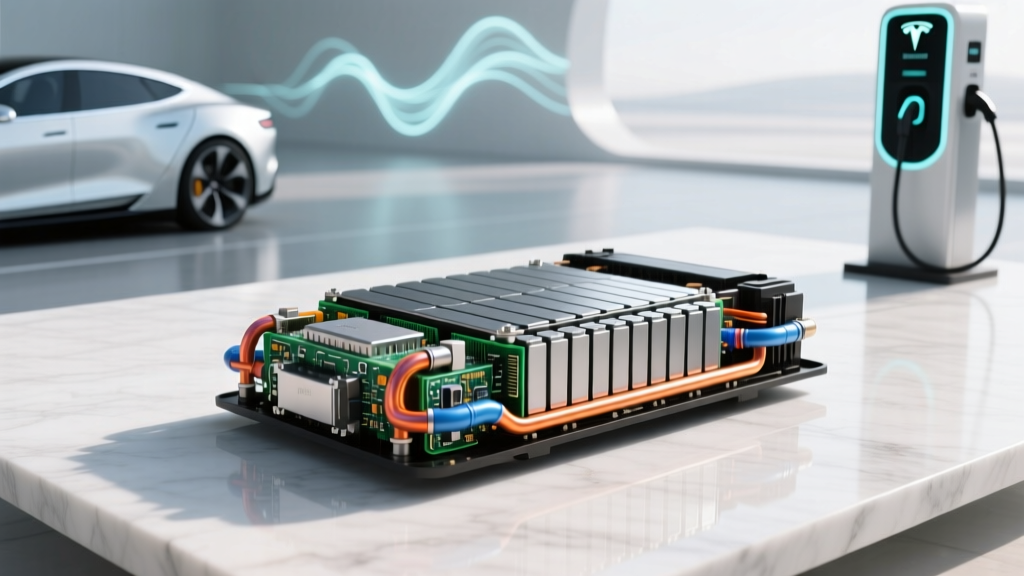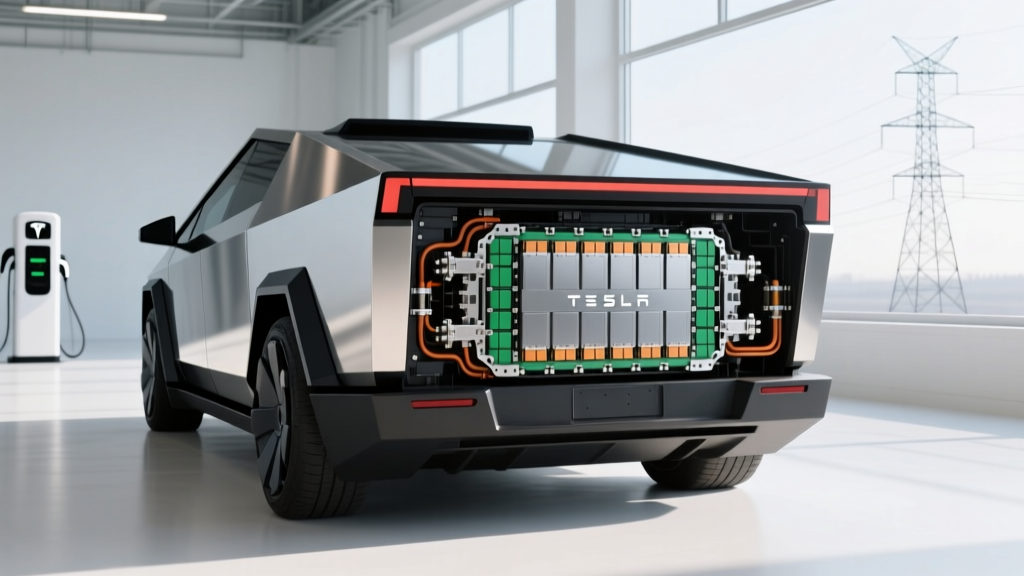
For most EV shoppers, the high-voltage traction battery is the single biggest source of purchase anxiety. How long will it last? What does replacement cost? Does chemistry matter? These are legitimate questions, and the answers have shifted significantly as of 2026. Battery costs have fallen below $130/kWh at the pack level, LFP (lithium iron phosphate) chemistry has moved mainstream, and onboard diagnostics have made it possible for owners to track battery health without a dealership visit. This guide breaks down every dimension of EV battery ownership — from chemistry trade-offs and degradation curves to INA battery diagnostic tools and real-world replacement economics — using current data, not marketing claims.
EV Battery Chemistry: LFP vs NMC vs NCA Explained
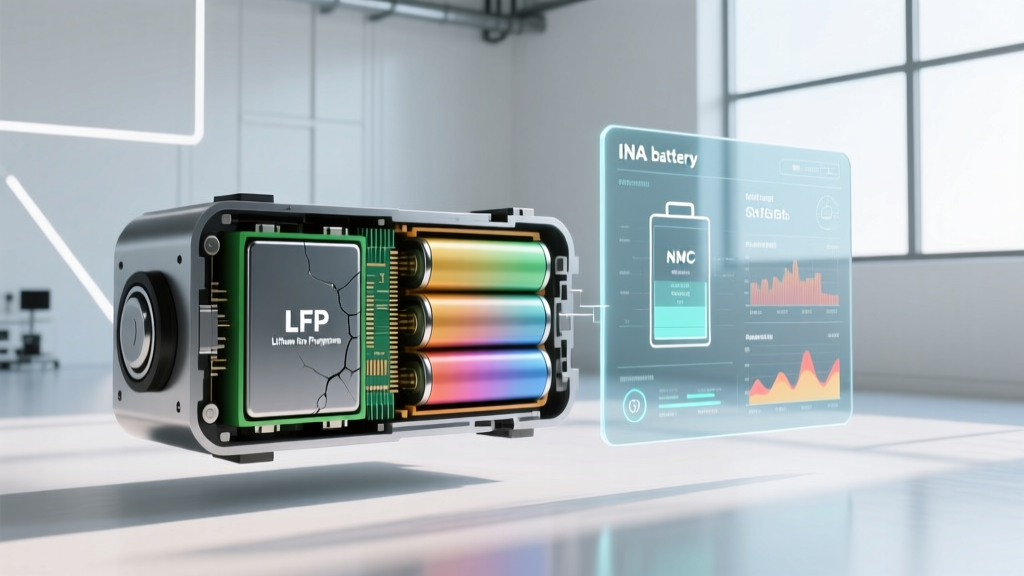
Every battery electric vehicle (BEV) on the US market in 2026 uses one of three dominant cathode chemistries: NMC (nickel-manganese-cobalt), NCA (nickel-cobalt-aluminum), or LFP (lithium iron phosphate). The chemistry dictates energy density, cycle life, cold-weather behavior, and cost — and understanding these trade-offs is the first step in choosing the right EV for your driving pattern.
NMC and NCA chemistries offer higher energy density, meaning more kWh packed into a smaller, lighter pack. This translates to longer EPA range in a given vehicle footprint. Tesla's Model 3 Long Range, Hyundai Ioniq 5, and most premium EVs use NMC or NCA packs. The trade-off: these chemistries are more sensitive to high state-of-charge (SoC) stress, degrade slightly faster over time, and rely on cobalt and nickel — minerals with volatile pricing and supply-chain concerns.
LFP batteries sacrifice roughly 15–20% in energy density but gain substantially in cycle life, thermal stability, and cost. Tesla's Model 3 RWD, the base Ford Mustang Mach-E Select (as of 2025+), and several Chinese-market imports use LFP. LFP packs tolerate daily 100% charging without accelerated degradation — a major practical advantage for commuters who want full range every morning. They also perform better at extreme temperatures above 100°F, though cold-weather range loss (below 20°F) remains comparable to NMC at roughly 20–30% reduction.
| Attribute | LFP (Lithium Iron Phosphate) | NMC (Nickel-Manganese-Cobalt) | NCA (Nickel-Cobalt-Aluminum) |
|---|---|---|---|
| Energy Density | ~160–180 Wh/kg (cell level) | ~220–260 Wh/kg | ~250–270 Wh/kg |
| Cycle Life (to 80% SoH) | 3,000–5,000 cycles | 1,500–2,500 cycles | 1,200–2,000 cycles |
| Cold Performance (below 20°F) | Moderate range loss (~25–30%) | Moderate range loss (~20–30%) | Slightly better cold discharge |
| Daily 100% SoC Tolerance | Excellent — recommended by OEMs | Not recommended — target 80–90% | Not recommended — target 80–90% |
| Thermal Stability | Very high — less prone to thermal runaway | Moderate — requires active cooling | Moderate — requires active cooling |
| Cost (2026 pack-level) | ~$95–110/kWh | ~$120–140/kWh | ~$125–145/kWh |
| Typical Applications | Standard-range / RWD models | Long-range / AWD / performance | Tesla Long Range, premium EVs |
Which is better? Neither is universally superior. If you drive a predictable daily commute under 80 miles, charge at home nightly, and want to minimize long-term degradation concerns, LFP is the pragmatic choice — charge to 100% without worry. If you need maximum range for road trips, tow frequently, or live in a climate where every mile of EPA range matters, NMC/NCA delivers the density advantage — but you'll want to follow the 80% daily SoC guideline and precondition before DC fast charging.
How Long Do EV Batteries Last? Real Degradation Data
The short answer: most EV traction batteries outlast the vehicles they're installed in. The fear of a $20,000 battery swap at year five is a relic of early-2010s EVs like the first-generation Nissan Leaf, which lacked active thermal management. Modern liquid-cooled packs degrade far more gracefully.
Based on aggregated fleet data from sources including Recurrent Auto and manufacturer warranty claims, here's what typical degradation looks like in 2026:
| Timeframe | Mileage (approx.) | Average Capacity Retention (SoH) | Notes |
|---|---|---|---|
| Year 1 | 12,000–15,000 mi | 96–98% | Initial formation loss; steepest part of the curve |
| Year 3 | 36,000–45,000 mi | 92–95% | Curve flattens significantly after year 1–2 |
| Year 5 | 60,000–75,000 mi | 88–93% | Most owners report negligible daily driving impact |
| Year 8 | 96,000–120,000 mi | 83–90% | Warranty threshold — most packs still above 70% |
| Year 10+ | 120,000–150,000+ mi | 78–87% | High-mileage fleet data (Tesla, Chevrolet Bolt) |
Several factors shift these numbers meaningfully. Vehicles that rely heavily on DC fast charging (3+ sessions per week consistently) show roughly 2–4% additional degradation at the five-year mark compared to predominantly Level 2 home-charged vehicles. Extreme heat climates (Arizona, Texas summers) accelerate electrolyte breakdown, while extreme cold doesn't degrade the battery permanently but does reduce usable range temporarily.
Notably, LFP packs show flatter degradation curves — many Tesla Model 3 RWD owners report 94–96% SoH at 50,000 miles, compared to 89–92% for comparable NMC packs. This is consistent with LFP's superior cycle life ratings.
What Does the EV Battery Warranty Actually Cover?
Federal law mandates that EV battery warranties cover a minimum of 8 years or 100,000 miles (whichever comes first) in most states, and 10 years or 150,000 miles in California Air Resources Board (CARB) states including California, New York, Massachusetts, Oregon, and Washington. Most manufacturers exceed the federal minimum voluntarily.
| Manufacturer | Warranty Term | Capacity Retention Threshold | Coverage Details |
|---|---|---|---|
| Tesla (Model 3/Y LFP) | 8 yr / 100,000 mi | 70% | Defects + capacity below threshold |
| Tesla (Model 3/Y LR NCA) | 8 yr / 120,000 mi | 70% | Defects + capacity below threshold |
| Hyundai / Kia | 10 yr / 100,000 mi | 70% | Defects + capacity below threshold |
| GM (Chevrolet, Cadillac) | 8 yr / 100,000 mi | 70% (60% for Bolt) | Defects + capacity below threshold |
| Ford | 8 yr / 100,000 mi | 70% | Defects + capacity below threshold |
| Volkswagen | 8 yr / 100,000 mi | 70% | Defects + capacity below threshold |
| Rivian | 8 yr / 175,000 mi | 70% | Extended mileage for commercial use |
The critical number is the capacity retention threshold — typically 70% of original capacity. If your 82 kWh pack can no longer hold at least 57.4 kWh (70% of 82), the warranty covers repair or replacement. In practice, hitting this threshold before 100,000 miles is rare with modern liquid-cooled packs. The warranty also covers manufacturing defects — internal short circuits, cell imbalance beyond BMS correction, and coolant leak damage.
What the warranty does not cover: damage from collisions, flooding, aftermarket modifications to the high-voltage system, or use of non-certified charging equipment that causes electrical damage. Always retain records of professional charging equipment installation.
EV Battery Replacement Cost: What to Expect in 2026
Battery replacement is the nuclear scenario most EV skeptics cite. The reality: complete pack replacements under 150,000 miles are uncommon, and when they do occur, most are covered by warranty. Out-of-pocket costs, when they apply, have dropped significantly as cell prices have fallen.
| Vehicle | Battery Capacity | Chemistry | Estimated Pack Cost | Labor + Installation | Total Estimate |
|---|---|---|---|---|---|
| Tesla Model 3 RWD | 60 kWh | LFP | $5,700–$7,200 | $1,500–$2,500 | $7,200–$9,700 |
| Tesla Model Y LR | 82 kWh | NCA | $9,800–$12,300 | $1,800–$3,000 | $11,600–$15,300 |
| Hyundai Ioniq 5 | 77.4 kWh | NMC | $9,300–$11,600 | $2,000–$3,200 | $11,300–$14,800 |
| Ford F-150 Lightning (Std) | 98 kWh | NMC | $11,800–$14,700 | $2,500–$4,000 | $14,300–$18,700 |
| Chevrolet Equinox EV | 85 kWh | NMC | $10,200–$12,800 | $2,000–$3,500 | $12,200–$16,300 |
| Rivian R1T (Max Pack) | 149 kWh | NMC | $17,900–$22,400 | $3,000–$5,000 | $20,900–$27,400 |
These figures represent OEM pack pricing through dealer channels. The growing EV battery refurbishment and module-level repair market offers an alternative: independent specialists can often identify and replace only the degraded modules within a pack (rather than the entire assembly) for 40–60% less than a full pack swap. This is increasingly common for vehicles like the Chevrolet Bolt and early Nissan Leaf, where individual module replacement runs $3,000–$5,000 total.
When is replacement typically needed? Based on current fleet data, the median mileage at first out-of-warranty battery replacement is approximately 180,000–220,000 miles — well beyond what most first owners will accumulate. For the average US driver covering 13,500 miles per year (per FHWA data), that's 13–16 years of service.
INA Battery Diagnostics: Monitoring Your EV's State of Health
The term "INA battery" in EV diagnostics refers to the category of battery measurement and monitoring systems — encompassing current sensing (I), voltage measurement (N, from the German Spannung convention in some diagnostic frameworks), and ambient/environmental (A) data collection. More broadly in the EV service world, INA battery diagnostics describes the process of reading the battery management system's (BMS) internal data to determine true State of Health (SoH), cell balance status, and degradation patterns.
Modern EVs continuously log thousands of data points about their traction battery: individual cell voltages (often 96–120+ cells in series), pack temperature at multiple sensor points, internal resistance trends, coulomb counting (energy in vs. energy out), and impedance spectroscopy snapshots. Accessing this data is how owners and technicians determine real battery health — not just the range estimate on the dashboard.
How Owners Can Check Battery Health
Several methods are available to EV owners in 2026:
- OEM App SoH Indicators: Tesla, Hyundai, and GM now display battery health percentages (or "good/fair" status) directly in their owner apps. Tesla's 2025.44+ software update added a detailed SoH readout under Service > Battery Health.
- OBD-II Diagnostic Tools: Devices like the OBDLink SX paired with apps such as EV Battery Health or Scan My Tesla can read BMS-reported SoH, cell voltage delta, and degradation estimates. These tools read the same INA battery parameters that dealer service departments access.
- Third-Party Testing Services: Companies like Geotab and Recurrent offer battery health certificates based on telematics data — increasingly used in the used-EV market to verify pack condition before purchase.
- Manual Range Tracking: Charge to 100% (on LFP) or your normal limit (on NMC), note the displayed range, and compare it to the original EPA sticker adjusted for your typical conditions. A sustained 15%+ drop from baseline suggests it's time for a dealer diagnostic.
Battery Longevity Checklist: Maximize Your Pack's Life
- Daily SoC limit: Set to 80% for NMC/NCA; 100% is fine for LFP
- DC fast charging: Use sparingly — aim for ≤1 session per week when possible
- Precondition: Always enable battery preconditioning before DC fast charging (warms the pack for optimal charge acceptance and reduces lithium plating risk)
- Avoid prolonged 0% or 100% storage: If parking for 2+ weeks, target 50–60% SoC
- Extreme heat: Park in shade or a garage when possible; active thermal management runs even when parked, consuming energy
- Cold weather: Plug in when parked in sub-freezing temps — the BMS uses grid power to maintain pack temperature rather than draining the battery
- Regen braking setting: Standard or moderate regen is fine; aggressive one-pedal driving doesn't meaningfully increase degradation
- Software updates: Keep your BMS firmware current — OEMs regularly refine charge algorithms to extend pack life
Factors That Accelerate EV Battery Degradation
Not all miles are equal when it comes to battery wear. Understanding the specific stressors lets you adjust habits and preserve capacity:
1. Frequent DC Fast Charging. High C-rates (the ratio of charge power to battery capacity) generate heat and mechanical stress within cells. A 77 kWh pack charging at 250 kW is absorbing energy at a 3.2C rate. Occasional road-trip fast charging is fine; daily reliance on DCFC accelerates degradation by an estimated 1.5–3% over five years compared to exclusive Level 2 charging. This is why fleet operators prioritize depot-level Level 2 charging for overnight top-ups.
2. Sustained High SoC. NMC and NCA cells held above 90% SoC for extended periods experience accelerated electrolyte oxidation and cathode surface degradation. This is the physics behind the "charge to 80%" recommendation. LFP's olivine crystal structure is far more stable at high SoC, which is why Tesla and Ford explicitly allow 100% daily charging on LFP-equipped models.
3. Extreme Temperatures. Sustained ambient temperatures above 95°F increase the rate of solid electrolyte interphase (SEI) layer growth, which irreversibly consumes lithium ions. In hot climates, vehicles with robust liquid cooling (Tesla, Hyundai E-GMP, GM Ultium) show measurably better longevity than passively cooled packs. Cold temperatures don't permanently degrade cells but do temporarily reduce available capacity and increase internal resistance — preconditioning mitigates this.
4. Deep Discharge Cycles. Regularly driving to near-0% SoC stresses cells through copper dissolution at the anode current collector. The BMS maintains a hidden buffer (typically 2–5 kWh at the bottom) to prevent true zero, but habitual deep discharges still accelerate wear. Plug in when you hit 10–15% remaining.
Emerging Battery Technology: Solid-State and Silicon Anodes
The next generation of EV battery technology is well-documented in press releases but not yet available in production vehicles sold in the US as of 2026. Here's a realistic assessment:
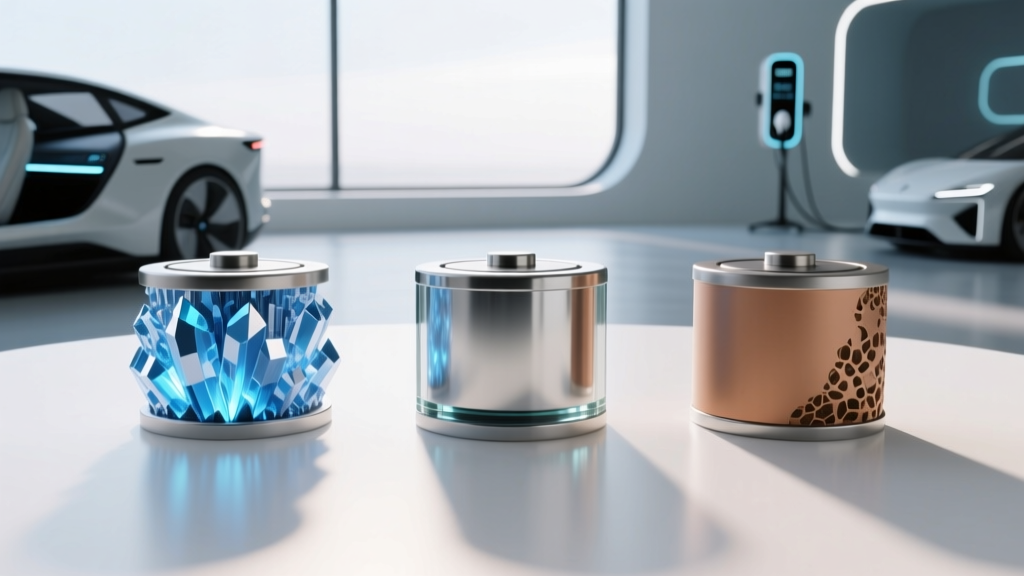
Solid-state batteries replace the liquid electrolyte with a solid ceramic, glass, or polymer separator. The promised benefits are substantial: 40–50% higher energy density (potentially 400+ Wh/kg at cell level), faster charging without lithium plating risk, and dramatically improved thermal stability. Toyota has announced solid-state EVs for 2027–2028 with 450+ mile range and 10-minute 10–80% charging, but production timelines have slipped multiple times. Samsung SDI and QuantumScape are targeting 2028–2030 for automotive-scale production. Expect initial deployment in premium, low-volume models before reaching mainstream price points around 2031–2033.
Silicon-dominant anodes are closer to reality. Replacing graphite anodes with silicon (or silicon-carbon composites) increases anode capacity by 3–10x, boosting overall cell energy density by 20–40%. Sila Nanotechnologies and Group14 Technologies are supplying silicon anode materials to manufacturers including Mercedes-Benz and Panasonic. Expect vehicles with silicon-enhanced anodes to appear in the 2027–2028 model years, offering meaningful range gains without the manufacturing challenges of full solid-state cells.
Sodium-ion batteries are entering the market for lower-range, cost-sensitive applications. CATL has begun shipping sodium-ion packs for Chinese-market EVs, offering ~120 Wh/kg at significantly lower material cost. These are unlikely to appear in US-market vehicles before 2028 and will target the sub-$30,000 EV segment with 150–200 mile ranges.
For buyers deciding today: current lithium-ion technology (both LFP and NMC) is mature, well-understood, and backed by robust warranties. Waiting for solid-state means waiting 3–5+ years for limited availability at premium prices. Today's packs will serve reliably for 150,000+ miles with basic care.
Frequently Asked Questions
How long do EV batteries last in years and miles?
Modern liquid-cooled EV batteries typically retain 83–90% of original capacity at 8 years / 100,000 miles. Real-world fleet data from Tesla, Chevrolet Bolt, and Hyundai Kona Electric owners shows many packs reaching 180,000–220,000 miles before capacity drops below 70% — the point where noticeable range reduction affects daily usability. LFP chemistry packs often exceed these figures due to their higher cycle-life ratings of 3,000–5,000 cycles.
How much does it cost to replace an EV battery?
Out-of-warranty replacement costs range from approximately $7,200 for a Tesla Model 3 RWD (60 kWh LFP) to $27,000+ for a Rivian R1T Max Pack (149 kWh NMC), including parts and labor. However, complete pack replacements before 150,000 miles are rare, and the vast majority are covered under the 8-year/100,000-mile minimum warranty. Module-level repairs at independent EV shops can reduce costs by 40–60% when only specific cell groups have degraded.
What does the EV battery warranty cover?
Standard battery warranties cover manufacturing defects and capacity loss below a defined threshold — typically 70% of original capacity — for 8 years/100,000 miles (10 years/150,000 miles in CARB states). This means if your battery can no longer hold 70% of its original kWh rating within the warranty period, the manufacturer will repair or replace it at no cost. Warranties do not cover collision damage, flooding, or damage from non-certified aftermarket modifications.
How do I check my EV battery's State of Health (SoH)?
Most 2024+ model-year EVs display SoH or battery health status in the OEM app or vehicle settings menu. For more granular data — including individual cell voltage delta and impedance readings — an OBD-II scanner with EV-specific software (such as Scan My Tesla or LeafSpy for Nissan) reads the BMS-reported INA battery parameters directly. Third-party services like Recurrent and Geotab also generate battery health certificates from telematics data, useful for used-EV purchases.
LFP vs NMC — which battery chemistry should I choose?
Choose LFP if you want maximum longevity, charge to 100% daily without worry, prioritize lower cost, and your range needs are met by standard-range models (typically 240–280 miles EPA). Choose NMC/NCA if you need maximum range (300–400+ miles EPA), tow heavy loads, frequently road-trip in cold weather, or need the performance characteristics of long-range and AWD trims. Both chemistries are proven and reliable — the choice is about matching the pack to your driving pattern, not about one being definitively "better."