Why Battery Chemistry Decides Your EV's Real-World Life
The sticker on the showroom floor tells you EPA range and 0-60 time. What it doesn't tell you is how much of that range you'll still have in year eight, whether your battery can handle a Minnesota winter without losing a third of its capacity, or how many DC fast charges it can absorb before degradation accelerates. All of that comes down to chemistry.
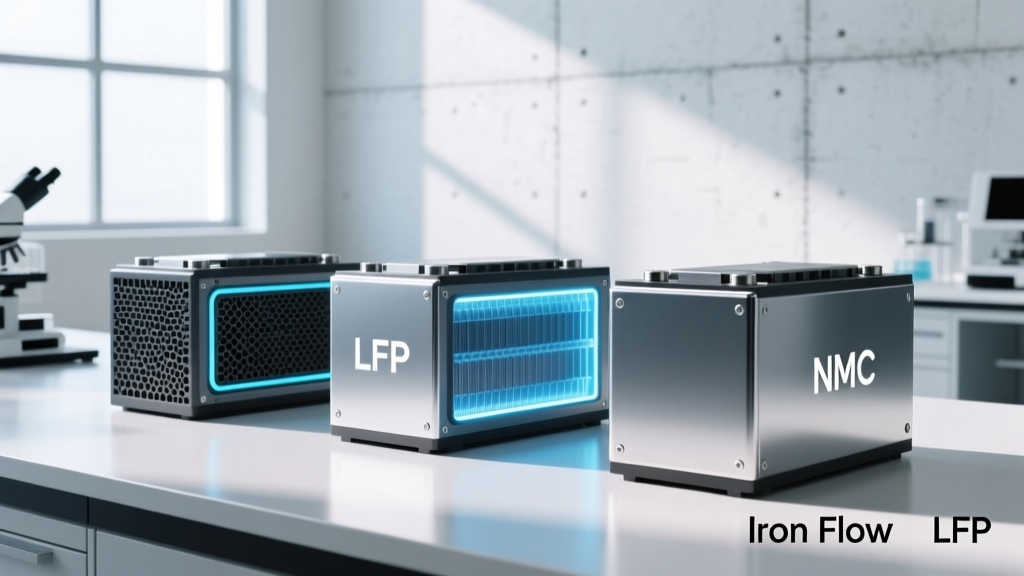
Most EVs sold in 2026 use one of two lithium-ion variants: NMC/NCA (nickel manganese cobalt or nickel cobalt aluminum) for maximum energy density, or LFP (lithium iron phosphate) for longevity and cost. But a third chemistry — iron flow batteries — has begun appearing in grid-storage headlines and concept-stage vehicle discussions, prompting buyers to ask: is this something that will end up under my hood?
This guide breaks down all three chemistries with real numbers, then covers degradation, warranty coverage, replacement costs, and the daily habits that determine whether your pack lasts 150,000 miles or 300,000.
LFP vs NMC vs Iron Flow: Chemistry Trade-Offs Explained
Before we compare, a quick primer on what these abbreviations mean at the cell level:
- NMC (Nickel Manganese Cobalt) and NCA (Nickel Cobalt Aluminum): High energy density cathodes used in most long-range EVs — Tesla Model 3 Long Range, Hyundai Ioniq 5, Ford Mustang Mach-E Extended Range. They pack more kWh into a smaller, lighter pack.
- LFP (Lithium Iron Phosphate): Lower energy density but far more stable, longer cycle life, and cheaper to produce. Used in Tesla Model 3 RWD, standard-range BYD models, and the Ford F-150 Lightning standard-range battery.
- Iron Flow Batteries: A fundamentally different architecture where energy is stored in liquid electrolyte tanks (iron-based) separate from the power-conversion cell stack. Energy capacity scales by making the tanks bigger; power scales by adding more cell stacks.
| Attribute | NMC / NCA | LFP | Iron Flow (Grid/Stationary) |
|---|---|---|---|
| Energy Density (Wh/kg) | 220–300 | 140–180 | 15–25 (system-level) |
| Typical Cycle Life | 1,000–2,000 | 3,000–6,000+ | 10,000–20,000+ |
| Cold Performance (at -20°C) | ~70–75% capacity retention | ~60–65% capacity retention | N/A (indoor stationary use) |
| Cost ($/kWh, pack-level) | $120–$150 | $80–$110 | $200–$300 (current low-volume) |
| Thermal Runaway Risk | Moderate (requires active cooling) | Very Low | Essentially Zero (aqueous electrolyte) |
| Critical Mineral Dependency | High (cobalt, nickel) | Low (iron, phosphate) | Very Low (iron, water-based) |
| EV Suitability (2026) | Standard for long-range BEVs | Standard-range / cost-optimized BEVs | Not viable for vehicles (weight/volume) |
The honest answer on iron flow batteries for EV buyers: they are not going in your car. The energy density of 15–25 Wh/kg at the system level means a 75 kWh pack would weigh several tons and require a trunk-sized electrolyte tank. Companies like Form Energy and ESS Inc. are deploying iron flow batteries for multi-day grid storage — think 100-hour duration at utility scale — where weight and volume don't matter but cycle life and raw material cost do. For passenger vehicles, LFP and NMC remain the only practical chemistries in 2026.
How Long Do EV Batteries Actually Last?
The short answer: longer than most buyers fear. The long answer depends on chemistry, climate, and charging habits.
Typical Degradation Trajectory (by chemistry):
- NMC/NCA packs (e.g., Tesla Model 3 LR, Hyundai Ioniq 5): Expect roughly 5–8% capacity loss in the first 2 years / 30,000 miles as the solid-electrolyte interphase (SEI) layer stabilizes. After that, degradation slows to approximately 1–2% per year under normal use. At 150,000 miles (~8 years), most NMC packs retain 82–90% of original capacity. Tesla's fleet data, published in their 2023 Impact Report, showed Model 3/Y packs retaining approximately 85% capacity at 150,000 miles.
- LFP packs (e.g., Tesla Model 3 RWD, BYD Seal): Slower initial degradation (~3–5% in first 2 years) and a flatter long-term curve. LFP cells routinely exceed 3,000 full charge cycles before reaching 80% capacity — equivalent to roughly 300,000+ miles for a 250-mile-range vehicle. Real-world fleet data from Chinese ride-hail services shows LFP packs at 200,000 km retaining 90%+ SoH.
- Outliers and failures: Early-generation packs (2011–2015 Nissan Leaf with passive air cooling) degraded significantly faster — some losing 20–30% capacity within 5 years in hot climates. Modern liquid-cooled packs have largely eliminated this risk.
The key insight: most EV batteries will outlast the vehicle they're installed in. The average US vehicle age is 12.6 years. A liquid-cooled NMC or LFP pack in a 2026 model year EV is engineered to retain 70–80% capacity at 150,000–200,000 miles, which aligns with or exceeds the mechanical life of the rest of the car.
What the Battery Warranty Actually Covers
Federal law mandates a minimum 8-year / 100,000-mile warranty on EV battery packs for emissions-related compliance, and most manufacturers meet or exceed this baseline. Here's what the major warranties look like for 2026 model-year vehicles:
| Manufacturer | Warranty Term | Capacity Retention Threshold | What Triggers a Claim |
|---|---|---|---|
| Tesla (Model 3/Y) | 8 yr / 120,000 mi (LR) or 100,000 mi (RWD) | 70% | Battery SoH drops below 70% as measured by Tesla diagnostics |
| Hyundai / Kia | 10 yr / 100,000 mi | 70% | Capacity below 70% under normal use conditions |
| Ford (Mach-E, F-150 Lightning) | 8 yr / 100,000 mi | 70% | Capacity loss exceeding 30% confirmed by dealer diagnostic |
| GM (Ultium-based) | 8 yr / 100,000 mi | 70% (some models 60%) | Battery capacity below threshold per OnStar/diagnostic read |
| BMW / Mercedes | 8 yr / 100,000 mi | 70% | Verified capacity loss beyond 30% |
What's covered: Defects in materials or workmanship, and capacity loss beyond the stated threshold under normal operating conditions.
What's typically NOT covered: Damage from accidents, flooding, or improper modification; capacity loss from sustained storage at 100% SoC in extreme heat (some manufacturers exclude abuse scenarios); cosmetic issues that don't affect function.
The practical reality: Warranty claims for battery replacement are rare on modern liquid-cooled packs. Most degradation is gradual and stays above the 70% threshold within the warranty period. The warranty is better understood as a floor — a guarantee that you won't face catastrophic early failure — rather than a prediction of typical performance.
EV Battery Replacement Cost: What the Numbers Really Look Like
This is where fear-mongering runs rampant. Let's ground it in data.
| Vehicle (2024–2026 MY) | Battery Size | Chemistry | Estimated Replacement Cost (Parts + Labor) | Typical Replacement Timeline |
|---|---|---|---|---|
| Tesla Model 3 RWD | 57.5 kWh | LFP | $8,000–$12,000 | Rarely needed before 200k+ mi |
| Tesla Model 3 Long Range | 75 kWh | NMC | $12,000–$16,000 | Rarely needed before 180k+ mi |
| Hyundai Ioniq 5 | 77.4 kWh | NMC | $11,000–$15,000 | Rarely needed before 180k+ mi |
| Ford F-150 Lightning Ext. Range | 131 kWh | NMC | $18,000–$28,000 | Rarely needed before 150k+ mi |
| Chevrolet Equinox EV | 85 kWh | NMC (Ultium) | $12,000–$17,000 | Rarely needed before 170k+ mi |
| Nissan Leaf (older, air-cooled) | 40–62 kWh | NMC | $6,500–$10,000 (refurb available) | May need replacement at 100k–130k mi in hot climates |
Several important context points:
- Battery prices have fallen roughly 90% since 2010 (BloombergNEF data), from ~$1,200/kWh to approximately $120–$140/kWh at the pack level in 2025–2026. This trend continues to push replacement costs down.
- Module-level repair is increasingly common. Many packs can be serviced by replacing individual modules (a few kWh each) rather than the entire pack, reducing costs to $2,000–$5,000 for a partial repair.
- The used and refurbished battery market is growing. Companies like Redwood Materials and OEM certified-refurb programs offer lower-cost replacement packs for out-of-warranty vehicles.
- Most original owners will never need a replacement. If you sell or trade your EV within 5–8 years, the battery will still be under warranty and likely above 85% SoH.
Five Factors That Accelerate (or Slow) Battery Degradation
What actually moves the needle on battery longevity:
- DC Fast Charging Frequency: Occasional fast charging (1–2x per week) has minimal impact. Daily DC fast charging — especially at 150+ kW on a regular basis — accelerates degradation by approximately 1–3% additional over 100,000 miles compared to Level 2 home charging. The heat generated during high-C-rate charging stresses cells. Practical rule: use DCFC for road trips; charge at home on Level 2 for daily use.
- State of Charge Habits: For NMC/NCA batteries, routinely charging to 100% and leaving the car parked at full SoC (especially in heat) is the single biggest avoidable degradation factor. Set your daily charge limit to 80% and only charge to 100% when you need the full range for a trip. LFP batteries are an exception — manufacturers like Tesla and BYD recommend charging LFP to 100% at least weekly to maintain cell balancing accuracy.
- Extreme Temperature Exposure: Sustained exposure to ambient temperatures above 95°F accelerates calendar degradation even when the car isn't driven. If you live in Phoenix or Houston, garage parking and preconditioning while plugged in meaningfully extend pack life. Extreme cold doesn't cause permanent degradation but temporarily reduces available capacity (expect 20–40% range loss at 0°F, recoverable when temperatures rise).
- Depth of Discharge: Frequently draining the battery below 10% SoC stresses cells. Try to keep the operating window between 20–80% for NMC, or 10–100% for LFP (which tolerates full cycles better).
- Preconditioning Before Fast Charging: Modern EVs precondition the battery when you navigate to a DC fast charger, warming or cooling it to the optimal temperature window (~25–35°C) for accepting high kW rates. This protects the cells AND speeds up your charge. Always navigate to the charger through the car's built-in system rather than just driving there cold.
How to Check and Monitor Your Battery's State of Health
State of Health (SoH) is the percentage of original capacity your battery currently holds. A new pack is 100% SoH; at 70% SoH, your 300-mile EPA range has effectively become ~210 miles.
How to check SoH in 2026 model-year vehicles:
- Tesla: No native SoH percentage in the app, but you can estimate it by charging to 100% and comparing the displayed range to the original EPA figure. Third-party tools like TeslaFi or OBD-II dongles with apps like Scan My Tesla can read the BMS-reported SoH directly.
- Hyundai / Kia: The infotainment system's EV diagnostics page shows a battery health indicator. Dealer service can pull a detailed SoH report via the KDS diagnostic tool.
- Ford: The FordPass app and in-vehicle settings display estimated range at full charge, which you can compare to original specs. Dealer diagnostics provide a formal SoH percentage.
- GM (Ultium): OnStar can provide battery health reports; the myChevrolet/myCadillac app shows estimated range trends.
- OBD-II universal method: An OBD-II adapter ($30–$60) paired with apps like Car Scanner or LeafSpy (for Nissan) can read the battery management system's SoH estimate on most EVs.
When to be concerned: If your SoH drops more than 3% per year after the initial break-in period, or if you notice sudden range drops that don't correlate with temperature, schedule a dealer diagnostic. Rapid degradation may indicate a defective module that can be replaced under warranty.
Emerging Battery Technologies: What's Real and What's Not Yet
Solid-State Batteries: Promised energy densities of 400–500 Wh/kg with faster charging and improved safety. Toyota has announced a 2027–2028 production timeline for a limited run of solid-state EVs. Samsung SDI and QuantumScape are in pilot production. Realistically, expect solid-state to appear in low-volume premium vehicles by 2028–2029, with mainstream availability not until 2030+. Current challenge: manufacturing cost remains 3–5x that of conventional lithium-ion.
Silicon Anode Batteries: Companies like Sila Nanotechnologies and Group14 are replacing graphite anodes with silicon-dominant composites, boosting energy density by 20–40%. These are beginning to appear in consumer electronics and are expected in EV cells by 2027–2028. The Mercedes-AMG G-Class electric (announced) is among the first vehicles expected to use silicon-anode cells.
Sodium-Ion Batteries: CATL and BYD have begun production of sodium-ion cells, which eliminate lithium entirely. Energy density is lower (~120–160 Wh/kg), but cost is significantly less. Expect sodium-ion in budget city EVs and PHEVs by 2027, primarily in Chinese-market vehicles initially.
Iron Flow Batteries for Grid Storage: As noted, iron flow batteries are scaling rapidly — but for stationary grid storage, not vehicles. Form Energy's 100-hour iron-air battery system is entering commercial deployment in 2025–2026 for utilities needing multi-day renewable energy shifting. This indirectly benefits EV owners by making the grid cleaner and electricity cheaper, but the chemistry will not appear in passenger vehicles due to its weight and volume requirements.
The realistic timeline for next-gen chemistries reaching your driveway: silicon anode by 2028, solid-state by 2029–2030 for premium models, sodium-ion for budget models by 2028. None of these will require you to change your charging habits — they'll simply offer more range, faster charging, or lower cost in the same form factor.
Frequently Asked Questions
How long do EV batteries last in years and miles?
Modern liquid-cooled EV batteries (both LFP and NMC) are designed to retain 70–85% of their original capacity at 150,000–200,000 miles, which typically corresponds to 10–15 years of average driving. LFP chemistries often exceed 3,000 full cycles before hitting 80% SoH — equivalent to 300,000+ miles for a 250-mile-range vehicle. Most EV batteries will outlast the mechanical life of the vehicle.
How much does it cost to replace an EV battery?
Full pack replacement costs range from approximately $8,000 for a smaller LFP pack (Tesla Model 3 RWD) to $28,000 for a large NMC pack (F-150 Lightning Extended Range) including parts and labor. However, most owners will never need a full replacement — module-level repairs cost $2,000–$5,000, and batteries under warranty are replaced at no cost if they fall below the 70% capacity threshold. Pack prices continue to decline ~8–12% per year.
What does the EV battery warranty cover?
Most manufacturers warrant the high-voltage traction battery for 8 years / 100,000 miles (Hyundai/Kia offer 10 years / 100,000 miles). The warranty covers defects and capacity loss below a stated threshold — typically 70% of original capacity. If your battery degrades below this level within the warranty period, the manufacturer will repair or replace it at no cost. The warranty does not cover damage from accidents, modifications, or in some cases, documented abuse like sustained storage at 100% SoC in extreme heat.
How do I check my EV battery's health?
You can estimate SoH by charging to 100% and comparing displayed range to the original EPA figure. For a precise reading, use an OBD-II adapter with an EV-compatible app (Car Scanner, Scan My Tesla, LeafSpy) to read the BMS-reported SoH percentage. Dealers can also pull formal SoH reports during service visits. Monitor the trend over time — a healthy pack loses 1–2% per year after the initial break-in.
LFP vs NMC — which battery chemistry is better for me?
Choose NMC/NCA if you need maximum range (300+ miles), frequently drive in cold climates (better low-temperature performance), or want the longest possible single-charge road trips. Choose LFP if you prioritize longevity and lower cost, mostly drive in moderate climates, can charge at home daily (LFP tolerates 100% SoC better), and are comfortable with 240–270 miles of range. For most daily commuters with home charging, LFP offers the better long-term ownership experience. For road-trip-heavy drivers in northern states, NMC remains the stronger choice.
Will iron flow batteries ever be used in electric cars?
Almost certainly not for passenger vehicles. Iron flow batteries store energy in large tanks of liquid electrolyte, making them extremely heavy and voluminous relative to their energy capacity (15–25 Wh/kg system-level vs. 140–300 Wh/kg for lithium-ion). A 75 kWh iron flow pack would weigh several tons and require significant cargo space for the electrolyte tanks. Their strength — 10,000–20,000+ cycle life with near-zero degradation and abundant iron — makes them ideal for grid-scale multi-day energy storage, where weight and space are not constraints.
Sources: EPA fuel economy data at fueleconomy.gov; IRS §30D clean vehicle credit rules at irs.gov; manufacturer warranty documentation from Tesla, Hyundai, Ford, and GM press sites.