Hybrid Battery Life: What the Data Actually Shows
The single most common question from first-time electrified-vehicle buyers isn't about range or charging speed — it's about longevity. Will the battery need replacing before the car hits 150,000 miles, and if so, at what cost? Whether you're evaluating a Toyota Prius hybrid (HEV), a RAV4 Prime plug-in hybrid (PHEV), or a full battery-electric vehicle (BEV), the traction battery is the most expensive component in the drivetrain. Understanding hybrid battery life requires looking past marketing claims and into degradation data, chemistry differences, and real-world ownership patterns.
The short answer: modern electrified-vehicle batteries are lasting longer than most buyers expect. Data from fleet operators, manufacturer warranty claims, and independent testing consistently shows that the vast majority of hybrid and EV batteries outlive the vehicles they power. But "vast majority" isn't "all," and the details matter — especially when you're spending $30,000 to $80,000 on a vehicle.
How Long Do Hybrid and EV Batteries Last?
Battery lifespan is measured in two dimensions: chronological age and charge cycles. A charge cycle is one full 0–100% discharge and recharge, though partial cycles (say, 40% to 80%) accumulate proportionally. Here's what real-world data tells us across vehicle types:
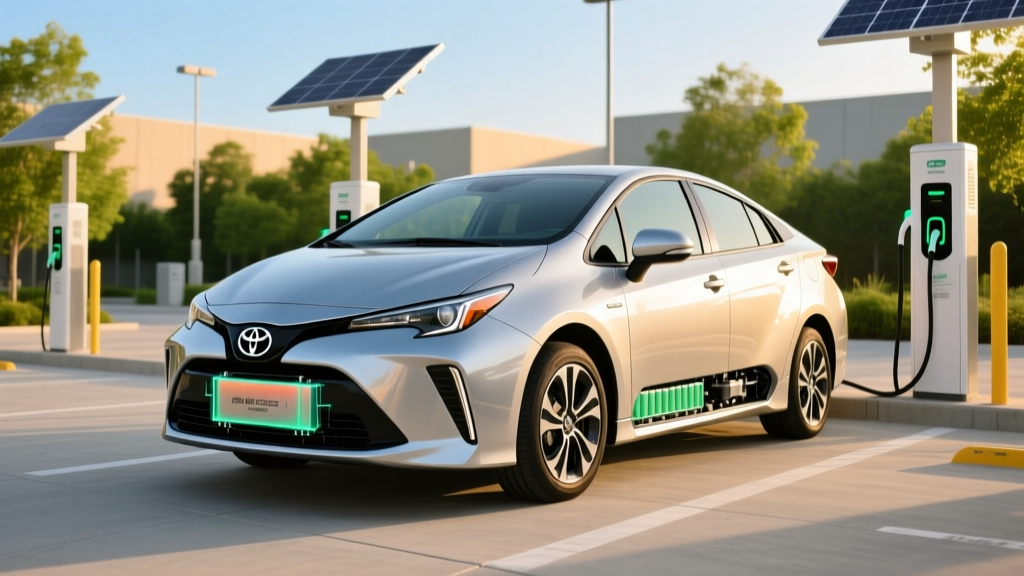
Conventional hybrids (HEV) — Vehicles like the Toyota Prius and Honda Accord Hybrid use relatively small batteries (1.0–2.0 kWh) that never fully discharge. The battery management system (BMS) keeps the state of charge (SoC) in a narrow window, typically between 40% and 80%. This shallow cycling is exceptionally gentle on cells. Toyota's hybrid batteries routinely exceed 200,000 miles with minimal capacity loss. Toyota's own data and third-party fleet studies show less than 10% degradation at 150,000 miles for the current-generation Prius.
Plug-in hybrids (PHEV) — PHEVs like the RAV4 Prime (18.1 kWh usable) or Jeep Wrangler 4xe (17.3 kWh) cycle more deeply, using a larger portion of the battery daily. Expect 15–25% capacity loss over 150,000 miles, though the electric-only range is small enough (typically 30–45 miles EPA) that even degraded batteries still serve daily commutes. A PHEV with 40 miles of electric range that degrades 20% still delivers 32 miles — adequate for most errands.
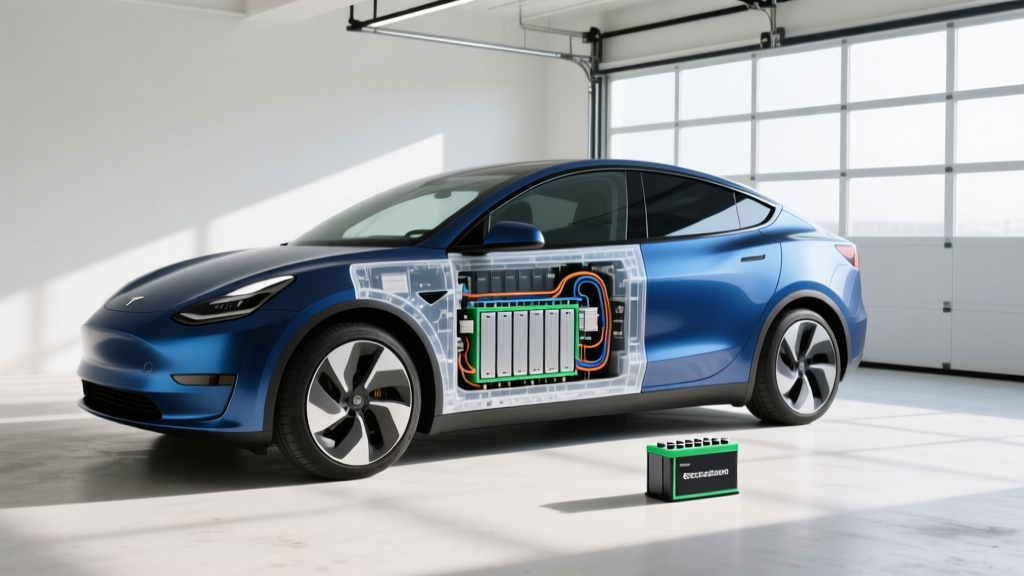
Battery-electric vehicles (BEV) — Full EVs carry large packs (60–110 kWh) and cycle more energy overall, but the BMS still buffers the top and bottom of the SoC range. Data from Recurrent Auto, which tracks over 15,000 EVs in real-world conditions, shows the median EV retains approximately 92% of original range at 100,000 miles and roughly 85–88% at 150,000 miles. Teslas with NMC chemistry average about 12% degradation at 150,000 miles, while LFP-equipped models show even less.
LFP vs. NMC vs. NCA: Battery Chemistry and Its Impact on Lifespan
Not all lithium-ion batteries are created equal. The cathode chemistry fundamentally determines energy density, cycle life, cold-weather performance, and cost. In 2026, three chemistries dominate the electrified-vehicle market:
| Attribute | LFP (Lithium Iron Phosphate) | NMC (Nickel Manganese Cobalt) | NCA (Nickel Cobalt Aluminum) |
|---|---|---|---|
| Energy density | Lower (~160 Wh/kg cell-level) | Higher (~230–260 Wh/kg) | Highest (~260–280 Wh/kg) |
| Cycle life | 3,000–5,000+ cycles to 80% SoH | 1,500–2,500 cycles to 80% SoH | 1,200–2,000 cycles to 80% SoH |
| Cold performance | Weaker — reduced range below 32°F | Better low-temp performance | Good low-temp performance |
| Cost (per kWh) | Lower — no cobalt or nickel | Higher — commodity-dependent | Highest — cobalt content |
| Thermal stability | Excellent — very low thermal runaway risk | Moderate — requires robust BMS | Moderate — requires robust BMS |
| Typical vehicles (2026) | Tesla Model 3/Y RWD, Ford Mustang Mach-E Select, Rivian Standard | Hyundai Ioniq 5/6, VW ID.4, BMW iX, most PHEVs | Tesla Model S/X, Lucid Air |
| Charging to 100% OK? | Yes — LFP tolerates full SoC well | No — daily limit 80% recommended | No — daily limit 80% recommended |
Which chemistry is "better" for longevity? If maximum cycle life and tolerance for deep cycling are your priorities, LFP wins decisively. An LFP pack rated for 4,000+ cycles to 80% state of health (SoH) could theoretically outlast 1 million miles of driving. The trade-off is lower energy density, meaning heavier packs for the same range, and weaker cold-weather range retention.
NMC and NCA offer more range per pound and better winter performance, but they degrade faster under aggressive use patterns. For a PHEV owner who charges nightly and drives 30 electric miles daily, NMC is the practical choice — the smaller pack cycles frequently, and NMC's energy density keeps vehicle weight manageable.
Battery Degradation: Real Data Points Across Milestones
Degradation isn't linear. Most lithium-ion packs experience a steeper drop in the first 10,000–20,000 miles (sometimes called "formation loss"), then settle into a slow, predictable decline. Here's what aggregated fleet and owner data shows:
| Mileage | Avg. Capacity Retained (NMC) | Avg. Capacity Retained (LFP) | Real-World Impact |
|---|---|---|---|
| New | 100% | 100% | Full EPA-rated range |
| 25,000 mi | ~95% | ~97% | Barely noticeable |
| 50,000 mi | ~93% | ~95% | ~10–15 mi less on a 300-mi pack |
| 100,000 mi | ~90% | ~93% | ~25–30 mi less on a 300-mi pack |
| 150,000 mi | ~87% | ~91% | ~35–40 mi less on a 300-mi pack |
| 200,000 mi | ~83–85% | ~88–90% | Noticeable but still functional |
For hybrids, the picture is even rosier. The Toyota Prius HEV battery, operating in a narrow SoC band with active thermal management, shows approximately 5–8% capacity loss at 150,000 miles based on fleet data — and since the pack is small, the impact on fuel economy is negligible (less than 1–2 MPG combined).
Cold-weather acceleration of degradation: Repeatedly fast-charging a battery at sub-freezing temperatures without preconditioning can cause lithium plating on the anode — a permanent form of damage. Vehicles with active battery thermal management (which includes nearly all 2024+ models) mitigate this by warming the pack before accepting a DC fast charge. If your EV offers a "precondition for charging" feature, use it.
What Does the Battery Warranty Actually Cover?
Federal law mandates a minimum hybrid/EV battery warranty of 8 years or 100,000 miles (whichever comes first). In California Air Resources Board (CARB) states — which include California, Colorado, Connecticut, Maine, Maryland, Massachusetts, New Jersey, New York, Oregon, Rhode Island, Vermont, Virginia, and Washington — the mandate extends to 10 years or 150,000 miles for PZEV-classified vehicles, which covers most hybrids and PHEVs.
| Manufacturer | Warranty Period | Mileage Limit | Capacity Threshold | Notes |
|---|---|---|---|---|
| Toyota (HEV/PHEV) | 10 years | 150,000 mi | Not published (case-by-case) | Strong track record; hybrid battery replacement rarely needed under 200k mi |
| Hyundai/Kia (HEV/PHEV/BEV) | 10 years | 100,000 mi | 70% SoH | Among the longest standard warranties |
| Tesla (BEV) | 8 years | 100,000–150,000 mi (varies by model) | 70% SoH | Model 3/Y: 100k mi; Model S/X: 150k mi |
| Ford (BEV/PHEV) | 8 years | 100,000 mi | 70% SoH | Covers Mach-E, F-150 Lightning, Escape PHEV |
| GM (BEV/PHEV) | 8 years | 100,000 mi | 60% SoH (Ultium packs) | Lower threshold than competitors — read the fine print |
| Honda (HEV/PHEV) | 8 years | 100,000 mi (10/150k in CARB states) | Not published | Accord Hybrid, CR-V Hybrid covered |
What triggers a warranty claim? If your battery drops below the stated capacity threshold (e.g., 70% SoH) within the warranty window, the manufacturer must repair or replace it at no cost. Most manufacturers first attempt module-level repair (replacing degraded cell groups rather than the entire pack), which is faster and cheaper. Full pack replacement is typically a last resort.
What voids the warranty? Using non-OEM chargers that damage the battery, modifying the BMS, or failing to follow the owner's manual charging guidelines can void coverage. Normal use — including DC fast charging — does not void the warranty.
EV and Hybrid Battery Replacement Costs: What to Budget
Out-of-warranty battery replacement is the scenario that generates the most anxiety — and the most misleading headlines. Here's the reality with current pricing:
| Vehicle Type | Battery Size | Replacement Cost Range | When Typically Needed |
|---|---|---|---|
| HEV (Prius, Accord Hybrid) | 1.0–2.0 kWh | $2,000–$4,500 | 200,000+ miles (if ever) |
| PHEV (RAV4 Prime, Wrangler 4xe) | 15–20 kWh | $6,000–$12,000 | 150,000–200,000+ miles (if ever) |
| BEV compact (Model 3 RWD, Bolt EV) | 50–65 kWh | $8,000–$14,000 | 200,000+ miles (rarely needed) |
| BEV midsize/large (Model Y, Ioniq 5, F-150 Lightning) | 75–100 kWh | $12,000–$22,000 | 200,000+ miles (rarely needed) |
| BEV luxury (Model S, Lucid Air, BMW iX) | 90–118 kWh | $18,000–$30,000+ | 200,000+ miles (rarely needed) |
Several critical points deserve emphasis:
Most batteries never need replacement. The data from Recurrent Auto and other fleet-tracking services shows that fewer than 5% of modern EVs require battery replacement within 150,000 miles. The vast majority of replacement claims involve manufacturing defects caught under warranty, not age-related wear.
Costs are declining. Battery pack prices have fallen from over $1,000/kWh in 2010 to approximately $120–$140/kWh at the cell level in 2026, according to BloombergNEF. Replacement costs will continue to decrease as the supply of refurbished and remanufactured packs grows.
Module-level repair is increasingly common. Rather than replacing an entire 80 kWh pack, many shops now identify and swap the specific degraded modules, cutting costs by 50–70%. This option is most mature for Toyota hybrids and Tesla vehicles.
Factors That Accelerate (or Preserve) Battery Life
Your daily habits have a measurable impact on how quickly your hybrid or EV battery degrades. Here's what the chemistry and the data tell us:
- Daily charge limit: Set to 80% for NMC/NCA vehicles. LFP owners can charge to 100% daily without harm (Tesla recommends periodic 100% charges for LFP calibration).
- Avoid prolonged storage at extremes: Don't leave your EV sitting at 100% SoC or below 10% for days. If storing for a week+, set SoC to 50–60%.
- Minimize DC fast charging when possible: Occasional fast charging is fine; daily fast charging at peak rates (250+ kW) generates sustained heat that accelerates degradation. Use Level 2 for daily needs.
- Precondition before fast charging: Use your EV's navigation-to-charger feature to warm or cool the battery before arriving at a DC fast charger. This is critical in cold weather to prevent lithium plating.
- Park in shade or a garage in summer: Sustained high ambient temperatures (above 95°F) with a high SoC is the most damaging combination for lithium-ion cells.
- Don't obsess over perfection: The difference between "perfect" battery care and "reasonable" care is typically 3–5% additional degradation over 150,000 miles. Live your life; the BMS is doing heavy lifting already.
Fast-charging frequency: A 2024 study published by the Idaho National Laboratory found that vehicles charged exclusively on DC fast chargers showed approximately 2–3% more degradation at 50,000 miles compared to vehicles charged primarily on Level 2. The gap widened slightly at higher mileages but remained within the margin of normal variation. Modern thermal management systems have substantially mitigated the fast-charging penalty.
Temperature extremes: Operating in sustained heat (Phoenix, Las Vegas summers) accelerates calendar aging. Operating in sustained cold (Minnesota, Maine winters) reduces range temporarily but doesn't permanently damage the battery — unless you fast-charge without preconditioning, which can cause lithium plating.
How to Check Your Battery's State of Health
State of Health (SoH) is the percentage of original capacity your battery retains. A new battery is 100% SoH; a battery that holds 72 kWh of its original 80 kWh is at 90% SoH. Here's how to monitor it:
Manufacturer apps and in-vehicle displays: Tesla, Hyundai, BMW, and Mercedes-Benz provide SoH estimates through their connected-car apps or service menus. Tesla owners can access detailed battery health data through the "Service" menu or by requesting a battery health report from Tesla support.
Third-party OBD-II tools: Devices like the OBDLink MX+ paired with apps such as ABRP (A Better Route Planner), Leaf Spy (for Nissan Leaf), or Torque Pro can read the BMS directly and report SoH, cell voltage variance, and pack temperature. These tools cost $40–$100 and work with most 2018+ electrified vehicles.
Dealer diagnostic reports: Any authorized dealer can run a battery health diagnostic, typically for $50–$150 if out of warranty. This is worth doing before purchasing a used EV — a printed SoH report from a dealer is more reliable than a seller's claim.
Manual estimation: Track your real-world range over time. If your 300-mile EPA-rated EV consistently delivers 260 miles at 100% SoC (adjusted for weather and driving style), your SoH is roughly 87%. This method is imprecise but directionally useful.
Emerging Battery Technology: What's Coming (and When)
Several next-generation battery technologies are in development, but buyers should separate laboratory milestones from showroom availability:
Solid-state batteries: These replace the liquid electrolyte with a solid material, promising higher energy density (potentially 400+ Wh/kg at the cell level), faster charging, and improved safety. Toyota has announced plans for limited solid-state EV production beginning in 2027–2028, with initial deployment in low volumes for premium models. Samsung SDI and QuantumScape are also advancing solid-state technology, but mass-market availability before 2030 remains uncertain. Expect initial solid-state packs to carry a significant price premium.
Silicon-dominant anodes: Replacing graphite anodes with silicon can boost energy density by 20–40%. Companies like Sila Nanotechnologies and Group14 Technologies are supplying silicon-anode materials to battery manufacturers, with early commercial deployment expected in 2026–2028 model-year vehicles. This is an incremental improvement, not a revolution — but it meaningfully extends range without increasing pack size.
Sodium-ion batteries: CATL and other Chinese manufacturers have begun producing sodium-ion packs for lower-cost, shorter-range EVs. Sodium-ion chemistry eliminates lithium, cobalt, and nickel entirely, offering excellent cycle life and cold-weather performance at lower energy density. Expect sodium-ion packs in budget city EVs and possibly some PHEVs by 2027–2028, but not in long-range vehicles.
None of these technologies will make current EV batteries obsolete overnight. Battery chemistry transitions take 5–10 years to scale from pilot production to mass-market pricing. The NMC and LFP packs in 2026 vehicles represent mature, well-understood technology with predictable degradation curves and established recycling infrastructure.
Frequently Asked Questions
How long do hybrid batteries last compared to EV batteries?
Hybrid (HEV) batteries often outlast EV batteries in terms of mileage because they cycle a much smaller energy window. A Prius battery operating between 40–80% SoC with active cooling can exceed 250,000 miles with under 10% degradation. EV batteries cycle more total energy but benefit from larger packs and sophisticated thermal management. Both routinely reach 150,000–200,000+ miles before capacity loss becomes a practical concern.
Does fast charging ruin my EV battery?
No. Occasional DC fast charging does not meaningfully accelerate degradation in modern EVs with active thermal management. The Idaho National Laboratory found only a 2–3% difference at 50,000 miles between exclusive fast-charging and exclusive Level 2 charging. However, daily fast-charging at 250+ kW without preconditioning in extreme heat will accelerate wear. Use Level 2 for daily needs and save DC fast charging for road trips.
Is the 12V battery covered under the hybrid/EV battery warranty?
No. The high-voltage traction battery warranty (8 years/100,000 miles minimum) covers only the main drive battery. The 12V auxiliary battery — which powers lights, infotainment, and control electronics — is covered under the standard vehicle warranty (typically 3 years/36,000 miles). If your 12V dies, it's a standard replacement costing $150–$350.
Can I replace just one battery module instead of the whole pack?
Yes, in many cases. Toyota hybrids, Tesla vehicles, and several other platforms support module-level replacement. A single degraded module can be swapped for $500–$2,000 depending on the vehicle, versus $8,000–$30,000 for a full pack. Ask your dealer or an independent EV specialist about module-level diagnostics before authorizing a full replacement.
Should I buy an extended battery warranty?
For most buyers, no. The federal mandate already provides 8 years/100,000 miles of coverage, and modern batteries rarely fail within that window. Extended battery warranties often cost $2,000–$4,000 and duplicate coverage you already have. The exception: if you plan to keep a luxury EV (with a $20,000+ replacement pack) well past 100,000 miles and the extended warranty specifically covers capacity degradation below 70% SoH, it may be worth evaluating — but read the contract carefully.
LFP or NMC — which should I choose for my next vehicle?
Choose LFP if: you want maximum cycle life, you plan to keep the vehicle 10+ years, you charge at home and can charge to 100% daily, and you live in a moderate climate. Choose NMC/NCA if: you need maximum range per charge, you regularly drive in cold weather, or you're buying a PHEV where energy density matters for packaging. Both chemistries will outlast the typical ownership period with proper care.