If you've landed here searching for a 1999 Dodge Ram 1500 battery, you're likely dealing with a dead Group 65 or Group 27 12-volt lead-acid battery — a $120–$200 swap at your local auto parts store. But maybe you're also eyeing a modern electric truck like the Ford F-150 Lightning or Ram 1500 REV and wondering how EV batteries compare. This guide covers both worlds: the simple 12V battery in your classic Ram, and the high-voltage traction battery packs that power today's EVs.
The 1999 Dodge Ram 1500 Battery: Quick Replacement Basics
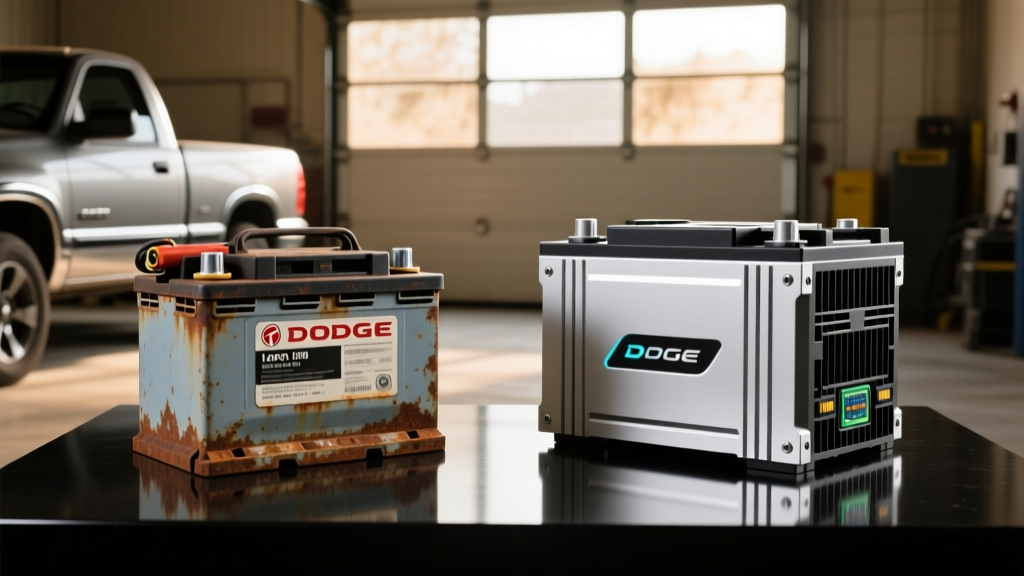
The 1999 Dodge Ram 1500 uses a conventional 12V lead-acid starter battery. Depending on your engine (3.9L V6, 5.2L V8, or 5.9L V8), you'll need one of these common group sizes:
- Group 65 (most common): ~750–850 CCA (cold cranking amps)
- Group 27 (heavy-duty/diesel applications): ~800–1,000 CCA
- Typical cost: $120–$220 for flooded lead-acid; $220–$320 for AGM
- Lifespan: 3–5 years depending on climate and use
This is a straightforward DIY replacement — disconnect the negative terminal first, swap the battery, reconnect. AutoZone, Advance Auto Parts, and O'Reilly all stock these and will test your old battery for free.
Now let's talk about the other kind of truck battery — the 100+ kWh lithium-ion pack in modern EVs.
EV Traction Batteries: Chemistry, Capacity, and How They Work
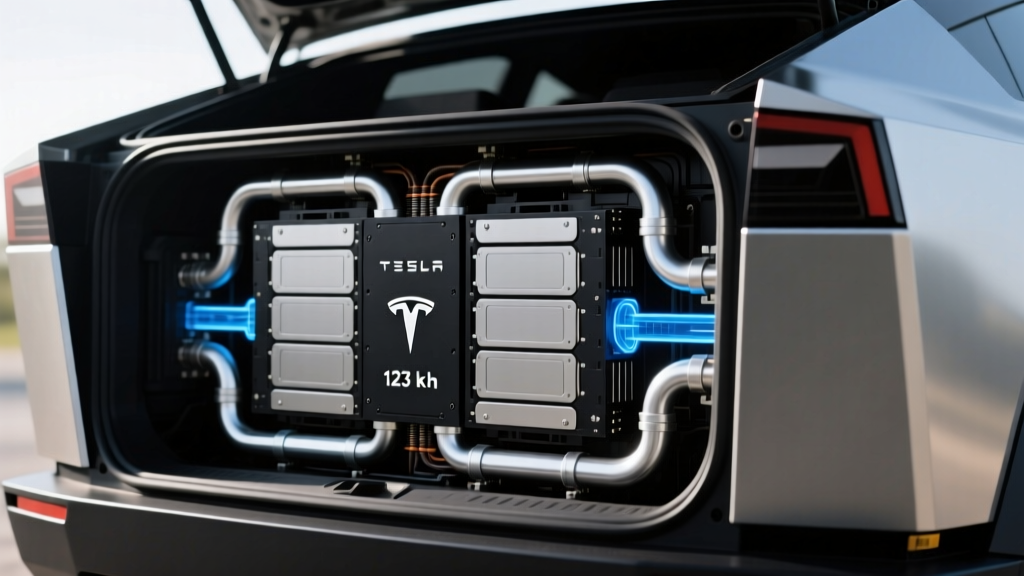
Modern electric vehicles use a high-voltage traction battery measured in kilowatt-hours (kWh) — a unit of energy storage. This is fundamentally different from the 12V battery in a '99 Ram, which stores roughly 0.6–0.9 kWh. A Ford F-150 Lightning Extended Range, for example, carries a 131 kWh usable lithium-ion pack weighing over 1,800 pounds.
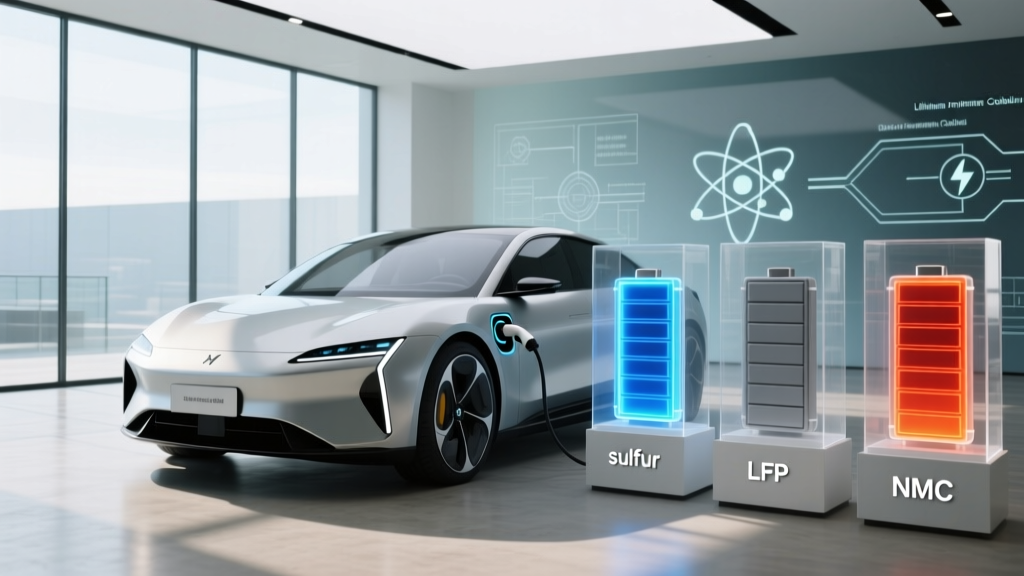
Two dominant lithium-ion chemistries power today's EVs:
| Attribute | LFP (Lithium Iron Phosphate) | NMC/NCA (Nickel Manganese Cobalt / Nickel Cobalt Aluminum) |
|---|---|---|
| Energy density | Lower (~160 Wh/kg cell-level) | Higher (~250–300 Wh/kg cell-level) |
| Cycle life | 3,000–5,000+ cycles | 1,000–2,500 cycles |
| Cold-weather performance | Weaker — more range loss below freezing | Better low-temperature discharge |
| Thermal stability / safety | Excellent — very low thermal runaway risk | Good but requires more active management |
| Cost per kWh | Lower (~$80–100/kWh at cell level in 2026) | Higher (~$110–140/kWh at cell level) |
| Charging to 100% | Recommended periodically for SoC calibration | Best kept 20–80% daily; 100% only for trips |
| Notable users (2026) | Tesla Model 3/Y RWD, Ford F-150 Lightning Standard Range, BYD | Tesla Long Range, Hyundai Ioniq 5, Rivian R1T, Ford Lightning Extended Range |
Which is better? It depends on your use case. LFP is the durability and value pick — ideal if you plan to keep a vehicle 10+ years and want minimal degradation anxiety. NMC wins on range-per-pound and cold-weather usability, making it the choice for long-range and performance trims. Neither is universally superior; they're engineered for different priorities.
How Long Do EV Batteries Actually Last?
The short answer: most EV batteries outlast the vehicle they're installed in. The fear of a $20,000 battery swap at 100,000 miles is largely a myth based on early-generation EVs. Here's what modern data shows:
Real-World Degradation Data Points:
- Tesla 2025 Impact Report: Model 3/Y packs retain an average of ~88% capacity after 200,000 miles — meaning ~12% total degradation over the vehicle's typical lifetime.
- Geotab fleet study (2024, 10,000+ EVs): Average annual degradation across all brands is ~1.8% per year, meaning ~14–18% loss over 8–10 years under normal use.
- Recurrent Auto data (2025): Chevrolet Bolt owners showed ~6–8% degradation at 100,000 miles, with LFP-equipped vehicles trending toward even lower loss.
- Porsche Taycan (NMC, 93.4 kWh pack): Independent fleet tests show ~5–7% loss at 60,000 miles thanks to aggressive thermal management.
Most EVs sold in 2024–2026 will retain 80–90% of original capacity at 150,000 miles under typical ownership. Catastrophic failure (sudden death, not gradual degradation) is rare — well under 1% of packs based on warranty claim data.
Battery Warranty: What's Actually Covered?
Federal regulations mandate a minimum 8-year/100,000-mile EV battery warranty (10 years/150,000 miles in California and states that follow CARB rules). Most manufacturers exceed this floor. Here's how major warranties compare:
| Manufacturer | Warranty Term | Capacity Retention Threshold | Notes |
|---|---|---|---|
| Tesla (Model 3/Y) | 8 yr / 120,000 mi (LR) 8 yr / 100,000 mi (RWD/LFP) |
70% | LFP packs have separate 100k term |
| Hyundai / Kia | 10 yr / 100,000 mi | 70% | Among the longest coverage |
| Ford (F-150 Lightning) | 8 yr / 100,000 mi | 70% | Covers battery & EV components |
| Rivian (R1T / R1S) | 8 yr / 175,000 mi | 70% | Highest mileage cap in segment |
| GM (Ultium vehicles) | 8 yr / 100,000 mi | 70% (60% for Bolt-era) | Ultium packs target 70% threshold |
| BMW (iX / i4) | 8 yr / 100,000 mi | 70% | Includes battery conditioning system |
Key detail: Warranty coverage kicks in only when capacity drops below the stated threshold (typically 70%). A battery at 72% capacity — while noticeably degraded — is not a warranty claim. In practice, very few modern EVs hit this threshold within the warranty period.
EV Battery Replacement Cost: Real Numbers
When a pack does need replacement — usually outside warranty due to physical damage or rare cell failure — costs vary enormously by pack size and chemistry:
| Vehicle | Pack Size | Chemistry | Estimated Replacement Cost |
|---|---|---|---|
| Tesla Model 3 RWD | ~60 kWh | LFP | $8,000–$12,000 |
| Hyundai Ioniq 5 | 77.4 kWh | NMC | $12,000–$16,000 |
| Ford F-150 Lightning Ext. Range | 131 kWh | NMC | $18,000–$28,000 |
| Chevrolet Equinox EV | 85 kWh | NMC (Ultium) | $14,000–$18,000 |
| Rivian R1T Dual-Motor | ~106 kWh (Standard) | NMC | $16,000–$22,000 |
| BMW iX xDrive50 | 111.5 kWh (usable) | NMC | $20,000–$30,000 |
Important context: These costs include the battery pack, labor, and associated cooling system service. However, full out-of-pocket replacement is rare. Most failures occur under warranty, and module-level repair (replacing individual cell groups rather than the entire pack) is increasingly available, often cutting costs by 50–70%. Independent EV repair shops are also emerging as a lower-cost alternative to dealer service.
Compare this to the 1999 Dodge Ram 1500 battery replacement: $120–$320 for a 12V unit. The scale difference is enormous, but so is what the EV battery delivers — 100,000+ miles of propulsion versus 3–5 years of cranking a starter motor.
Maximizing EV Battery Health: A Practical Care Guide
How you charge and drive has a measurable impact on long-term battery health. Here's what the data supports:
- Avoid sustained 100% SoC (NMC/NCA): Daily charging to 80% significantly reduces calendar aging. Charge to 100% only when you need the range for a trip, and drive it down soon after.
- LFP owners — charge to 100% weekly: LFP chemistry benefits from periodic full charges for cell balancing and accurate SoC estimation. Tesla and Ford recommend this.
- Minimize DC fast charging when possible: Occasional fast charging is fine, but daily use of 150+ kW chargers accelerates degradation. Research from Geotab shows vehicles that fast-charge more than 3x/week degrade ~1–2% faster annually.
- Precondition before fast charging: Most modern EVs do this automatically when you navigate to a charger. A warm battery (30–40°C) accepts charge faster and with less stress.
- Avoid extreme SoC + extreme heat: A battery sitting at 100% SoC in 100°F+ ambient heat experiences accelerated calendar degradation. If storing, set SoC to ~50%.
- Use Level 2 home charging as your daily default: A 7–11 kW home charger is gentle on the pack and convenient for overnight top-ups.
- Don't baby it excessively: Modern battery management systems (BMS) are sophisticated. They buffer the top and bottom of the pack (you never truly use 0% or 100% of cells), manage temperature, and balance cells. Normal use is fine.
Monitoring Your Battery's State of Health (SoH)
State of Health (SoH) is the percentage of your battery's original capacity that remains usable. Here's how to check it:
- In-vehicle displays: Tesla, Hyundai, and BMW offer battery health readouts in the service menu or app. Tesla's app shows estimated range at 100% — comparing this to the original EPA figure gives a rough SoH percentage.
- OBD-II tools: Devices like the OBDLink SX paired with apps such as EV Battery Health or Leaf Spy (Nissan) can pull detailed SoH data from the BMS.
- Third-party services: Companies like Recurrent Auto offer free battery health reports by connecting to your vehicle's telematics data — useful for tracking degradation trends over time.
- Dealer diagnostic: Any authorized service center can run a full pack health scan. Request this during routine service or before a used-EV purchase.
When buying a used EV: Always request a SoH report. A 4-year-old EV at 92% SoH is a healthy find; one at 80% may indicate heavy fast-charging use or a defective module that could become a warranty claim.
Emerging Battery Tech: What's Next (and When)
Battery technology is advancing, but timelines matter. Here's a realistic look at what's coming:
- Silicon-dominant anodes: Companies like Sila Nanotechnologies and Group14 are replacing graphite anodes with silicon composites, boosting energy density by 20–40%. Limited production vehicles (notably from Mercedes-Benz and startups) are expected by 2027–2028. This is the nearest-term improvement.
- Semi-solid-state batteries: Toyota, Samsung SDI, and QuantumScape are targeting 2027–2029 for initial production. These promise 20–30% more range and faster charging, but early availability will be limited to premium models.
- Full solid-state batteries: Often hyped as the "holy grail," true all-solid-state packs remain in the 2030+ timeframe for mass-market vehicles. Lab results are promising, but manufacturing scale-up is the bottleneck.
- Sodium-ion batteries: CATL and BYD are producing sodium-ion packs for budget EVs in China. These offer lower energy density but dramatically lower cost and no lithium/cobalt dependency. US availability is 2027+ at earliest and likely limited to fleet/budget segments.
Bottom line: Today's lithium-ion batteries (both LFP and NMC) are mature, well-warrantied, and proven to last 200,000+ miles with manageable degradation. Waiting for solid-state is not a rational reason to delay an EV purchase — the batteries in 2026 models are already excellent.
EV Battery FAQ
How long do EV batteries last in years and miles?
Based on fleet data from Tesla, Geotab, and Recurrent Auto, modern EV batteries typically retain 80–90% capacity at 150,000–200,000 miles (roughly 12–15 years of average driving). Most will outlast the vehicle's body, interior, and suspension components. Complete failure is rare — under 1% based on warranty claim rates.
How much does an EV battery cost to replace?
Out-of-warranty replacement ranges from roughly $8,000 for a smaller LFP pack (e.g., Tesla Model 3 RWD) to $28,000+ for a large NMC pack (e.g., F-150 Lightning Extended Range). However, most replacements happen under warranty at no cost, and module-level repairs can cut out-of-pocket costs by 50–70%. Compare this to the $120–$320 you'd spend on a 1999 Dodge Ram 1500 12V battery — different technology, different scale.
What does the EV battery warranty cover?
Federal law requires at least 8 years/100,000 miles of coverage (10/150k in CARB states). The warranty guarantees your battery will retain at least 70% of its original capacity. If it drops below that threshold due to normal use, the manufacturer replaces or repairs it at no cost. Warranties typically exclude damage from accidents, flooding, or unauthorized modifications. Check the U.S. Department of Energy's EV technology page for current standards.
How do I check and maximize my EV battery health?
Check SoH via your vehicle's app, an OBD-II scanner with EV-capable software, or a dealer diagnostic. To maximize longevity: charge NMC to 80% daily (LFP to 100% weekly), minimize frequent DC fast charging, precondition before fast charges, and avoid leaving the vehicle at 100% SoC in extreme heat for extended periods. Normal driving and Level 2 home charging are the gentlest on your pack.
LFP vs NMC — which battery chemistry is better for me?
Choose LFP if: you want maximum cycle life, lower cost, don't need the longest possible range, and are comfortable with slightly reduced cold-weather performance. Choose NMC/NCA if: you need maximum range per charge, frequently drive in cold climates, or want the highest performance. Both chemistries are proven to last 200,000+ miles with proper care.
Is a 1999 Dodge Ram 1500 battery the same as an EV battery?
No. The 1999 Ram 1500 uses a 12V lead-acid starter battery (Group 65 or 27, ~0.6–0.9 kWh, $120–$320). An EV traction battery is a high-voltage lithium-ion pack (60–131+ kWh, $8,000–$28,000). Notably, modern EVs also carry a small 12V battery (often lithium) to power accessories and computers — so the concept is similar, but the scale is vastly different.