How Long to Charge an EV Battery — The Short Answer
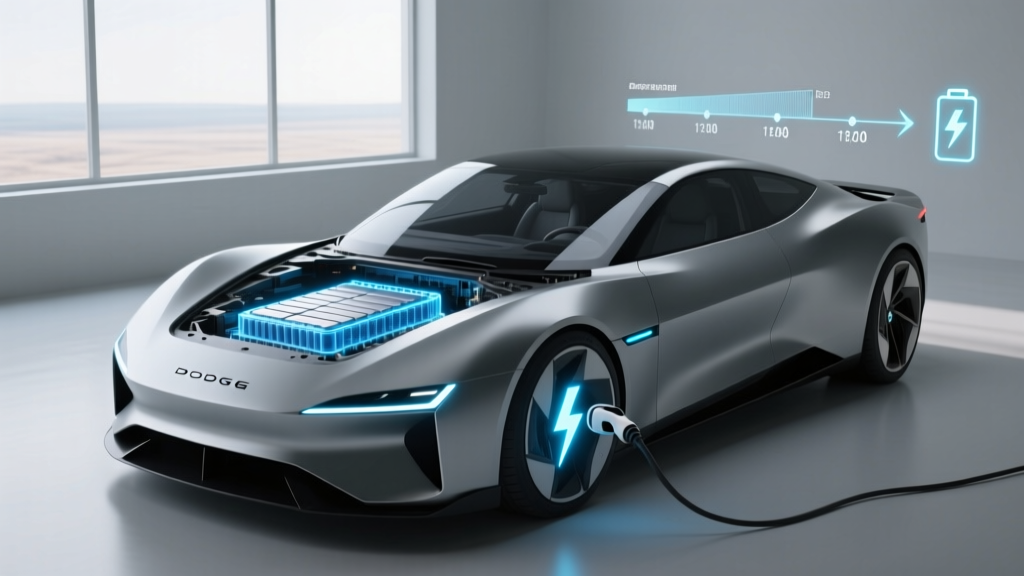
The time it takes to charge an electric vehicle battery ranges from under 20 minutes on a DC fast charger to over 40 hours on a standard 120V household outlet. The exact figure depends on three variables: the battery's usable capacity (measured in kWh), the charger's power output (measured in kW), and the battery chemistry (LFP or NMC/NCA), which dictates how fast the pack can accept energy without damage.
Here is the fundamental relationship: Charge time (hours) ≈ Battery kWh ÷ Charger kW, adjusted upward by 15–25% to account for charging-curve taper above 80% State of Charge (SoC). A 77 kWh battery on a 150 kW DC fast charger, for example, will reach 80% in roughly 25–30 minutes — not the theoretical 31 minutes a flat division would suggest, because peak kW is never sustained across the full session.
Charging Speed by Level: What You'll Actually Experience
EV charging falls into three tiers. Understanding the difference between kW (power — the rate of energy flow) and kWh (energy — the battery's total capacity) is essential. Think of kW as the width of a hose and kWh as the size of the bucket you're filling.
| Level | Voltage / Power | Typical kW | Miles Added per Hour | Best For |
|---|---|---|---|---|
| Level 1 (120V) | 120V AC / 12–16A | 1.4–1.9 kW | 3–5 mi/hr | Overnight top-ups, PHEVs |
| Level 2 (240V) | 240V AC / 16–80A | 3.8–19.2 kW | 12–60 mi/hr | Daily home charging |
| DC Fast Charge | 400–800V DC / 50–350 kW | 50–350 kW (peak) | 150–1,000+ mi/hr (peak) | Road trips, quick stops |
For a typical 75 kWh battery pack (like the one in a Tesla Model Y Long Range or Hyundai Ioniq 5), here is how long a full 10–80% session takes at each level:
- Level 1 (1.4 kW): ~37 hours — impractical for BEVs, acceptable for PHEVs with 15–40 kWh packs
- Level 2 at 7.7 kW (32A): ~7.5 hours — standard overnight home charge
- Level 2 at 11.5 kW (48A): ~5 hours — faster home charge with hardwired unit
- DC Fast at 150 kW peak: ~25–30 minutes (10–80%)
- DC Fast at 250 kW peak: ~18–22 minutes (10–80%)
- DC Fast at 350 kW peak (800V architecture, e.g., Ioniq 5, Porsche Taycan): ~15–18 minutes (10–80%)
Battery Chemistry Matters: LFP vs NMC/NCA and Charge Speed
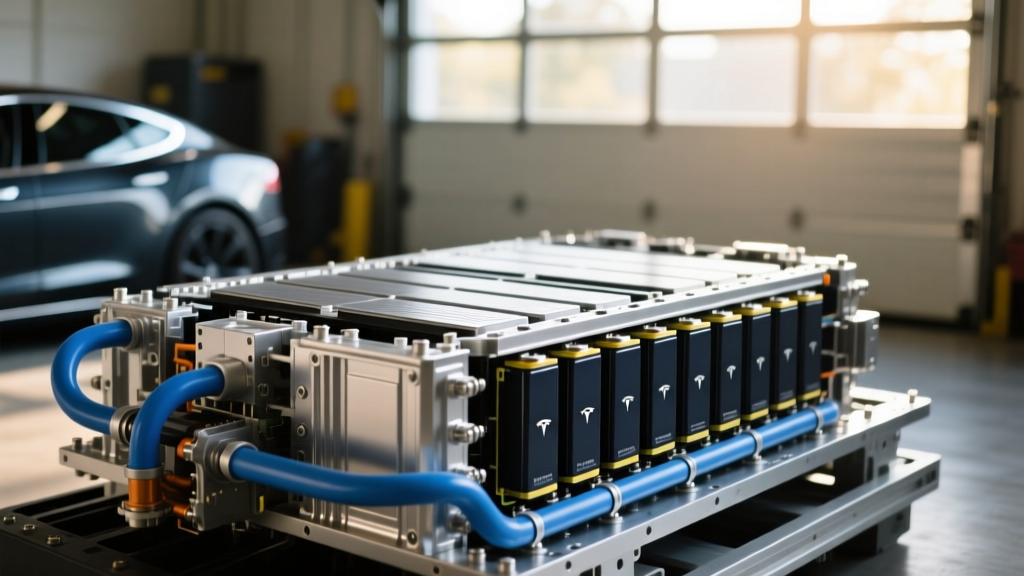
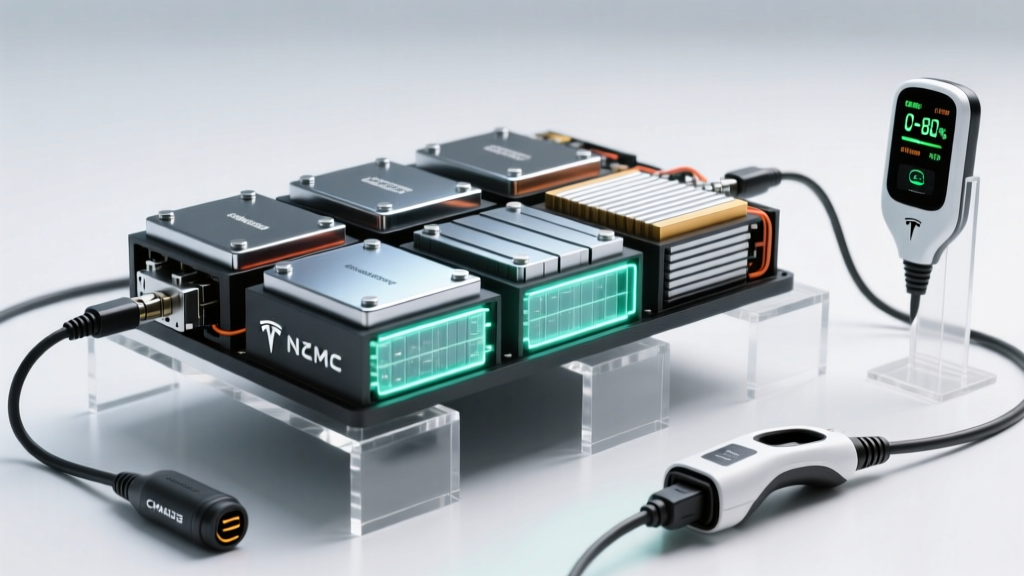
Not all EV batteries are the same. The two dominant lithium-ion chemistries in 2026-model-year EVs are LFP (lithium iron phosphate) and NMC/NCA (nickel manganese cobalt / nickel cobalt aluminum). Chemistry affects not just range and longevity but how quickly the battery can charge and how it behaves in cold weather.
| Attribute | LFP (Lithium Iron Phosphate) | NMC / NCA (Nickel-Based) |
|---|---|---|
| Energy Density | Lower (~160–180 Wh/kg cell-level) — heavier pack for same kWh | Higher (~220–300 Wh/kg) — lighter, more range per kg |
| Cycle Life | 3,000–5,000+ cycles to 80% SoH | 1,000–2,000 cycles to 80% SoH |
| Cold Performance | Weaker — more range loss below 32°F, slower cold charging | Better — less cold-weather range penalty |
| Charge to 100% Regularly? | Yes — Tesla and Ford recommend periodic 100% charges for calibration | No — daily limit of 80–90% recommended for longevity |
| Fast-Charge Tolerance | Good — robust thermal stability, slightly slower peak kW | Excellent — higher peak kW rates, but heat management critical |
| Cost | Lower — no cobalt or nickel; $100–115/kWh pack-level (2025–2026) | Higher — commodity-linked; $125–145/kWh pack-level |
| Common In (2026 Models) | Tesla Model 3/Y RWD, Ford Mustang Mach-E Select, Rivian Standard | Tesla LR/Performance, Hyundai Ioniq 5/6, BMW i4/iX, most luxury EVs |
Which is better? For a buyer who drives under 30 miles daily, charges at home, and lives in a mild climate, LFP is the pragmatic choice — longer cycle life, lower cost, and no anxiety about charging to 100%. For road-trippers, cold-climate drivers, or anyone prioritizing maximum range per charge, NMC/NCA delivers higher energy density and better cold-weather performance. Neither chemistry is universally superior; the right answer depends on your driving pattern.
How Long Do EV Batteries Last? Degradation Data
The question "how long to charge a battery" often leads to a deeper concern: how long before the battery itself needs replacing? The data is reassuring. According to analysis from Geotab's large-scale fleet study of over 10,000 EVs, the average lithium-ion traction battery loses approximately 1.8% of its capacity per year under typical use. That translates to roughly 90% State of Health (SoH) after five years and 82–85% after ten years.
- Year 1: ~3–4% loss (initial drop, then stabilizes)
- Year 3: ~90–92% SoH
- Year 5: ~87–90% SoH
- Year 8: ~82–86% SoH
- Year 10: ~78–84% SoH
- Year 15: ~72–80% SoH (estimated, data still maturing)
Importantly, degradation is not linear. Batteries experience a slightly steeper drop in the first year (sometimes called the "initial knee"), then plateau into a slow, predictable decline. A second, steeper drop ("end-of-life knee") may occur well beyond 15 years or 200,000+ miles — far past the point most vehicles remain in service.
Factors That Accelerate (or Slow) Battery Degradation
While chemistry sets the baseline, your habits determine whether your battery tracks the average or outperforms it. Based on data from fleet operators and National Renewable Energy Laboratory (NREL) research, the following factors have the most measurable impact:
- Exclusive DC fast charging: Vehicles that rely primarily on DCFC show ~0.5–1% additional annual loss vs. Level 2–dominant charging. Occasional fast charging is fine; daily exclusive fast charging accelerates wear.
- Sustained high SoC: Storing an NMC battery at 100% for extended periods (days to weeks) stresses the cathode. The 20–80% daily window is optimal for NMC. LFP is more tolerant of 100% storage.
- Extreme heat exposure: Ambient temperatures above 95°F, combined with high SoC, are the single worst condition for lithium-ion longevity. Garage parking in hot climates measurably helps.
- Deep discharge: Regularly driving below 10% SoC stresses the anode. The battery management system (BMS) maintains a buffer, but habitually arriving at 0% is unnecessary wear.
- Cold charging without preconditioning: Charging a cold battery (below ~40°F) at high kW causes lithium plating on the anode. Always use your vehicle's preconditioning feature before a fast-charge stop in winter.
- Thermal management system quality: Liquid-cooled packs (Tesla, Hyundai E-GMP, GM Ultium) dramatically outperform passive-air-cooled packs (older Nissan Leaf) in long-term SoH.
Battery Warranty Terms: What's Actually Covered
Federal law mandates that EV battery warranties cover a minimum of 8 years / 100,000 miles (10 years / 150,000 miles in California Air Resources Board states). Most manufacturers meet or exceed this baseline. The warranty guarantees that the battery will retain a specified percentage of its original capacity — typically 70% — over the warranty period.
| Manufacturer (2026 MY) | Battery Warranty | Capacity Threshold | Notes |
|---|---|---|---|
| Tesla | 8 yr / 120,000 mi (LR) | 70% | 100k mi on RWD/LFP |
| Hyundai / Kia | 10 yr / 100,000 mi | 70% | Among the longest terms |
| GM (Ultium) | 8 yr / 100,000 mi | 70% | Covers module-level repair |
| Ford | 8 yr / 100,000 mi | 70% | Covers battery + hybrid components |
| Rivian | 8 yr / 175,000 mi | 70% | Highest mileage cap in segment |
| BMW | 8 yr / 100,000 mi | 70% | Module replacement where possible |
The warranty covers defects and excessive degradation — not damage from accidents, flooding, or unauthorized modifications. If your battery falls below the threshold within the warranty period, the manufacturer will repair or replace it (often replacing individual modules rather than the entire pack) at no cost. In practice, very few owners ever file a battery degradation claim. Most packs significantly outperform the 70% guarantee.
EV Battery Replacement Cost: What to Budget (and When)
The fear of a $20,000 battery swap looms large in EV purchase decisions. The reality is more nuanced. Full battery replacement is rarely needed within the typical ownership period, and when it is, costs have declined steadily. Here are current replacement cost ranges for popular 2026-model-year vehicles, based on manufacturer service bulletins and independent shop estimates:
| Vehicle | Battery Size | Chemistry | Full Pack Replacement (est.) | Module Repair (est.) |
|---|---|---|---|---|
| Tesla Model 3 RWD | 60 kWh | LFP | $10,000–$13,000 | $1,500–$3,000/module |
| Tesla Model Y LR | 75 kWh | NMC | $12,000–$16,000 | $2,000–$3,500/module |
| Hyundai Ioniq 5 | 77.4 kWh | NMC | $13,000–$17,000 | $1,800–$3,000/module |
| Ford F-150 Lightning Ext. | 131 kWh | NMC | $18,000–$25,000 | $2,500–$4,500/module |
| Chevrolet Equinox EV | 85 kWh | NMC (Ultium) | $14,000–$18,000 | $2,000–$3,500/module |
When is replacement typically needed? For most EVs, the answer is: never during normal ownership. Battery replacement generally becomes a consideration only after 150,000–200,000+ miles or 12–15+ years, and even then, it's usually individual module failures rather than complete pack death. Many high-mileage EVs (200,000+ mile Teslas, for example) continue operating on their original packs at 75–80% SoH. For context, the average American vehicle is scrapped at around 12 years and 150,000 miles — well within the battery's functional lifespan.
How to Check and Maximize Battery Health (SoH)
State of Health (SoH) is a percentage representing your battery's current maximum capacity relative to its original capacity. Here is how to monitor and protect it:
Checking SoH:
- In-vehicle displays: Tesla shows battery health in the Service menu (added in 2024 software updates). Some Hyundai/Kia models display SoH via the diagnostic screen. Ford provides battery health data through the FordPass app.
- OBD-II tools: Third-party apps like Scan My Tesla, Leaf Spy (for Nissan), or ABRP (A Better Route Planner) OBD integration read the BMS directly for precise SoH, cell voltage imbalance, and cycle count.
- Dealer diagnostics: Any authorized service center can pull a full battery health report. Request one during routine service — it's typically free during the warranty period.
- Manual calculation: Charge to 100% (on LFP) or note the displayed range at a known SoC, then compare to the original EPA-rated range. A Model Y LR that originally displayed 330 miles at 100% but now shows 297 miles has approximately 90% SoH.
Maximizing longevity:
- Set your daily charge limit to 80% for NMC, 100% for LFP (per manufacturer guidance)
- Use Level 2 home charging as your primary method; reserve DCFC for road trips
- Enable preconditioning before fast charging, especially in cold weather
- Avoid leaving the vehicle at very low (<10%) or very high (100% NMC) SoC for extended periods
- Park in shade or a garage during extreme heat
- Drive moderately in extreme cold — aggressive acceleration on a freezing pack increases internal resistance and heat generation
What's Next: Solid-State and Silicon-Anode Batteries
Next-generation battery technologies promise faster charging, higher energy density, and longer lifespans — but timelines remain measured, not imminent.
Solid-state batteries replace the liquid electrolyte with a solid ceramic, polymer, or sulfide conductor. The theoretical benefits are significant: 2–3× energy density vs. current lithium-ion, charge times under 10 minutes, and inherently safer chemistry (no flammable electrolyte). Toyota has announced a solid-state battery targeting 2027–2028 production in limited models, while Samsung SDI and QuantumScape are supplying prototype cells to OEMs. However, manufacturing scalability, cost (currently 3–5× conventional cells), and cycle-life durability remain unsolved challenges for mass-market vehicles. Realistic mass adoption: 2029–2032.
Silicon-anode batteries (from companies like Sila Nanotechnologies and Group14) replace graphite anodes with silicon-dominant composites, boosting energy density by 20–40%. These are closer to market — appearing in limited production vehicles like the Mercedes G-Class 580e and upcoming GM applications. Expect silicon-anode tech to appear in mainstream EVs by 2027–2028, offering meaningful range gains without the manufacturing overhaul that solid-state requires.
Neither technology changes the buying decision today. Current lithium-ion batteries — both LFP and NMC — are mature, reliable, and improving incrementally each model year through better cell designs, manufacturing precision, and BMS algorithms.
Frequently Asked Questions
How long does it take to charge an EV battery at home?
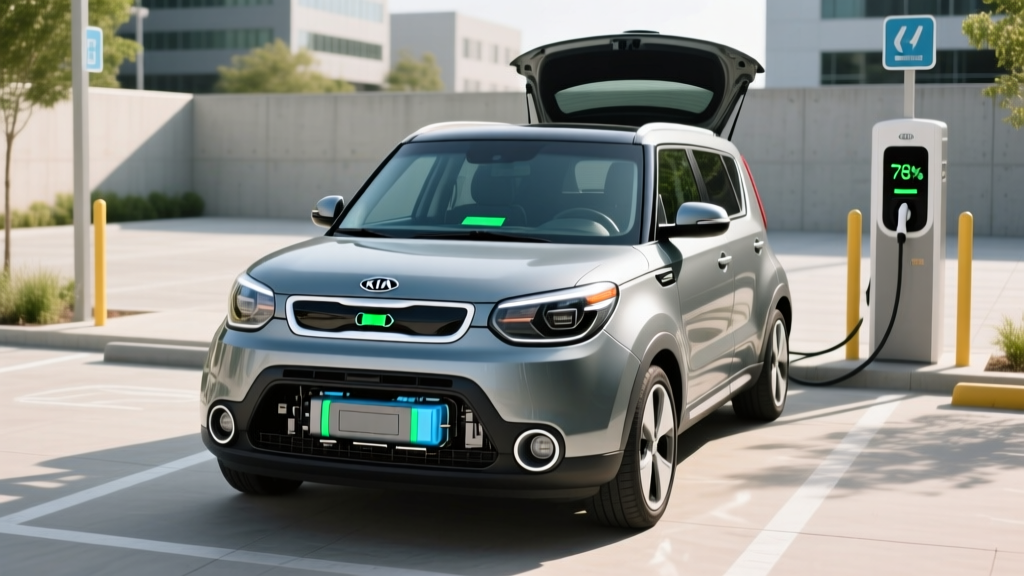
On a Level 2 home charger (7.7–11.5 kW), a typical 75 kWh battery charges from empty to full in 6.5–10 hours. Most owners plug in overnight and wake to a full charge every morning. A standard 120V Level 1 outlet adds only 3–5 miles of range per hour — adequate for PHEVs with smaller batteries, but too slow for daily BEV use unless your commute is under 20 miles.
Does frequent fast charging damage the battery?
Exclusively relying on DC fast charging adds roughly 0.5–1% additional annual degradation compared to Level 2–dominant charging, based on fleet data. For most drivers, this means the difference between 88% SoH and 86% SoH after five years — a marginal impact. Modern thermal management systems actively protect the battery during fast charging. The practical advice: fast charge when you need it, but make Level 2 your daily habit.
Should I charge my EV to 100% every night?
It depends on your battery chemistry. For NMC/NCA batteries, daily charging to 100% accelerates degradation — set your limit to 80–90% for daily use and 100% only before long trips. For LFP batteries, manufacturers like Tesla and Ford actually recommend charging to 100% at least once per week to allow the BMS to recalibrate cell voltage readings. Check your owner's manual for your specific vehicle's guidance.
How much does an EV battery cost to replace in 2026?
Full pack replacement costs range from roughly $10,000 for a 60 kWh LFP pack (e.g., Tesla Model 3 RWD) to $25,000 for a 131 kWh NMC pack (e.g., F-150 Lightning Extended Range). However, most replacements involve individual module repairs at $1,500–$4,500 per module rather than full pack swaps. In practice, the vast majority of EV batteries outlast the vehicle itself, and full replacement within the first 10 years or 150,000 miles is extremely uncommon.
What does the EV battery warranty actually cover?
By federal mandate, EV battery warranties cover at minimum 8 years / 100,000 miles against defects and excessive capacity loss (below 70% of original capacity). Some manufacturers, like Rivian, extend to 8 years / 175,000 miles, and Hyundai/Kia offer 10 years / 100,000 miles. The warranty does not cover damage from collisions, flooding, or aftermarket modifications. If your battery drops below the guaranteed threshold, the manufacturer repairs or replaces it at no cost.
How do I check my EV battery's State of Health?
Many modern EVs display SoH through the infotainment system or companion app (Tesla Service menu, FordPass, Hyundai Bluelink). For more granular data — individual cell voltages, cycle count, internal resistance — an OBD-II dongle paired with apps like Scan My Tesla or Leaf Spy provides direct BMS readouts. Your dealer can also pull a comprehensive battery health report during any service visit.
Is LFP or NMC better for long-term battery health?
LFP chemistry offers inherently longer cycle life (3,000–5,000+ cycles vs. 1,000–2,000 for NMC), greater thermal stability, and tolerance for regular 100% charging. NMC offers higher energy density, better cold-weather performance, and faster peak charge rates. For pure longevity in moderate climates, LFP has a measurable advantage. For maximum range and all-weather capability, NMC is the stronger choice. Both chemistries will comfortably outlast a typical vehicle's lifespan with proper care.