The 2015 Kia Soul EV Battery: A Decade-Old Pack Under the Microscope
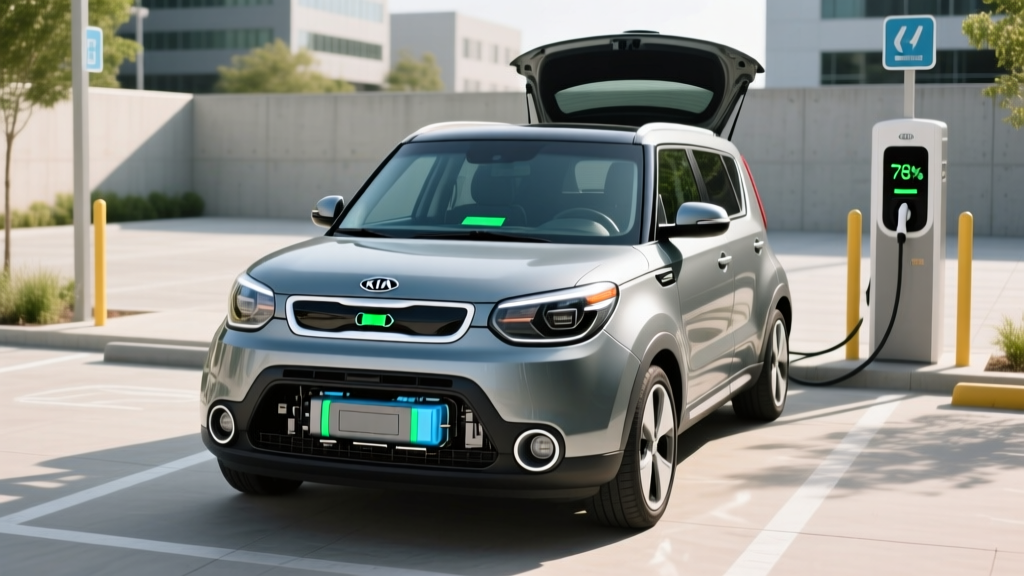
The 2015 Kia Soul EV was one of the first affordable, mainstream electric vehicles to reach U.S. showrooms. Built around a 27 kWh lithium-ion polymer traction battery, it delivered an EPA-rated 93 miles of range when new. Now, more than ten years later, owners and prospective used-EV buyers are asking the same question: how is that battery holding up?
This guide breaks down the original battery chemistry, real-world degradation data, replacement costs in 2026, warranty coverage, and practical steps to check and maximize the State of Health (SoH) of a 2015 Kia Soul EV battery — plus how this pack compares to the chemistries used in today's EVs.
- Battery capacity: 27 kWh (usable ~25 kWh)
- Chemistry: NMC (Nickel Manganese Cobalt) lithium-ion polymer
- EPA range (new): 93 miles
- DC fast charge: CHAdeMO, up to ~50 kW (80% in ~33 min)
- Level 2 charge: 6.6 kW onboard charger (full charge ~4–5 hrs)
- Battery warranty (original): 10 years / 100,000 miles, 70% capacity retention
- Original MSRP: $33,700 (before incentives)
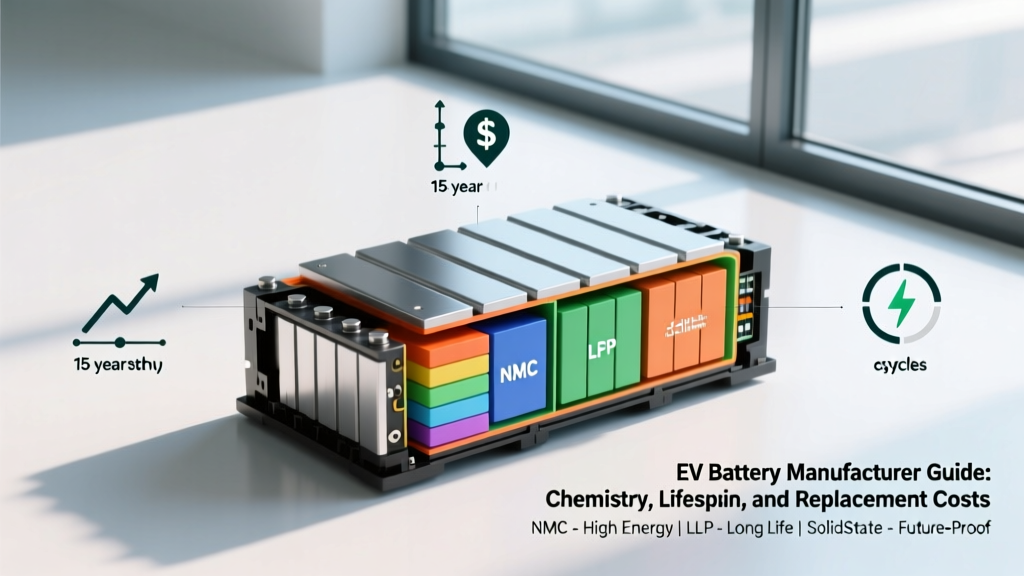
Battery Chemistry: NMC in the 2015 Soul EV vs. LFP Today
The 2015 Kia Soul EV uses an NMC (Nickel Manganese Cobalt) lithium-ion polymer battery supplied by SK Innovation. NMC was the dominant EV chemistry in the mid-2010s because it offered a strong balance of energy density and power output in a compact package — critical for fitting 27 kWh into the Soul's small crossover platform.
Today's EV market has introduced a second major chemistry: LFP (Lithium Iron Phosphate), now used in vehicles like the Tesla Model 3 RWD and base Ford Mustang Mach-E. Understanding the trade-offs between these two chemistries helps explain why Kia chose NMC and what it means for long-term ownership.
| Attribute | NMC (2015 Soul EV) | LFP (Modern EVs) |
|---|---|---|
| Energy density | Higher (~150–220 Wh/kg cell-level) — more range in smaller pack | Lower (~120–160 Wh/kg) — requires larger/heavier pack for same range |
| Cycle life | ~1,000–1,500 full cycles before significant degradation | ~2,000–3,500+ full cycles — substantially longer lifespan |
| Cold-weather performance | Better low-temp conductivity, less range loss in freezing conditions | Greater range loss in cold; benefits significantly from preconditioning |
| Charging to 100% | Not recommended daily — stresses cells above 80% SoC | Can be charged to 100% regularly without significant harm |
| Cost per kWh | Higher (cobalt and nickel are expensive) | Lower (iron and phosphate are abundant and cheap) |
| Thermal stability | Good, but requires active thermal management | Excellent — inherently more resistant to thermal runaway |
Which is better? Neither is universally superior. NMC's higher energy density made it the right choice for the compact Soul EV platform where space and weight were at a premium. LFP's longer cycle life and lower cost make it ideal for standard-range vehicles where pack size is less constrained. For a 2015 Soul EV owner, the NMC chemistry is what you have — and the focus should be on managing its health effectively.
Degradation Data: What 10 Years Does to a 27 kWh Pack
Lithium-ion batteries degrade through two mechanisms: calendar aging (chemical changes over time regardless of use) and cycle aging (wear from charge-discharge cycles). A 2015 Kia Soul EV in 2026 has experienced a decade of calendar aging on top of whatever mileage it has accumulated.
Based on owner-reported data from Kia Soul EV forums, Recurrent Auto battery studies, and fleet observations:
- Year 1–2 (0–30k mi): ~3–5% capacity loss — initial formation loss
- Year 3–5 (30k–75k mi): ~8–14% total loss — degradation curve flattens
- Year 6–8 (75k–120k mi): ~14–22% total loss — gradual linear decline
- Year 9–11 (120k–160k mi): ~20–30% total loss — some packs show accelerated fade
Real-world implication: A 2015 Soul EV that originally delivered 93 EPA miles may now provide 65–78 miles of usable range depending on its specific degradation history, driving conditions, and climate.
Several factors make the Soul EV's degradation profile somewhat worse than modern EVs. First, the 27 kWh pack is air-cooled rather than liquid-cooled, meaning it has less ability to manage heat during DC fast charging and in hot climates. Second, the smaller battery means owners used a higher percentage of its capacity on each trip, leading to more full equivalent cycles. Third, early-generation NMC cells had less sophisticated battery management system (BMS) software to protect against high-SoC stress.
According to Recurrent Auto's battery degradation research, EV batteries from the 2012–2016 era typically show 15–25% capacity loss at 100,000 miles, though individual results vary widely based on climate, charging habits, and storage conditions.
2015 Kia Soul EV Battery Warranty: What's Covered in 2026
Kia originally backed the Soul EV's battery with one of the industry's best warranties: 10 years or 100,000 miles, whichever comes first, with a capacity retention threshold of 70%. This means Kia committed to replacing or repairing the battery if its usable capacity dropped below 70% of the original 27 kWh (approximately 18.9 kWh) within the warranty period.
| Warranty Parameter | 2015 Kia Soul EV Terms |
|---|---|
| Duration | 10 years / 100,000 miles (whichever comes first) |
| Capacity threshold | 70% of original capacity (below ~18.9 kWh triggers claim) |
| Coverage type | Repair or replacement at Kia's discretion |
| Transferable? | Yes — transfers to second owner within the 10yr/100k window |
| 2026 status | Most 2015 models have now exceeded the 10-year mark — warranty likely expired unless mileage was under 100k and a claim was filed before expiration |
Important caveat for 2026 buyers: Since the 10-year mark has passed for all 2015 model-year vehicles, the original battery warranty has almost certainly expired. If you're purchasing a used 2015 Soul EV today, you're buying the battery as-is. A pre-purchase battery health check (detailed below) is essential.
Replacement Cost: What a New Battery Costs in 2026
If the battery in a 2015 Kia Soul EV has degraded beyond practical usability — typically below 60–65% capacity, meaning roughly 55–60 miles of real-world range — replacement becomes a consideration. Here's what that looks like financially:
| Replacement Scenario | Estimated Cost (2026) | Notes |
|---|---|---|
| New OEM battery (Kia dealer) | $10,000–$14,000 | Full pack replacement with new 27 kWh unit; includes labor. Parts availability may be limited for 2015 model year. |
| Refurbished/remanufactured battery | $7,000–$10,000 | Third-party rebuilt pack using tested cells; warranty typically 1–3 years. Availability varies by market. |
| Individual module replacement | $2,000–$5,000 | If only specific modules are degraded, an EV specialist can replace individual cell groups. Requires specialized diagnostic equipment. |
| Used/salvage battery | $3,500–$6,000 | Pulled from a wrecked or parted-out Soul EV. Capacity unknown without testing; highest risk option. |
The economic reality: With a 2015 Soul EV's resale value typically between $6,000 and $11,000 in 2026 (depending on mileage and condition), a full OEM battery replacement at $12,000+ often exceeds the vehicle's value. This is the central calculus for owners of decade-old EVs. Most batteries, however, do not catastrophically fail — they gradually lose capacity. A pack at 70% SoH still provides ~65 miles of range, which is adequate for many urban commutes.
For context, according to fueleconomy.gov's EV technology overview, modern EV battery packs are designed to outlast the vehicles they're installed in, with most showing 10–15% degradation over 150,000 miles. The 2015 Soul EV's air-cooled system is a generation behind this standard, which is why proactive health monitoring matters more here.
Factors That Accelerate Battery Degradation
Not all 2015 Soul EV batteries age equally. The spread between a pack at 85% SoH and one at 65% SoH after the same number of years comes down to how it was treated. Here are the primary degradation accelerants, ranked by impact:
- Frequent DC fast charging (CHAdeMO) — The Soul EV's air-cooled battery cannot shed heat efficiently during 50 kW charging sessions. Repeated DCFC use, especially in hot weather, accelerates cell wear. Owners who relied primarily on Level 2 charging show measurably better SoH.
- Sustained high State of Charge — Regularly parking the vehicle at 90–100% SoC, especially in warm weather, stresses NMC cells. The degradation penalty is most severe when high SoC combines with high ambient temperature.
- Hot-climate operation — Battery calendar aging roughly doubles for every 10°C (18°F) increase above room temperature. Soul EVs in Arizona, Texas, and Southern California show faster capacity loss than those in the Pacific Northwest or Northeast.
- Deep discharges to 0% — Running the battery to true zero regularly causes copper dissolution in the anode current collectors. The BMS maintains a small buffer, but habitually driving until the car stops is harmful.
- Extended storage at extreme SoC — Leaving the vehicle unused for weeks at either very high or very low charge causes irreversible capacity loss. Storage at ~50% SoC is optimal.
How to Check the Battery Health of a 2015 Kia Soul EV
Before purchasing a used 2015 Soul EV — or simply to track your own pack's condition — you need a reliable State of Health (SoH) reading. Here are the methods available, from most to least precise:
OBD-II Scanner with EV-Capable Software
The most accurate consumer method. An OBD-II dongle paired with an app like Soul EV-specific tools (e.g., SoulEVO or EVNotify-compatible apps) or a general-purpose EV scanner can read the BMS-reported SoH percentage directly. This pulls data straight from the battery management system and typically shows a percentage (e.g., 76.3% SoH) along with individual cell voltage readings.
Kia Dealer Diagnostic
Any Kia dealership with EV service capability can run a full battery diagnostic using Kia's Global Diagnostic System (KDS). This produces a detailed report showing overall SoH, individual module voltages, internal resistance values, and any fault codes. Expect a diagnostic fee of $100–$150 if the vehicle is out of warranty.
Range-Based Estimation
A rough but practical method: fully charge the vehicle to 100%, reset the trip meter, and drive until the battery reaches 10%. If you covered 60 miles and the dashboard efficiency readout shows 3.0 mi/kWh, your usable capacity is approximately 20 kWh (60 ÷ 3.0), which represents roughly 74% of the original 27 kWh. This method is imprecise because temperature, driving style, and terrain affect efficiency, but it gives a reasonable ballpark.
Charging-Based Calculation
Charge the battery from a known low SoC (e.g., 10%) to 100% using a Level 2 charger with a known power output (e.g., 6.6 kW). If the charge takes 3.5 hours, you've added approximately 23.1 kWh (6.6 × 3.5). Accounting for ~10% charging losses, the usable capacity is roughly 20.8 kWh, or about 77% SoH. This method works best with a smart charger that reports actual energy delivered in kWh.
Maximizing Remaining Battery Life: A Practical Care Guide
If you own a 2015 Soul EV or are considering buying one, these habits will slow further degradation and extend the pack's useful life:
- Set charge limit to 80% for daily driving. Use the vehicle's built-in charge scheduling or a smart Level 2 charger to stop charging at 80%. Only charge to 100% when you need the full range for a longer trip.
- Minimize DC fast charging. Reserve CHAdeMO sessions for road trips. Daily charging on a Level 2 home charger (240V, 6.6 kW) is far gentler on the air-cooled pack.
- Avoid parking in direct sun when fully charged. If you must charge to 100%, try to time it so you begin driving shortly after reaching full charge rather than letting the pack sit at maximum voltage in the heat.
- Don't let the car sit below 10% for extended periods. If you're not driving for a week or more, aim for 40–60% SoC.
- Use preconditioning. While the 2015 Soul EV lacks the sophisticated heat pump systems of modern EVs, plugging in and using the climate system while still connected to shore power reduces the energy draw from the battery and avoids cold-start stress on the cells.
- Monitor SoH quarterly. Track your battery health readings over time. A sudden acceleration in degradation can indicate a failing module that, if caught early, can sometimes be repaired at a fraction of full-pack replacement cost.
Looking Forward: What Modern Battery Tech Means for Soul EV Owners
The battery technology landscape has advanced significantly since 2015. While these developments don't directly retrofit into a Soul EV, they provide context for understanding where EV batteries are headed:
Solid-state batteries — Companies including Toyota, Samsung SDI, and QuantumScape are developing solid-state cells that promise 30–50% higher energy density and improved safety. However, as of 2026, solid-state batteries remain in limited pilot production and are not available as aftermarket replacements for existing vehicles. Realistic mass-market availability is projected for 2028–2030 in new vehicles only.
Silicon anode technology — Startups like Sila Nanotechnologies and Group14 are integrating silicon into battery anodes to increase energy density. These are beginning to appear in new production EVs (e.g., the Mercedes G-Class electric) but are not applicable as retrofits.
Improved NMC formulations — Modern NMC cells (NMC 811 and NMC 9½½) use higher nickel and lower cobalt ratios than the 2015-era cells, achieving better energy density. However, replacement packs for the Soul EV, if available, would use the original-spec cells or equivalent refurbishments.
For current Soul EV owners, the practical takeaway is that your existing NMC pack — if well-maintained — can continue providing usable urban-range transportation for several more years. The next major battery technology leap will arrive in new vehicles, not as upgrades for existing ones.
Frequently Asked Questions
How long do EV batteries last in years and miles?
Most modern EV batteries are designed to last 15–20 years or 150,000–200,000 miles before degrading to 70% capacity. The 2015 Kia Soul EV's air-cooled NMC pack is a generation behind current thermal management standards, so a realistic expectation is 10–15 years with 70–80% capacity retention if well-maintained. Many Soul EV packs are still functional at 10+ years, albeit with reduced range.
How much does it cost to replace the battery in a 2015 Kia Soul EV?
A new OEM replacement battery costs approximately $10,000–$14,000 including labor at a Kia dealership. Refurbished packs run $7,000–$10,000, and individual module repairs can cost $2,000–$5,000. Given that the vehicle's resale value is typically $6,000–$11,000, a full replacement often exceeds the car's worth — which is why checking SoH before purchase is critical.
What does the 2015 Kia Soul EV battery warranty cover?
The original warranty covered 10 years or 100,000 miles with a 70% capacity retention threshold. If the battery dropped below ~18.9 kWh of usable capacity within that window, Kia would repair or replace it. As of 2026, the 10-year window has closed for all 2015 model-year vehicles, so the warranty is effectively expired unless a claim was initiated before the deadline.
How do I check the battery health on a 2015 Kia Soul EV?
The most reliable method is an OBD-II scanner with EV-compatible software that reads the BMS-reported State of Health (SoH) percentage directly. A Kia dealer can also run a full diagnostic for $100–$150. Alternatively, you can estimate SoH by fully charging the battery and measuring how far you can drive or how much energy the charger delivers during a full charge cycle.
Is LFP better than NMC for EV batteries?
It depends on the application. LFP offers longer cycle life (2,000–3,500 cycles vs. 1,000–1,500 for NMC), better thermal stability, and lower cost — making it ideal for standard-range vehicles. NMC provides higher energy density and better cold-weather performance, which is why it remains preferred for long-range and performance vehicles. For a compact vehicle like the Soul EV where space was limited, NMC was the practical choice in 2015.
Can I still daily-drive a 2015 Kia Soul EV in 2026?
Absolutely — if the battery is in reasonable health. A pack at 75% SoH still delivers roughly 70 miles of real-world range, which covers most urban commutes and errands. The Soul EV's 6.6 kW Level 2 onboard charger means a full home recharge takes under 5 hours. The key is to verify SoH before purchase, budget for potential future battery service, and understand the vehicle's range limitations for longer trips.
Does the 12V battery affect the main traction battery?
Not directly. The 12V auxiliary battery powers the vehicle's electronics, lights, and computers — it's separate from the 27 kWh high-voltage traction battery that drives the motor. However, a failing 12V battery can prevent the vehicle from starting or charging properly, which owners sometimes misdiagnose as a main battery issue. The 12V battery in a Soul EV should be replaced every 3–5 years like any conventional car battery.
Sources: fueleconomy.gov — EV Technology, Recurrent Auto — Battery Degradation Research, Kia USA — Soul EV Specifications. Tax credit and incentive rules referenced from IRS §30D Clean Vehicle Credit guidelines. All pricing and availability current as of 2026.