The Short Answer: Tesla Battery Lifespan in Real Numbers
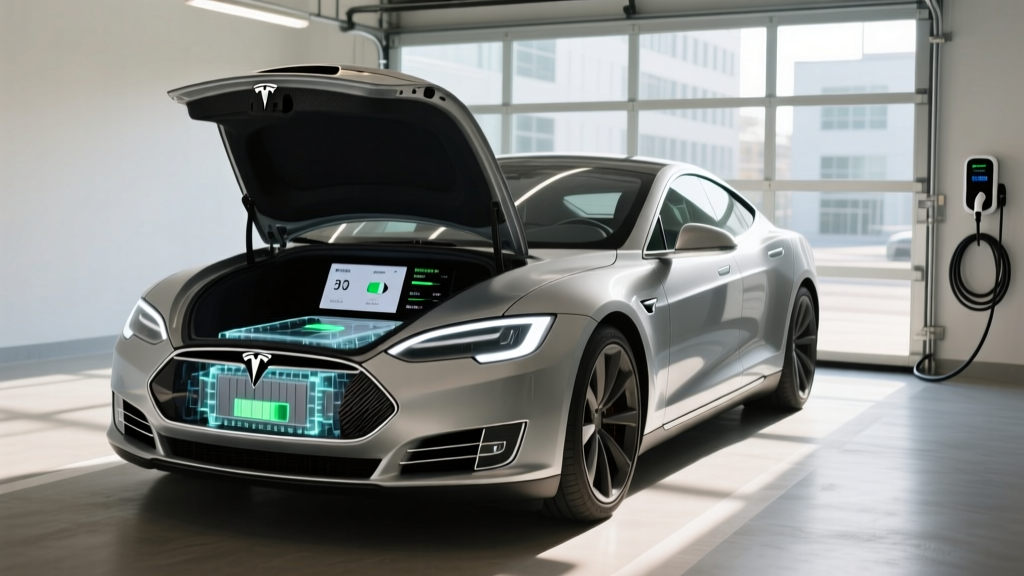
Tesla's high-voltage traction battery is engineered to outlast the useful life of the vehicle itself. Based on Tesla's own fleet data and third-party owner surveys, the typical Model 3 or Model Y battery loses approximately 10-15% of its original capacity over 150,000 miles. Higher-mileage data from Tesla's 2024 Impact Report showed that vehicles reaching 200,000 miles retained an average of 85% of their original range — a figure consistent with NMC and NCA chemistry packs.
For LFP (lithium iron phosphate) batteries, now standard in Model 3 and Model Y Rear-Wheel Drive trims, long-term fleet data is still maturing, but early indicators and manufacturer projections suggest even flatter degradation curves, with 90%+ retention at 150,000 miles being a realistic expectation.
In practical terms, a Model Y Long Range with an EPA-rated 320 miles of range will likely deliver around 270-290 miles at the 150,000-mile mark — still ample for daily driving and road trips. Most Tesla owners will sell or trade their vehicle before battery replacement becomes necessary.
Tesla Battery Chemistry: LFP vs. NMC vs. NCA Explained
Tesla uses three distinct battery chemistries across its 2026 lineup, and the chemistry in your specific vehicle significantly affects degradation behavior, charging habits, and long-term ownership experience.
| Attribute | LFP (LiFePO4) | NMC (Nickel Manganese Cobalt) | NCA (Nickel Cobalt Aluminum) |
|---|---|---|---|
| Used in (2026) | Model 3 RWD, Model Y RWD | Model Y Long Range (CATL-supplied packs) | Model S, Model X, Model 3/Y Performance |
| Energy Density | Lower (~160 Wh/kg cell-level) | Higher (~220-250 Wh/kg) | Highest (~260-270 Wh/kg) |
| Cycle Life | 3,000-5,000+ cycles | 1,500-2,500 cycles | 1,000-2,000 cycles |
| Cold Performance | Weaker — slower charging & more range loss below 32°F | Good | Good |
| Degradation Profile | Very flat — minimal loss over time | Moderate — 2-3% first year, then linear | Moderate — similar to NMC |
| Charging Recommendation | Charge to 100% regularly (weekly recommended) | Daily limit 80-90%; 100% for trips only | Daily limit 80-90%; 100% for trips only |
| Cost | Lower (no cobalt or nickel) | Mid-range | Highest |
Which is better? It depends on your use case. LFP is the superior choice for daily commuters who charge at home and prioritize longevity and low cost — its cycle life is roughly double that of NMC, and Tesla explicitly recommends charging to 100% at least once per week to keep the battery management system (BMS) calibrated. NMC and NCA offer more range per kilogram, making them the right call for Performance trims and Long Range models where maximizing EPA-rated miles matters. If you live in a cold climate and frequently DC fast-charge in winter, NMC/NCA will precondition and charge faster than LFP.
Tesla Battery Degradation: What the Data Actually Shows
Tesla publishes fleet-wide degradation data periodically, and independent owner groups have compiled granular longitudinal datasets. Here's what the numbers reveal:
- Year 1 / 15,000 miles: ~2-4% capacity loss (initial formation loss)
- Year 3 / 45,000 miles: ~5-7% total loss
- Year 5 / 75,000 miles: ~7-9% total loss
- 150,000 miles: ~10-15% total loss (per Tesla's 2024 Impact Report)
- 200,000 miles: ~12-15% total loss (fleet average, Model S/X)
- Year 1 / 15,000 miles: ~1-2% capacity loss
- Year 3 / 45,000 miles: ~3-5% total loss
- 150,000 miles (projected from early fleet data): ~6-10% total loss
These figures represent averages. Individual results vary based on charging habits, climate, and DC fast-charging frequency. The degradation curve is notably non-linear: the steepest loss occurs in the first 10,000-20,000 miles (calendar aging and initial SEI layer formation), after which the curve flattens considerably. This is why a Tesla battery reaching 10% loss at 100,000 miles is unlikely to hit 20% loss at 200,000 miles — the rate of decline slows over time.
According to data compiled by the Tesla Impact Report and independently verified by owner communities, fewer than 1% of Tesla vehicles have required a battery replacement due to degradation alone. The vast majority of replacements have been related to manufacturing defects covered under warranty, not wear-out.
Tesla Battery Warranty: What's Covered and for How Long
Tesla's battery and drive unit warranty is one of the most straightforward in the industry. Here are the current terms for 2026 model-year vehicles:
| Model | Warranty Period | Mileage Limit | Minimum Capacity Retention |
|---|---|---|---|
| Model 3 RWD (LFP) | 8 years | 100,000 miles | 70% |
| Model 3 Long Range / Performance | 8 years | 120,000 miles | 70% |
| Model Y (all trims) | 8 years | 120,000 miles | 70% |
| Model S / Model X | 8 years | 150,000 miles | 70% |
What the warranty covers: Battery capacity falling below 70% of its original rated capacity during the warranty period, as well as any manufacturing defects in the battery pack or drive unit. If your pack drops below the 70% threshold, Tesla will repair or replace it to bring it back to at least 70% — not necessarily to 100%.
What it doesn't cover: Damage from accidents, flooding, fire, or improper use (such as using the vehicle as a stationary power source outside of approved V2H/V2L configurations). The warranty also doesn't cover gradual degradation above the 70% threshold — a battery at 72% capacity at 119,000 miles on a Model Y is operating within normal parameters.
Full warranty details are available on Tesla's official warranty page.
Tesla Battery Replacement Cost: What to Budget For
Out-of-warranty battery replacement is the scenario that generates the most anxiety among prospective EV buyers. Here's the reality as of 2026:
| Model | Battery Size | Estimated Pack + Labor Cost | Typical Replacement Scenario |
|---|---|---|---|
| Model 3 RWD (LFP) | ~60 kWh | $8,000 – $12,000 | Rarely needed; LFP cycle life exceeds vehicle life |
| Model 3 Long Range / Performance | ~75-82 kWh | $12,000 – $16,000 | 10+ years / 200k+ miles if at all |
| Model Y Long Range / Performance | ~75-82 kWh | $12,000 – $16,000 | 10+ years / 200k+ miles if at all |
| Model S / Model X | ~100 kWh | $15,000 – $22,000 | Older vehicles; some early packs replaced under warranty |
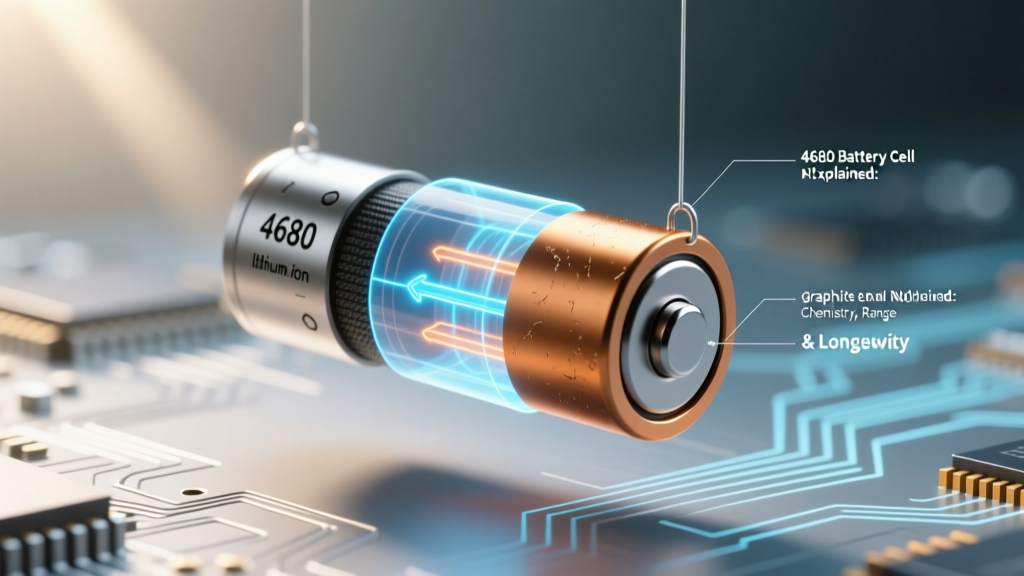
Important context: Battery cell costs have declined roughly 80-90% since 2010 (from over $1,000/kWh to approximately $100-130/kWh at the cell level in 2026, per BloombergNEF tracking). Replacement costs today are significantly lower than they were five years ago, and they will continue to decline. Additionally, Tesla's modular pack architecture on the 4680-cell structural pack allows for partial repairs in some cases, rather than full pack replacement.
The average age of a vehicle on US roads is 12.6 years (per S&P Global Mobility data). Given that Tesla batteries demonstrably retain 85%+ capacity at 200,000 miles, the statistical likelihood of needing a battery replacement during typical ownership is very low. Most Tesla vehicles will be retired due to body damage, electronics failure, or owner upgrade decisions long before the battery becomes unusable.
Factors That Accelerate Battery Degradation
Not all miles are created equal when it comes to battery wear. These are the factors that measurably impact long-term capacity retention:
- Avoid sustained 100% SoC: For NMC/NCA packs, set your daily charge limit to 80-90%. Reserve 100% for road trips and charge to full only shortly before departure. (LFP owners: charge to 100% at least weekly for BMS calibration.)
- Minimize DC fast-charging frequency: Occasional Supercharging is fine — Tesla's thermal management system is excellent. But daily DC fast-charging at 150-250 kW generates more cumulative heat stress than Level 2 home charging. Use Level 2 (7-11 kW) for daily needs.
- Precondition before charging: Tesla's navigation system automatically preconditions the battery when you route to a Supercharger. This brings the pack to optimal temperature, enabling faster charging and reducing stress. Always use nav-to-charger rather than driving to one cold.
- Avoid prolonged storage at extreme SoC: If storing the vehicle for weeks, leave it plugged in with the charge limit set to 50%. Never store at 100% or below 10% for extended periods.
- Don't fear cold weather: Cold temperatures reduce range temporarily but do not cause permanent degradation. Tesla's thermal management protects the pack. However, expect slower DC charging speeds in winter until the pack warms — this is normal and protective.
- Keep it plugged in when possible: Tesla recommends leaving the vehicle plugged in during extended parking. The BMS will maintain optimal SoC and manage thermal conditioning using grid power rather than battery energy.
How to Check Your Tesla's Battery Health (State of Health)
Tesla doesn't expose a direct "State of Health" (SoH) percentage in the vehicle's touchscreen, unlike some competitors. However, there are several reliable methods to assess your pack's condition:
1. Range comparison method: Charge your vehicle to 100% (or your normal limit) and note the displayed estimated range. Compare this to the EPA-rated range for your specific model and trim. For example, a 2024 Model Y Long Range with an EPA rating of 320 miles displaying 295 miles at 100% SoC suggests approximately 8% degradation. Note that displayed range is influenced by recent driving behavior — for a more accurate reading, check the projected range immediately after a full charge.
2. Energy screen trip data: Use the Energy app's trip tab to track kWh consumed over a known distance. If your vehicle consistently uses more kWh per mile than its rated efficiency (e.g., a Model 3 LR rated at 25 kWh/100mi now averaging 28 kWh/100mi under similar conditions), this can indicate degradation — though driving style, temperature, and tire condition also affect this metric.
3. Third-party apps: Tools like Tessie, TeslaFi, and Stats (for iOS) log detailed charge session data, including energy added vs. SoC change, which can be used to calculate a more precise SoH estimate. These apps track long-term trends and are popular among Tesla owners who want granular battery data.
4. Service mode (advanced): Tesla's Service Mode (accessible by tapping the Software screen's model name 3 times, then entering "service" as the access code) displays nominal full-pack capacity and other diagnostic data. This is the most direct way to read BMS-reported capacity without third-party tools.
What's Next: Solid-State and Silicon-Anode Batteries
Next-generation battery technologies are in active development across the industry, but realistic timelines matter:
Solid-state batteries replace the liquid electrolyte with a solid material, promising higher energy density, faster charging, and improved safety. Toyota, Samsung SDI, and QuantumScape have all announced production targets, but as of 2026, no solid-state EV battery is in mass production for consumer vehicles. Realistic large-scale availability for mainstream EVs remains in the 2028-2032 timeframe. Tesla has not publicly committed to solid-state adoption, instead focusing on its 4680-cell manufacturing scale-up and dry-electrode process improvements.
Silicon-anode batteries replace graphite anodes with silicon, which can store roughly 10x more lithium ions per unit mass. Companies like Sila Nanotechnologies and Group14 are supplying silicon-dominant anode materials to battery manufacturers now, and incremental silicon blending is already present in some production cells. Expect gradual integration into Tesla's supply chain over the 2026-2029 period, yielding 5-15% energy density improvements rather than a step-change revolution.
What this means for current owners: Today's Tesla batteries are already highly durable and cost-effective. Waiting for solid-state is not a sound purchase strategy — the technology is years from volume production, and today's LFP and NMC packs will serve reliably for the life of the vehicle. Per BloombergNEF lithium-ion battery price surveys, the economics of current chemistry continue to improve.
Frequently Asked Questions
How long do Tesla batteries last in years?
Based on fleet data, Tesla batteries are designed to last the life of the vehicle — typically 15-20 years or 200,000+ miles. The 8-year warranty is a minimum guarantee, not a lifespan estimate. Most packs retain 85%+ capacity at 200,000 miles.
How much does a Tesla battery cost to replace?
Out-of-warranty replacement costs range from approximately $8,000 (Model 3 RWD, LFP) to $22,000 (Model S/X, 100 kWh NCA). However, the vast majority of Tesla batteries never require replacement — fleet data shows fewer than 1% of vehicles have needed a new pack due to degradation.
Does frequent Supercharging damage the battery?
Occasional DC fast-charging does not cause meaningful additional degradation thanks to Tesla's active liquid thermal management. However, daily Supercharging at peak rates (150-250 kW) does generate more cumulative thermal stress than Level 2 home charging at 7-11 kW. For daily needs, Level 2 is preferable; for road trips, Supercharge without concern.
Should I charge my Tesla to 100% every day?
It depends on your battery chemistry. LFP owners (Model 3 RWD, Model Y RWD) should charge to 100% at least once per week — Tesla explicitly recommends this for BMS calibration. NMC and NCA owners (Long Range, Performance trims) should set a daily limit of 80-90% and only charge to 100% immediately before long trips.
Does cold weather permanently damage Tesla batteries?
No. Cold weather causes temporary range reduction (15-30% in freezing conditions) due to increased internal resistance and cabin heating demand, but it does not cause permanent degradation. Tesla's thermal management system actively protects the pack. Always use navigation to a Supercharger to enable battery preconditioning before fast-charging in cold weather.
What voids a Tesla battery warranty?
The warranty is voided by physical damage (accidents, flooding, fire), unauthorized modifications to the battery or powertrain, using the vehicle as a stationary power source outside approved configurations, and failure to maintain the vehicle per Tesla's guidelines. Normal degradation is covered down to the 70% capacity threshold.
Is LFP better than NMC for long-term ownership?
For longevity specifically, yes — LFP offers roughly double the cycle life of NMC (3,000-5,000 cycles vs. 1,500-2,500) and a flatter degradation curve. However, LFP has lower energy density (less range per kWh), weaker cold-weather charging performance, and is only available in RWD trims. Choose LFP for maximum battery lifespan and lower cost; choose NMC/NCA for maximum range and cold-climate performance.