Cadillac Escalade IQ Battery Capacity kWh: The Numbers That Matter
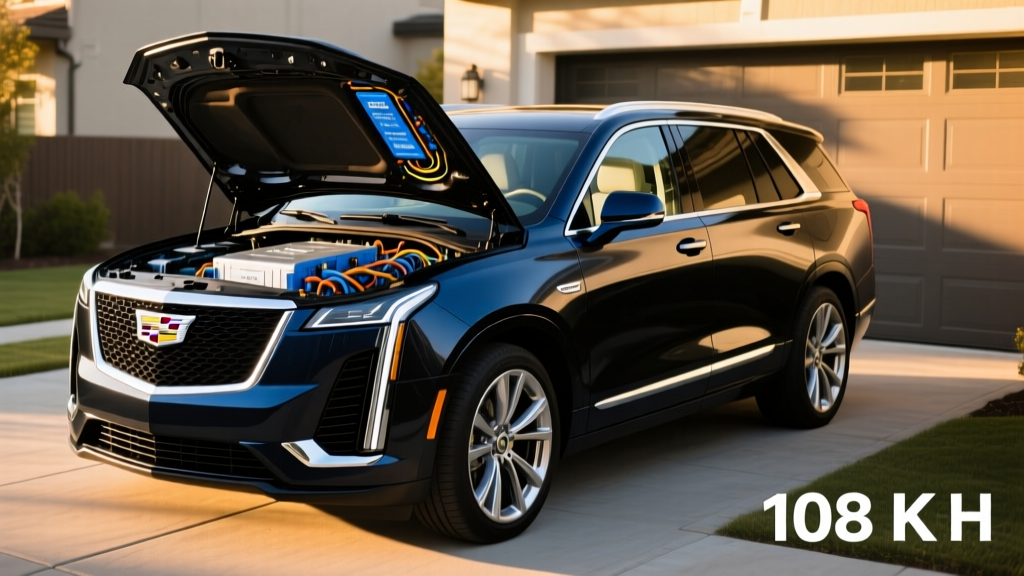
The 2025 Cadillac Escalade IQ is built on General Motors' BT1 electric truck platform and carries a massive 200 kWh usable battery pack (gross capacity approximately 205+ kWh). This is one of the largest lithium-ion traction batteries ever fitted to a production passenger vehicle, and it's the engineering backbone behind the Escalade IQ's EPA-estimated 450 miles of range in optimal conditions.
But raw capacity is only part of the story. For buyers evaluating a six-figure electric luxury SUV, the critical questions go deeper: What chemistry is inside that pack? How will it degrade over 100,000+ miles? What does replacement actually cost if something goes wrong out of warranty? And how does the Escalade IQ's Ultium battery compare to competing large-format packs from Rivian, Tesla, or Mercedes-Benz?
This guide breaks down everything you need to know about the Escalade IQ's battery system — from cell-level chemistry to long-term ownership economics — using verified data from fueleconomy.gov, GM's published specifications, and independent battery-degradation research.
| Specification | Value |
|---|---|
| Usable Battery Capacity | ~200 kWh |
| Cell Chemistry | NCMA (Nickel-Cobalt-Manganese-Aluminum) — Ultium platform |
| Cell Format | Large-format pouch cells |
| EPA Range (est.) | Up to 450 miles |
| Peak DC Fast Charge Rate | ~350 kW (800V architecture) |
| 10–80% DC Fast Charge Time | ~20 minutes (estimated, preconditioned) |
| Level 2 AC Charging | Up to 19.2 kW (estimated ~10 hrs for full charge) |
| System Horsepower | Up to 750 hp (dual-motor AWD) |
| 0–60 mph | ~4.9 seconds (est.) |
| Battery/Powertrain Warranty | 8 years / 100,000 miles |
| Base MSRP | ~$130,000 (Luxury 1 trim) |
Ultium NCMA Chemistry vs. LFP: Understanding the Trade-Offs
The Escalade IQ uses GM's Ultium battery platform, which employs NCMA (nickel-cobalt-manganese-aluminum) cathode chemistry in large-format pouch cells. This is a variant of NMC chemistry optimized for high energy density — critical when you need to pack 200 kWh into a vehicle that still needs to seat seven adults and haul cargo.
Understanding why GM chose NCMA over LFP (lithium iron phosphate) requires looking at the fundamental trade-offs between the two dominant EV battery chemistries available today.
| Attribute | NCMA / NMC (Escalade IQ) | LFP (e.g., Tesla Model 3 RWD, Ford F-150 Lightning Pro) |
|---|---|---|
| Energy Density | High (~250–300 Wh/kg cell-level) | Moderate (~160–200 Wh/kg cell-level) |
| Typical Cycle Life | 1,000–2,000 cycles to 80% SoH | 3,000–5,000+ cycles to 80% SoH |
| Cold-Weather Performance | Better low-temp discharge capability | More significant range loss below 32°F |
| Cost per kWh | Higher (~$110–140/kWh at pack level) | Lower (~$80–100/kWh at pack level) |
| Thermal Stability | Good; requires active thermal management | Excellent; inherently more stable |
| Recommended SoC for Daily Use | 20–80% (avoid prolonged 100%) | Can be charged to 100% regularly |
| Best For | Long-range, premium, large-pack vehicles | Standard-range, daily-commuter, fleet vehicles |
For the Escalade IQ, the choice is straightforward: LFP simply cannot deliver 200 kWh in a package that fits the vehicle's floor without adding unacceptable weight. NCMA's higher energy density is essential for this application. However, the trade-off is that NCMA cells degrade somewhat faster than LFP and require more careful state-of-charge management to maximize lifespan.
GM's Ultium pouch-cell design also offers a packaging advantage: the flat, rectangular cells stack efficiently in modular trays, allowing the Escalade IQ's battery to sit low in the chassis for improved center of gravity despite the vehicle's towering proportions.
How Long Do EV Batteries Last? Degradation Data and Real-World Mileage
The question every EV buyer asks — and the one that generates the most misinformation — is battery longevity. Let's look at what the data actually shows.
Modern liquid-cooled lithium-ion EV batteries like the Escalade IQ's Ultium pack typically lose approximately 1–2% of total capacity per year under normal use, or roughly 5–10% over 100,000 miles. The degradation curve is not linear: most batteries experience a steeper drop in the first 20,000–30,000 miles (often 2–4%), then settle into a slower, more gradual decline.
| Mileage | Estimated Capacity Retention | Notes |
|---|---|---|
| 0–10,000 mi | 98–99% | Initial formation loss; barely perceptible |
| 25,000 mi | 95–97% | Steeper early degradation phase ends |
| 50,000 mi | 92–95% | Linear degradation phase; ~1% loss per 10k miles |
| 100,000 mi | 88–92% | Well within warranty threshold for most OEMs |
| 150,000 mi | 84–90% | Approaching warranty boundary; still functional |
| 200,000+ mi | 78–85% | Out-of-warranty territory; replacement may be considered |
Sources: Geotab fleet data (2024 study of 10,000+ EVs), Recurrent Auto battery health reports, GM Ultium warranty specifications.
For the Escalade IQ specifically, a 200 kWh pack losing 10% over 100,000 miles still leaves ~180 kWh usable — enough for roughly 400 miles of range under the same conditions that originally delivered 450. That's still more range than most EVs deliver brand new.
The key insight: battery "end of life" in automotive applications is typically defined as 70–80% capacity retention. A battery at 75% health isn't dead — it simply offers reduced range. Most EV batteries reach this threshold well beyond 200,000 miles, meaning the battery will likely outlast the vehicle's economic life for most owners.
What Does the Escalade IQ Battery Warranty Actually Cover?
GM provides an 8-year / 100,000-mile battery and powertrain warranty on the Escalade IQ, consistent with the Ultium platform warranty across Cadillac's EV lineup. Here's what that means in practice:
| Coverage Element | Terms |
|---|---|
| Duration | 8 years or 100,000 miles (whichever comes first) |
| Capacity Retention Threshold | ~70% of original usable capacity (industry-standard; confirm with dealer for exact figure) |
| What's Covered | Battery cell defects, excessive degradation below threshold, BMS failures, cooling system defects |
| What's NOT Covered | Damage from accidents, aftermarket modifications, improper charging (e.g., sustained 100% storage), environmental damage |
| Remedy | Repair, module replacement, or full pack replacement at GM's discretion |
| Transferable? | Yes — warranty transfers to subsequent owners |
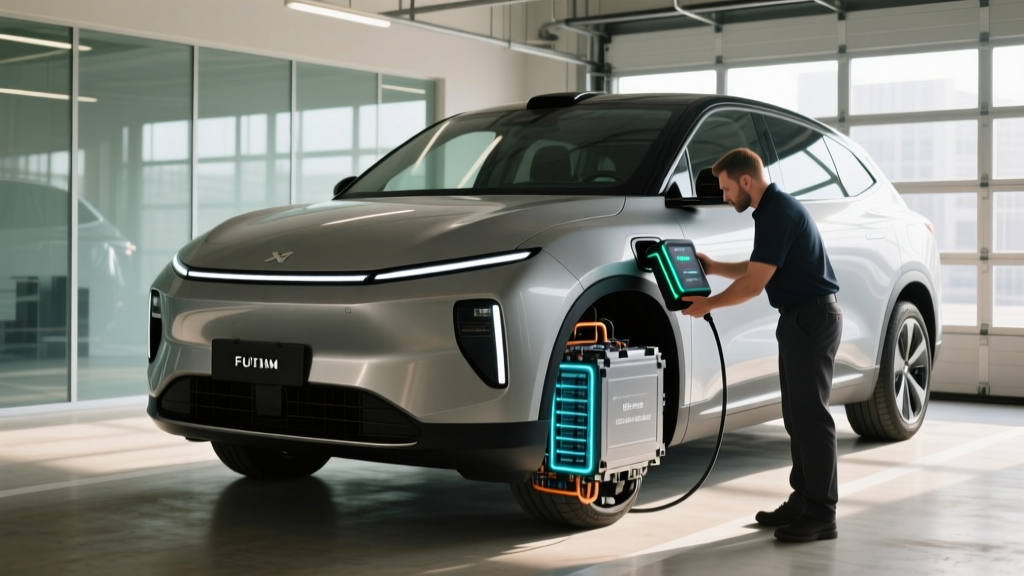
Critical nuance: GM (like most automakers) reserves the right to repair or replace individual battery modules rather than the entire pack. The Ultium platform's modular design — with cells grouped into trays within the larger pack — means a single degraded or defective module can be swapped without replacing the full 200 kWh assembly. This significantly reduces out-of-warranty repair costs compared to older monolithic pack designs.
EV Battery Replacement Cost: What If You're Out of Warranty?
If your Escalade IQ's battery degrades below the 70% threshold after the 8-year/100,000-mile warranty expires, or if it sustains physical damage not covered by insurance, replacement is a legitimate — if expensive — consideration.
| Vehicle / Pack Size | Estimated Full-Pack Replacement Cost | Estimated Module Repair Cost |
|---|---|---|
| Compact EV (60–75 kWh, e.g., Chevy Bolt) | $12,000–$16,000 | $2,000–$5,000 |
| Midsize EV (80–100 kWh, e.g., Tesla Model Y) | $15,000–$22,000 | $3,000–$7,000 |
| Large EV (100–135 kWh, e.g., Ford F-150 Lightning Ext. Range) | $20,000–$30,000 | $4,000–$9,000 |
| Ultra-Large EV (175–200+ kWh, e.g., Escalade IQ) | $30,000–$45,000+ | $5,000–$12,000 |
Costs include parts and labor. Prices vary by dealer, region, and whether OEM or refurbished cells are used. Source: GM dealer service estimates, Recurrent Auto, industry repair databases.
The $30,000–$45,000 figure for a full Escalade IQ pack replacement will make headlines, but context matters enormously:
- Full pack replacement is rare. Most degradation issues involve individual modules, which can be replaced for $5,000–$12,000 — comparable to a major engine or transmission repair on an ICE vehicle.
- Battery prices continue to fall. Pack-level costs have dropped from ~$400/kWh in 2015 to roughly $110–140/kWh in 2025. By the time an Escalade IQ might need out-of-warranty battery service (year 10+), replacement costs will likely be substantially lower.
- Most batteries outlive the car. Data from Recurrent Auto shows that fewer than 2% of EVs in their 15,000-vehicle study required battery replacement. The vehicle's body, interior, and other systems typically reach end-of-life before the battery does.
Factors That Accelerate Battery Degradation (and How to Avoid Them)
Not all miles are equal when it comes to battery wear. The following factors have the most measurable impact on long-term capacity retention for NCMA/NMC packs like the Escalade IQ's:
Battery Care Best Practices for the Escalade IQ
- Avoid sustained 100% State of Charge: NCMA chemistry degrades faster when held at maximum SoC for extended periods. Charge to 80–90% for daily use; reserve 100% for road trips. The Escalade IQ's infotainment system allows you to set a target charge limit.
- Minimize DC fast-charging frequency: Occasional DC fast charging (350 kW on the Escalade IQ's 800V architecture) is fine, but daily reliance on ultra-fast charging accelerates degradation. For daily needs, Level 2 home charging at 11.5–19.2 kW is gentler on the cells.
- Don't store the vehicle at extreme SoC: If leaving the Escalade IQ parked for weeks, aim for 50–60% SoC. Storing at 100% or below 10% for extended periods stresses the chemistry.
- Use preconditioning before fast charging: The Escalade IQ's thermal management system can warm or cool the battery to optimal temperature before a DC fast-charge session. Always navigate to a charger using the built-in route planner to trigger automatic preconditioning — this protects the cells and delivers faster charge speeds.
- Extreme heat is worse than extreme cold: While cold temporarily reduces range, sustained high ambient temperatures (95°F+) accelerate chemical degradation. Garage parking in hot climates meaningfully extends battery life.
- Don't fear regen braking: Regenerative braking generates modest charge currents that are well within the battery's design parameters. One-pedal driving does not harm the battery.
How to Check and Monitor Battery State of Health (SoH)
State of Health (SoH) is the metric that tells you what percentage of original capacity your battery retains. For the Escalade IQ, there are several ways to monitor this:
- In-vehicle display: The Escalade IQ's infotainment system provides estimated range and energy consumption data. While GM doesn't display a raw SoH percentage on the dashboard (unlike some competitors), the range estimate relative to the original EPA figure provides a practical proxy.
- myCadillac app: GM's connected-services app includes battery health diagnostics and charging history. Periodic reports can flag unusual degradation patterns.
- Dealer diagnostic scan: Cadillac service centers can run a full battery diagnostic that reads individual module voltages, internal resistance, and precise SoH percentage. Request this during routine service visits, especially as the vehicle approaches the warranty mileage boundary.
- OBD-II third-party tools: Devices like the OBDLink MX+ paired with apps such as ABRP (A Better Routeplanner) or Car Scanner can read battery management system (BMS) data on many GM EVs, including estimated SoH and cell voltage spread.
A healthy battery will show tight cell-voltage uniformity (typically within 20–50 mV across all modules). Widening voltage spread between modules is an early indicator of imbalance that a dealer can address under warranty.
Emerging Battery Tech: Solid-State and Silicon Anodes on the Horizon
GM has invested heavily in next-generation battery research through its Ultium Labs division and partnerships with companies like Solid Power. Two technologies are most relevant to future Escalade IQ successors:
- Solid-state batteries: These replace the liquid electrolyte with a solid conductor, promising higher energy density (~400+ Wh/kg), faster charging, and improved safety. However, solid-state batteries remain in pre-production validation as of 2026. Realistic availability in production vehicles like a future Escalade IQ generation is 2029–2032. Toyota, Nissan, and Samsung SDI have announced similar timelines.
- Silicon-anode cells: Replacing graphite anodes with silicon can boost energy density by 20–40%. Companies like Sila Nanotechnologies and Group14 are scaling production, with silicon-anode cells expected in select EV models by 2027–2028. GM has indicated interest but has not confirmed specific model applications.
For current Escalade IQ buyers, these technologies are forward-looking context, not purchase-decision factors. Today's Ultium NCMA pack is a mature, well-characterized system with known degradation profiles and established service infrastructure — which, for a $130,000+ vehicle, is arguably more valuable than unproven next-generation chemistry.
Frequently Asked Questions
How long do EV batteries last in years and miles?
Modern liquid-cooled EV batteries like the Escalade IQ's Ultium pack are designed to retain 70–80% of original capacity over 150,000–200,000+ miles or 12–15+ years of typical use. Data from fleet studies by Geotab and Recurrent Auto confirms that the vast majority of EV batteries never require replacement during the vehicle's ownership life. The battery will almost certainly outlast the vehicle's economic value.
How much does an Escalade IQ battery cost to replace?
A full 200 kWh Ultium pack replacement for the Escalade IQ would cost an estimated $30,000–$45,000 including labor at current pricing. However, full-pack replacements are extremely rare. More commonly, individual module repairs cost $5,000–$12,000. Battery pack costs continue to decline year over year, and by the time out-of-warranty service might be needed (year 10+), prices will likely be significantly lower.
What does the Cadillac Escalade IQ battery warranty cover?
GM covers the Escalade IQ's battery for 8 years or 100,000 miles, whichever comes first. The warranty covers defects and excessive capacity loss below approximately 70% of original capacity. The warranty is transferable to subsequent owners. GM may repair individual modules rather than replace the entire pack, leveraging the Ultium platform's modular architecture.
How do I check my Escalade IQ's battery health?
Monitor range trends relative to the original EPA estimate, use the myCadillac app for battery diagnostics, and request a full BMS scan at Cadillac service visits. Third-party OBD-II tools can also read State of Health data and cell-voltage uniformity. A dealer diagnostic is the most authoritative method and is recommended as the vehicle approaches 80,000+ miles.
LFP vs NMC — which battery chemistry is better?
Neither is universally "better" — they serve different applications. NMC/NCMA (used in the Escalade IQ) offers higher energy density, making it essential for long-range, large-pack vehicles where weight and packaging matter. LFP offers longer cycle life, lower cost, and better thermal stability, making it ideal for standard-range daily drivers. For a 200 kWh luxury SUV battery, NCMA is the correct engineering choice. For a 60 kWh commuter car, LFP may be preferable.
Does frequent DC fast charging damage the Escalade IQ battery?
Occasional DC fast charging is well within the battery's design parameters and will not cause meaningful harm. However, daily reliance on 350 kW ultra-fast charging does accelerate degradation compared to Level 2 home charging. The Escalade IQ's advanced thermal management and preconditioning system mitigates much of this stress. Best practice: fast-charge on road trips, Level 2 charge at home for daily use.