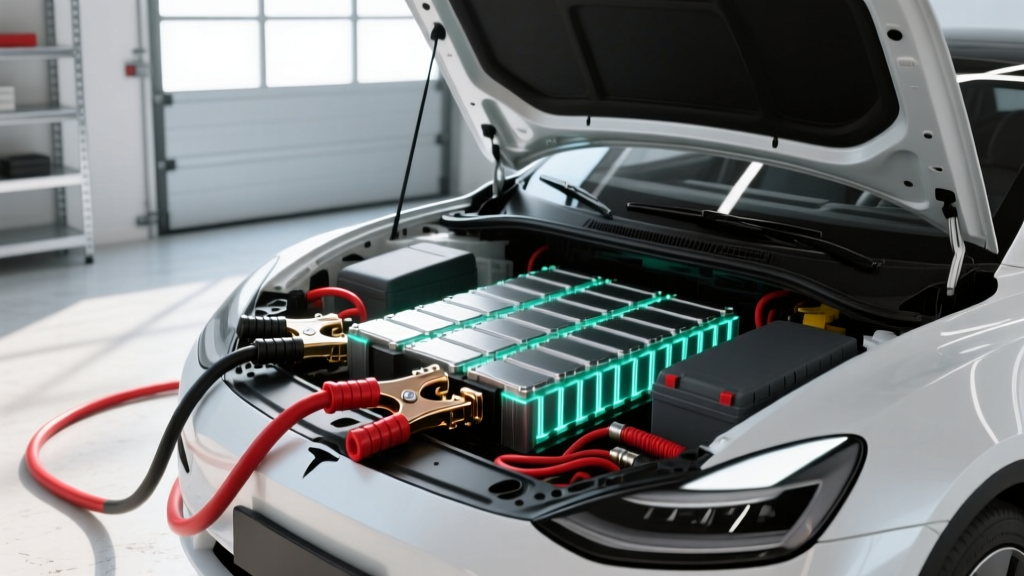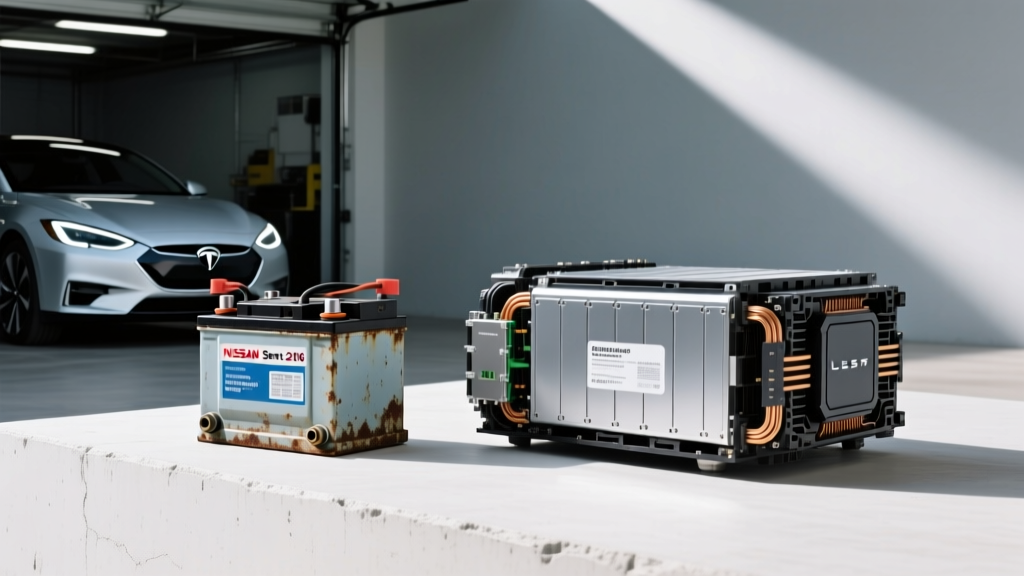
If you've searched for a 2016 Nissan Sentra battery, you're likely looking at a 12V lead-acid replacement for a conventional gasoline sedan — a $150–$220 part you swap every four to six years at any auto-parts store. That search, however, opens a much bigger question for anyone considering an electric vehicle: How long do EV traction batteries actually last, what do they cost to replace, and how do you keep them healthy?
This guide uses the 2016 Sentra's simple 12V battery as a baseline to explore the high-voltage lithium-ion packs that power today's EVs. We'll cover chemistry trade-offs, real-world degradation data, warranty terms, replacement economics, and the care habits that maximize State of Health (SoH) over 150,000+ miles.
12V Baseline: The 2016 Nissan Sentra Battery vs. an EV Traction Pack
The 2016 Nissan Sentra uses a Group 51R or 35 lead-acid 12V battery rated at roughly 55 Ah and 550 cold-cranking amps (CCA). It powers the starter motor, lights, and electronics — not propulsion. Replacement is trivial: a 45-minute job costing under $250 at most retailers.
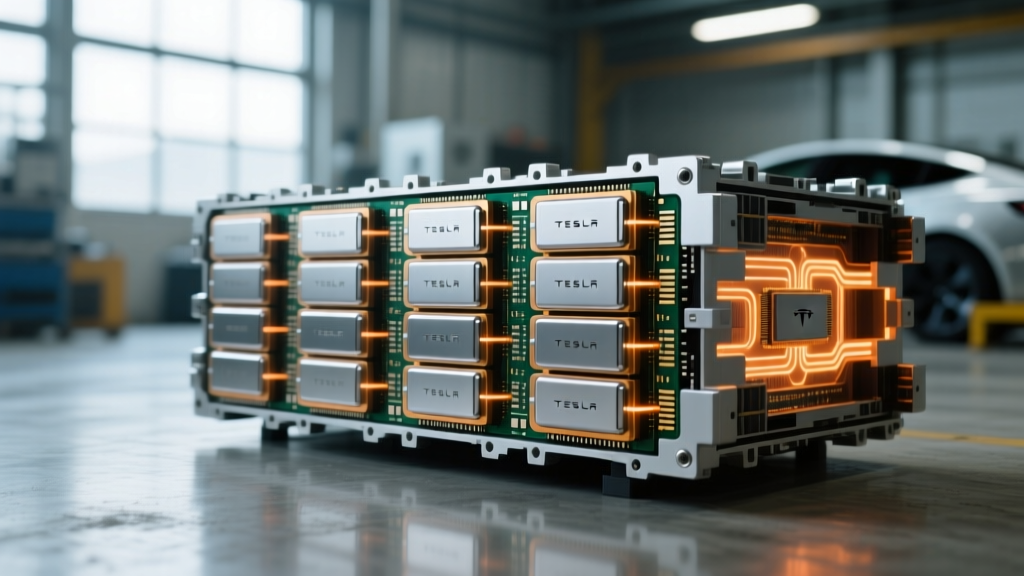
An EV's high-voltage traction battery is a completely different animal. It stores between 40 kWh and 120+ kWh of energy (depending on the model), weighs 600–1,500 lbs, and powers the electric motor(s) that move the car. Modern packs use lithium-ion cells in either NMC/NCA (nickel manganese cobalt / nickel cobalt aluminum) or LFP (lithium iron phosphate) chemistry. Understanding the difference is the first step to smart EV ownership.
LFP vs NMC/NCA: Chemistry Trade-Offs Explained
Not all lithium-ion batteries are created equal. The two dominant chemistries in 2026 EVs serve different priorities:
| Attribute | LFP (Lithium Iron Phosphate) | NMC / NCA (Nickel-Based) |
|---|---|---|
| Energy Density | ~160–180 Wh/kg (lower) | ~220–300 Wh/kg (higher) |
| Cycle Life | 3,000–5,000+ cycles | 1,000–2,000 cycles |
| Cold-Weather Performance | Moderate — greater range loss below 32°F | Better low-temp discharge; pairs well with heat pumps |
| Cost per kWh | ~$80–$100 (lower) | ~$110–$140 (higher) |
| Thermal Stability | Excellent — lower runaway risk | Good — requires robust BMS |
| Charging to 100% | Recommended periodically for SoC calibration | Best kept 20–80% for daily use |
| Common In 2026 Models | Tesla Model 3/Y RWD, Ford Mustang Mach-E Select (LFP trims), BYD, Rivian Standard | Hyundai Ioniq 5/6, Chevy Equinox EV, Tesla Long Range, BMW iX, Porsche Taycan |
The practical takeaway: LFP wins on longevity and cost — ideal for standard-range daily drivers who plan to keep a car 10+ years. NMC/NCA wins on energy density and cold-weather range — better for long-range models and colder climates. Neither is universally "better"; the right choice depends on your driving pattern and climate.
How Long Do EV Batteries Actually Last? Real Degradation Data
The fear that EV batteries need replacing every few years is not supported by fleet data. Most modern packs are engineered to outlast the vehicle's economic life.
Typical Capacity Retention Over Time (Fleet Averages)
- Year 1 (~12,000 mi): 95–98% SoH — initial formation loss, then plateau
- Year 3 (~36,000 mi): 91–95% SoH — gradual linear decline
- Year 5 (~60,000 mi): 88–93% SoH — most owners notice minimal real-world range change
- Year 8 (~96,000 mi): 84–90% SoH — still well above warranty threshold
- Year 10 (~120,000 mi): 80–88% SoH — usable range remains practical for daily driving
- Year 12+ (~150,000+ mi): 75–85% SoH — some packs reach this with careful charging habits
Data from Recurrent Auto's fleet tracking of over 15,000 EVs shows that the average 2020–2024 model-year battery retains roughly 90–93% capacity at 60,000 miles. Early-generation EVs (2011–2015 Nissan Leafs with passive air-cooled packs) showed notably worse degradation — some dropping below 75% by year 5 — which is why modern liquid-cooled thermal management systems were a critical engineering leap.
Real-world context: A 2025 Hyundai Ioniq 5 with an EPA range of 303 miles and a 77.4 kWh NMC pack would, at 90% SoH after 60,000 miles, still deliver roughly 270 miles of EPA-equivalent range. In mixed highway driving at 70 mph, expect closer to 240–255 miles — still ample for most daily needs and road trips with one DC fast-charge stop.
Battery Warranty Terms: What's Actually Covered?
Federal law mandates that EV batteries carry a minimum warranty of 8 years / 100,000 miles (10 years / 150,000 miles in CARB states like California, New York, and Massachusetts). Most manufacturers exceed the minimum on capacity retention thresholds.
| Model | Warranty Period | Capacity Threshold | Notes |
|---|---|---|---|
| Tesla Model 3/Y (LFP RWD) | 8 yr / 100,000 mi | 70% retention | LFP packs show minimal degradation in fleet data |
| Tesla Model 3/Y (Long Range NMC) | 8 yr / 120,000 mi | 70% retention | Higher mileage threshold on LR/AWD trims |
| Hyundai Ioniq 5/6 | 10 yr / 100,000 mi | 70% retention | Industry-leading duration |
| Ford Mustang Mach-E | 8 yr / 100,000 mi | 70% retention | LFP and NMC trims available |
| Chevrolet Equinox EV / Blazer EV | 8 yr / 100,000 mi | 60% retention | Lower threshold — verify before purchase |
| BMW iX / i4 | 8 yr / 80,000 mi | 70% retention | Lower mileage cap than most competitors |
| Rivian R1T / R1S | 8 yr / 175,000 mi | 70% retention | Highest mileage cap in the segment |
What the warranty covers: Defects in materials/workmanship AND capacity loss below the stated threshold. If your 77.4 kWh pack drops below ~54 kWh (70% of original) within the warranty window, the manufacturer must repair or replace it — typically with a refurbished or new module set. Normal gradual degradation above the threshold is not covered.
What it does NOT cover: Damage from accidents, flooding, unauthorized modifications, or using non-approved charging equipment. Always review your specific owner's manual warranty section.
EV Battery Replacement Costs: The Real Numbers
This is where the 2016 Nissan Sentra battery comparison is starkest. A 12V lead-acid battery costs ~$180. A high-voltage EV traction pack replacement is a five-figure job — but it's also one that most owners will never need.
| Vehicle / Pack Size | Battery Capacity | Estimated Replacement Cost | Typical Replacement Trigger |
|---|---|---|---|
| Nissan Leaf (40 kWh) | 40 kWh (NMC) | $6,500–$9,000 | 150,000+ mi or severe degradation in hot climates |
| Tesla Model 3 RWD (LFP) | ~60 kWh (LFP) | $8,000–$12,000 | Rarely needed; LFP cycle life exceeds 3,000 cycles |
| Tesla Model Y Long Range | ~75 kWh (NMC) | $12,000–$16,000 | 200,000+ mi projected; most cars retire before the pack |
| Hyundai Ioniq 5 | 77.4 kWh (NMC) | $11,000–$15,000 | 150,000–200,000 mi projected |
| Ford F-150 Lightning (Extended) | ~131 kWh (NMC) | $18,000–$25,000 | Largest packs = highest replacement cost |
| Chevrolet Bolt EV (discontinued) | ~65 kWh (NMC) | $9,000–$14,000 | Recall replacements completed; future out-of-warranty cost |
Critical context: According to data tracked by the U.S. Department of Energy via fueleconomy.gov, the average EV battery is lasting well beyond 150,000 miles before reaching 70% capacity. Most vehicles are totaled, traded, or retired before the battery needs full replacement. Module-level repairs (replacing individual cell groups rather than the entire pack) are increasingly available and cost $2,000–$5,000 — a middle ground that didn't exist a decade ago.
For comparison, a 2016 Nissan Sentra's gasoline engine and CVT transmission could require $3,000–$5,000+ in repairs over 150,000 miles (timing chain, CVT rebuild, head gasket). The EV battery replacement fear often ignores the equivalent ICE maintenance costs that are simply normalized.
Factors That Accelerate (or Preserve) Battery Health
Battery degradation is not purely a function of time — how you charge, drive, and store your EV has a measurable impact on SoH over the long term.
Battery Care Best Practices
- Daily SoC target: Set charge limit to 80% for NMC/NCA packs. LFP packs should be charged to 100% at least once a week for cell balancing and accurate SoC estimation.
- DC fast-charging frequency: Occasional DCFC (1–2x/week on road trips) is fine. Daily reliance on 150+ kW DCFC can accelerate degradation by 1–3% over 100,000 miles compared to Level 2 home charging. Use Level 2 (7–11.5 kW) as your daily charging method.
- Extreme heat: Sustained battery temperatures above 95°F accelerate electrolyte decomposition. Park in shade when possible; precondition while plugged in. Modern liquid-cooled packs handle this far better than the passively cooled 2011–2017 Nissan Leaf.
- Extreme cold: Below 20°F, expect 20–35% temporary range reduction (this recovers as temperatures rise). Always precondition the battery before DC fast charging in cold weather — a cold pack charges much slower and can experience lithium plating.
- Long-term storage: If storing for 2+ weeks, leave the pack at ~50% SoC. Avoid storing at 100% or below 10%.
- Avoid consistent 0% or 100% on NMC: The extremes of the charge curve stress nickel-based cathodes. The 20–80% window is the longevity sweet spot.
How to Check and Monitor Battery State of Health (SoH)
Unlike the 2016 Nissan Sentra's 12V battery — where you simply notice slow cranking — EV battery health is tracked digitally and continuously by the Battery Management System (BMS).
In-Vehicle Methods
- Tesla: Service Mode (accessible via the software menu) displays estimated battery capacity in kWh and degradation percentage.
- Hyundai/Kia: The EV-specific trip computer shows battery health estimates in later model years; dealer diagnostic tools provide detailed SoH reports.
- General Motors (Ultium platform): The myChevrolet/myCadillac app surfaces battery health data and can schedule diagnostics.
- OBD-II dongles + apps: Tools like OBDLink SX paired with apps such as Leaf Spy (for Nissan) or Car Scanner ELM can read BMS-reported SoH, cell voltage deltas, and pack temperature.
Third-Party Battery Health Reports
Services like Recurrent Auto offer free battery health reports that compare your pack's degradation to a fleet of identical vehicles. This is especially valuable when buying a used EV — request a report before purchase to confirm the pack is tracking within normal parameters.
What to look for: A SoH reading above 90% at 50,000 miles is excellent. Below 85% at 50,000 miles warrants investigation — it may indicate frequent DCFC abuse, exposure to extreme heat, or a defective module that could be warranty-replaced.
Emerging Battery Tech: Solid-State and Silicon Anodes
The next frontier in battery technology promises step-change improvements, but realistic timelines matter.
Solid-State Batteries
Solid-state cells replace the liquid electrolyte with a solid ceramic or polymer separator, enabling lithium-metal anodes for dramatically higher energy density (~400–500 Wh/kg projected) and faster charging. Toyota, Samsung SDI, and QuantumScape are leading development.
Realistic timeline: Limited production vehicles with solid-state packs are expected from Toyota around 2027–2028, initially in low-volume, premium models. Mass-market solid-state EVs at competitive pricing are not expected before 2030–2032. This technology is not available in any production EV as of 2026.
Silicon Anode Enhancements
Adding silicon to the graphite anode increases lithium storage capacity by up to 30%, boosting energy density without a full chemistry overhaul. Sila Nanotechnologies and Group14 Technologies are supplying silicon-dominant anode materials to automakers including Mercedes-Benz and Panasonic.
Realistic timeline: Silicon-enhanced anodes are already appearing in limited 2025–2026 model-year applications (e.g., Mercedes-Benz G-Class EV). Broader adoption across mainstream EVs is expected by 2027–2029.
Sodium-Ion Batteries
For budget-oriented EVs, sodium-ion chemistry eliminates lithium, cobalt, and nickel entirely, using abundant sodium. Energy density is lower (~120–150 Wh/kg), but cost is significantly reduced. CATL and BYD are deploying sodium-ion packs in Chinese-market city EVs. U.S. availability remains uncertain beyond 2028.
Bottom line for buyers today: Current LFP and NMC packs are mature, well-warrantied, and proven to last 150,000+ miles with proper care. Waiting for solid-state is not a practical strategy unless your purchase timeline extends to 2030+.
Frequently Asked Questions
How long do EV batteries last in years and miles?
Most modern liquid-cooled EV batteries (2020+ model years) retain 80–90% of original capacity at 100,000–150,000 miles, which translates to 8–12+ years of typical use. Fleet data from Recurrent Auto and warranty claim rates both confirm that catastrophic battery failure before 150,000 miles is rare in liquid-cooled packs.
How much does an EV battery cost to replace?
Out-of-warranty replacement ranges from ~$6,500 for a 40 kWh pack (Nissan Leaf) to $25,000 for a 131 kWh pack (Ford F-150 Lightning Extended Range). Most owners never pay this — the pack either remains functional for the car's lifetime, or it's covered under the 8-year/100,000-mile federal warranty minimum. Module-level repairs ($2,000–$5,000) are an increasingly common middle ground.
What does the EV battery warranty actually cover?
Federal law requires at least 8 years / 100,000 miles of coverage (10 yr / 150,000 mi in CARB states). Coverage includes manufacturing defects and capacity loss below a stated threshold — typically 70% of original capacity. If your pack falls below that threshold within the warranty period, the manufacturer must repair or replace it at no cost.
How do I check my EV's battery health?
Most EVs surface SoH data through the infotainment system, a companion app, or a hidden service menu. Third-party OBD-II tools (Leaf Spy, Car Scanner) can read BMS data directly. For used-EV purchases, a Recurrent Auto battery report or a dealer pre-purchase diagnostic provides the most objective health assessment.
LFP vs NMC — which battery chemistry is better for me?
Choose LFP if you want maximum cycle life (3,000–5,000+ cycles), lower cost, and plan to keep the vehicle 10+ years. It's ideal for daily commuting and warmer climates. Choose NMC/NCA if you need maximum range per charge, live in a cold climate (better low-temperature performance), or frequently take long road trips. Both chemistries are proven and well-warrantied in 2026 models.
Is it true that fast charging ruins EV batteries?
Not "ruins," but frequent DC fast charging does accelerate degradation modestly. Studies show that exclusive DCFC use (daily 150+ kW charging) can add 1–3% more degradation over 100,000 miles versus Level 2 home charging. Occasional DCFC on road trips has negligible impact. The key is making Level 2 (7–11.5 kW) your daily charging method and reserving DCFC for trips.
How does the 2016 Nissan Sentra battery compare to an EV battery in cost of ownership?
The Sentra's 12V battery costs ~$180 and lasts 4–6 years — roughly $30–$45/year. An EV traction battery costs $8,000–$20,000+ but lasts 150,000+ miles and is warrantied for 8–10 years. When you factor in the elimination of oil changes ($40–$80 each), transmission fluid, spark plugs, and exhaust system repairs, the EV's powertrain total cost of ownership is competitive or lower over a 10-year period, despite the higher upfront battery cost.
Sources: U.S. DOE / fueleconomy.gov — EV Battery Technology | Recurrent Auto — How Long Do EV Batteries Last | IRS §30D Clean Vehicle Credits