Why Are You Searching for a Battery for Chevy Equinox 2014 — and What Does It Teach Us About EV Batteries?
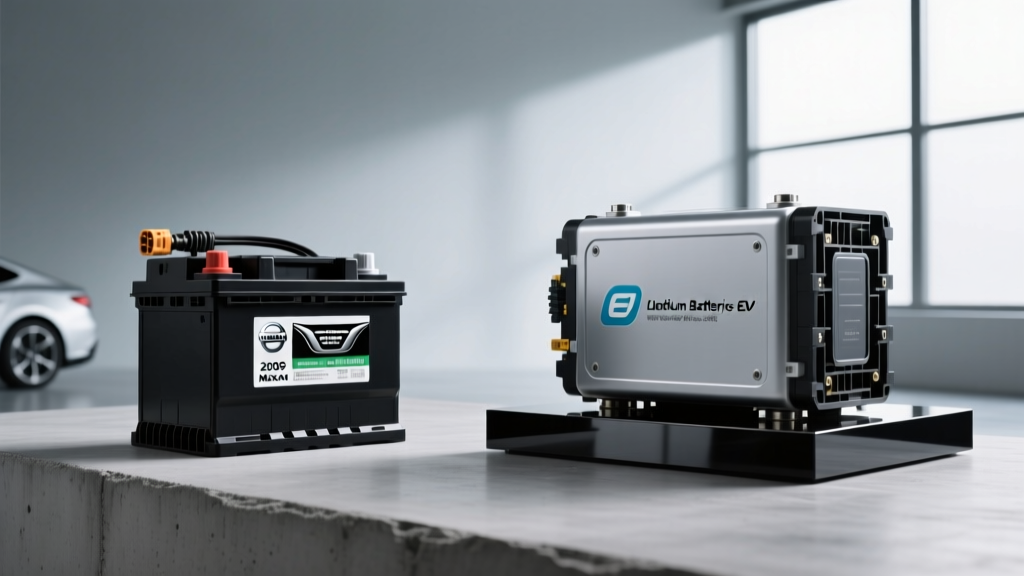
If you own a 2014 Chevy Equinox, you've likely searched for a replacement 12V battery at least once. That Group 48 AGM or flooded lead-acid battery costs roughly $150–$250, takes ten minutes to swap, and lasts three to five years. It's a routine maintenance item — and it's also the single biggest source of confusion when drivers start researching electric vehicles.
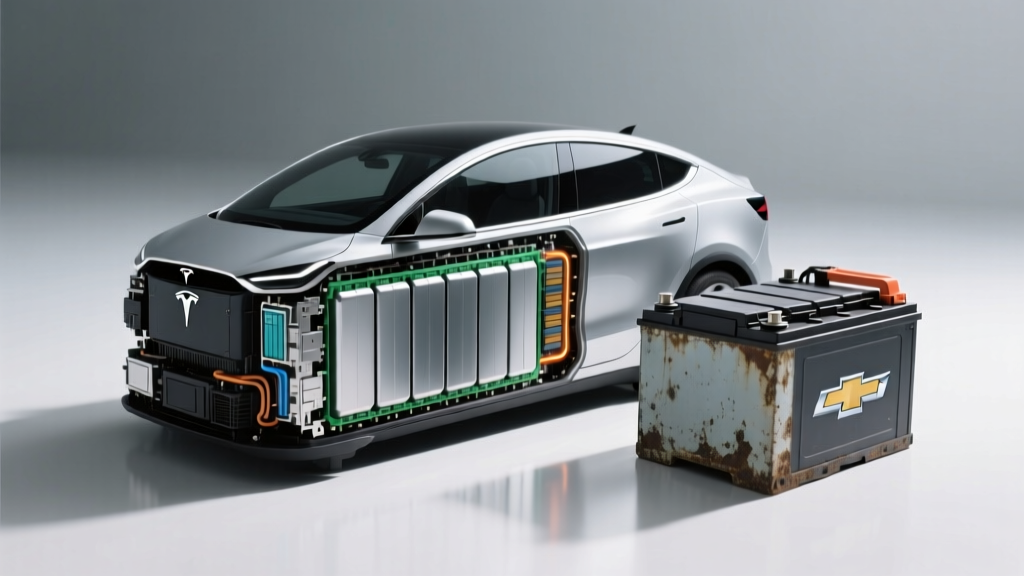
When EV-curious shoppers hear "EV battery replacement," they picture the same transaction: pull into a shop, pay a few hundred dollars, drive away. The reality is fundamentally different. An electric vehicle's high-voltage traction battery is a $7,000–$22,000 component designed to last the lifetime of the vehicle — not a consumable you swap on a schedule. Understanding this distinction is the first step toward making an informed electrified purchase.
This guide breaks down exactly how modern EV traction batteries work, what chemistry is inside them, how they degrade over time, what warranties actually cover, and what replacement costs if the worst happens. We'll also address why the battery for Chevy Equinox 2014 keeps showing up in EV forums — and how to avoid conflating the two very different systems.
12V Auxiliary vs. High-Voltage Traction Battery: The Equinox Confusion Explained
Before diving into lithium-ion chemistry, let's clear up the most common mix-up in EV battery research. Your 2014 Equinox has a single 12V lead-acid battery under the hood. It cranks the starter motor, powers the infotainment system, and runs the lights. When it dies, the car won't start — but replacing it is a $200 errand.
Electric vehicles also carry a 12V auxiliary battery (yes, even Teslas). It powers the computers, door locks, and safety systems. But the traction battery — the large lithium-ion pack mounted under the floor — is what actually propels the vehicle. This pack typically stores between 50 and 130 kWh of energy and operates at 350–800 volts.
If you're cross-shopping an EV against your aging Equinox, the relevant comparison isn't the $200 12V swap. It's the traction battery's multi-decade lifespan versus the Equinox's engine and transmission — components that routinely require $3,000–$6,000 repairs past 120,000 miles. That's the real cost-of-ownership conversation.
Battery Chemistry 101: LFP vs. NMC and What's Inside Your EV
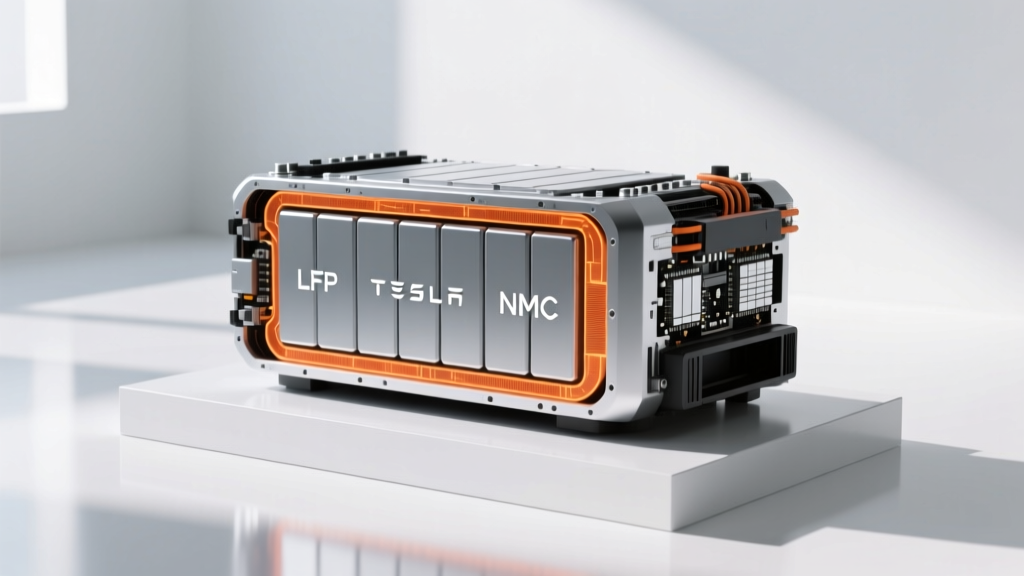
Not all lithium-ion batteries are the same. The two dominant chemistries in today's EV market are LFP (lithium iron phosphate) and NMC (nickel manganese cobalt). Each has distinct trade-offs in energy density, cycle life, cost, and cold-weather performance. Here's how they compare:
| Attribute | LFP (Lithium Iron Phosphate) | NMC (Nickel Manganese Cobalt) |
|---|---|---|
| Energy Density | Lower (~160 Wh/kg cell-level) | Higher (~220–260 Wh/kg cell-level) |
| Cycle Life | 3,000–5,000+ cycles to 80% SoH | 1,000–2,000 cycles to 80% SoH |
| Cost per kWh | Lower (~$80–100/kWh at cell level) | Higher (~$110–140/kWh at cell level) |
| Cold-Weather Performance | More range loss below freezing | Better low-temp discharge capability |
| Thermal Stability | Superior — less prone to thermal runaway | Good but requires more active thermal management |
| Charging to 100% | Recommended regularly for calibration | Best kept at 80% daily; 100% for trips only |
| Notable Vehicles (2025–2026) | Tesla Model 3 RWD, Ford Mustang Mach-E Select (LFP option), BYD Seal | Hyundai Ioniq 5, Chevy Equinox EV, BMW i4, VW ID.4 |
Which is better? It depends on your use case. If you charge at home every night and mostly drive in moderate climates, LFP's superior cycle life and lower cost make it a compelling choice — you can charge to 100% daily without accelerating degradation. If you need maximum range from a smaller, lighter pack or regularly drive in sub-freezing conditions, NMC's higher energy density and better cold performance are worth the trade-off. Most 2025–2026 buyers will encounter both chemistries depending on trim level.
How Long Do EV Batteries Actually Last? Degradation Data by the Numbers
The honest answer: far longer than most buyers expect. Modern EV traction batteries are engineered to outlast the vehicles they're installed in. But they do degrade — meaning usable capacity shrinks over time, reducing range.
- Tesla fleet data (2023 Impact Report): Model 3/Y batteries retain ~88% capacity at 200,000 miles — a 12% loss over roughly 10–15 years of average driving.
- Geotab fleet study (2024, 10,000+ EVs): Average annual degradation rate of 1.8% across all brands, meaning ~82% capacity retention after 10 years.
- Recurrent Auto data (2025): Chevy Bolt EV owners report ~94% battery capacity at 50,000 miles; ~87% at 100,000 miles.
- Nissan Leaf (passive cooling, older design): Higher degradation rates — ~75–80% retention at 100,000 miles, demonstrating why active thermal management matters.
A few patterns emerge from this data. First, degradation is nonlinear: most capacity loss occurs in the first 20,000–30,000 miles (roughly 2–5%), after which the curve flattens considerably. Second, vehicles with active liquid cooling and heating (virtually all 2020+ EVs) degrade far more slowly than older passively-cooled designs. Third, chemistry matters — LFP packs are showing slower long-term fade in fleet data, though NMC packs with robust thermal management also perform well.
For context, if your EV starts with an EPA-estimated 300 miles of range, expect roughly 255–275 miles of real-world range at the 10-year / 150,000-mile mark. That's still plenty for daily driving and most road trips.
What the Battery Warranty Actually Covers — and What It Doesn't
Federal law in the United States mandates a minimum battery warranty of 8 years / 100,000 miles for all EVs (extended to 10 years / 150,000 miles in California and states that follow CARB standards). Most manufacturers meet or exceed this baseline. Here's how major warranties compare:
| Manufacturer | Warranty Period | Capacity Threshold | Notes |
|---|---|---|---|
| Tesla | 8 yr / 100,000–120,000 mi (varies by model) | 70% retention | Covers defects + excessive degradation |
| Hyundai / Kia | 10 yr / 100,000 mi | 70% retention | Among the longest coverage |
| General Motors (Chevy) | 8 yr / 100,000 mi | 70% retention (60% for Bolt) | Equinox EV uses Ultium NMC platform |
| Ford | 8 yr / 100,000 mi | 70% retention | Mach-E, F-150 Lightning covered |
| Volkswagen | 8 yr / 100,000 mi | 70% retention | ID.4, ID. Buzz included |
What "70% retention" means: If your EV started with 80 kWh of usable capacity, the warranty guarantees at least 56 kWh remains. If degradation drops below this threshold within the warranty period, the manufacturer will repair or replace the battery at no cost. In practice, warranty claims for degradation alone are rare — most EV batteries retain well above 70% even at high mileage, as the fleet data above shows.
What's NOT covered: Damage from accidents, flooding, or unauthorized modifications. Gradual capacity loss above the threshold is considered normal wear, just as an engine losing a few horsepower over 100,000 miles is expected.
EV Battery Replacement Cost: What You'd Actually Pay
This is the question that keeps prospective EV buyers up at night. Let's address it with real numbers — and crucial context about how rarely replacement is actually needed.
| Vehicle / Pack Size | Battery Capacity | Estimated Replacement Cost (2025–2026) | When Typically Needed |
|---|---|---|---|
| Tesla Model 3 (LFP, RWD) | ~60 kWh | $7,000–$10,000 | Rarely; typically 300,000+ mi if at all |
| Chevy Equinox EV (Ultium NMC) | ~85 kWh | $12,000–$16,000 | Rarely; module-level repair often possible |
| Hyundai Ioniq 5 | 77.4 kWh | $10,000–$14,000 | Rarely; individual module swap ~$2,000–$4,000 |
| Ford F-150 Lightning (Extended) | ~131 kWh | $18,000–$22,000 | Extremely rare; fleet data shows strong retention |
| Nissan Leaf (older, passive cooling) | 40–62 kWh | $6,500–$9,000 | More common on pre-2018 models in hot climates |
The critical context most articles skip: The vast majority of EV owners will never need a full battery replacement. Data from Recurrent Auto, which tracks over 15,000 EVs in real-world conditions, shows that complete pack failures are exceedingly rare on modern liquid-cooled vehicles. When issues do arise, many can be resolved with a single module replacement ($2,000–$5,000) rather than a full pack swap.
Compare this to the 2014 Chevy Equinox you may be replacing: its 3.6L V6 engine or 6-speed transmission can fail past 120,000 miles, with replacement costs of $4,000–$7,000 — and unlike an EV battery, those components have no federally mandated long-term warranty.
Five Factors That Accelerate (or Preserve) Battery Health
EV battery degradation isn't random. Your habits directly influence how quickly capacity fades. Here's what the data shows matters most:
- Limit DC fast charging to road trips. Frequent use of 150+ kW DC fast chargers generates sustained heat, the primary enemy of lithium-ion longevity. Daily Level 2 home charging (7–11 kW) is gentler and extends battery life. According to Idaho National Laboratory testing, packs charged exclusively on DC fast charging showed measurably higher degradation than those charged primarily on Level 2 — though the difference was modest on modern liquid-cooled systems.
- Avoid extreme State of Charge (SoC) for daily use (NMC). For NMC batteries, keeping daily charge between 20–80% reduces stress. LFP batteries are an exception — manufacturers recommend charging to 100% at least weekly for accurate SoC calibration.
- Precondition before fast charging. Most modern EVs automatically warm the battery when you navigate to a DC fast charger. This allows the pack to accept higher charge rates safely, reducing time spent at elevated temperatures. If your EV offers preconditioning, use it.
- Park in shade or a garage during extreme heat. Sustained high ambient temperatures (above 95°F / 35°C) accelerate chemical degradation, especially when combined with a high SoC. A garage or shaded spot meaningfully slows this process.
- Don't leave the car at 100% SoC for extended periods. If you charge to full for a road trip, try to depart within a day. Sitting at 100% for weeks — especially in heat — stresses the cells.
The single most impactful habit? Charging at home on Level 2 most of the time and reserving DC fast charging for trips. This alone accounts for the majority of longevity variance between otherwise similar vehicles.
How to Check Your EV Battery's State of Health (SoH)
State of Health (SoH) is the percentage of original capacity your battery currently holds. A new EV has 100% SoH; a pack that has degraded to hold 64 kWh out of an original 77.4 kWh is at ~83% SoH. Here's how to monitor it:
- In-vehicle displays: Many EVs (Tesla, Hyundai/Kia, BMW) show battery health or estimated range trends in the settings menu. Tesla's app displays rated range vs. original, which serves as a proxy for SoH.
- OBD-II dongles + apps: Third-party tools like OBD2 scanners paired with apps such as EV Batmon, Car Scanner, or Leaf Spy (Nissan-specific) can read detailed cell-level data, including individual cell voltage variance and pack SoH percentage.
- Dealer diagnostics: A service center can run a full battery health report, often required for warranty claims. Request this during routine service visits.
- Telematics services: Companies like Recurrent offer free battery health tracking by connecting to your vehicle's telematics data, providing SoH reports and range projections over time.
For used-EV buyers, always request a battery health report before purchase. A 2021 EV with 45,000 miles showing 93% SoH is in excellent shape; one at 82% SoH may indicate heavy DC fast-charging use or hot-climate exposure and warrants a price discount.
What's Next: Solid-State Batteries and Silicon Anodes (Forward-Looking)
If you've read headlines about "revolutionary" battery breakthroughs, here's a grounded assessment of what's actually coming and when:
- Silicon-dominant anodes: Companies like Sila Nanotechnologies and Group14 are already shipping silicon-blend anode materials that increase energy density by 10–20%. These are appearing in limited 2025–2026 production vehicles (e.g., Mercedes-Benz G-Class EV). Expect broader adoption by 2027–2028. This is an incremental improvement, not a revolution — but it meaningfully extends range without increasing pack size.
- Solid-state batteries: Toyota, Samsung SDI, and QuantumScape have demonstrated prototype cells with 40–50% higher energy density and faster charging. However, manufacturing scale-up remains the bottleneck. Toyota has announced limited solid-state production for 2027–2028, but widespread availability in affordable vehicles is realistically a 2030+ timeline. Current liquid-electrolyte lithium-ion cells continue to improve incrementally and remain the standard.
- Sodium-ion batteries: CATL and BYD have begun shipping sodium-ion packs in Chinese-market vehicles. These offer lower cost and better cold performance but significantly lower energy density — making them suitable for city cars and stationary storage, not long-range EVs. US availability is not yet confirmed.
Bottom line: Don't delay an EV purchase waiting for solid-state. Today's lithium-ion batteries (both LFP and NMC) are mature, well-warrantied, and demonstrably long-lasting. The next decade will bring incremental improvements, not a disruptive overnight shift that makes current EVs obsolete.
Frequently Asked Questions
How long do EV batteries last in years and miles?
Based on fleet data from Tesla, Geotab, and Recurrent Auto, modern liquid-cooled EV batteries typically retain 80–90% of original capacity at 150,000–200,000 miles (roughly 10–15 years of average driving). Complete failure before 200,000 miles is rare on vehicles with active thermal management. Many EV batteries will outlast the rest of the vehicle.
How much does an EV battery cost to replace?
Full pack replacement ranges from roughly $7,000 for a smaller LFP pack (e.g., Tesla Model 3 RWD) to $22,000 for a large pack (e.g., Ford F-150 Lightning Extended Range). However, most modern EVs never require a full replacement. Module-level repairs, when needed, typically cost $2,000–$5,000. Federal warranty requirements cover the battery for at least 8 years / 100,000 miles.
What does the EV battery warranty actually cover?
By federal mandate, all EV batteries are warranted for at least 8 years / 100,000 miles (10 years / 150,000 miles in CARB states). Coverage includes manufacturing defects and excessive degradation — typically defined as falling below 70% of original capacity. Damage from accidents, flooding, or unauthorized modifications is excluded.
How do I check and maximize my EV battery health?
Monitor SoH through your vehicle's built-in displays, OBD-II diagnostic apps (Car Scanner, Leaf Spy), dealer service reports, or third-party telematics services like Recurrent. To maximize longevity: charge primarily on Level 2 at home, limit DC fast charging to road trips, keep NMC packs between 20–80% SoC for daily use, precondition before fast charging, and avoid leaving the car at 100% SoC for extended periods in hot weather.
LFP vs. NMC — which battery chemistry is better for me?
Choose LFP if you charge at home daily, drive in moderate climates, and want maximum cycle life and lower cost — you can charge to 100% regularly without concern. Choose NMC if you need the longest possible range from a lighter pack, frequently drive in sub-freezing temperatures, or take regular long road trips where energy density matters. Both chemistries are proven to last well beyond 150,000 miles with proper care.
Is the battery in a 2014 Chevy Equinox the same as an EV battery?
No. The 2014 Chevy Equinox uses a conventional 12V lead-acid (or AGM) battery to start the engine and power accessories. An EV's high-voltage traction battery is a completely different system — a large lithium-ion pack (50–130 kWh) that propels the vehicle. The two are not interchangeable, not comparable in cost, and serve entirely different functions. If you're searching for a battery for Chevy Equinox 2014, you need a Group 48 12V battery from any auto parts store — not an EV traction pack.