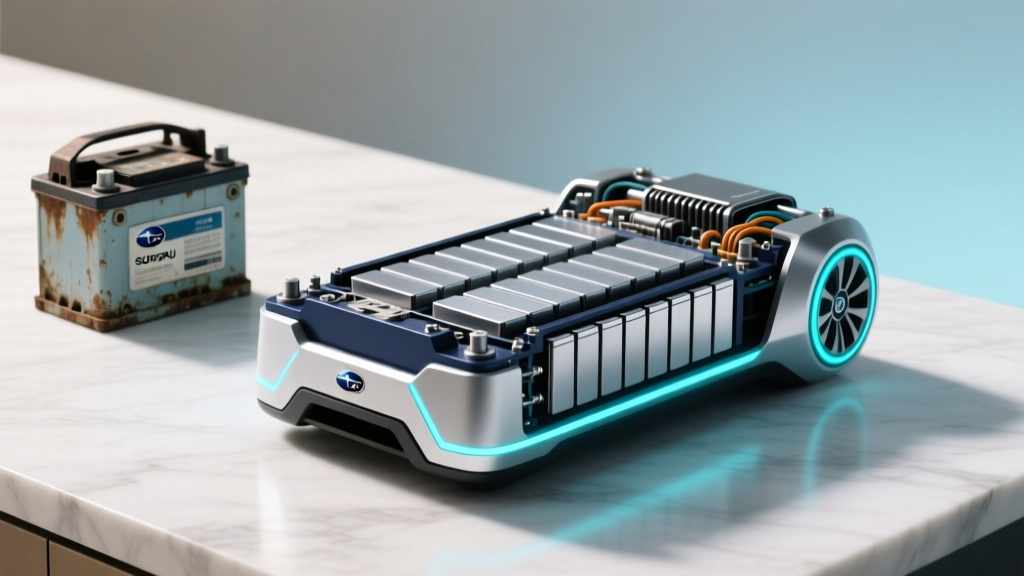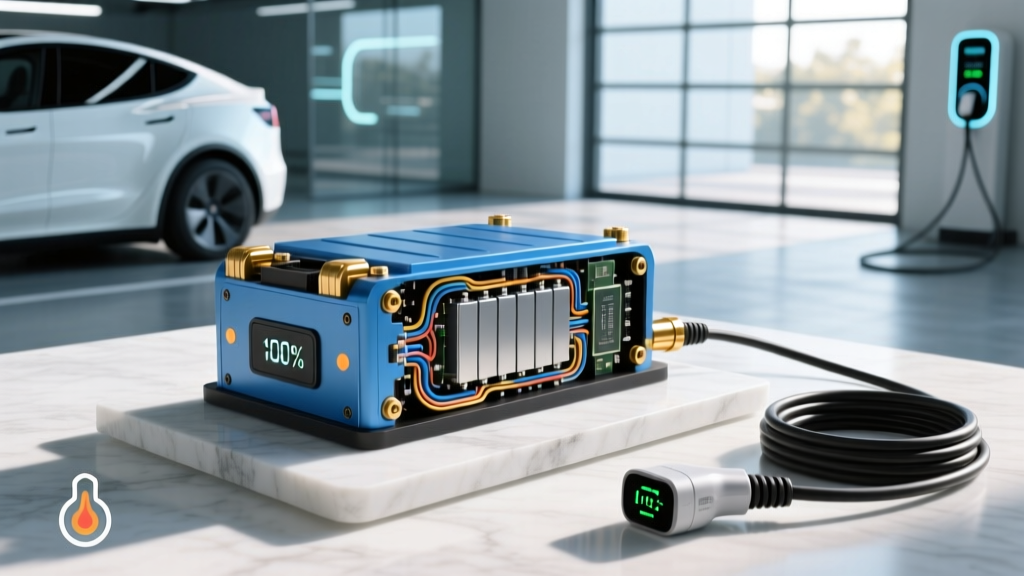
The battery is the single most expensive and consequential component in any electric vehicle. Yet most buyers focus on range and horsepower while glossing over the cell chemistry and the company that built the pack. That's a mistake. The battery manufacturing companies supplying your EV's cells directly influence how far you can drive, how fast you can charge, how the pack holds up in freezing weather, and what you'll face in replacement costs a decade from now.
This guide breaks down the major players, the chemistries they produce, and the real-world ownership implications — backed by degradation data, warranty specifics, and replacement-cost figures that matter when you're spending $40,000+ on an electrified vehicle.
Who Are the Major EV Battery Manufacturing Companies?
A handful of cell makers dominate global EV battery supply. Understanding who built your pack helps you anticipate chemistry, longevity, and charging behavior.
- CATL (Contemporary Amperex Technology Co., Limited) — The world's largest EV battery manufacturer by volume. Supplies Tesla (Model 3/Y Standard Range LFP packs), Ford, BMW, Hyundai, and others. Known for both LFP and NMC cells, plus its emerging condensed-matter battery platform.
- BYD (Build Your Dreams) — Vertically integrated Chinese automaker and battery giant. Its Blade Battery (LFP, cell-to-pack architecture) supplies its own vehicles and is increasingly exported to partners including Toyota and Tesla for certain markets.
- LG Energy Solution (LGES) — South Korean manufacturer supplying GM (Ultium platform), Ford, Hyundai, Stellantis, and others. Primarily NMC chemistry, with large-format pouch cells.
- Panasonic Energy — Longtime Tesla partner, producing 2170-format NCA cells at the Nevada Gigafactory and newer 4680 cells. Also supplies Toyota.
- SK On — Supplies Ford (F-150 Lightning, Mustang Mach-E) and Hyundai/Kia. NMC pouch cells with a focus on high-nickel formulations.
- Samsung SDI — Supplies BMW, Stellantis, and others. Developing both NMC prismatic and solid-state prototype cells.
When you see an EV spec sheet, the manufacturer is listed — but the cell supplier often isn't. A Tesla Model 3 Rear-Wheel Drive, for instance, uses CATL LFP cells, while a Model 3 Long Range AWD uses Panasonic NCA cells. The chemistry difference is significant, and it affects everything from daily charging habits to cold-weather range.
LFP vs. NMC/NCA: Chemistry Trade-Offs That Matter
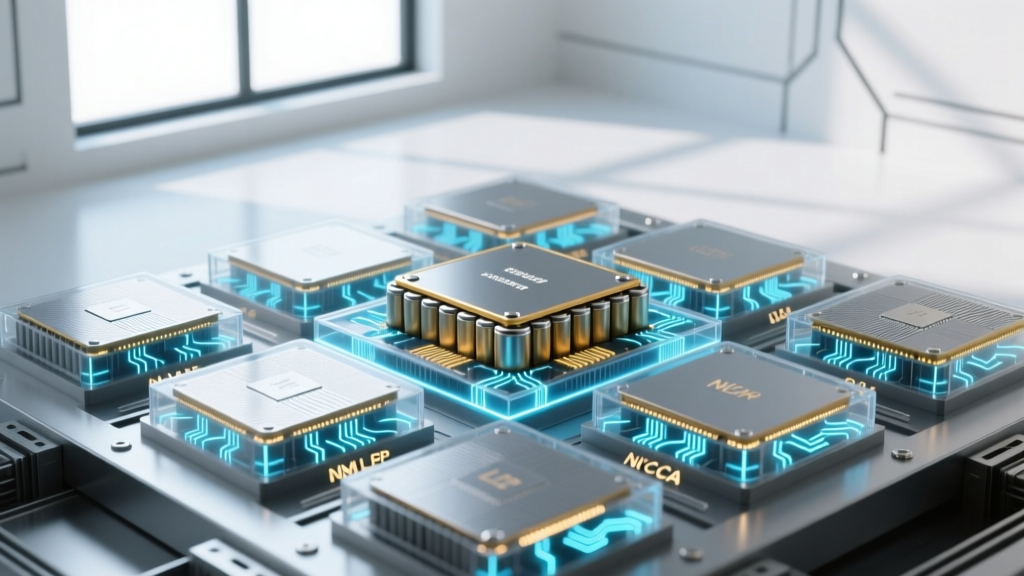
The two dominant lithium-ion chemistries in EVs today are LFP (lithium iron phosphate) and NMC/NCA (nickel manganese cobalt / nickel cobalt aluminum). Each has distinct strengths.
| Attribute | LFP (Lithium Iron Phosphate) | NMC / NCA (Nickel-based) |
|---|---|---|
| Energy Density | Lower (~160–180 Wh/kg cell-level) | Higher (~220–300 Wh/kg cell-level) |
| Typical EPA Range | 240–290 mi (standard-range packs) | 300–400+ mi (long-range packs) |
| Cycle Life | 3,000–5,000+ cycles to 80% SoH | 1,000–2,000 cycles to 80% SoH |
| Cold-Weather Performance | Greater range loss (~30–40% at 20°F) | Moderate loss (~20–30% at 20°F) |
| Daily Charging to 100% | Recommended — BMS needs full SoC for calibration | Not recommended — 80% daily limit extends life |
| Cost per kWh | ~$80–100 (cell-level, 2025–2026) | ~$110–140 (cell-level, 2025–2026) |
| Cobalt Content | None (cobalt-free) | Varies; high-nickel formulations reducing cobalt |
| Thermal Stability | Superior — less prone to thermal runaway | Good with active thermal management |
| Key Suppliers | CATL, BYD (Blade Battery) | LGES, Panasonic, SK On, Samsung SDI |
Which Is Better for You?
Choose LFP if: You want maximum cycle life, plan to keep the vehicle 10+ years, mostly drive in moderate climates, and want the simplicity of charging to 100% daily without degradation guilt. LFP is the pragmatic commuter-chemistry choice.
Choose NMC/NCA if: You need maximum range per charge, frequently drive in cold climates, take regular road trips where energy density matters, or want the longest single-charge legs possible. NMC/NCA remains the range-maximizing choice.
How Long Do EV Batteries Actually Last?
The fear that EV batteries need replacement every few years is not supported by fleet data. Most modern packs are engineered to outlast the vehicle's economic life.
Real-World Degradation Data Points:
- Tesla fleet data (2024 Impact Report): Model 3/Y packs retain approximately 85% capacity after 150,000 miles. Degradation curve flattens significantly after the initial ~20,000-mile break-in period.
- Geotab fleet study (2024, 10,000+ EVs): Average annual degradation across all brands was 1.8% per year — meaning a typical pack retains ~82% State of Health (SoH) after 10 years.
- Taxi/high-mileage data: Tesla Model 3 vehicles used as ride-share and taxi vehicles in multiple markets have exceeded 300,000 miles on original packs with 75–80% SoH.
- Nissan Leaf (early passive-cooled packs): A notable exception — 2011–2017 Leafs with passive air cooling showed 20–30% degradation by year 8 in hot climates. Modern liquid-cooled packs from all manufacturers have largely solved this issue.
The general expectation for a 2025–2026 model-year EV with active liquid thermal management: 85–90% SoH at 100,000 miles, and 75–85% SoH at 200,000 miles. At 70–80% SoH, the battery is still fully functional — you simply have proportionally less range than when new.
What Does the EV Battery Warranty Actually Cover?
Federal law in the United States mandates that EV batteries carry a minimum warranty of 8 years or 100,000 miles (whichever comes first). In California Air Resources Board (CARB) states, that extends to 10 years or 150,000 miles. Most manufacturers meet or exceed these thresholds.
| Manufacturer | Warranty Period | Mileage Limit | Capacity Retention Threshold |
|---|---|---|---|
| Tesla (Model 3/Y RWD, LFP) | 8 years | 100,000 mi | 70% SoH |
| Tesla (Model 3/Y LR, NCA) | 8 years | 120,000 mi | 70% SoH |
| Hyundai / Kia | 10 years | 100,000 mi | 70% SoH |
| GM (Ultium platform) | 8 years | 100,000 mi | 70% SoH |
| Ford | 8 years | 100,000 mi | 70% SoH |
| BMW | 8 years | 100,000 mi | 70% SoH |
| Rivian | 8 years | 175,000 mi | 70% SoH |
What triggers a warranty claim: If your battery's State of Health drops below the stated threshold (typically 70%) within the warranty period, the manufacturer will repair or replace the pack at no cost. SoH is measured by the vehicle's BMS (Battery Management System) and can be verified at a dealership or via diagnostic tools.
What's NOT covered: Damage from accidents, flooding, unauthorized modifications, or use outside normal operating parameters. Gradual degradation above the 70% threshold is considered normal wear and is not warrantable.
EV Battery Replacement Cost: What to Expect
Out-of-warranty battery replacement is the number-one fear among prospective EV buyers. Here's what the numbers actually look like for current-generation vehicles.
| Vehicle / Pack Size | Battery Capacity | Chemistry | Estimated Replacement Cost |
|---|---|---|---|
| Tesla Model 3 RWD (~60 kWh) | ~60 kWh | LFP (CATL) | $10,000–$13,000 |
| Tesla Model Y LR (~75 kWh) | ~75 kWh | NCA (Panasonic) | $14,000–$18,000 |
| Hyundai Ioniq 5 (~77.4 kWh) | ~77.4 kWh | NMC (SK On/LGES) | $14,000–$17,000 |
| Ford F-150 Lightning Ext. Range (~131 kWh) | ~131 kWh | NMC (SK On) | $22,000–$30,000 |
| Chevy Equinox EV (~85 kWh) | ~85 kWh | NMC (LGES Ultium) | $14,000–$18,000 |
| Nissan Ariya (~91 kWh) | ~91 kWh | NMC | $15,000–$20,000 |
Important context: Full pack replacement is rare. Most out-of-warranty failures involve individual module or cell replacements, which cost significantly less — often $2,000–$5,000 depending on the number of modules replaced. Additionally, battery prices per kWh have fallen roughly 90% since 2010 and continue declining. By the time a 2026 EV actually needs a replacement (likely 2036+), costs will be substantially lower.
The U.S. Department of Energy's fueleconomy.gov maintains EV efficiency and range data that can help you project long-term range loss based on degradation estimates.
Factors That Accelerate (or Preserve) Battery Life
Battery degradation is inevitable but not uniform. Your habits significantly influence how quickly your pack ages.
Battery Care Best Practices
- Avoid sustained 100% SoC (NMC/NCA): For nickel-based packs, set your daily charge limit to 80%. Reserve 100% charges for road trips. LFP packs, by contrast, benefit from regular 100% charges for BMS calibration.
- Minimize DC fast charging frequency: Occasional fast charging is fine, but daily use of 150+ kW DC chargers accelerates degradation. Studies show packs that primarily use Level 2 (home) charging degrade 1–2% less over 100,000 miles versus packs that rely heavily on DCFC.
- Precondition before fast charging: Most modern EVs automatically precondition the battery when you navigate to a charger. This brings the cells to optimal temperature (~77–95°F), reducing stress and improving charge speed. If your EV has manual preconditioning, use it in cold weather.
- Avoid extreme SoC storage: Don't leave your EV sitting at 100% or below 10% for weeks. For long-term storage, aim for ~50% SoC.
- Extreme heat is worse than extreme cold: Sustained ambient temperatures above 95°F accelerate chemical degradation more than cold exposure. If you live in a hot climate, garage parking and preconditioning help.
- Don't obsess — the BMS protects you: Modern Battery Management Systems enforce buffers (typically 2–5% at top and bottom) that you never access. The "100%" on your dash is not true 100% at the cell level.
How to Monitor Your Battery's State of Health
State of Health (SoH) is a percentage representing your battery's current maximum capacity relative to its original capacity. A new battery is 100% SoH; a battery with 85% SoH holds 85% of its original energy.
How to Check SoH
- In-vehicle display: Some manufacturers (BMW, Mercedes, Rivian) provide a SoH indicator or battery health report in the vehicle settings menu.
- Manufacturer app: Tesla's app doesn't show SoH directly, but you can estimate it by comparing your current max range at 100% charge to the original EPA figure. A Model 3 LR that originally displayed 341 miles at 100% but now shows 305 miles has approximately 89% SoH.
- OBD-II diagnostic tools: Third-party apps like Scan My Tesla (for Tesla vehicles) or generic OBD-II EV readers can pull BMS data including SoH, cell voltage variance, and pack temperature.
- Dealership diagnostic: Request a battery health report during scheduled service. Most dealerships can print a SoH certificate — useful for resale.
What to Watch For
A sudden drop in SoH (e.g., 3–5% in a single month) or significant cell voltage imbalance (variance greater than 0.1V between cell groups) may indicate a defective module. This is typically warrantable if within the coverage period.
Emerging Battery Technology: Solid-State and Beyond
Next-generation battery technologies are in active development, but it's critical to separate announcements from production reality.
- Solid-state batteries: Promised energy densities of 400–500 Wh/kg (roughly double current NMC) with faster charging and improved safety. Toyota has announced a solid-state battery targeting 2027–2028 production in limited volumes. Samsung SDI and Nissan are pursuing similar timelines. However, manufacturing scalability and cost remain unsolved challenges. Expect solid-state to appear first in premium/low-volume applications, not mainstream EVs, through at least 2030.
- Silicon-dominant anodes: Companies like Sila Nanotechnologies and Group14 are replacing graphite anodes with silicon composites, boosting energy density by 20–40%. These are beginning to appear in limited production (e.g., Mercedes G-Class 580e prototype) and are expected to scale into mainstream EVs by 2027–2029.
- Sodium-ion batteries: CATL has begun mass-producing sodium-ion cells for lower-cost, shorter-range EVs in China. Energy density is ~30% lower than LFP, but raw material costs are dramatically lower. U.S. market availability is not yet confirmed but is expected in budget-oriented models by 2028–2030.
- CATL condensed-matter battery: Announced at 500 Wh/kg, targeting aviation and premium EVs. Production timeline is 2026–2027 for initial applications.
For buyers today, these technologies are forward-looking and should not factor into a current purchase decision. Current LFP and NMC chemistries are mature, well-understood, and backed by extensive warranty coverage.
Tax Credit Implications and Battery Sourcing
Under the current IRS §30D Clean Vehicle Credit, up to $7,500 in federal tax credits is available for qualifying new EVs — but eligibility hinges heavily on battery sourcing. The credit is split into two halves:
§30D Battery Sourcing Requirements (2026 Tax Year)
- $3,750 — Critical Minerals: A specified percentage of critical minerals in the battery must be extracted or processed in the U.S. or a free-trade-agreement country, or recycled in North America. This percentage increases annually.
- $3,750 — Battery Components: A specified percentage of battery components must be manufactured or assembled in North America. This percentage also increases annually.
- MSRP Caps: Vans, SUVs, and pickups: $80,000 max MSRP. Sedans and other vehicles: $55,000 max MSRP.
- Buyer Income Caps: AGI must not exceed $300,000 (married filing jointly), $225,000 (head of household), or $150,000 (single).
- FEOC Exclusion: Vehicles with battery components or critical minerals from a Foreign Entity of Concern (primarily Chinese companies including CATL and BYD for certain supply chains) may be disqualified. This rule has narrowed eligibility for several popular models.
- Point-of-Sale Transfer: You can transfer the credit to the dealer at purchase for an immediate price reduction, rather than waiting to claim it on your tax return.
The FEOC rules specifically affect battery manufacturing companies with Chinese ownership or control. This is why several automakers have been reshoring battery production to U.S.-based joint ventures (e.g., GM-LGES Ultium Cells plants in Ohio, Tennessee, and Michigan; Ford's BlueOval SK plants in Kentucky and Tennessee). Always verify current eligibility on the fueleconomy.gov tax credit lookup tool before purchasing.
Frequently Asked Questions
How long do EV batteries last in years and miles?
Modern liquid-cooled EV batteries with active thermal management typically retain 85–90% of original capacity at 100,000 miles and 75–85% at 200,000 miles. In calendar years, expect 15–20+ years of usable service life before the pack degrades below 70% SoH. Most EV batteries will outlast the vehicle's economic life.
How much does an EV battery cost to replace?
Full pack replacement costs range from approximately $10,000 for a ~60 kWh LFP pack (e.g., Tesla Model 3 RWD) to $30,000 for a ~131 kWh NMC pack (e.g., F-150 Lightning Extended Range). However, full replacements are rare — most out-of-warranty repairs involve individual module replacements costing $2,000–$5,000. Costs are projected to continue declining as cell prices fall.
What does the EV battery warranty cover?
Federal law mandates a minimum of 8 years/100,000 miles. The warranty covers battery capacity loss below a specified threshold (typically 70% State of Health). If your SoH drops below 70% within the warranty period, the manufacturer repairs or replaces the pack at no cost. Damage from accidents, misuse, or unauthorized modifications is excluded.
How do I check and maximize my EV battery health?
Check SoH via your vehicle's settings menu, manufacturer app, OBD-II diagnostic tool, or dealership service report. To maximize longevity: set daily charge limits to 80% for NMC/NCA packs (100% is fine for LFP), minimize daily DC fast charging, precondition before fast charging, avoid prolonged storage at extreme SoC levels, and park in shade or garages in hot climates.
LFP vs. NMC — which battery chemistry is better?
Neither is universally better. LFP offers longer cycle life (3,000–5,000+ cycles), lower cost, no cobalt, and the convenience of daily 100% charging — but sacrifices energy density and cold-weather performance. NMC/NCA delivers higher range per charge and better cold-weather behavior — but has shorter cycle life and requires an 80% daily charge limit for longevity. For commuters in moderate climates, LFP is often the more practical choice. For road-trippers and cold-climate drivers, NMC/NCA is preferable.
Which battery manufacturing companies supply the most EVs?
CATL is the world's largest by volume, supplying Tesla, Ford, BMW, Hyundai, and many others — primarily LFP and NMC cells. LG Energy Solution is the leading non-Chinese supplier, providing NMC cells to GM, Ford, Hyundai, and Stellantis. Panasonic primarily supplies Tesla and Toyota. BYD supplies its own vehicles plus partners like Toyota. SK On supplies Ford and Hyundai/Kia. Samsung SDI supplies BMW and Stellantis.
Understanding the battery manufacturing companies behind your EV and the chemistry they use isn't just academic — it directly affects your daily charging routine, real-world range, long-term ownership costs, and even your federal tax credit eligibility. Check your specific vehicle's cell supplier, learn its chemistry, and adjust your charging habits accordingly. The data is clear: modern EV batteries are remarkably durable, and informed owners get the most out of them.