If you've ever priced a 12V battery for a 2013 Hyundai Accent — typically $120 to $200 at an auto parts store — and then heard that an electric vehicle's traction battery can cost $10,000 or more to replace, the sticker shock is understandable. But comparing these two components requires understanding what each one actually does, how long each lasts, and what protections exist when things go wrong. This guide breaks down EV high-voltage battery technology, longevity, and replacement economics while using that familiar gas-car 12V battery as a baseline reference point.
The Two Batteries in an EV (and Why Neither Is Like Your Accent's)
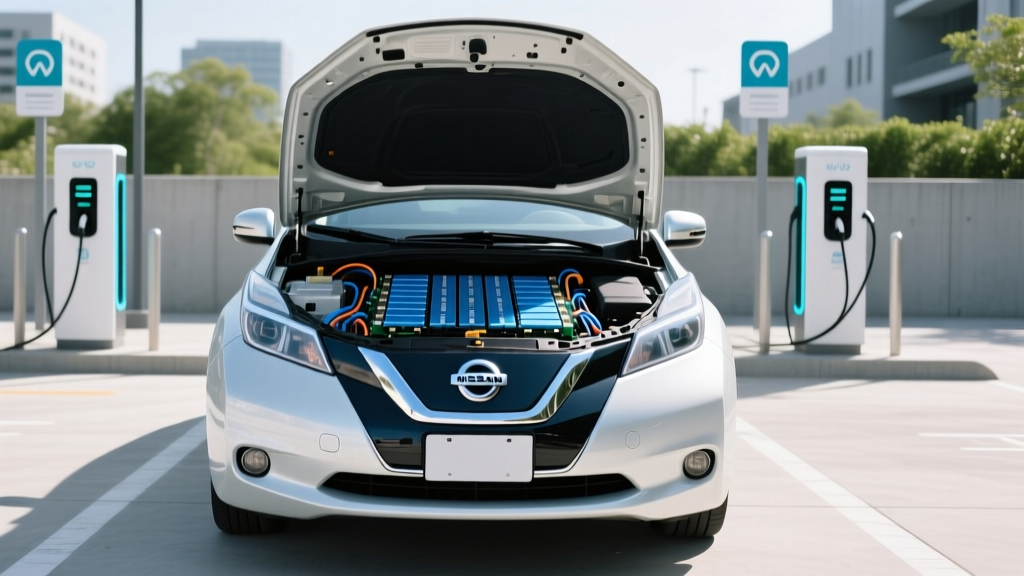
Every electric vehicle actually contains two batteries:
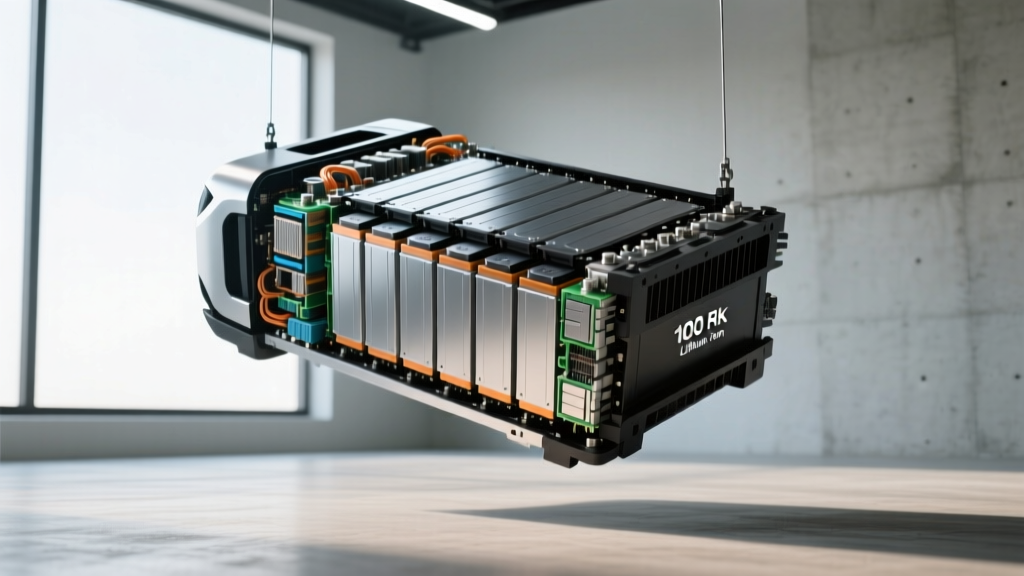
- High-voltage traction battery — the large pack (typically 50–100+ kWh) that stores energy to drive the electric motor. This is the expensive, complex component that defines the car's range and performance.
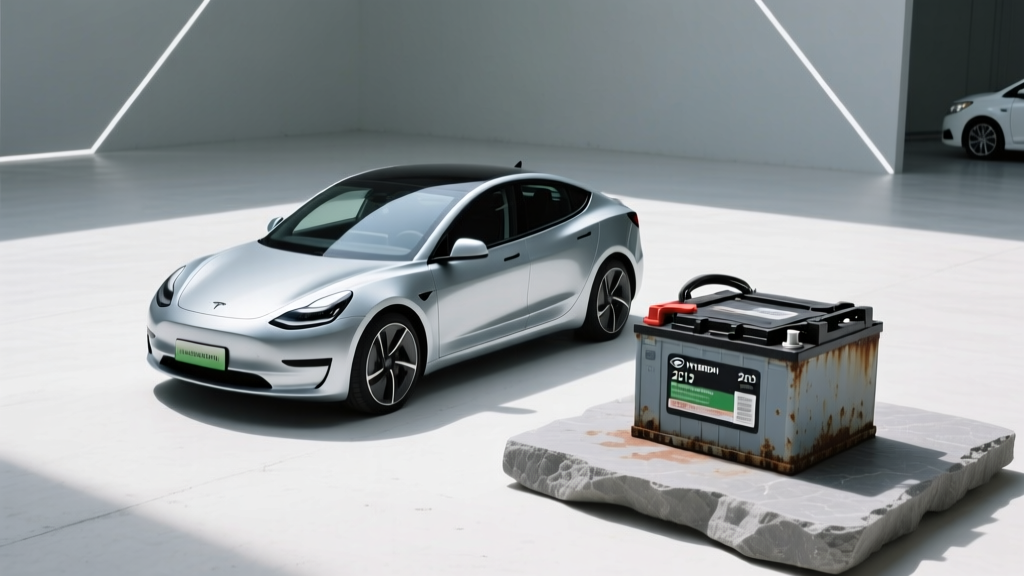
- 12V auxiliary battery — a small lead-acid or lithium-ion battery that powers lights, infotainment, door locks, and control computers. This is functionally similar to the 12V battery for a 2013 Hyundai Accent (Group 12V/H5 or H6, ~550 CCA).
The 12V battery in an EV is a wear item just like in any gas car, and replacing it costs roughly the same — $100 to $250 depending on chemistry and brand. The traction battery is an entirely different engineering challenge, and it's the focus of the rest of this guide.
Battery Chemistry: LFP vs. NMC vs. NCA Explained
Modern EV traction batteries use lithium-ion cells, but not all lithium-ion chemistry is the same. The two dominant chemistries in 2026 are LFP (lithium iron phosphate) and NMC/NCA (nickel manganese cobalt / nickel cobalt aluminum). Each has distinct trade-offs that affect range, longevity, cold-weather behavior, and cost.
| Attribute | LFP (Lithium Iron Phosphate) | NMC / NCA |
|---|---|---|
| Energy Density | Lower (~160–180 Wh/kg cell-level) — heavier pack for same range | Higher (~220–300 Wh/kg) — lighter, more range per kg |
| Cycle Life | 3,000–5,000+ cycles to 80% SoH | 1,000–2,500 cycles to 80% SoH |
| Cold Performance | Weaker in sub-freezing temps; more range loss, slower charging | Better cold-weather discharge and charge acceptance |
| Cost per kWh | Lower — no cobalt or nickel; ~$80–100/kWh pack-level (2026) | Higher — commodity metals; ~$110–140/kWh pack-level (2026) |
| Recommended SoC Range | Can charge to 100% daily without significant degradation | Best kept 20–80% daily; 100% for trips only |
| Thermal Stability | Excellent — very resistant to thermal runaway | Good with active thermal management; requires more monitoring |
| Common In (2026 Models) | Tesla Model 3/Y RWD, standard-range Ford Mustang Mach-E, BYD models | Tesla Long Range, Hyundai Ioniq 5/6, Kia EV6/EV9, GM Ultium vehicles |
Which is better? There is no universal winner. If you live in a mild climate, charge primarily at home, and want maximum cycle life with the simplicity of daily 100% charging, LFP is the pragmatic choice. If you need maximum range from a lighter pack, frequently drive in cold weather, or rely on DC fast charging in winter, NMC/NCA delivers better real-world performance in those conditions.
How Long Do EV Batteries Last? Degradation Data by the Numbers
EV battery degradation is not a cliff — it's a gradual, nonlinear curve. Most packs lose capacity quickly in the first year or two (roughly 2–5%), then the rate slows considerably. According to data aggregated by Recurrent Auto from over 15,000 vehicles in real-world use, here's what typical degradation looks like:
- Year 1 / ~15,000 mi: 95–98% State of Health (SoH) — initial settling
- Year 3 / ~45,000 mi: 91–96% SoH — gradual linear decline
- Year 5 / ~75,000 mi: 88–94% SoH — still well above warranty threshold
- Year 8 / ~100,000 mi: 85–92% SoH — approaching typical warranty floor
- Year 10+ / ~150,000+ mi: 80–90% SoH — many packs still viable for daily use
Source: Recurrent Auto fleet data (2024–2025); results vary by chemistry, climate, and charging habits. LFP packs generally show slower degradation than NMC in moderate climates.
To put this in perspective: a 2026 Hyundai Ioniq 5 with a 77.4 kWh (usable) NMC battery rated at 305 miles EPA range would, at 90% SoH after five years, still deliver roughly 275 miles of EPA-equivalent range. That's a meaningful but manageable reduction — not a car-ending event.
Compared to a 12V battery for a 2013 Hyundai Accent, which typically lasts 3–5 years before it can no longer hold sufficient charge to crank the engine, an EV traction battery is engineered to outlast most owners' time with the vehicle. The vast majority of EV batteries sold in the U.S. since 2011 are still in their original vehicles.
What Does the Battery Warranty Actually Cover?
Federal law mandates that EV batteries carry a minimum warranty of 8 years or 100,000 miles (whichever comes first). In California Air Resources Board (CARB) states — which include California, New York, Massachusetts, and over a dozen others — the requirement extends to 10 years or 150,000 miles. Most automakers meet or exceed these floors.
| Manufacturer | Term | Capacity Retention Threshold | Notes |
|---|---|---|---|
| Tesla | 8 yr / 120,000 mi (Model 3/Y); 8 yr / 150,000 mi (S/X) | 70% | Covers defects + degradation below threshold |
| Hyundai / Kia | 10 yr / 100,000 mi | 70% (some models 65%) | Among the longest terms in the industry |
| GM (Ultium) | 8 yr / 100,000 mi | 70% | Covers module-level replacement |
| Ford | 8 yr / 100,000 mi | 70% | Mach-E, F-150 Lightning |
| BMW | 8 yr / 100,000 mi | 70% | i4, i5, iX |
The critical detail is the capacity retention threshold — typically 70%. If your battery degrades below 70% of its original capacity within the warranty period, the manufacturer must repair or replace it at no cost. This means even at the warranty boundary, you'd still have 70% of original range. For a 300-mile EPA vehicle, that's 210 miles — still very usable for most daily driving.
Warranties cover manufacturing defects and abnormal degradation. They do not cover damage from collisions, flooding, or improper modifications. Always review your specific warranty booklet for exclusions.
EV Battery Replacement Cost: What to Expect and When
Here's the number most people want: How much does it cost to replace an EV battery? The answer depends heavily on pack size, chemistry, and whether you're replacing the full pack or individual modules.
| Vehicle / Pack Size | Full Pack Replacement | Module-Level Repair | Typical Need Timeline |
|---|---|---|---|
| Compact EV (~50–60 kWh, e.g., Chevy Bolt) | $8,000–$12,000 | $2,000–$5,000 | Rarely before 150,000+ mi |
| Mid-size EV (~75–85 kWh, e.g., Tesla Model 3 LR, Ioniq 5) | $12,000–$16,000 | $3,000–$7,000 | Rarely before 150,000+ mi |
| Large EV / Truck (~100–130 kWh, e.g., F-150 Lightning, Hummer EV) | $18,000–$28,000 | $4,000–$10,000 | Rarely before 150,000+ mi |
| 12V battery for a 2013 Hyundai Accent (reference) | $120–$200 | N/A | Every 3–5 years |
Two important context points:
- Most EV batteries never need replacement during typical ownership. Data from Consumer Reports and Recurrent Auto indicate fewer than 5% of EV batteries have been replaced outside of warranty-covered defects. The pack is designed to outlast 150,000–200,000 miles with gradual, manageable degradation.
- Module-level repair is increasingly common. Many modern packs (GM Ultium, BMW, some Hyundai/Kia) allow technicians to swap individual degraded modules rather than the entire pack — dramatically reducing cost.
Battery pack prices have also been falling steadily. BloombergNEF reports average lithium-ion pack prices dropped from over $1,200/kWh in 2010 to roughly $115/kWh in 2025, meaning replacement costs in 2030 or 2035 will likely be significantly lower than today's figures.
Factors That Accelerate (or Slow) Battery Degradation
Not all miles are created equal when it comes to battery wear. The following factors have the most measurable impact on long-term State of Health:
✅ Practices That Extend Battery Life
- Moderate State of Charge: Keep NMC/NCA batteries between 20–80% for daily use. LFP batteries can be charged to 100% regularly — in fact, Tesla and BYD recommend periodic 100% charges for LFP to maintain accurate BMS calibration.
- Level 2 home charging as primary: Slow, steady AC charging (6–11 kW) generates less heat and stress than repeated DC fast charging.
- Preconditioning: Use your car's preconditioning feature before fast charging in cold weather — it warms the battery to optimal temperature, improving charge speed and reducing lithium plating risk.
- Moderate climates: Garage parking in extreme heat or cold reduces thermal cycling stress.
- Drive it regularly: Batteries prefer regular use to prolonged sitting at high or low SoC.
❌ Practices That Accelerate Degradation
- Frequent DC fast charging to 100%: High-power DC charging (150–350 kW) generates significant heat. Doing this daily — especially in hot climates — accelerates cell wear. Studies show vehicles that fast-charge more than 3x/week degrade 1–3% faster over 5 years.
- Sitting at 100% SoC for days: For NMC/NCA, prolonged full charge stresses cathode material. Set charge limits and only charge to 100% when you'll drive shortly after.
- Deep discharge to near 0%: Consistently draining below 10% and letting the car sit empty stresses cells.
- Extreme heat exposure: Sustained ambient temperatures above 95°F (35°C) without thermal management active can accelerate calendar degradation.
- Aftermarket modifications: Non-OEM charging equipment or firmware tweaks can void warranty and damage cells.
How to Check and Monitor Your Battery's State of Health
State of Health (SoH) is a percentage representing your battery's current maximum capacity compared to its original capacity. A new battery is at 100% SoH; one that has lost 12% of capacity sits at 88% SoH.
Here's how to check it:
- In-car displays: Many EVs (Tesla, Hyundai/Kia, BMW, Ford) show battery health or degradation data in the settings or service menu. Tesla's service mode, for instance, displays a calculated range at 100% SoC that you can compare to the original EPA figure.
- OBD-II dongles + apps: Tools like OBDLink SX/MX paired with apps such as Leaf Spy (Nissan Leaf), ABRP OBD, or manufacturer-specific diagnostic tools can read detailed cell-level voltage data and SoH estimates.
- Third-party services: Companies like Recurrent and AVTOC offer battery health reports based on telematics data — increasingly useful for used-EV buyers.
- Dealer diagnostics: A service center can run a full pack health report, often required for warranty claims. Request this during routine service visits.
Practical tip for used-EV buyers: Before purchasing a used EV, compare the car's displayed range at 100% charge to its original EPA rating. A 2019 Tesla Model 3 Long Range originally rated at 310 miles EPA that now shows 275 miles at full charge sits at roughly 89% SoH — normal and healthy for a 7-year-old pack.
Emerging Battery Technology: What's Coming and When
Several next-generation battery technologies are in development. None are available in production vehicles as of 2026, but here's a realistic timeline based on manufacturer announcements and industry analysis:
- Silicon-dominant anode batteries: Companies like Sila Nanotechnologies and Group14 are replacing graphite anodes with silicon composites, boosting energy density by 20–40%. Expected in limited production vehicles by 2027–2028. Mercedes-Benz and Panasonic are among early adopters.
- Solid-state batteries: Replace the liquid electrolyte with a solid material, promising higher energy density, faster charging, and improved safety. Toyota has announced a solid-state battery EV for 2027–2028, but initial production will be extremely limited and likely premium-priced. Widespread availability is not expected before 2030+. Samsung SDI and QuantumScape are also in advanced testing.
- Sodium-ion batteries: Use abundant sodium instead of lithium, dramatically reducing cost and eliminating cobalt/nickel. Lower energy density limits them to shorter-range, budget EVs. CATL and BYD have begun limited production in China; U.S. availability is uncertain before 2028–2029.
EV Battery vs. Gas Car Battery: A Total Cost Perspective
Coming back to our reference point — that battery for a 2013 Hyundai Accent — let's put EV battery costs in the broader ownership context:
- A 2013 Accent owner will likely replace their 12V battery 2–4 times over 12 years, spending roughly $400–$800 total on 12V batteries alone.
- They'll also spend thousands on engine oil changes, transmission fluid, timing belts, spark plugs, and exhaust system repairs — maintenance items that simply don't exist on an EV.
- An EV owner may never replace their traction battery. And if they do, at year 12–15, the cost (adjusted for declining battery prices) may be comparable to what a gas car owner spent on cumulative powertrain maintenance over the same period.
According to fueleconomy.gov, EVs also save $600–$1,200 annually on fuel compared to comparable gas vehicles (based on 15,000 miles/year and national average electricity/gas prices). Over 10 years, those fuel savings alone ($6,000–$12,000) can offset a significant portion of any eventual battery replacement cost — which, again, most owners never face.
Frequently Asked Questions
How long do EV batteries last in years and miles?
Based on fleet data from Recurrent Auto and Consumer Reports, most modern EV batteries retain 85–92% of their original capacity at 8 years / 100,000 miles. Many packs continue functioning well past 150,000–200,000 miles with gradual degradation. Complete failure before 150,000 miles is rare (under 5% of vehicles) and typically covered by warranty.
How much does it cost to replace an EV battery?
Full pack replacement ranges from roughly $8,000 for a compact EV (50–60 kWh) to $28,000 for a large truck pack (130 kWh). However, module-level repairs can cost $2,000–$7,000. Most EV batteries never require replacement during typical ownership, and pack prices continue declining year over year. For comparison, a 12V battery for a 2013 Hyundai Accent costs $120–$200 but needs replacing every 3–5 years.
What does the EV battery warranty cover?
Federal minimum is 8 years / 100,000 miles; CARB states require 10 years / 150,000 miles. The warranty covers manufacturing defects and degradation below a stated capacity threshold — typically 70% of original capacity. If your battery falls below that threshold within the warranty period, the automaker repairs or replaces it at no cost to you.
How do I check my EV battery's State of Health?
Check your vehicle's in-car battery health display (if equipped), use an OBD-II scanner with a compatible EV diagnostic app, request a battery health report from your dealer during service, or use a third-party telematics service like Recurrent. For used-EV purchases, compare the displayed range at 100% charge against the original EPA rating to estimate SoH.
LFP vs. NMC — which battery chemistry should I choose?
Choose LFP if you want maximum cycle life, lower cost, the ability to charge to 100% daily, and you live in a mild climate. Choose NMC/NCA if you need maximum range from a lighter pack, frequently drive in cold weather, or need faster DC charging performance in winter. Neither is universally "better" — the right choice depends on your climate, driving patterns, and charging access.
Does frequent DC fast charging damage my battery?
Occasional DC fast charging is fine and accounted for in battery design. However, data shows that vehicles fast-charging more than 3 times per week degrade 1–3% faster over 5 years compared to those primarily using Level 2 home charging. The heat generated during high-power charging (150–350 kW) is the main stressor. Use DC fast charging for road trips and rely on Level 2 for daily needs.
Will solid-state batteries make current EVs obsolete?
Not anytime soon. Solid-state batteries are not yet in mass production as of 2026. Toyota, Samsung SDI, and others target limited production in 2027–2028, but widespread, affordable availability is unlikely before 2030+. Current LFP and NMC batteries are mature, reliable, and improving incrementally every model year.