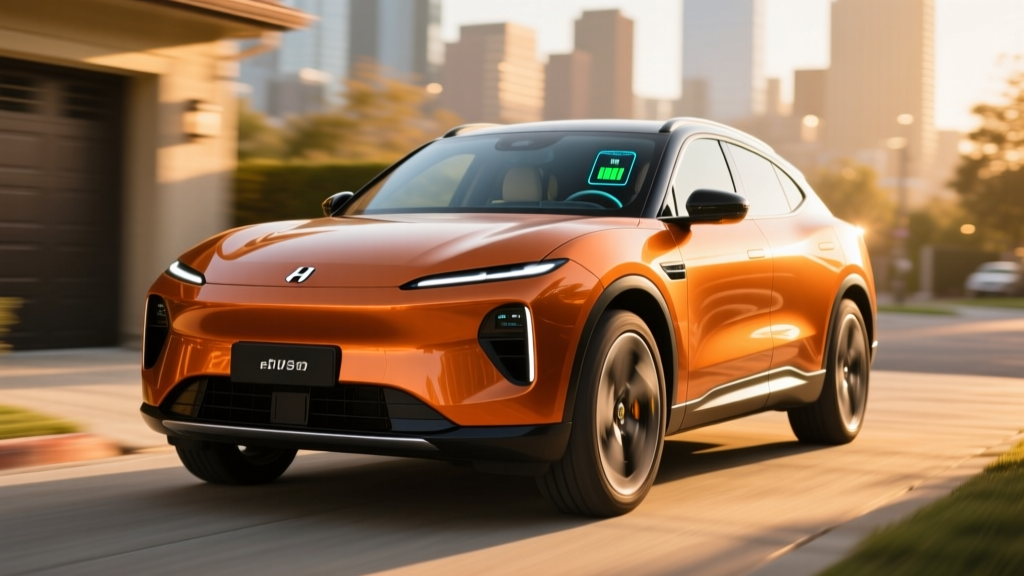
When Ford committed to electrifying its lineup — from the Mustang Mach-E to the F-150 Lightning and beyond — it didn't just source cells from suppliers and bolt them into chassis. The automaker built the Ford Battery Center of Excellence in Romulus, Michigan (and expanded R&D operations in Ion Park, Dearborn) to bring battery engineering, testing, and validation in-house. For buyers, that institutional investment translates into how Ford designs its packs, manages thermal loads, selects chemistry, and stands behind its warranties.
This guide breaks down what Ford's battery R&D infrastructure means for the real-world ownership experience: chemistry choices (LFP vs. NMC), degradation you can actually expect, warranty terms, replacement economics, and the daily habits that extend pack life. Whether you're evaluating a 2026 Mach-E, an F-150 Lightning, or a future Ford EV, these are the numbers that matter.
Why Ford Built a Battery Center of Excellence
The Ford Battery Center of Excellence consolidates cell-level testing, module integration, pack-level validation, and manufacturing process development under one roof. Rather than treating the battery as a purchased component, Ford engineers now control:
- Cell selection and chemistry validation — testing LFP and NMC cells across thousands of charge cycles under varied thermal conditions.
- Pack architecture — structural integration, cooling-loop design, and crash-safety compliance.
- Software-defined battery management — the BMS algorithms that govern charge limits, thermal preconditioning, and state-of-charge estimation accuracy.
- Manufacturing scale-up — translating lab results into BlueOval SK joint-venture production lines in Kentucky and Tennessee.
For consumers, the practical result is tighter quality control, more accurate range estimation, and chemistry choices matched to vehicle purpose rather than one-size-fits-all procurement.
LFP vs. NMC: The Chemistry Trade-Offs Ford Engineers Weigh
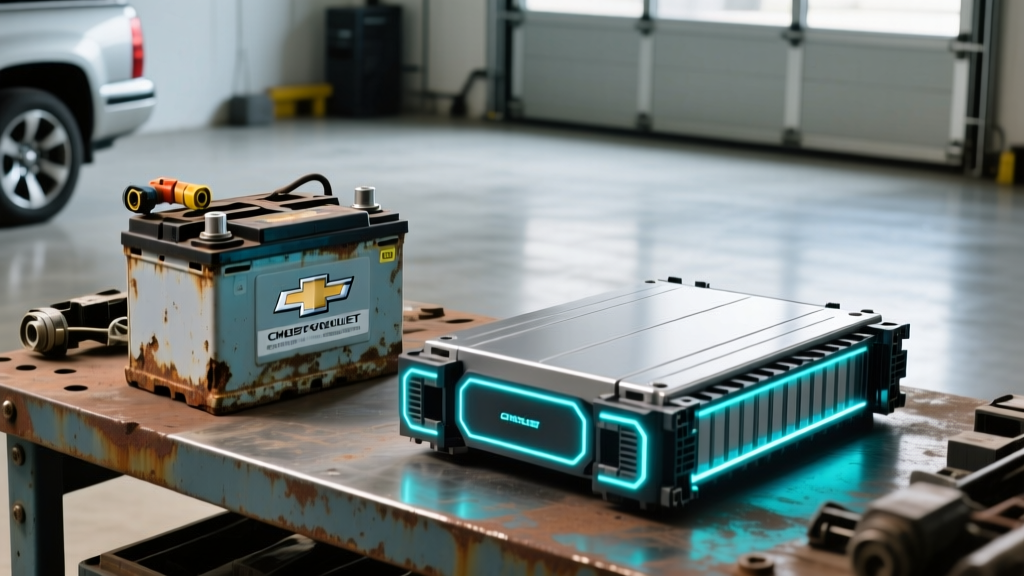
Ford has deployed both lithium iron phosphate (LFP) and nickel manganese cobalt (NMC) chemistries across its EV portfolio, and the choice isn't arbitrary. Each chemistry serves different use cases, and the Battery Center of Excellence tests both extensively before committing to production applications.
| Attribute | LFP (Lithium Iron Phosphate) | NMC (Nickel Manganese Cobalt) |
|---|---|---|
| Energy Density | Lower (~160-180 Wh/kg cell-level) | Higher (~220-260 Wh/kg cell-level) |
| Cycle Life | 3,000-5,000+ cycles to 80% capacity | 1,500-2,500 cycles to 80% capacity |
| Cold-Weather Performance | Greater range loss below 32°F; slower cold-charge acceptance | Better low-temp conductivity; less range penalty |
| Cost per kWh | Lower — no cobalt or nickel | Higher — commodity-price exposure to Ni/Co |
| Thermal Stability | Excellent — higher thermal runaway threshold | Good — requires more active thermal management |
| Typical Ford Application | Standard-range models; cost-optimized trims | Extended-range models; towing/performance trims |
| Recommended Charge Habit | Can charge to 100% regularly without accelerated degradation | Best kept 20-80% for daily use; 100% for trips only |
The bottom line: LFP wins on longevity, cost, and safety but sacrifices energy density and cold-weather range. NMC delivers more range per kilogram and handles cold better but costs more and degrades faster if routinely charged to 100%. Ford's standard-range Mach-E models have used LFP packs, while extended-range and F-150 Lightning models use NMC to maximize range and towing capability.
How Long Do Ford EV Batteries Actually Last?
The short answer: far longer than most buyers assume. Modern EV traction batteries are engineered to outlast the useful life of the vehicle itself in most cases. But "how long" depends on chemistry, climate, charging habits, and what you consider acceptable degradation.
Degradation Data: What the Numbers Show
Battery degradation is not linear. Most lithium-ion packs experience a steeper capacity drop in the first 1-2 years (typically 2-5%), followed by a much slower, nearly linear decline. Based on industry-wide testing data and fleet reporting:
| Timeframe | NMC Capacity Retention | LFP Capacity Retention | Notes |
|---|---|---|---|
| Year 1 / ~15,000 mi | 95-97% | 97-98% | Initial "formation" loss |
| Year 3 / ~45,000 mi | 90-93% | 94-96% | Steady-state degradation phase |
| Year 5 / ~75,000 mi | 87-91% | 92-95% | Still well above warranty threshold |
| Year 8 / ~100,000 mi | 82-88% | 89-93% | Warranty period end — most packs still above 70% |
| Year 10+ / 150,000+ mi | 78-85% | 85-92% | Approaching or exceeding typical vehicle lifespan |
According to fueleconomy.gov, EV batteries in modern thermal-managed packs typically retain 80-90% of original capacity after 100,000 miles. Ford's liquid-cooled pack designs — validated at the Battery Center of Excellence — are engineered to keep cells within optimal temperature windows, which is the single biggest factor in slowing calendar and cycle degradation.
Real-world caveat: These figures assume moderate climates and mixed charging habits. Owners in Phoenix or Dubai who DC fast-charge daily in 100°F+ heat will see faster degradation than garage-parking, Level-2-charging owners in temperate climates. Cold-climate owners who precondition their packs before charging will fare better than those who don't.
Ford's Battery Warranty: What's Covered and for How Long
Ford provides a high-voltage battery warranty that meets or exceeds the federal minimum mandated by the EPA and applies across all current EV models. Here are the specific terms:
| Parameter | Coverage |
|---|---|
| Duration | 8 years / 100,000 miles (whichever comes first) |
| Capacity Retention Threshold | Minimum 70% of original usable capacity |
| What Triggers a Claim | Measured capacity falls below 70% under diagnostic testing |
| Remedy | Repair, module replacement, or full pack replacement at Ford's discretion |
| Exclusions | Damage from accidents, misuse, unauthorized modifications, or flood |
| Transferability | Yes — transfers to subsequent owners automatically |
What this means practically: If your 2026 Mach-E Extended Range started with 91 kWh of usable capacity and a Ford diagnostic test at year 7 shows it can only hold 60 kWh (66% retention), Ford would repair or replace the pack at no cost. Based on the degradation data above, the vast majority of Ford EV owners will never approach this threshold during the warranty period.
The warranty also covers the battery management system (BMS), cooling system components integral to the pack, and high-voltage wiring within the battery enclosure. It does not cover the 12V auxiliary battery, which is a separate, conventional component with its own shorter warranty.
EV Battery Replacement Costs: The Numbers
Out-of-warranty battery replacement is the cost scenario that generates the most anxiety — and the most misinformation. Here's what the data actually shows:
| Vehicle / Pack Size | Battery Capacity (Usable) | Estimated Replacement Cost | Typical Replacement Trigger |
|---|---|---|---|
| Ford Mustang Mach-E (Standard Range, LFP) | ~70 kWh | $12,000 - $16,000 | Rare before 200,000+ mi |
| Ford Mustang Mach-E (Extended Range, NMC) | ~91 kWh | $16,000 - $22,000 | Rare before 150,000+ mi |
| Ford F-150 Lightning (Standard Range) | ~98 kWh | $18,000 - $24,000 | Rare before 150,000+ mi |
| Ford F-150 Lightning (Extended Range) | ~131 kWh | $22,000 - $30,000 | Rare before 150,000+ mi |
Critical context: Full pack replacement is uncommon. Most battery issues involve individual module failures — a single degraded or defective module can be replaced for $1,500-$4,000 rather than swapping the entire pack. Ford's modular pack designs, validated at the Battery Center of Excellence, specifically enable module-level service to keep out-of-warranty costs manageable.
Furthermore, cell pricing continues to decline. BloombergNEF reports average lithium-ion pack prices fell below $130/kWh at the cell level in 2025, meaning replacement costs for a 2026 model purchased today will likely be lower in 2034 when the warranty expires than they are for equivalent packs today.
Factors That Accelerate (or Slow) Battery Degradation
Not all miles are created equal when it comes to battery wear. The Battery Center of Excellence's testing protocols account for these variables, and understanding them helps you maximize your pack's lifespan.
What Accelerates Degradation
- Frequent DC fast charging above 150 kW — high C-rates generate internal heat and lithium plating risk. Occasional road-trip fast charging is fine; daily 200+ kW sessions accelerate wear.
- Sustained high state of charge — storing an NMC pack at 100% for days (especially in heat) stresses cathode chemistry. LFP is more tolerant of 100% storage.
- Deep discharge below 10% — regularly running the pack to near-zero stresses the anode and can trigger copper dissolution in the cell.
- Extreme ambient temperatures — prolonged exposure above 95°F or below 10°F without thermal management engagement degrades cells faster.
- Towing and heavy payloads — sustained high-current draw (as with F-150 Lightning towing at capacity) generates more internal heat per mile than light-duty driving.
What Extends Battery Life
- Level 2 home charging as your daily routine — 7-11 kW charging is gentle on cells and generates minimal heat.
- Set charge limits appropriately — 80% daily limit for NMC; 100% is fine for LFP.
- Precondition before fast charging — Ford's navigation-to-charger feature warms the pack to optimal temperature before you arrive at a DC station, improving charge speed and reducing stress.
- Park in shade or a garage — reducing ambient heat soak in summer cuts calendar degradation significantly.
- Keep the vehicle plugged in during extreme cold — the thermal management system will maintain the pack at a safe temperature using grid power rather than battery energy.
- Update vehicle software — Ford periodically releases BMS calibration updates that improve charge algorithms and thermal strategies.
How to Check Your Ford EV's Battery Health (State of Health)
Monitoring your battery's State of Health (SoH) doesn't require a dealership visit. Here are the methods available to Ford EV owners:
Method 1: FordPass App
The FordPass app provides a battery health indicator that estimates remaining capacity. While it doesn't give a precise percentage SoH reading like some third-party tools, it flags when the pack approaches warranty-threshold levels.
Method 2: Dealership Diagnostic Test
Ford dealers can run a full BMS diagnostic that reports measured capacity vs. original capacity as a percentage. Request this during routine service visits, especially as you approach the 8-year/100,000-mile warranty boundary. This is the only measurement Ford recognizes for warranty claims.
Method 3: Manual Calculation
Track your real-world range over a consistent route at similar temperatures and compare it to your range when the vehicle was new. If your 2024 Mach-E Extended Range originally delivered 290 real-world highway miles at 70°F and now delivers 265 on the same route under the same conditions, your approximate SoH is ~91%. This method is imprecise but useful for trend monitoring.
Method 4: OBD-II Diagnostic Tools
Aftermarket OBD-II readers paired with apps like FORScan or Car Scanner can read BMS-reported SoH values directly from the vehicle's CAN bus. Accuracy varies by adapter quality, but this gives enthusiasts real-time visibility without a dealer visit.
Emerging Battery Technology: What's on Ford's Roadmap
The Ford Battery Center of Excellence isn't just validating today's chemistry — it's developing what comes next. Here's where future technology stands, with realistic timelines:
Silicon-Anode Cells
Replacing graphite anodes with silicon-dominant anodes can increase energy density by 20-40% at the cell level. Ford has invested in silicon-anode startups and is testing these cells at the Center of Excellence. Timeline: limited production applications possible by 2028-2029, with broader adoption in the early 2030s. Cycle life remains the primary challenge — silicon expands significantly during charge cycles, and long-term durability must match current NMC standards before production commitment.
Solid-State Batteries
Solid-state cells replace the liquid electrolyte with a solid conductor, promising higher energy density, faster charging, and improved safety. Ford has partnered with Solid Power, a Colorado-based developer, and is evaluating prototype cells. Timeline: no solid-state EV in production before 2030 at the earliest. Manufacturing yield, cost, and interface stability between the solid electrolyte and electrodes remain unsolved at scale. Any announcements of solid-state vehicles before 2030 should be treated as preliminary concept claims, not purchase-ready products.
Sodium-Ion Cells
Sodium-ion chemistry eliminates lithium entirely, using abundant sodium for the cathode. Energy density is lower than LFP, but cost and supply-chain security are compelling. Timeline: potential for low-cost, short-range EV applications by 2028-2030, likely in fleet or urban vehicles rather than long-range consumer models.
All of these technologies are being evaluated at the Battery Center of Excellence, but none are currently available in any production Ford vehicle. Ford's official press resources provide updates as technologies move from lab to production commitment.
Frequently Asked Questions
How long do Ford EV batteries last in years and miles?
Based on degradation data for liquid-cooled LFP and NMC packs, most Ford EV batteries retain 80-90% of original capacity at 100,000 miles and 8 years. Many will function well beyond 150,000-200,000 miles before capacity drops below 70%. The pack will likely outlast other major vehicle components.
How much does it cost to replace a Ford EV battery?
Full pack replacement ranges from approximately $12,000 (Mach-E Standard Range LFP) to $30,000 (F-150 Lightning Extended Range NMC) out of warranty. However, full replacements are rare — most issues involve single-module failures costing $1,500-$4,000 to repair. Cell prices continue to decline, so future replacement costs will likely be lower than today's estimates.
What does Ford's battery warranty cover?
Ford covers the high-voltage traction battery for 8 years or 100,000 miles, guaranteeing it will retain at least 70% of original usable capacity. If measured capacity falls below this threshold, Ford will repair or replace the pack at no charge. The warranty is transferable to subsequent owners.
How do I check my Ford EV battery's State of Health?
Use the FordPass app for a general health indicator, request a BMS diagnostic at a Ford dealer for a precise SoH percentage, or use an OBD-II reader with FORScan for enthusiast-level monitoring. Manual range tracking over consistent routes also provides a useful trend estimate.
Is LFP or NMC better for my Ford EV?
Neither is universally better — they serve different needs. Choose LFP (standard-range trims) if you want maximum cycle life, lower cost, and the ability to charge to 100% daily without degradation concern. Choose NMC (extended-range trims) if you need maximum range, better cold-weather performance, and towing capability — and commit to 20-80% daily charging habits. Both chemistries are extensively validated at Ford's Battery Center of Excellence.
Does frequent DC fast charging damage my battery?
Occasional DC fast charging (road trips, a few times per month) causes negligible additional degradation. Daily reliance on 150+ kW DC charging does accelerate wear over time due to sustained high internal temperatures. For daily use, Level 2 home charging at 7-11 kW is optimal for long-term battery health. Always use your vehicle's preconditioning feature before fast charging to warm the pack.
Will Ford's battery technology make current EVs obsolete?
Emerging technologies like silicon-anode and solid-state cells will improve energy density and charging speed, but today's LFP and NMC packs are already durable enough to last 150,000+ miles with minimal degradation. The practical gap between current and future technology is narrower than marketing suggests. Buy based on today's specs and your actual needs rather than waiting for next-generation chemistry that remains years from production.
For the most current Ford EV specifications and warranty details, consult Ford's official EV hub or the EPA's fueleconomy.gov database for independent range and efficiency ratings.