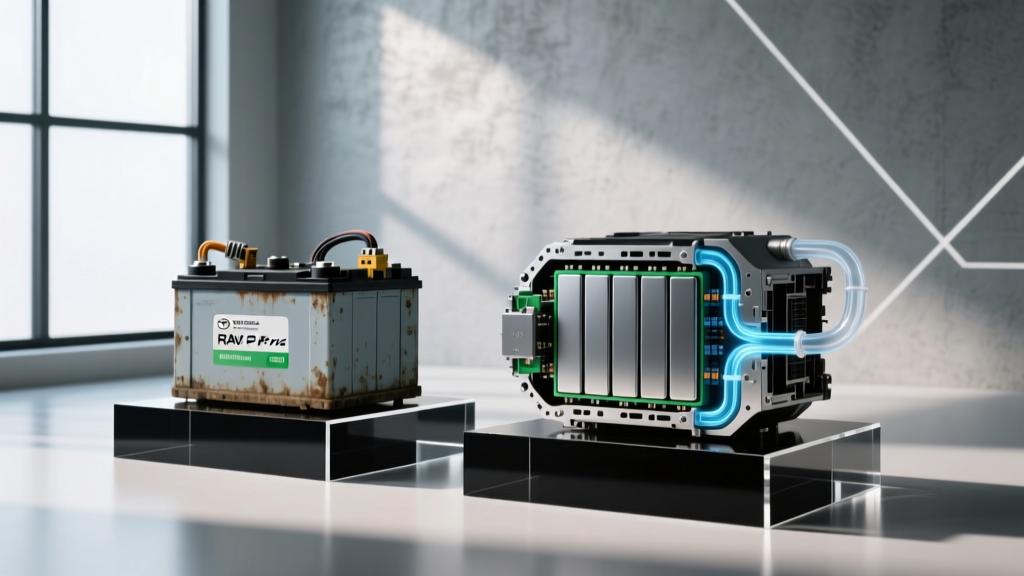
If you've ever wondered how a 82,000-pound Tesla Semi can haul freight across Nevada on electricity alone, the answer starts with the battery pack — and just how enormous it is. The question how much does a semi battery weigh opens the door to a broader look at EV battery mass, chemistry trade-offs, degradation realities, and what replacement actually costs in 2026.
This guide covers everything from Class 8 truck packs to the 60–100 kWh batteries in passenger EVs, with hard numbers on energy density, lifespan, warranty coverage, and the chemistry choices automakers are making right now.
How Much Does a Semi Truck Battery Actually Weigh?
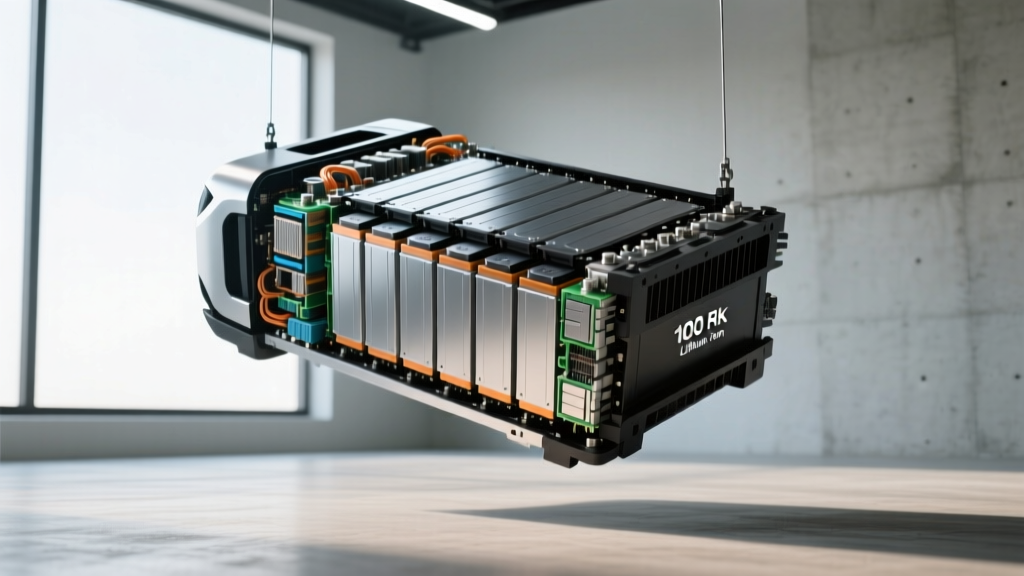
The Tesla Semi, which entered volume production in late 2022 and continues ramping through 2026, uses a battery pack estimated at ~900 kWh for the 500-mile range variant. Tesla has not published an official pack weight, but industry analyses and teardown data point to a battery mass of roughly 8,000 to 10,000 pounds (3,600–4,500 kg) for the long-range configuration.
To put that in perspective:
- A fully loaded Class 8 diesel semi tractor weighs roughly 17,000–20,000 lbs without a trailer.
- The Tesla Semi's battery alone accounts for nearly half the tractor's curb weight.
- Federal gross vehicle weight limits remain 80,000 lbs, meaning the battery mass directly reduces available payload capacity compared to a diesel tractor.
Other electric semi platforms follow a similar pattern:
| Model | Battery Capacity (kWh) | Est. Battery Weight (lbs) | EPA / Advertised Range |
|---|---|---|---|
| Tesla Semi (500 mi) | ~900 kWh | ~8,000–10,000 | 500 mi (loaded) |
| Tesla Semi (300 mi) | ~540 kWh | ~5,000–6,000 | 300 mi (loaded) |
| Freightliner eCascadia | 291–475 kWh | ~3,000–5,000 | 150–230 mi |
| Volvo VNR Electric | 375 kWh | ~4,000–4,500 | ~150–275 mi |
| Peterbilt 579EV | 396 kWh | ~4,200–4,800 | ~150 mi |
The physics are straightforward: current lithium-ion energy density sits at roughly 150–250 Wh/kg at the pack level (including cooling, housing, and BMS). To store 900 kWh, you need 3,600–6,000 kg of pack mass depending on the cell chemistry and structural integration.
Passenger EV Battery Weight: How Cars Compare to Semis
For context, here's what the battery packs in popular 2026 passenger EVs weigh:
| Vehicle | Usable kWh | Chemistry | Est. Pack Weight (lbs) |
|---|---|---|---|
| Tesla Model 3 RWD | 57.5 kWh | LFP | ~770 |
| Tesla Model Y Long Range | 75 kWh | NMC/NCA | ~1,000 |
| Hyundai Ioniq 5 (Long Range) | 77.4 kWh | NMC | ~1,050 |
| Ford F-150 Lightning (Extended) | 131 kWh | NMC | ~1,800 |
| GMC Hummer EV | 212.7 kWh | NMC | ~2,900 |
The GMC Hummer EV's Ultium pack — at nearly 2,900 lbs — is the heaviest passenger-vehicle battery on the US market, and it's still less than a third of the Tesla Semi's estimated pack mass. Energy density improvements are helping, but the fundamental trade-off between range and weight remains the central engineering challenge for electric trucks.
Battery Chemistry: LFP vs NMC/NCA Trade-Offs
The two dominant lithium-ion chemistries in 2026 EVs are LFP (lithium iron phosphate) and NMC/NCA (nickel manganese cobalt / nickel cobalt aluminum). Each has distinct strengths depending on the application.
| Attribute | LFP (LiFePO4) | NMC/NCA |
|---|---|---|
| Energy Density (cell-level) | 160–180 Wh/kg | 220–300 Wh/kg |
| Cycle Life | 3,000–5,000+ cycles | 1,000–2,000 cycles |
| Cold-Weather Performance | Moderate (slower charge below 32°F) | Better low-temp charge acceptance |
| Cost (per kWh) | Lower (~$70–90/kWh cell) | Higher (~$100–130/kWh cell) |
| Thermal Stability | Excellent (resistant to thermal runaway) | Good (requires more BMS safeguards) |
| Typical SoC Recommendation | Can charge to 100% daily | 80% daily recommended for longevity |
| Common Applications | Standard-range sedans, commercial fleets | Long-range and performance models |
Which is better? It depends on your use case. If you drive a standard-range commuter EV and charge at home nightly, LFP is arguably the smarter choice — lower cost, longer cycle life, and no anxiety about charging to 100%. If you need maximum range in a heavier vehicle (or live in extreme cold), NMC's higher energy density and better cold-weather charge acceptance make it the practical pick.
For semi trucks, the calculus favors NMC today because energy density directly determines payload capacity. Tesla's Semi uses NMC cells (likely a variant of the 4680 form factor) to pack as many kWh as possible into the available chassis volume. LFP's weight penalty at 900 kWh would be prohibitive for a freight application.
How Long Do EV Batteries Last? Degradation Data
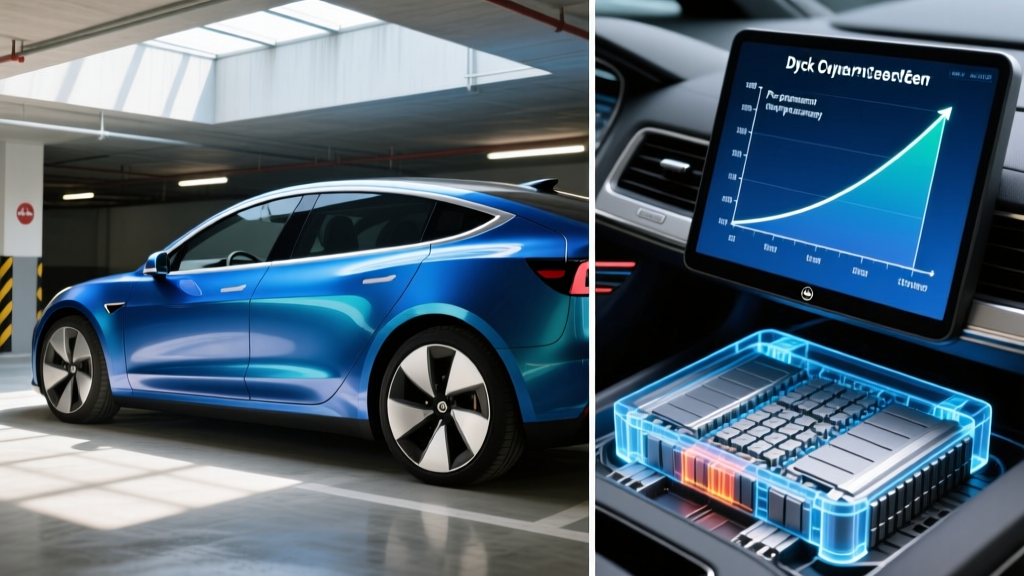
Modern EV batteries are lasting longer than early skeptics predicted. Real-world fleet data and manufacturer testing show that most packs retain meaningful capacity well beyond 150,000 miles.
Typical Degradation Curve (NMC packs, average use):
- Year 1 / 15,000 mi: ~2–5% capacity loss (initial settling)
- Year 3 / 45,000 mi: ~5–8% total loss
- Year 5 / 75,000 mi: ~8–12% total loss
- Year 8 / 120,000 mi: ~10–15% total loss
- Year 10 / 150,000 mi: ~12–18% total loss
LFP packs show slower degradation in most datasets. Tesla's 2024 Impact Report noted that Model 3/Y batteries retained approximately 85% capacity at 150,000 miles, with LFP-equipped standard-range models showing slightly better retention curves. Tesla Impact Report
Data from fleet operator Geotab, which tracks over 10,000 EVs, shows average annual degradation of roughly 1.8% per year across all chemistries, with significant variance based on climate and charging habits. Geotab EV Battery Health Study
What Does the Battery Warranty Actually Cover?
Federal regulations mandate a minimum 8-year / 100,000-mile warranty on EV battery packs for emissions-related compliance, and most automakers meet or exceed this baseline. California and states adopting CARB standards require 10 years / 150,000 miles.
| Manufacturer | Warranty Period | Mileage Limit | Capacity Retention Threshold |
|---|---|---|---|
| Tesla (Model 3/Y RWD, LFP) | 8 years | 120,000 mi | 70% |
| Tesla (Model 3/Y LR/Performance) | 8 years | 120,000 mi | 70% |
| Hyundai / Kia | 10 years | 100,000 mi | 70% |
| Ford (F-150 Lightning, Mustang Mach-E) | 8 years | 100,000 mi | 70% |
| GM (Ultium platform) | 8 years | 100,000 mi | 70% |
| Rivian | 8 years | 120,000 mi | 70% |
| BMW | 8 years | 100,000 mi | 70% |
Key detail: The warranty covers capacity loss below the stated threshold — typically 70% of original capacity. If your 75 kWh pack drops to 50 kWh (67% retention) within the warranty period, the manufacturer must repair or replace it. Normal degradation above the threshold is not covered.
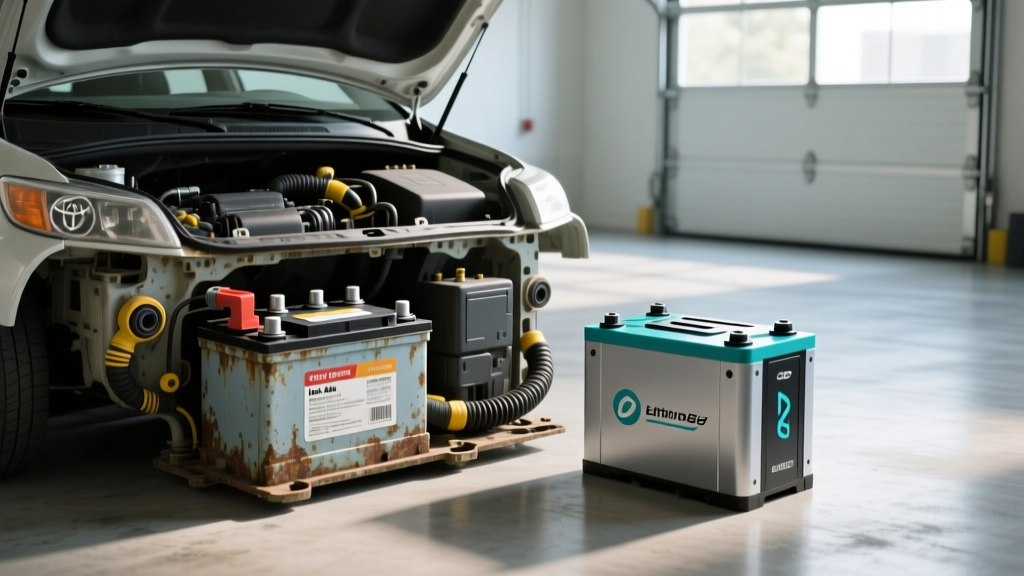
The warranty does not cover damage from accidents, improper charging equipment, flooding, or modifications. It also doesn't cover the 12V auxiliary battery, which is a separate lead-ion or lithium-ion unit that powers accessories and computers.
EV Battery Replacement Cost: What to Expect
Battery replacement remains one of the most cited concerns among prospective EV buyers. Here's what the data shows for 2026:
| Vehicle | Battery Size | Replacement Cost (parts + labor) | Typical Replacement Timeline |
|---|---|---|---|
| Tesla Model 3 RWD (LFP) | 57.5 kWh | $8,000–$12,000 | Rarely needed within vehicle life |
| Tesla Model Y Long Range | 75 kWh | $12,000–$16,000 | Rarely needed within vehicle life |
| Hyundai Ioniq 5 | 77.4 kWh | $11,000–$15,000 | Rarely needed within vehicle life |
| Ford F-150 Lightning (Extended) | 131 kWh | $18,000–$28,000 | Rarely needed within vehicle life |
| GMC Hummer EV | 212.7 kWh | $30,000–$42,000 | Rarely needed within vehicle life |
| Tesla Semi (500 mi) | ~900 kWh | $100,000–$150,000+ | Expected mid-life for commercial use |
The honest reality: most EV batteries outlast the vehicle they're installed in. Catastrophic pack failure is rare, and gradual degradation means the pack still functions — it just offers less range. A pack at 75% capacity still delivers 75% of the original EPA range, which for a 320-mile vehicle is still 240 miles.
Cell costs continue to decline. Pack-level pricing has fallen from over $300/kWh in 2015 to roughly $100–130/kWh in 2026 for NMC, and $70–90/kWh for LFP, according to BloombergNEF. This trend makes out-of-warranty replacements progressively more affordable.
Factors That Affect Battery Lifespan
Not all miles are created equal when it comes to battery wear. These factors have the most measurable impact on long-term State of Health (SoH):
- DC fast charging frequency: Occasional fast charging (1–2x/week) shows negligible impact in fleet data. Daily DCFC use, especially at rates above 1C (charging the full pack in under an hour), accelerates degradation by roughly 1–3% over 100,000 miles compared to Level 2 charging.
- Extreme heat exposure: Sustained ambient temperatures above 95°F without active thermal management accelerate electrolyte decomposition. Vehicles with liquid-cooled packs (most modern EVs) handle this far better than older air-cooled designs.
- State of charge habits: For NMC packs, storing at 100% SoC for extended periods (days/weeks) stresses the cathode. The 20–80% daily window remains best practice. LFP packs tolerate 100% SoC storage far better.
- Deep discharge cycles: Regularly driving below 5% SoC stresses the anode. Most EVs have a low-voltage buffer (typically 2–5 kWh below the displayed 0%) to protect against this.
- Cold-weather charging without preconditioning: Charging a cold NMC pack at high kW can cause lithium plating on the anode. Always use battery preconditioning (most EVs activate this automatically when you navigate to a charger).
How to Check and Monitor Battery Health (SoH)
State of Health (SoH) is expressed as a percentage of the battery's current maximum capacity relative to its original capacity. Here's how to track it:
Built-in Vehicle Displays
Some manufacturers provide SoH readings directly. Tesla does not display SoH natively, but the car's range estimate at 100% charge gives a practical proxy. Hyundai and Kia offer battery health readouts in the infotainment system on many models.
OBD-II Diagnostic Tools
Apps like Leaf Spy (Nissan Leaf), Scan My Tesla, and OBDeleven (VW/Audi) can read the battery management system's internal SoH estimate via the OBD-II port. These readings are generally accurate within 2–3%.
Third-Party Battery Reports
Services like Recurrent and Geotab offer battery health reports that compare your pack's degradation to fleet averages for your specific model and climate zone. Some dealerships and used-EV marketplaces now include these reports in vehicle listings.
Manual Calculation
Charge to 100% (or your known maximum), note the displayed range, and compare it to the original EPA figure adjusted for your typical conditions. If your 310-mile EPA vehicle now shows 265 miles at 100%, that's roughly 85% SoH — well within normal for a 5-year-old pack.
Emerging Battery Technology: What's Next
Several next-generation technologies aim to address the weight, cost, and energy-density limitations of current lithium-ion packs:
Solid-state batteries replace the liquid electrolyte with a solid material (ceramic, sulfide, or polymer), potentially enabling energy densities of 350–500 Wh/kg at the cell level. Toyota has announced solid-state production for limited 2027–2028 models, while Samsung SDI targets 2027 volume production. These remain announced/preliminary — no solid-state EV is currently available for purchase in the US market.
Silicon-dominant anodes replace graphite with silicon to increase lithium storage capacity at the anode. Companies like Sila Nanotechnologies and Group14 are supplying silicon-composite anode materials to battery manufacturers, with gradual adoption expected from 2026–2028. This technology offers a 10–20% energy density improvement over graphite anodes and is already appearing in limited consumer electronics applications.
Sodium-ion batteries use abundant sodium instead of lithium, dramatically reducing material costs. CATL began shipping sodium-ion packs for Chinese-market EVs in 2024–2025. Energy density is lower (~120–160 Wh/kg), making sodium-ion best suited for budget city cars and stationary storage rather than long-range or heavy-duty applications.
For semi trucks and heavy-duty applications, solid-state technology holds the most promise because a 50% improvement in energy density would reduce a 900 kWh pack's weight from ~9,000 lbs to ~6,000 lbs — recovering meaningful payload capacity. Realistic volume production timelines for heavy-duty solid-state packs remain 2029–2032 based on current industry roadmaps.
Frequently Asked Questions
How much does a Tesla Semi battery weigh?
The Tesla Semi's 500-mile variant uses a ~900 kWh battery pack estimated to weigh between 8,000 and 10,000 pounds based on current NMC cell energy density and pack-level integration. The 300-mile variant uses a smaller ~540 kWh pack weighing approximately 5,000–6,000 lbs. Tesla has not published official pack weights.
How long do EV batteries last before needing replacement?
Most modern EV batteries are designed to last the life of the vehicle. Fleet data shows typical NMC packs retaining 80–88% capacity at 150,000 miles. LFP packs often retain 85–92% at the same mileage. Catastrophic failure requiring full replacement is rare and typically covered under the 8-year/100,000-mile warranty.
Is LFP better than NMC for daily driving?
For daily commuting with home charging, LFP offers clear advantages: lower cost, longer cycle life (3,000–5,000 cycles vs. 1,000–2,000), and the ability to charge to 100% without accelerated degradation. NMC wins on energy density (more range per pound) and cold-weather charging performance. Choose LFP if you don't need maximum range; choose NMC if you take frequent road trips or live in extreme cold.
Does fast charging damage my EV battery?
Occasional DC fast charging has minimal impact on battery health. Fleet studies show that vehicles using DCFC 1–2 times per week degrade only 1–3% more over 100,000 miles compared to exclusive Level 2 charging. The bigger risk is charging a cold battery at high power without preconditioning, which can cause lithium plating. Always let the car precondition the pack before a fast-charge session.
What happens when an EV battery degrades to 70% capacity?
At 70% State of Health, a vehicle with an original 300-mile EPA range will deliver approximately 210 miles of range. The car remains fully functional — it simply has reduced range. This threshold triggers warranty coverage from most manufacturers, meaning a repair or replacement may be available at no cost if it occurs within the warranty period.