If you've ever replaced the 12-volt lead-acid battery in a 2001 Jeep Cherokee, you know the drill: a $120–$180 Group 34 or 75 battery from an auto parts store, ten minutes of wrench work, and you're back on the road. That simple, familiar experience is exactly why so many new EV buyers ask: "Is replacing an EV battery going to be the same kind of straightforward, affordable swap?"
The short answer is no — but the reality is far less alarming than the internet would have you believe. Modern electric-vehicle traction batteries (the high-voltage packs that actually drive the wheels) are engineered to outlast most gas engines, with degradation curves that flatten out for the vast majority of an EV's useful life. This guide breaks down exactly how today's EV battery technology works, how it compares to the 2001 Jeep Cherokee battery you may already know, and what you can expect in terms of longevity, cost, and care.
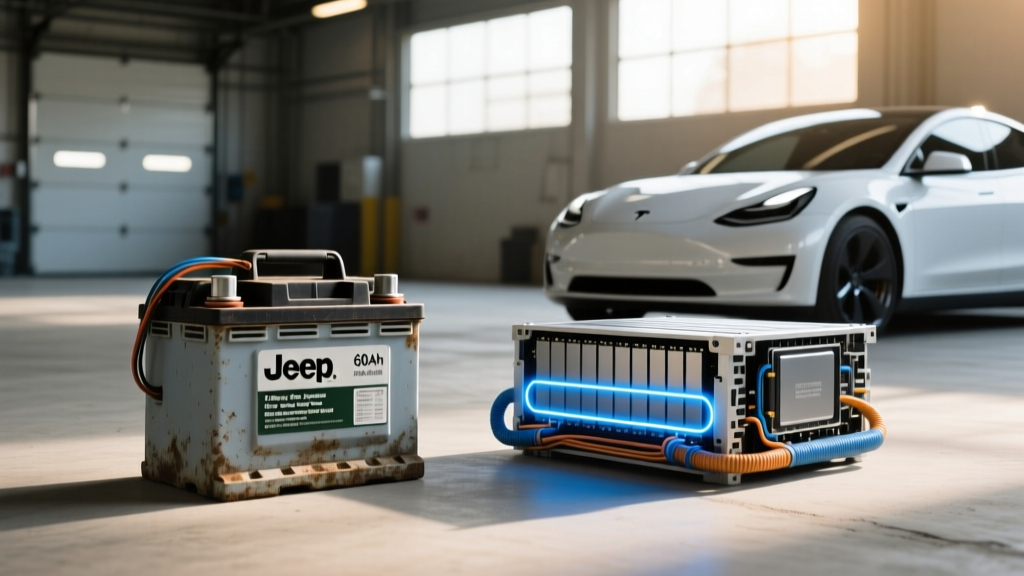
The 2001 Jeep Cherokee Battery vs. an EV Traction Pack: Two Completely Different Worlds
The 2001 Jeep Cherokee battery is a 12-volt, lead-acid, flooded or AGM (absorbent glass mat) unit. It stores roughly 0.6–0.8 kWh of usable energy and exists solely to crank a 4.0L inline-six engine and run accessories when the alternator isn't spinning. It weighs about 40 lbs, costs under $200, and typically lasts 3–5 years before sulfation or plate degradation kills it.
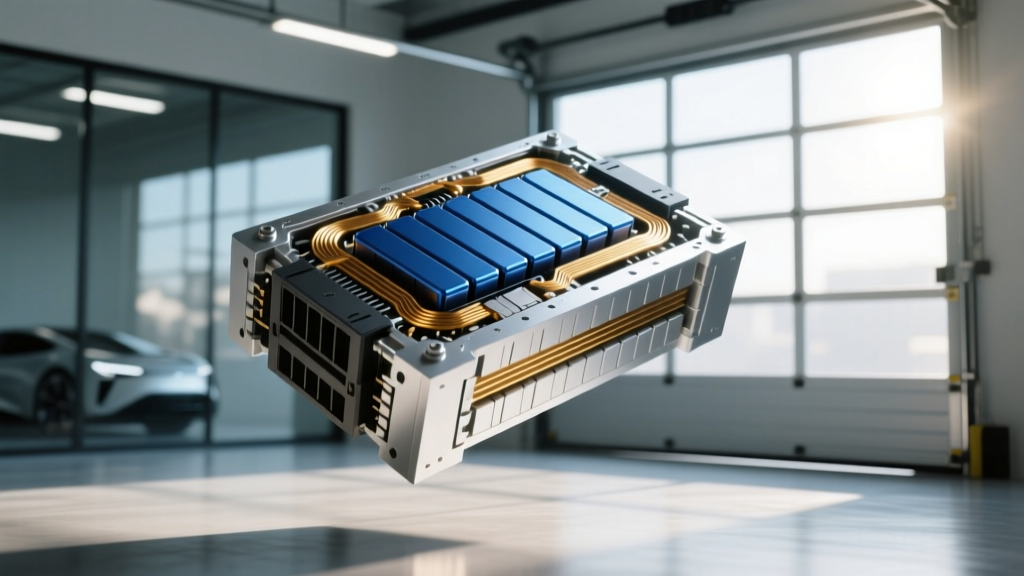
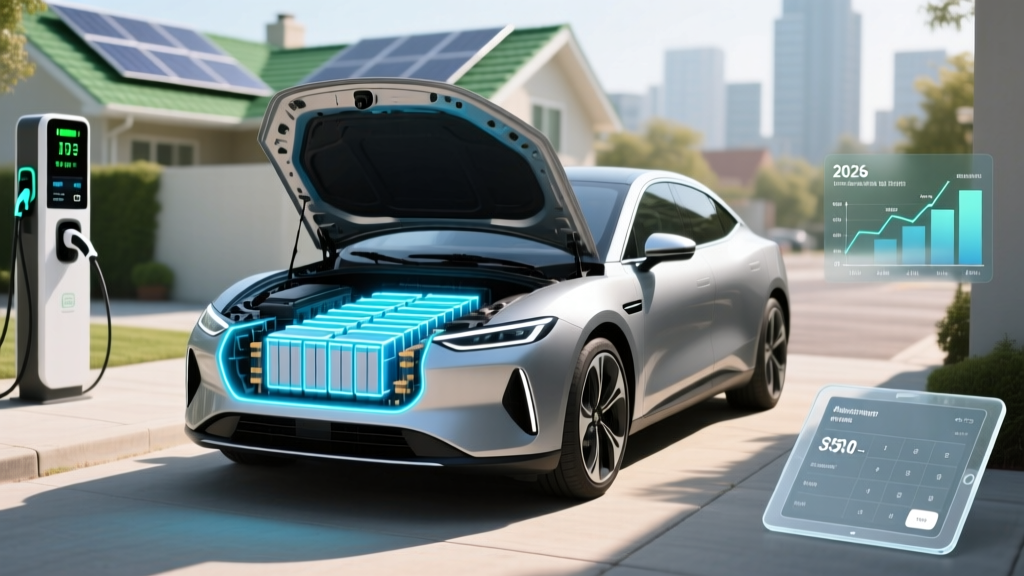
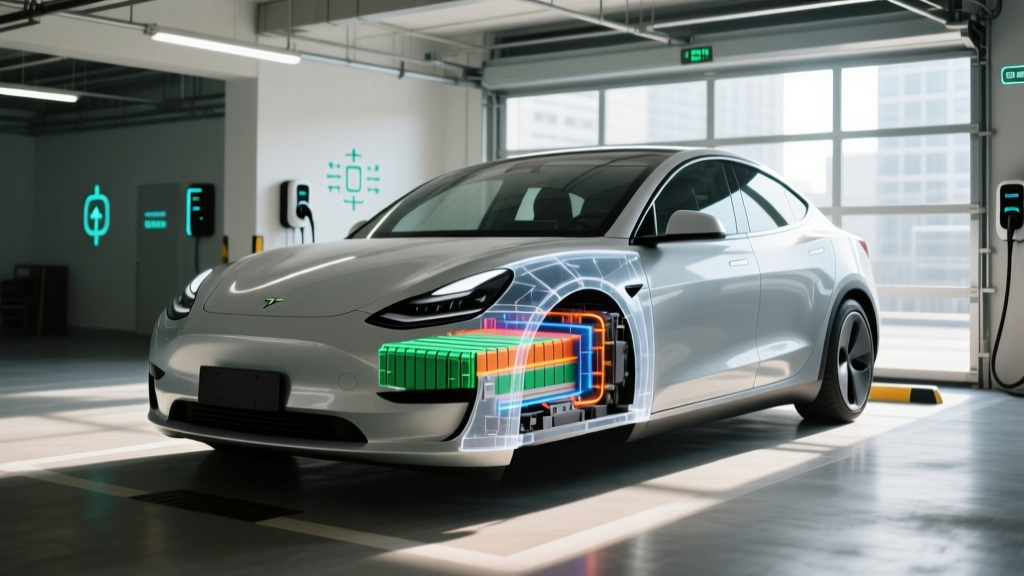
An EV traction battery is a fundamentally different machine. A 2026 Hyundai Ioniq 5, for example, carries a 77.4 kWh usable NMC (nickel-manganese-cobalt) lithium-ion pack weighing roughly 1,000 lbs. It powers a 320-hp dual-motor drivetrain, supports 350 kW DC fast charging, and is warrantied for 10 years or 100,000 miles. The energy stored is nearly 100× that of the Cherokee's lead-acid battery, and the engineering tolerances are measured in millivolts and tenths of a degree Celsius.
Even the 12V auxiliary battery in a modern EV — which still exists to run lights, infotainment, and contactors — is a different animal from the 2001 Jeep Cherokee battery. Many 2026 EVs use a small lithium-iron-phosphate (LFP) 12V unit that lasts 6–8 years, far outstripping the lead-acid replacements Cherokee owners are used to.
LFP vs. NMC/NCA: The Chemistry Decision That Defines Your EV
Every EV sold in 2026 uses one of two dominant lithium-ion chemistries for its traction pack: NMC/NCA (nickel-manganese-cobalt or nickel-cobalt-aluminum) or LFP (lithium iron phosphate). The choice between them affects range, longevity, cost, and how you should charge.
| Attribute | LFP (Lithium Iron Phosphate) | NMC / NCA (Nickel-Based) |
|---|---|---|
| Energy Density | Lower (~160 Wh/kg cell-level) | Higher (~250–300 Wh/kg cell-level) |
| Typical Vehicles | Tesla Model 3 RWD, Ford Mustang Mach-E Select, BYD models | Hyundai Ioniq 5/6, Kia EV6/EV9, Tesla Long Range, Rivian |
| Cycle Life | 3,000–5,000+ cycles to 80% SoH | 1,500–2,500 cycles to 80% SoH |
| Cold-Weather Performance | Moderate — greater range loss below 32°F | Better low-temp conductivity |
| Charging to 100% Daily | Recommended (helps BMS calibration) | Not recommended (80% daily limit advised) |
| Cobalt Content | Zero | Contains cobalt (supply-chain and ethical considerations) |
| Cost per kWh (pack-level) | ~$90–$110 | ~$120–$145 |
| Thermal Stability | Superior — higher runaway threshold | Good, but requires more active cooling |
Which is better? It depends on your use case. If you commute daily, charge at home, and want maximum cycle life with zero cobalt concerns, LFP is the pragmatic choice — Tesla's Standard Range models have used CATL LFP cells since 2021 with excellent longevity results. If you need maximum range per charge, tow frequently, or live in a cold climate where every mile of range matters, NMC packs deliver higher energy density and better winter performance. Neither chemistry is "better" universally; they serve different buyer profiles.
How Long Do EV Batteries Actually Last? Real Degradation Data
The fear that EV batteries "wear out like phone batteries" is the single biggest misconception in electric mobility. Here's what the data actually shows.
According to aggregated fleet data from sources like Geotab's EV Battery Degradation study, the average EV battery loses roughly:
- Year 1: ~2–3% capacity loss (initial "break-in" degradation)
- Years 2–5: ~0.5–1% per year (linear, slow decline)
- Years 6–10: ~0.5–1.5% per year (gradual, with slight acceleration possible)
- 10-year average SoH: ~85–92% of original capacity across most models
Let's put that in concrete terms. A 2026 Hyundai Ioniq 5 with a 303-mile EPA range and an NMC pack would, at a typical 1% annual degradation rate after year one, still have roughly 275–285 miles of range at year 10. That's not a dead battery — that's a battery with slightly less range, still entirely functional for daily driving.
Tesla's own 2024 Impact Report showed that Model 3/Y batteries retained an average of 85% capacity after 200,000 miles. Given that the average American drives ~14,000 miles per year (FHWA data), that's over 14 years of driving before hitting the 85% mark.
What the Battery Warranty Actually Covers (and What It Doesn't)
Federal law in the United States mandates that EV batteries sold in EPA-certified vehicles carry a minimum warranty of 8 years or 100,000 miles (whichever comes first) in most states, and 10 years/150,000 miles in California Air Resources Board (CARB) states. Most manufacturers exceed the federal minimum.
| Manufacturer | Warranty Term | Capacity Retention Threshold | What's Covered |
|---|---|---|---|
| Tesla (Model 3/Y RWD — LFP) | 8 yr / 100,000 mi | 70% | Defects + excessive degradation below threshold |
| Tesla (Model 3/Y LR/Perf — NMC) | 8 yr / 120,000 mi | 70% | Defects + excessive degradation below threshold |
| Hyundai (Ioniq 5/6) | 10 yr / 100,000 mi | 70% | Defects + excessive degradation below threshold |
| Kia (EV6/EV9) | 10 yr / 100,000 mi | 70% | Defects + excessive degradation below threshold |
| Ford (Mustang Mach-E) | 8 yr / 100,000 mi | 70% | Defects + excessive degradation below threshold |
| Rivian (R1T/R1S) | 8 yr / 120,000 mi | 70% | Defects + excessive degradation below threshold |
| BMW (iX/i4) | 8 yr / 100,000 mi | 70% | Defects + excessive degradation below threshold |
What triggers a warranty claim? If your battery's State of Health (SoH) drops below the stated threshold — typically 70% of original capacity — within the warranty period, the manufacturer must repair or replace the pack at no cost to you. In practice, most warranty claims involve defective modules or cells, not gradual degradation, because degradation rarely crosses the 70% line within 8–10 years under normal use.
What's NOT covered: Damage from accidents, flooding, improper modifications, or using non-approved charging equipment. Normal degradation above the threshold (e.g., losing 15% over 8 years, keeping you at 85% SoH) is considered normal wear and is not a warranty event.
EV Battery Replacement Cost: The Numbers, Without the Fear
Replacement cost is the topic that generates the most anxiety — and the least context. Here are the actual figures for 2026:
| Vehicle / Pack Size | Battery Chemistry | Full Replacement Cost (Parts + Labor) | Typical When Needed |
|---|---|---|---|
| Tesla Model 3 RWD (~60 kWh) | LFP | $10,000–$13,000 | Rarely within 15+ years / 200k+ miles |
| Hyundai Ioniq 5 (~77 kWh) | NMC | $14,000–$18,000 | Rarely within 15+ years / 200k+ miles |
| Ford F-150 Lightning Ext. Range (~131 kWh) | NMC | $22,000–$30,000 | Rarely within 15+ years / 200k+ miles |
| Chevrolet Bolt EV (~65 kWh) | NMC | $14,000–$16,000 | Rarely within 15+ years / 200k+ miles |
| BMW iX xDrive50 (~111 kWh) | NMC | $25,000–$32,000 | Rarely within 15+ years / 200k+ miles |
Yes, these numbers are large. But context matters enormously:
- Most EV batteries are never replaced. The failure rate within the warranty period is low (typically under 1–2% of vehicles based on manufacturer and fleet data), and post-warranty failures remain uncommon through 200,000+ miles.
- Module-level repair is increasingly available. Many shops and manufacturers can replace individual battery modules (a fraction of the full pack) for $2,000–$5,000 rather than swapping the entire pack.
- Compare it to gas-car powertrain costs. A new transmission for a conventional SUV can cost $4,000–$7,000. A timing chain or head gasket job on a modern turbo engine can run $3,000–$5,000. These are expected maintenance items on ICE vehicles — EV battery replacement is not an expected maintenance item.
- Costs are declining. Pack-level lithium-ion prices have fallen from over $1,000/kWh in 2010 to roughly $100–$140/kWh in 2026, per BloombergNEF data. This trend continues.
To put it in perspective: the 2001 Jeep Cherokee battery cost about $130 and lasted 4 years. Over 16 years of ownership, a Cherokee owner might buy four lead-acid batteries ($520 total) — but they'd also spend $3,000+ on timing chain components, $1,500 on a radiator, $800 on a fuel pump, and thousands more on oil changes, transmission fluid, and emissions components. The EV's "expensive" battery is offset by the elimination of nearly all of these costs.
Factors That Affect EV Battery Life (and How to Maximize It)
While modern battery management systems (BMS) do an excellent job protecting the pack, your habits still matter. Here's what accelerates degradation — and what doesn't:
Battery Care Checklist: Do's and Don'ts
- ✅ DO charge to 80% daily for NMC/NCA packs (set your charge limit in the vehicle app). LFP packs are an exception — charge to 100% at least weekly for accurate BMS calibration.
- ✅ DO use Level 2 home charging as your primary method. Slow, steady AC charging generates far less heat than DC fast charging.
- ✅ DO precondition your battery before DC fast charging in cold weather. Most EVs do this automatically when you navigate to a charger.
- ✅ DO keep your SoC between 20–80% for daily driving with NMC packs. This is the "sweet spot" for lithium-ion longevity.
- ❌ DON'T rely exclusively on DC fast charging. Occasional road-trip fast charging is fine, but daily 150–350 kW sessions generate cumulative heat stress. Studies show vehicles that DC fast-charge more than 3× per week degrade slightly faster (~1–2% additional loss over 5 years).
- ❌ DON'T store your EV at 100% SoC for extended periods. If leaving for a week or more, set the charge limit to 50–60%.
- ❌ DON'T let your EV sit at 0% SoC. If you're running low, plug in — even a trickle charge at Level 1 (120V) prevents the pack from entering deep discharge, which can cause permanent cell damage.
- ❌ DON'T ignore extreme heat. Parking in shade or a garage during sustained 100°F+ weather helps. The BMS will protect the pack, but reducing thermal load extends life.
How to Check Your EV's Battery Health (State of Health Monitoring)
State of Health (SoH) is the metric that tells you what percentage of your battery's original capacity remains. Here's how to monitor it in 2026:
Built-In Vehicle Displays
Many 2026 EVs include a battery health indicator in the infotainment or driver display. Tesla shows a range-based estimate in the vehicle settings. Hyundai/Kia provide SoH percentage in the EV menu. BMW includes it in the iDrive energy flow screen.
OBD-II Dongles and Third-Party Apps
For vehicles that don't display SoH natively, an OBD-II reader paired with apps like LeafSpy (Nissan Leaf), Scan My Tesla, or ABRP (A Better Route Planner) can pull raw BMS data including SoH, cell voltage spread, and pack temperature. This is particularly useful when buying a used EV.
Dealer Diagnostics
Any authorized dealer can run a full battery health report, typically showing individual module voltages, SoH percentage, and any cell imbalance flags. Request this during routine service visits — it's often free, or a minimal diagnostic fee applies.
The "Range Test" Method
Charge to 100% (or your normal limit), note the displayed range, and compare it to the original EPA rating adjusted for your SoC. If your Ioniq 5 originally showed 303 miles at 100% and now shows 270 miles at 100%, your SoH is roughly 89%. This isn't lab-precise, but it's a solid field estimate.
What's Next: Solid-State, Silicon Anodes, and the 2028+ Horizon
The next generation of battery technology is real — but it's not in showrooms yet. Here's a grounded, hype-free look at what's coming:
Solid-State Batteries
Solid-state batteries replace the liquid electrolyte with a solid material (ceramic, sulfide, or polymer), promising higher energy density (~400+ Wh/kg at the cell level), faster charging, and improved safety. Toyota has announced limited production of solid-state-equipped vehicles for 2027–2028, initially in small volumes and likely restricted to the Japanese market. Samsung SDI and QuantumScape are targeting 2028–2030 for broader commercialization. No 2026 model uses solid-state technology.
Silicon Anode Technology
Replacing graphite anodes with silicon can increase energy density by 20–40%. Sila Nanotechnologies (partnered with Mercedes-Benz/Panasonic) and Group14 (backed by Porsche) are targeting 2026–2028 production vehicles. The Mercedes G-Class EV may be among the first to feature silicon-dominant anodes. This is an incremental improvement, not a revolution, but it meaningfully extends range per kWh.
Sodium-Ion Batteries
CATL and BYD have begun producing sodium-ion packs for budget EVs in China, with energy densities around 120–140 Wh/kg. These won't replace lithium-ion in long-range vehicles, but they could power affordable city EVs and reduce reliance on lithium and cobalt. US-market availability is uncertain before 2028.
EV Battery FAQ: Your Top Questions Answered
How long do EV batteries last in years and miles?
Based on fleet data, most EV batteries retain 85–92% of original capacity after 10 years or 150,000–200,000 miles. Tesla reports Model 3/Y packs averaging 85% SoH at 200,000 miles. Catastrophic failure is rare (under 1–2% of packs). In practical terms, the battery will likely outlast the rest of the vehicle's useful components.
How much does an EV battery cost to replace?
Full pack replacement ranges from $10,000 for a ~60 kWh LFP pack (Tesla Model 3 RWD) to $30,000+ for a ~130 kWh NMC pack (Ford F-150 Lightning Extended Range). However, most batteries never need replacement, and module-level repairs cost $2,000–$5,000. Pack costs continue to decline year-over-year.
What does the EV battery warranty cover?
US federal law requires at minimum 8 years/100,000 miles of battery warranty coverage (10 years/150,000 miles in CARB states). Coverage includes manufacturing defects and capacity loss below a stated threshold (typically 70% of original capacity). Normal gradual degradation above the threshold is not covered.
How do I check and maximize my EV battery's health?
Monitor SoH through your vehicle's built-in display, OBD-II apps, or dealer diagnostics. Maximize longevity by charging NMC packs to 80% daily, using Level 2 home charging as your primary method, minimizing frequent DC fast charging, avoiding prolonged storage at 0% or 100% SoC, and preconditioning before fast charging in cold weather. LFP packs should be charged to 100% at least weekly.
LFP vs. NMC — which battery chemistry is better for me?
Choose LFP if you prioritize cycle life (3,000–5,000+ cycles), lower cost, cobalt-free sourcing, and plan to charge at home daily. Choose NMC if you need maximum range per charge, better cold-weather performance, or tow frequently. Neither is universally "better" — the right choice depends on your driving patterns and priorities.
Is an EV battery anything like the battery in my old gas car?
Not at all. The 2001 Jeep Cherokee battery was a 12V lead-acid unit storing under 1 kWh, costing ~$130, and lasting 3–5 years. A modern EV traction pack stores 60–130+ kWh, costs $10,000–$30,000 to replace (but rarely needs it), and is engineered for 15–20+ years of service. The only similarity is the word "battery."