Quick Answer: Hybrid Battery Lifespan by the Numbers
If you're researching how long does a battery last in a hybrid, the short answer is: modern hybrid and plug-in hybrid traction batteries typically last 150,000 to 200,000+ miles (roughly 12–15 years of average driving) before capacity loss becomes noticeable. Many outlive the vehicle itself. But the real story depends on chemistry, usage patterns, and whether you're driving a conventional hybrid (HEV) like the Toyota Prius or a plug-in hybrid (PHEV) like the Toyota RAV4 Prime.
This guide covers the data behind those numbers, the chemistry differences that matter, what your warranty actually protects, and what a replacement costs if you ever need one.
HEV vs. PHEV Battery: Why Usage Pattern Changes Everything
Not all hybrid batteries are stressed equally. The fundamental difference between a conventional hybrid (HEV) and a plug-in hybrid (PHEV) directly determines how hard the battery works — and therefore how fast it degrades.
HEV batteries (Toyota Prius, Honda Accord Hybrid, Hyundai Sonata Hybrid) are small — typically 1.0 to 1.8 kWh — and operate in a narrow state-of-charge (SoC) window, usually between 40% and 80%. The car's software never lets the battery fully charge or fully deplete. This shallow cycling is extremely gentle on the cells. HEV batteries routinely exceed 200,000 miles with minimal capacity loss.
PHEV batteries (RAV4 Prime, Jeep Wrangler 4xe, Chrysler Pacifica Hybrid) are much larger — typically 13 to 20 kWh usable — and are designed for deeper daily cycling. You charge to full, drive on electric power until the battery depletes, then the engine kicks in. This deeper cycling (often 80–90% depth of discharge daily) puts more stress on the cells. Even so, modern PHEV batteries are engineered for 3,000–5,000 full cycles before significant degradation, which translates to 150,000+ miles of daily use.
| Attribute | HEV (e.g., Prius) | PHEV (e.g., RAV4 Prime) |
|---|---|---|
| Battery Capacity | 1.0–1.8 kWh | 13–20 kWh usable |
| Chemistry | NiMH (older) / NMC lithium-ion (newer) | NMC lithium-ion |
| Typical SoC Window | 40–80% (shallow cycle) | 10–95% (deep cycle) |
| Daily Cycling Stress | Very low | Moderate to high |
| Expected Lifespan | 200,000+ miles / 15+ years | 150,000–200,000 miles / 12–15 years |
| Typical Degradation (10 yr) | 10–15% capacity loss | 15–25% capacity loss |
Battery Chemistry: LFP vs. NMC/NCA and the Trade-Offs That Matter
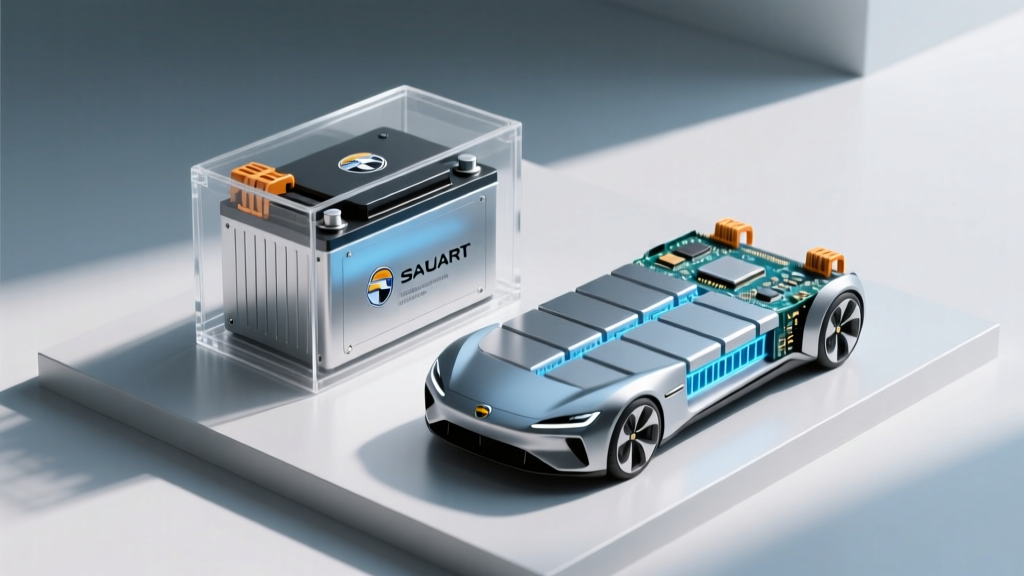
The chemistry inside your hybrid's battery pack determines its energy density, lifespan, cold-weather performance, and cost. While most hybrids today use NMC (nickel manganese cobalt) lithium-ion cells, some newer models and aftermarket replacements are adopting LFP (lithium iron phosphate). Understanding the difference is critical for long-term ownership planning.
| Factor | LFP (Lithium Iron Phosphate) | NMC/NCA (Nickel Manganese Cobalt / Nickel Cobalt Aluminum) |
|---|---|---|
| Cycle Life | 3,000–6,000+ cycles | 1,500–3,000 cycles |
| Energy Density | Lower (~160 Wh/kg cell-level) | Higher (~250 Wh/kg cell-level) |
| Cold-Weather Performance | Weaker below 32°F; slower charging | Better cold-weather discharge and charge acceptance |
| Thermal Stability | Excellent; very low thermal runaway risk | Good but requires more active thermal management |
| Cost | Lower (no cobalt or nickel) | Higher (commodity-sensitive metals) |
| Common In | Some newer HEVs, BEVs (Tesla Model 3 RWD, BYD) | Most PHEVs, performance BEVs |
| Degradation Profile | Very linear, slow; holds 80%+ at 3,000 cycles | Faster initial drop, then plateaus; ~80% at 1,500–2,000 cycles |
Which is better for a hybrid? For a PHEV that cycles deeply every day, LFP's superior cycle life is a significant advantage — if the pack can accommodate the lower energy density. For an HEV with its tiny, shallow-cycling battery, NMC's higher energy density matters less, and either chemistry will easily outlast the car. Cold-climate buyers should note that LFP's weaker low-temperature performance can reduce winter electric-only range in a PHEV by an additional 5–10% compared to NMC.
Hybrid Battery Degradation: What the Data Actually Shows
Degradation is not a cliff — it's a gradual curve. Here's what real-world and manufacturer data tells us about capacity retention over time:
- Year 1–2 (0–30,000 mi): 2–5% capacity loss (initial formation loss, then stabilizes)
- Year 3–5 (30,000–75,000 mi): Additional 3–7% loss; total ~8–12% from new
- Year 6–10 (75,000–150,000 mi): Additional 5–10% loss; total ~15–22% from new
- Year 11–15 (150,000–225,000 mi): Degradation rate slows; total ~20–30% from new
Sources: Geotab fleet data, manufacturer warranty thresholds, and Consumer Reports battery longevity analysis.
For an HEV like the Prius, a 15% capacity loss at 150,000 miles might mean fuel economy drops from 57 MPG combined to roughly 53–54 MPG — barely noticeable in daily driving. For a PHEV like the RAV4 Prime (EPA-rated 42 miles electric-only), a 20% loss at 150,000 miles means your electric range drops to roughly 33–34 miles. Still usable, but meaningfully reduced.
A critical point: most hybrid batteries are never replaced. According to data from repair networks and fleet operators, fewer than 5% of hybrid batteries require replacement before the vehicle is retired. When replacement does happen, it's usually between 150,000 and 200,000 miles, often triggered by a cell failure (not gradual wear) in older NiMH packs.
What Does the Hybrid Battery Warranty Actually Cover?
Federal law (EPA emissions warranty requirements) mandates that hybrid battery packs on PZEV/AT-PZEV vehicles carry at least 8 years / 100,000 miles of coverage. In California Air Resources Board (CARB) states, that extends to 10 years / 150,000 miles. Most automakers meet or exceed these minimums across all 50 states.
| Manufacturer | Warranty Period | Capacity Threshold | Applies To |
|---|---|---|---|
| Toyota (HEV/PHEV) | 10 yr / 150,000 mi | Below ~70% capacity or defect | All hybrids (Prius, RAV4 Hybrid/Prime, Camry Hybrid) |
| Honda (HEV/PHEV) | 8 yr / 100,000 mi (10/150k in CARB states) | Defect or significant capacity loss | Accord Hybrid, CR-V Hybrid |
| Hyundai/Kia (HEV/PHEV) | 10 yr / 100,000 mi | Below ~70% capacity or defect | Sonata Hybrid, Tucson PHEV, Sorento PHEV |
| Ford (HEV/PHEV) | 8 yr / 100,000 mi | Below ~70% capacity or defect | Escape Hybrid, Maverick Hybrid |
| Jeep/Chrysler (PHEV) | 8 yr / 100,000 mi | Below ~70% capacity or defect | Wrangler 4xe, Pacifica Hybrid |
What the warranty covers: Defects in materials/workmanship and capacity loss below the stated threshold (typically 70% of original capacity). If your PHEV's 18 kWh pack drops below ~12.6 kWh usable within the warranty period, the manufacturer must repair or replace it at no cost.
What it doesn't cover: Damage from accidents, modifications, improper charging equipment, or failure to follow maintenance schedules. Normal gradual degradation above the 70% threshold is not a warranty claim — that's considered expected wear.
Always verify your specific model-year warranty on the manufacturer's official site, as terms can shift. Toyota's shift from 8/100k to 10/150k for hybrid batteries, for example, was a significant improvement that now covers all current models.
Hybrid Battery Replacement Cost: When and How Much
If your hybrid battery does eventually need replacement — typically at 150,000–200,000+ miles — here's what to budget for. Costs vary enormously by vehicle, battery size, and whether you choose OEM new, OEM remanufactured, or aftermarket.
| Vehicle | Battery Size | OEM New | Remanufactured / Aftermarket | Labor (additional) |
|---|---|---|---|---|
| Toyota Prius (HEV) | ~1.3 kWh | $2,500–$3,500 | $1,200–$2,000 | $500–$800 |
| Toyota RAV4 Prime (PHEV) | ~18.1 kWh | $8,000–$12,000 | $5,000–$7,500 | $800–$1,200 |
| Honda Accord Hybrid | ~1.3 kWh | $2,000–$3,000 | $1,000–$1,800 | $500–$700 |
| Ford Escape PHEV | ~14.4 kWh | $6,500–$9,000 | $4,000–$6,000 | $700–$1,000 |
| Jeep Wrangler 4xe | ~17.3 kWh | $7,500–$11,000 | $5,000–$7,000 | $800–$1,200 |
| Chrysler Pacifica Hybrid | ~16.0 kWh | $7,000–$10,000 | $4,500–$6,500 | $800–$1,200 |
Context that matters: At 175,000 miles, a $3,000 Prius battery replacement (total with labor) extends the car's life by another 50,000–100,000 miles — a cost of roughly 3–6 cents per mile for that extended life. That's far cheaper than buying a new vehicle. For PHEVs, the larger battery cost is steeper, but the vehicle's higher original price means the replacement is a smaller percentage of total ownership cost.
Also worth noting: individual cell or module replacement is increasingly available from specialized hybrid repair shops. Instead of replacing the entire pack, a technician can identify and swap the 2–3 degraded modules for $500–$1,500 total, restoring most of the pack's capacity. This is particularly common for older Prius and Camry Hybrid models.
Factors That Accelerate (or Extend) Hybrid Battery Life
Your driving and charging habits have a measurable impact on how quickly your hybrid battery degrades. Here's what the data shows:
- Avoid extreme SoC for extended periods (PHEV): Don't leave your PHEV sitting at 100% charge for days. If you won't drive for a few days, charge to 80–85%. Lithium-ion cells degrade fastest at high SoC and high temperature simultaneously.
- Minimize DC fast charging (PHEV): Most PHEVs don't support DC fast charging, but those that do (like the Mitsubishi Outlander PHEV) should use it sparingly. Frequent high-power charging generates heat that accelerates degradation. Level 2 home charging is ideal for daily use.
- Let the thermal management system work: Don't block battery cooling vents (common in Prius hatch cargo areas). In hot climates, park in shade or a garage when possible. Battery temperature above 104°F (40°C) significantly accelerates chemical aging.
- Drive it regularly: Hybrid batteries prefer regular use to long sit periods. A car driven daily will often have a healthier battery at 100,000 miles than one driven 5,000 miles/year and left sitting for weeks.
- Cold weather is temporary, not damaging: Cold temperatures reduce performance and range temporarily but don't cause permanent degradation. The battery's thermal management (or the engine's waste heat in an HEV) brings it to operating temperature during driving.
- Follow the maintenance schedule: Some hybrids (especially older Prius models) have a battery cooling fan filter that needs periodic cleaning. A clogged filter causes the battery to overheat during heavy use, accelerating wear.
How to Check Your Hybrid Battery's State of Health (SoH)
State of Health (SoH) is the percentage of your battery's original capacity that remains usable. A new battery is 100% SoH; at 80% SoH, it holds 80% of its original energy. Here's how to monitor it:
OBD-II scanner apps: Tools like Dr. Prius (for Toyota hybrids), Hybrid Assistant, or general OBD-II apps like Torque Pro can read battery-specific data from your hybrid's ECU. You'll see current SoC, battery temperature, individual cell voltages, and in some cases a calculated SoH estimate. A $25–$50 Bluetooth OBD-II dongle plus a free or low-cost app is all you need.
Dealer diagnostic check: Most dealerships can run a hybrid battery health check as part of a routine service visit. Toyota's "Hybrid Battery Health Check" is often complimentary during warranty-period service visits and provides a printout showing block voltage variance and overall condition.
Range tracking (PHEV): The simplest method for PHEV owners — track your electric-only range over time. If your RAV4 Prime used to deliver 40 miles on a full charge and now delivers 34, your battery has lost roughly 15% capacity. Use the trip meter consistently in similar conditions (same route, similar temperature) for meaningful comparisons.
What to watch for: Individual cell voltage variance is a leading indicator of trouble. In a healthy pack, all cell groups should be within 0.1–0.2V of each other under load. A variance exceeding 0.3V suggests one or more cells are weakening and may need attention before the entire pack degrades.
Looking Ahead: Solid-State and Silicon Anode Batteries
Next-generation battery technologies promise step-change improvements, but realistic timelines matter more than headlines:
Solid-state batteries replace the liquid electrolyte with a solid material, offering higher energy density, faster charging, and improved safety. Toyota has announced solid-state battery production for 2027–2028, initially in limited-run BEVs. Expect these to reach mainstream hybrids no earlier than 2030–2032, with costs initially 2–3x current lithium-ion. The technology is real but not imminent for your next hybrid purchase.
Silicon anode batteries (used in limited form by GM's Ultium platform and startups like Sila Nanotechnologies) offer 10–20% energy density improvement by replacing graphite anodes with silicon composites. These are closer to market — appearing in some 2025–2026 BEVs — and could reach PHEV applications by 2028–2029. The benefit for hybrids: more electric-only range from the same physical pack size.
Sodium-ion batteries are emerging as a low-cost alternative for smaller EVs and potentially HEVs, with CATL and BYD beginning production in 2025–2026. Lower energy density limits PHEV use, but the chemistry's excellent cycle life and low cost could make it attractive for HEV applications where the battery is small.
None of these technologies should delay a hybrid purchase today. Current NMC and LFP batteries are mature, well-understood, and proven to last the life of the vehicle in most cases.
Frequently Asked Questions
How long does a battery last in a hybrid before it needs replacement?
Most hybrid batteries last 150,000–200,000+ miles before capacity loss becomes significant enough to consider replacement. Many are never replaced — the car is retired or sold before the battery fails. HEV batteries (Prius, Accord Hybrid) tend to outlast PHEV batteries due to gentler shallow cycling.
How much does a hybrid battery cost to replace?
HEV battery replacement costs $1,500–$4,000 total (parts + labor) for most models. PHEV battery replacement runs $5,000–$12,000 depending on battery size. Remanufactured and aftermarket options reduce costs by 30–50% compared to OEM new. Individual module repair can cost as little as $500–$1,500.
Is the 12V battery the same as the hybrid battery?
No. Your hybrid has two batteries: the high-voltage traction battery (1.3–20 kWh) that powers the electric motor, and a standard 12V auxiliary battery that runs accessories, lights, and computers. The 12V battery typically lasts 3–5 years and costs $150–$300 to replace — completely separate from the hybrid battery discussed in this guide.
What does the hybrid battery warranty cover?
Most manufacturers cover the hybrid battery for 8–10 years / 100,000–150,000 miles against defects and capacity loss below ~70% of original. Toyota currently offers the strongest coverage at 10 years / 150,000 miles across all 50 states. Check your specific model-year warranty for exact terms.
Does fast charging damage a PHEV battery?
Frequent DC fast charging generates heat that accelerates lithium-ion degradation over time. Occasional use is fine, but daily DC fast charging will measurably reduce your battery's lifespan compared to Level 2 home charging. Most PHEVs only support Level 2 (AC) charging anyway, which is gentler on the battery.
LFP vs. NMC — which chemistry is better for a hybrid?
For cycle life and longevity, LFP wins (3,000–6,000 cycles vs. 1,500–3,000 for NMC). For energy density and cold-weather performance, NMC wins. In a PHEV that cycles daily, LFP's longer life is a meaningful advantage. In an HEV with shallow cycling, either chemistry will easily outlast the car. Cold-climate PHEV buyers should lean NMC for better winter range retention.
Can I extend my hybrid battery's life?
Yes. Avoid leaving a PHEV at 100% charge for extended periods, keep battery cooling vents clear, drive regularly, park in shade in hot climates, and follow the maintenance schedule (especially battery cooling fan filter cleaning on older Toyotas). These habits can add 20,000–50,000 miles of useful battery life.