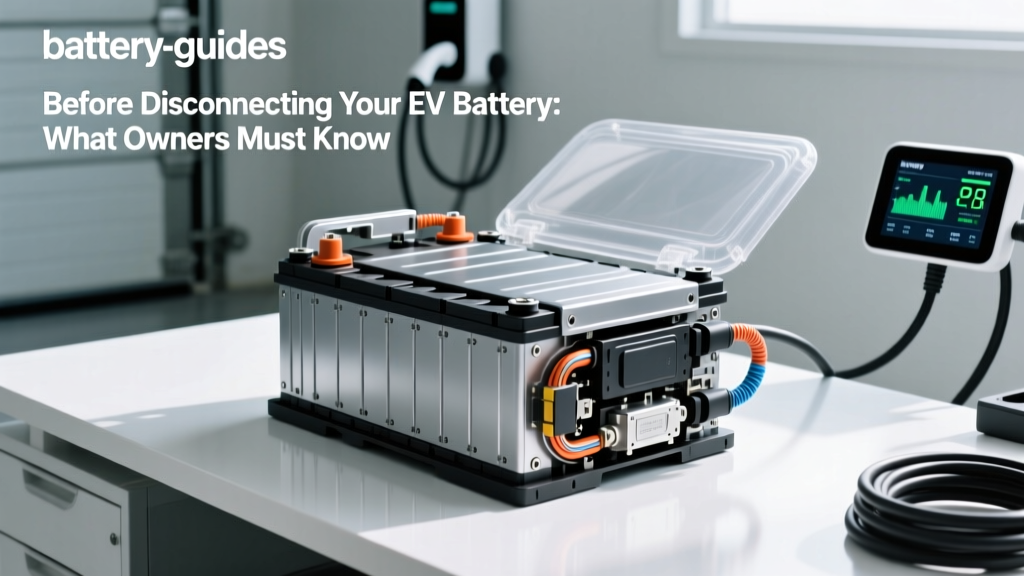
If you've landed here searching for a battery for Chrysler Town & Country 2014, you're likely staring at a dead 12-volt starter battery and wondering what comes next. That's a straightforward fix — a Group 34 or H7 AGM battery from any auto parts store will get your minivan running again for roughly $180–$260 installed. But if that search has you thinking about the bigger picture of vehicle batteries — particularly the high-voltage traction batteries that power modern electric vehicles — this guide will give you the full, data-backed picture.
The gap between swapping a 12V battery in a 2014 Town & Country and understanding an EV's 60–100+ kWh lithium-ion pack is enormous. One is a maintenance item you can replace in a driveway in 15 minutes. The other is a chemically complex, thermally managed energy system designed to last the life of the vehicle. Let's break down exactly how EV batteries work, how long they last, what they cost, and what's coming next — with the exact numbers you need to make informed decisions.
EV Battery Chemistry: LFP vs NMC vs NCA
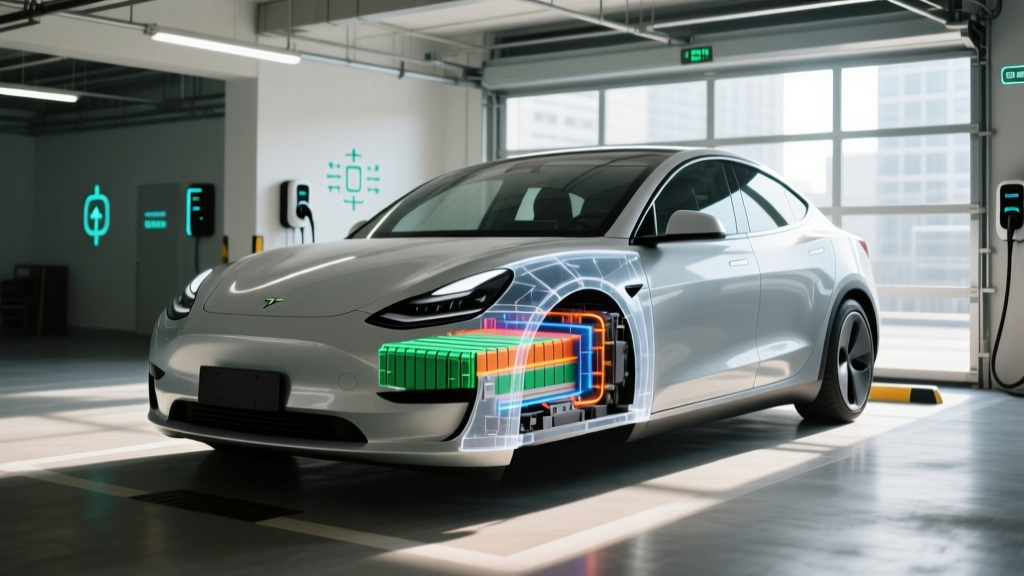
Not all lithium-ion batteries are the same. The cathode chemistry determines energy density, lifespan, cold-weather behavior, and cost. The two dominant chemistries in 2026 EVs are LFP (lithium iron phosphate) and NMC/NCA (nickel manganese cobalt / nickel cobalt aluminum).
LFP batteries, used in standard-range Tesla Model 3 and Model Y vehicles, the Ford Mustang Mach-E Select, and many Chinese-market EVs, offer exceptional cycle life and thermal stability but lower energy density. NMC and NCA packs, found in long-range and performance trims across most manufacturers, pack more energy into a smaller, lighter package but degrade slightly faster and rely on more expensive, supply-chain-sensitive materials like cobalt and nickel.
| Attribute | LFP (Lithium Iron Phosphate) | NMC / NCA |
|---|---|---|
| Energy Density | ~160–180 Wh/kg (lower) | ~220–300 Wh/kg (higher) |
| Cycle Life | 3,000–5,000+ cycles | 1,000–2,000 cycles |
| Cold Performance | Weaker below 32°F; needs preconditioning | Better low-temp discharge |
| Thermal Stability | Excellent — very low thermal runaway risk | Good — requires robust BMS |
| Cost per kWh | Lower (~$90–110/kWh at pack level, 2026) | Higher (~$120–145/kWh at pack level, 2026) |
| Recommended SoC Daily | 100% OK — Tesla recommends weekly 100% calibration | 80% daily; 100% for trips only |
| Common Vehicles (2026) | Tesla Model 3 RWD, Model Y Standard, base Ford Mach-E | Tesla LR/Performance, Hyundai Ioniq 5/6, Rivian, BMW iX |
Which is better? For daily commuting and high-mileage drivers who can charge to 100% regularly, LFP's longer cycle life and lower cost make it the pragmatic choice. For drivers who need maximum range in a single charge, tow frequently, or live in cold climates where every mile of range matters, NMC/NCA's higher energy density is worth the trade-off. Neither is universally superior — it depends on your driving pattern.
How Long Do EV Batteries Actually Last?
The short answer, backed by fleet data: most modern EV batteries will outlast the vehicle they're installed in. But "outlast" doesn't mean "zero degradation." Let's look at the numbers.
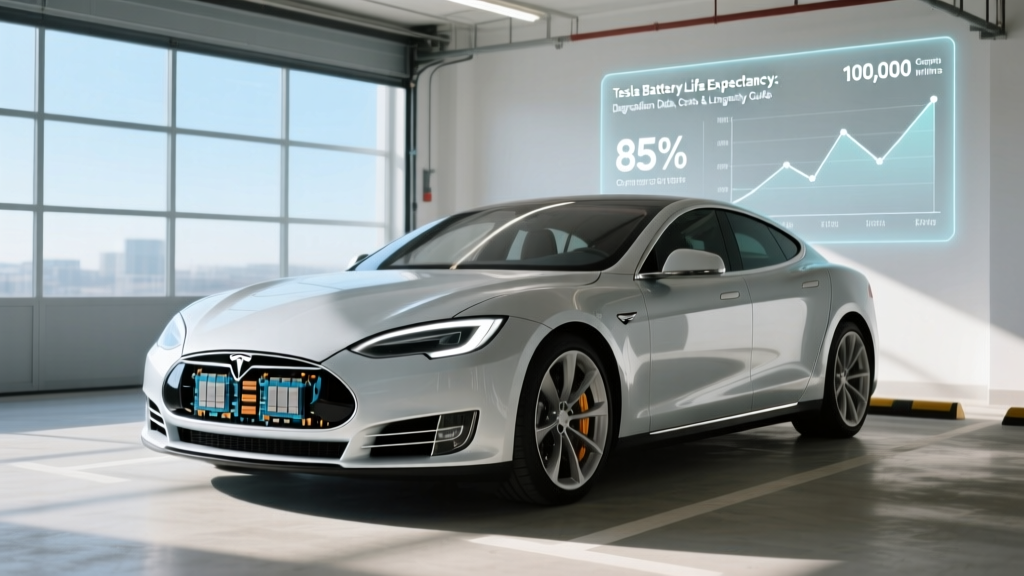
Based on data aggregated from Tesla's 2024 Impact Report, Recurrent Auto's fleet studies, and real-world owner reporting through 2025–2026, here is what typical degradation looks like across major platforms:
- Year 1 / 15,000 mi: ~2–3% capacity loss (initial formation loss)
- Year 3 / 45,000 mi: ~5–7% total loss
- Year 5 / 75,000 mi: ~7–10% total loss
- Year 8 / 120,000 mi: ~10–14% total loss
- Year 10 / 150,000 mi: ~12–18% total loss (NMC); ~8–12% (LFP)
Sources: Recurrent Auto, Tesla Impact Report 2024. Individual results vary based on climate, charging habits, and chemistry.
The degradation curve is non-linear. Most capacity loss occurs in the first 20,000–30,000 miles as the battery's solid electrolyte interphase (SEI) layer stabilizes. After that, degradation slows significantly — often to less than 1% per year. A 2026 Tesla Model Y Long Range with an NMC pack might start at 310 miles EPA range and settle around 280–290 miles by year five, which remains more than adequate for most drivers.
LFP packs degrade even more slowly. Tesla has stated that Model 3 Standard Range vehicles with LFP chemistry show minimal measurable degradation even at 100,000+ miles in fleet service. The limiting factor for these vehicles is more often the car itself — suspension, interior wear, electronics — rather than the battery.
Battery Warranty Terms: What's Actually Covered
Federal law in the United States mandates that EV batteries carry a minimum warranty of 8 years or 100,000 miles (whichever comes first). In California Air Resources Board (CARB) states, that extends to 10 years or 150,000 miles. Most manufacturers exceed these minimums. Here's how the major players stack up in 2026:
| Manufacturer | Duration | Mileage | Capacity Threshold |
|---|---|---|---|
| Tesla | 8 years | 100,000–120,000 mi (varies by model) | 70% retention |
| Hyundai / Kia | 10 years | 100,000 mi | 70% retention |
| Ford | 8 years | 100,000 mi | 70% retention |
| Rivian | 8 years | 175,000 mi | 70% retention |
| BMW | 8 years | 100,000 mi | 70% retention |
| GM (Chevrolet/Cadillac) | 8 years | 100,000 mi | 60–70% retention (varies) |
The critical number here is the capacity retention threshold — typically 70%. This means the manufacturer guarantees the battery will retain at least 70% of its original usable capacity during the warranty period. If your 75 kWh pack drops below 52.5 kWh of usable capacity within 8 years/100,000 miles, the manufacturer must repair or replace it at no cost to you.
In practice, warranty claims are rare. Data from Recurrent Auto indicates that fewer than 1.5% of EV batteries in their study fleet required warranty replacement. When replacements do happen, they're often due to manufacturing defects (bad cells, BMS failures) rather than gradual degradation.
EV Battery Replacement Cost: The Numbers
This is the question that generates the most anxiety — and the most misinformation. Let's ground it in real data.
| Vehicle / Pack Size | Battery Size (kWh) | Replacement Cost Range | Typical Need Timeline |
|---|---|---|---|
| Tesla Model 3 Standard (LFP) | 60 kWh | $8,000–$12,000 | Rarely needed within vehicle life |
| Tesla Model Y Long Range (NMC) | 75 kWh | $12,000–$16,000 | Rarely needed within vehicle life |
| Hyundai Ioniq 5 (NMC) | 77.4 kWh | $11,000–$15,000 | Rarely needed within vehicle life |
| Ford F-150 Lightning Ext. Range | 131 kWh | $18,000–$28,000 | Rarely needed within vehicle life |
| Chevrolet Bolt EV/EUV | 65 kWh | $9,000–$14,000 | Rarely needed within vehicle life |
| Rivian R1T / R1S (Large Pack) | 135 kWh | $20,000–$30,000 | Rarely needed within vehicle life |
Yes, these are large numbers. But context matters enormously:
- Most batteries never need replacement. With degradation averaging 10–14% over 8 years and warranties covering below 70%, the vast majority of packs serve the vehicle's entire useful life.
- Costs are falling. Pack-level lithium-ion prices have dropped from over $1,000/kWh in 2010 to roughly $100–140/kWh in 2026, per BloombergNEF. Replacement costs in 2030 will be significantly lower than today.
- Module-level repair is increasingly common. Many shops can now replace individual battery modules rather than the entire pack, bringing costs down to $2,000–$5,000 for a partial repair.
- Compare to ICE powertrain costs. A transmission replacement on a conventional vehicle runs $3,000–$7,000; an engine rebuild can exceed $5,000–$10,000. These are accepted costs of gas-car ownership that rarely generate the same anxiety.
If you're coming from maintaining a 2014 Chrysler Town & Country — where a timing chain replacement or transmission rebuild could easily hit $3,000–$5,000 at 120,000 miles — the EV battery replacement conversation isn't as foreign as the sticker price suggests. The difference is that EV battery replacement is statistically far less likely to be needed.
Factors That Affect Battery Life (and What You Can Control)
Battery degradation isn't random. It's driven by specific, measurable factors — some within your control, some not.
- Daily charge limit: Set to 80% for NMC/NCA packs. LFP packs can (and should) be charged to 100% at least weekly for BMS calibration.
- Avoid prolonged storage at extremes: Don't leave the car sitting at 100% or below 10% SoC for days or weeks. 50% is ideal for long-term parking.
- Minimize DC fast charging when possible: Occasional Supercharging or Electrify America stops are fine — modern thermal management handles it well. But daily reliance on 150+ kW DC charging accelerates degradation by an estimated 1–3% over the pack's life compared to Level 2 home charging.
- Use preconditioning: Enable your car's battery preconditioning feature before fast-charging sessions. This warms the pack to optimal temperature (~70–95°F internally), reducing lithium plating risk and improving charge speed.
- Extreme heat is worse than extreme cold: Sustained ambient temperatures above 95°F accelerate chemical degradation. If you live in Arizona or Texas, garage parking helps. Cold weather reduces range temporarily but doesn't cause permanent damage.
- Drive it regularly: Lithium-ion cells prefer regular cycling over prolonged sitting. A car driven 30 miles daily will often age better than one that sits for weeks at a time.
The single most impactful habit? Avoiding habitual 100% charges on NMC/NCA batteries. Research from the Idaho National Laboratory and battery analytics firm Geotab shows that consistently charging to 100% — rather than 80% — can roughly double the rate of capacity loss over a 5-year period. The top 20% of the charge window places the highest electrochemical stress on nickel-rich cathodes.
Monitoring Your Battery's State of Health (SoH)
State of Health (SoH) is a percentage representing your battery's current maximum capacity relative to its original capacity when new. A brand-new pack is 100% SoH; a pack that has degraded to hold only 90% of its original energy is at 90% SoH.
Here's how to check it on major 2026 platforms:
- Tesla: The in-car service menu (hold the model badge on the About screen for 3 seconds, enter "service" as the access code) displays battery health metrics. Third-party tools like TeslaFi or Scan My Tesla via an OBD-II dongle provide more granular cell-level data.
- Hyundai/Kia: The EV-specific menu in the infotainment system shows battery conditioning status. Dealers can pull detailed SoH reports via the KDS diagnostic tool.
- Ford: The FordPass app and in-cluster displays show estimated range, which indirectly reflects SoH. Full diagnostic reports require a dealer visit.
- Universal OBD-II tools: Devices like the OBDLink SX paired with apps such as LeafSpy (Nissan) or Car Scanner can read battery management system data on most EVs, including cell voltage variance, pack temperature, and estimated capacity.
A healthy SoH reading should show cell voltage variance under 20–30 millivolts across all modules. Wider variance may indicate a weak cell that could trigger a warranty claim. If your SoH drops below 70% within the warranty period, contact the manufacturer — that's exactly what the warranty is designed to cover.
Emerging Battery Technology: What's Next (and When)
The battery landscape is evolving rapidly, but it's critical to separate laboratory milestones from production reality.
Solid-state batteries — which replace the liquid electrolyte with a solid material, promising higher energy density, faster charging, and improved safety — remain the industry's biggest prize. Toyota has announced plans for limited solid-state EV production beginning in 2027–2028, while Samsung SDI targets 2027 for initial commercialization. However, these timelines have shifted multiple times. Realistically, solid-state batteries will appear in limited, premium vehicles first and won't reach mainstream price points until the early 2030s at the earliest.
Silicon-dominant anodes — which replace graphite anodes with silicon to increase energy storage capacity by 20–40% — are closer to market. Companies like Sila Nanotechnologies and Group14 Technologies are already supplying silicon-carbon composite anode materials to battery manufacturers. Expect vehicles with silicon-enhanced anodes to appear in 2026–2028 model years, initially in performance-oriented applications.
Sodium-ion batteries — which eliminate lithium entirely in favor of abundant, cheap sodium — are entering production in China through CATL and BYD for low-cost city EVs. Energy density is significantly lower than lithium-ion (~120–160 Wh/kg), making sodium-ion unsuitable for long-range vehicles but potentially transformative for affordable urban transportation. US-market availability remains uncertain and likely 2028+ at the earliest.
Bringing It Back: Your 2014 Town & Country and the EV Transition
If you're maintaining a 2014 Chrysler Town & Country, you're managing a vehicle with a conventional 12V electrical system, a 3.6L Pentastar V6, and a 6-speed automatic transmission. The battery you need is a straightforward lead-acid or AGM unit — nothing in this guide changes that immediate need.
But if you're researching batteries because you're considering an EV as your next vehicle, the data above should reassure you: EV traction batteries are not the ticking time bombs that internet forums sometimes suggest. They degrade slowly, are covered by robust warranties, cost less to replace over time, and in the overwhelming majority of cases, will serve you faithfully for 150,000+ miles.
The jump from replacing a $200 battery in a Town & Country to understanding a $12,000 EV battery pack feels large — but the ownership reality is that you'll likely never write that check. And when you factor in zero oil changes, no transmission fluid, no spark plugs, and fuel costs that average $0.04–$0.06 per mile on home charging versus $0.12–$0.18 per mile on gasoline, the total cost of ownership math strongly favors electric.
Frequently Asked Questions
How long do EV batteries last in years and miles?
Based on fleet data from Recurrent Auto and manufacturer reports, most modern EV batteries retain 80–90% of their original capacity at 150,000 miles and 10+ years of service. LFP-chemistry packs often exceed 90% retention at this mileage. The battery will typically outlast other vehicle components like suspension, interior trim, and infotainment hardware.
How much does an EV battery cost to replace in 2026?
Full pack replacement costs range from approximately $8,000 for smaller packs (60 kWh, like the Tesla Model 3 Standard Range) to $28,000+ for large packs (131 kWh, like the F-150 Lightning Extended Range). However, the vast majority of EV batteries never require replacement. Module-level repairs, when needed, typically cost $2,000–$5,000. Pack prices continue to decline annually as manufacturing scales.
What does the EV battery warranty actually cover?
Federal law requires a minimum of 8 years / 100,000 miles of battery warranty coverage (10 years / 150,000 miles in CARB states). The warranty guarantees that the battery will retain at least 70% of its original usable capacity. If capacity drops below this threshold within the warranty period, the manufacturer must repair or replace the battery at no charge. This covers both gradual degradation and manufacturing defects.
How do I check my EV battery's health?
Most EVs provide battery health data through the infotainment system, mobile app, or hidden service menus. Tesla owners can access detailed metrics through the service menu or third-party apps like TeslaFi. For other brands, dealers can pull State of Health (SoH) reports using diagnostic tools. Universal OBD-II readers paired with EV-specific apps can also read cell-level data on most platforms.
LFP vs NMC — which battery chemistry should I choose?
Choose LFP if you want maximum longevity, lower cost, and don't need the absolute longest single-charge range. LFP handles 100% daily charging well and offers 3,000–5,000+ cycle life. Choose NMC/NCA if you need maximum range per charge, tow frequently, or live in a cold climate where energy density directly translates to usable winter miles. NMC offers ~30–50% more energy per kilogram but degrades slightly faster and costs more.
Does fast charging damage my EV battery?
Occasional DC fast charging (150–350 kW) is fine — modern battery management systems with active liquid cooling handle thermal loads effectively. However, daily exclusive reliance on DC fast charging can accelerate degradation by an estimated 1–3% over the pack's lifetime compared to predominantly Level 2 (7–19 kW) home charging. The key risk factors are sustained high temperatures during charging and charging at high power when the battery is very cold without preconditioning.
Can I replace a 2014 Chrysler Town & Country battery myself, and is it anything like an EV battery swap?
A 12V battery replacement in a 2014 Town & Country is a straightforward DIY job — disconnect the negative terminal first, remove the hold-down clamp, swap the battery, reconnect, and you're done in 15 minutes. An EV traction battery replacement is nothing like this: it requires a high-voltage-certified technician, specialized lift equipment, and safety protocols for 400V+ systems. Never attempt to service an EV traction battery without proper training and certification.