When Your EV Battery Isn't Charging Like It Used To
If you've noticed your electric vehicle taking longer to charge, accepting less energy at the plug, or delivering noticeably less range than the EPA sticker promised, you're not alone. Searches for "battery in car not charging" have surged as the first wave of mass-market EVs crosses the 100,000-mile mark. But before you panic about a $20,000 replacement, it's worth understanding what's actually happening inside your high-voltage traction battery — and what you can do about it.
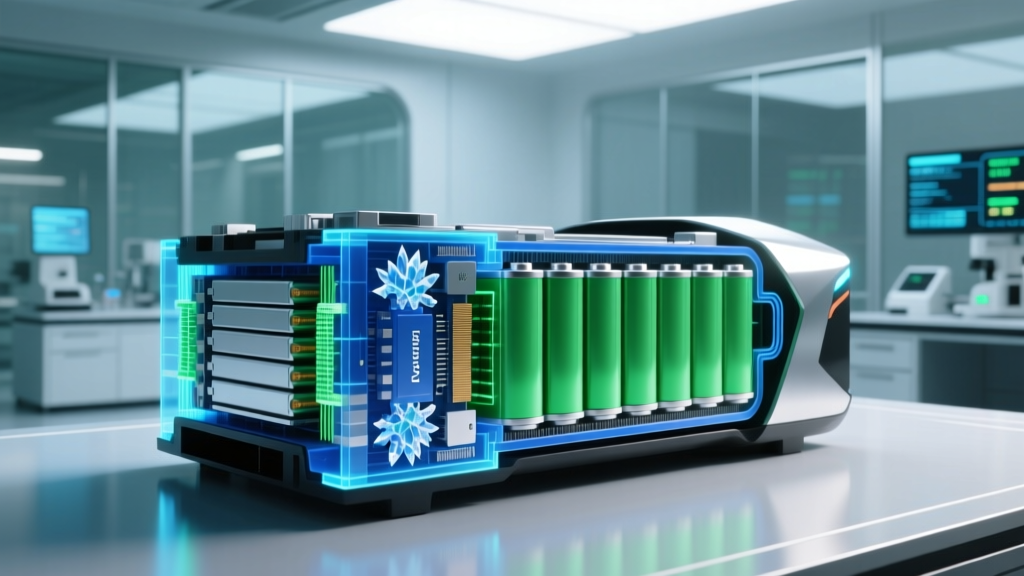
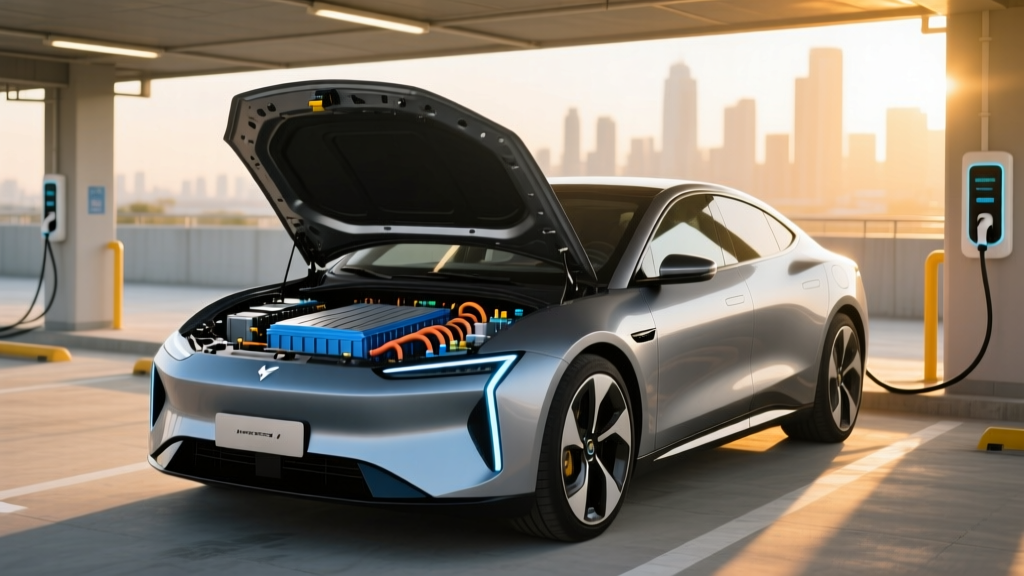
This guide breaks down EV battery chemistry, real-world degradation data, warranty protections, replacement costs, and daily habits that preserve long-term health. We'll also clarify a common confusion right up front: the high-voltage traction battery (the large pack that powers your motor, typically 50–110 kWh) is entirely different from the 12V auxiliary battery (the small lead-acid or lithium unit that runs your lights, infotainment, and computers). A dead 12V battery can prevent the car from "waking up" to charge — but that's a separate, far cheaper fix.
LFP vs NMC/NCA: Understanding Your Battery Chemistry
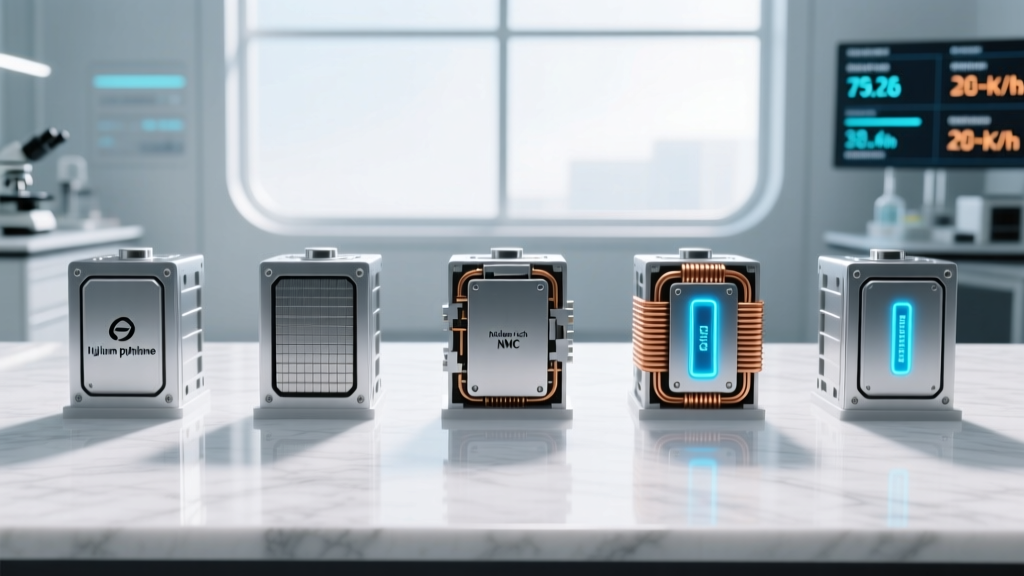
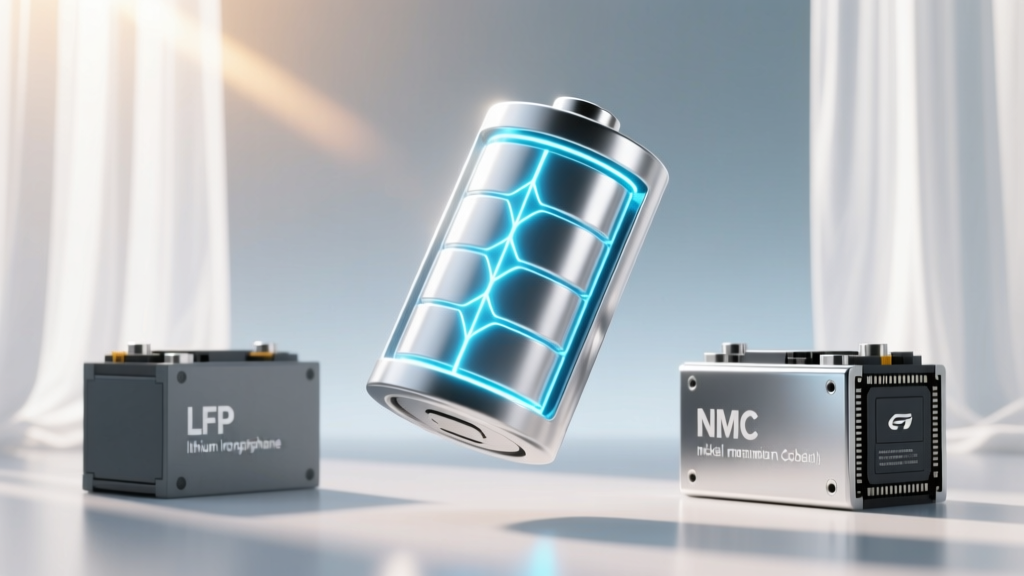
The single biggest factor in how your EV battery ages is its cell chemistry. As of 2026, virtually every EV on the US market uses one of two lithium-ion chemistries: LFP (lithium iron phosphate) or NMC/NCA (nickel manganese cobalt / nickel cobalt aluminum). Each has distinct trade-offs that affect range, longevity, and charging behavior.
| Attribute | LFP (Lithium Iron Phosphate) | NMC / NCA (Nickel-Based) |
|---|---|---|
| Energy Density | Lower (~160–180 Wh/kg cell-level) | Higher (~220–260 Wh/kg cell-level) |
| Cycle Life | 3,000–5,000+ cycles to 80% SoH | 1,000–2,000 cycles to 80% SoH |
| Cold-Weather Performance | Moderate; greater range loss below 32°F | Better low-temp energy delivery |
| Recommended Charge Habit | Can charge to 100% regularly; benefits from periodic full charges for BMS calibration | Best kept 20–80% daily; 100% only for trips |
| Cost | Lower (no cobalt/nickel) | Higher (commodity-sensitive) |
| Typical 2026 Vehicles | Tesla Model 3/Y RWD, Ford Mustang Mach-E Select (2025+), BYD models, Rivian Standard | Tesla Long Range/Performance, Hyundai Ioniq 5/6, Kia EV6/EV9, BMW iX, Ford Extended Range |
Which is better? Neither is universally superior — it depends on your use case. LFP excels for owners who want maximum cycle life and don't mind slightly lower range per kWh of pack weight. It's ideal for daily commuters who charge at home every night. NMC/NCA delivers more range in a lighter, more compact pack, making it preferable for long-range trims and colder climates — but it demands more careful charge habits to maximize longevity.
How Long Do EV Batteries Actually Last?
Based on aggregated fleet data from Tesla's 2025 Impact Report, Recurrent Auto's battery health database, and independent testing by fueleconomy.gov, most modern liquid-cooled EV batteries retain 85–92% of their original capacity after 100,000 miles. That translates to roughly 8–10 years of typical use (12,000–15,000 miles/year).
- Tesla Model 3/Y (NMC, 2020–2023): ~5–7% loss at 60,000 mi; ~8–12% loss at 100,000 mi. Curve flattens significantly after the initial break-in period (first 20,000 mi).
- Tesla Model 3 RWD (LFP, 2022–2024): ~3–5% loss at 60,000 mi; ~5–8% loss at 100,000 mi. Slower degradation curve overall.
- Hyundai Ioniq 5 (NMC, 77.4 kWh, 2022–2024): ~4–6% loss at 50,000 mi per owner-reported data from Recurrent Auto.
- Chevrolet Bolt EV/EUV (NMC, 65 kWh, 2020–2023): ~6–9% loss at 80,000 mi; early 2017–2019 models with LG cells had higher degradation linked to the recall campaign.
- Ford Mustang Mach-E Extended Range (NMC, 91 kWh usable, 2021–2023): ~5–8% at 60,000 mi based on owner fleet sampling.
Sources: Recurrent Auto Battery Health Index (2025), Tesla Impact Report 2025, manufacturer service bulletins. Individual results vary with climate, charging habits, and thermal management.
The degradation curve is not linear. Most batteries lose the bulk of their capacity in the first 20,000–30,000 miles (the "break-in" phase), then the curve flattens considerably. A battery that has lost 8% at 60,000 miles is not on track to lose 16% at 120,000 — it's more likely to land around 12–14% total loss by that point.
What Does the EV Battery Warranty Actually Cover?
Federal law (EPA emissions warranty requirements) mandates that EV batteries carry a minimum warranty of 8 years / 100,000 miles. In California and states that follow CARB (California Air Resources Board) standards — which now include over a dozen states — the mandate extends to 10 years / 150,000 miles for certain components.
| Manufacturer | Coverage Period | Capacity Retention Threshold | Notes |
|---|---|---|---|
| Tesla | 8 yr / 120,000 mi (Model 3/Y LR); 8 yr / 100,000 mi (RWD) | 70% | Covers defect + degradation below threshold |
| Hyundai / Kia | 10 yr / 100,000 mi | 70% | Among the longest coverage periods |
| Ford | 8 yr / 100,000 mi | 70% | Applies to Mustang Mach-E, F-150 Lightning |
| GM (Chevrolet, Cadillac) | 8 yr / 100,000 mi | 70% (60% on some Bolt-era packs) | Ultium platform models carry 8/100k |
| BMW | 8 yr / 100,000 mi | 70% | i4, iX, i7 coverage |
| Rivian | 8 yr / 175,000 mi (R1T/R1S) | 70% | Highest mileage threshold in segment |
What triggers a warranty claim? If your battery's State of Health (SoH) drops below the stated threshold (typically 70% of original capacity) within the coverage period, the manufacturer must repair or replace the pack at no cost. In practice, most warranty replacements involve swapping defective modules rather than the entire pack. Keep in mind: warranty covers degradation below a threshold and manufacturing defects — it does not cover damage from accidents, flooding, or unauthorized modifications.
EV Battery Replacement Cost: What You'll Actually Pay
This is where fear-mongering runs rampant, so let's anchor to real numbers. As of 2026, full high-voltage battery replacement costs range from roughly $8,000 to $22,000 depending on pack size and vehicle, including labor. However, most EV batteries never need full replacement during the vehicle's usable life. The more common scenario is a module-level repair ($2,000–$5,000) if a specific cell group develops a fault.
| Vehicle | Battery Size (Usable kWh) | Estimated Full Replacement Cost (2026) | Module Repair Range |
|---|---|---|---|
| Tesla Model 3 RWD (LFP) | 57.5 kWh | $8,000–$12,000 | $2,000–$4,000 |
| Tesla Model Y Long Range (NMC) | 75 kWh | $12,000–$16,000 | $2,500–$5,000 |
| Hyundai Ioniq 5 (NMC) | 77.4 kWh | $11,000–$15,000 | $2,500–$4,500 |
| Ford F-150 Lightning Ext. Range | 131 kWh | $18,000–$22,000 | $3,500–$6,000 |
| Chevrolet Equinox EV (Ultium) | 85 kWh | $12,000–$16,000 | $2,500–$5,000 |
| BMW iX xDrive50 | 105.2 kWh | $16,000–$21,000 | $3,000–$5,500 |
When is replacement typically needed? Full pack replacement is rare before 150,000–200,000 miles on modern liquid-cooled systems. The more realistic concern at 100,000–150,000 miles is gradual range reduction (e.g., a 310-mile EPA vehicle delivering 260–275 miles) — which is an inconvenience, not a failure. Battery cell prices have fallen roughly 80% since 2013 (per BloombergNEF), and continue to trend downward, meaning replacement costs in 2030 will likely be significantly lower than today's figures.
Factors That Accelerate (or Slow) Battery Degradation
Not all miles are created equal when it comes to battery wear. Here are the factors that measurably impact long-term State of Health:
- Avoid frequent DC fast charging above 150 kW. Occasional road-trip fast charging is fine, but daily use of 250–350 kW chargers accelerates degradation. Studies show vehicles that fast-charge more than 3x/week degrade ~1–2% faster over 100k miles. If you have home Level 2 charging, use it for daily needs.
- Keep State of Charge between 20–80% for NMC/NCA. Storing an NMC battery at 100% for extended periods (days/weeks) stresses the cathode. LFP batteries are more tolerant of 100% SoC and actually benefit from periodic full charges for BMS cell-balancing calibration.
- Precondition before fast charging. Most EVs do this automatically when you navigate to a charger. Preconditioning warms the battery to ~95°F (35°C), enabling faster charging with less lithium plating risk. Charging a cold battery at high kW causes measurable wear.
- Minimize exposure to extreme heat. Sustained ambient temperatures above 100°F with a high SoC is the worst-case degradation scenario. If you live in Phoenix or Las Vegas, charge to 80% (not 100%) and park in shade or a garage when possible.
- Don't let the battery sit at 0% or near-zero. Deep discharge causes copper dissolution in the anode current collector. If storing the vehicle for more than 2 weeks, leave it at ~50% SoC.
- Use regenerative braking moderately in extreme cold. High regen into a cold battery can cause lithium plating. Most EVs automatically reduce regen when the battery is cold — let the system do its job.
How to Check and Monitor Your EV Battery Health
Most EVs don't expose a simple "battery health percentage" the way a smartphone does, but there are several reliable methods to assess your State of Health (SoH):
1. In-Vehicle Displays: Tesla's service mode (accessible via the software menu on 2022+ vehicles) shows a battery health readout. Hyundai/Kia's infotainment system includes an EV battery status screen under the EV submenu. BMW's iDrive displays estimated remaining capacity in the charging menu.
2. OBD-II Dongles and Apps: Tools like OBDLink SX paired with apps such as EV Bat Life or Car Scanner ELM OBD2 can read the BMS-reported SoH directly from the CAN bus. This typically gives a percentage figure (e.g., 94.2% SoH) that's more precise than guessing from range.
3. Range-Based Estimation: Charge to 100% (on an LFP vehicle) or a known high SoC, then compare the displayed estimated range to the EPA sticker. A 310-mile EPA vehicle showing 280 miles at 100% suggests roughly 90% SoH. Caveat: this is approximate because the BMS range estimate also factors in recent driving efficiency and temperature.
4. Dealer/Service Center Diagnostic: Any authorized service center can pull a detailed battery health report showing individual module voltages, internal resistance, and overall capacity. Request this during routine service visits, especially before a warranty period expires.
5. Third-Party Battery Reports: Services like Recurrent Auto (now integrated with some OEM platforms) offer ongoing battery health monitoring via connected-car data. Some used-EV marketplaces now include battery health certificates.
Why Your EV Battery Might Not Be Charging — Common Causes
If your EV's battery is genuinely "not charging" — meaning the vehicle is plugged in but accepting zero or minimal power — the cause is rarely catastrophic battery failure. Here are the most common culprits, in order of likelihood:
12V Auxiliary Battery Failure: The most common reason an EV won't initiate a charge session. The 12V system powers the BMS, contactors, and communication modules. If the 12V battery is dead or weak (common after 3–5 years), the car can't close the high-voltage contactors to begin charging. Fix: jump-start or replace the 12V battery ($150–$400). This is not a traction battery problem.
Charge Port or Cable Fault: Damaged pins, moisture ingress, or a faulty CCS/NACS latch can prevent a proper handshake between the vehicle and charger. Try a different cable or station before assuming a battery issue.
Thermal Management System Fault: If the battery cooling/heating loop has a pump failure or low coolant, the BMS may refuse to charge (or limit to very low kW) to protect the cells. Dashboard warnings typically flag this.
Software/BMS Glitch: Occasionally, a BMS firmware bug can cause incorrect SoC reporting or charge-session rejection. A software update via OTA or at the service center usually resolves this. Tesla, Ford, and Hyundai have all issued BMS-related OTA updates addressing charging anomalies.
Cell Imbalance or Module Degradation: In rarer cases, one or more cell groups may have degraded disproportionately, causing the BMS to limit charging to protect the weak cells. This triggers a diagnostic trouble code (DTC) readable via OBD-II and requires service-center attention — potentially a module replacement under warranty.
What's Next: Solid-State and Silicon-Anode Batteries
Looking ahead, two technologies promise to reshape EV batteries — but neither is available in production vehicles as of 2026.
Solid-State Batteries: These replace the liquid electrolyte with a solid ceramic or polymer separator, promising higher energy density (potentially 400+ Wh/kg at the cell level), faster charging, and reduced fire risk. Toyota has announced solid-state battery production for 2027–2028 in limited models. Samsung SDI and QuantumScape are targeting similar timelines for OEM partnerships. Realistic mass-market availability: 2029–2032. Expect initial deployment in premium vehicles at high cost.
Silicon-Anode Batteries: Replacing graphite anodes with silicon can boost energy density by 20–40%. Companies like Sila Nanotechnologies and Group14 are supplying silicon-dominant anode materials to OEMs now. The Mercedes-Benz G-Class (2025+) uses a silicon-anode battery from Sila in limited capacity. Expect broader adoption in 2027–2029 model years as manufacturing scales. This is a nearer-term, incremental improvement rather than a full technology leap.
For current buyers: today's lithium-ion batteries — both LFP and NMC — are mature, well-understood, and backed by robust warranties. Waiting for solid-state is not a practical purchase strategy unless your timeline extends to 2030+.
Frequently Asked Questions
How long do EV batteries last in years and miles?
Most modern liquid-cooled EV batteries retain 85–92% of their original capacity at 100,000 miles (approximately 8–10 years of average driving). Based on current degradation curves, a well-maintained battery should deliver usable service for 200,000+ miles before capacity drops to levels that meaningfully impact daily usability (below 70–75% SoH). The vehicle's body, suspension, and electronics are more likely to reach end-of-life before the battery does.
How much does it cost to replace an EV battery in 2026?
Full pack replacement ranges from approximately $8,000 (smaller LFP packs like the Tesla Model 3 RWD) to $22,000 (large packs like the F-150 Lightning Extended Range at 131 kWh). However, full replacement is rarely needed — module-level repairs ($2,000–$5,000) are more common, and most packs outlast the vehicle. Battery cell costs continue to decline year over year.
What does the EV battery warranty actually cover?
Federal minimum is 8 years / 100,000 miles; CARB states extend to 10 years / 150,000 miles. Coverage applies to manufacturing defects and degradation below a stated threshold (typically 70% of original capacity). If your battery's SoH drops below that threshold within the warranty period, the manufacturer must repair or replace it at no cost. Damage from accidents, flooding, or unauthorized modifications is excluded.
How do I check my EV battery's health?
Use your vehicle's built-in battery status screen (Tesla service mode, Hyundai/Kia EV menu, BMW iDrive), an OBD-II dongle with an EV battery app (like Car Scanner or EV Bat Life), or request a diagnostic report from your dealer. Comparing your 100%-charge displayed range to the original EPA sticker gives a rough estimate, but BMS-reported SoH via OBD-II is more precise.
LFP vs NMC — which battery chemistry should I choose?
Choose LFP if you want maximum cycle life, plan to charge to 100% regularly (home charging), and prioritize long-term durability over maximum range per pound. Choose NMC/NCA if you need the longest possible range in a lighter pack, live in a cold climate where NMC performs better at low temperatures, or frequently take road trips where energy density matters. Both chemistries are proven and reliable — the "right" choice depends on your driving pattern.
Does fast charging damage my EV battery?
Occasional DC fast charging (1–2x per week) has minimal measurable impact on modern batteries with active thermal management. However, frequent high-power fast charging (3+ sessions per week at 150+ kW) can accelerate degradation by 1–3% over 100,000 miles compared to primarily Level 2 home charging. The biggest risk is charging a cold battery at high power — always let your vehicle precondition the battery before a fast-charge session.
My EV won't charge at all — is the battery dead?
Almost certainly not. The most common cause of an EV refusing to charge is a dead or weak 12V auxiliary battery, not the high-voltage traction battery. The 12V system powers the computers and contactors needed to initiate charging. Check or replace the 12V battery first ($150–$400). Other common causes include charge port faults, thermal management errors, or BMS software glitches — all far less expensive than a traction battery replacement.
Sources: U.S. Department of Energy / fueleconomy.gov, IRS §30D Clean Vehicle Credit guidelines, Recurrent Auto Battery Health Index (2025), Tesla Impact Report 2025, BloombergNEF Battery Price Survey. Battery replacement costs are estimates based on 2025–2026 service-center pricing and may vary by region and provider.