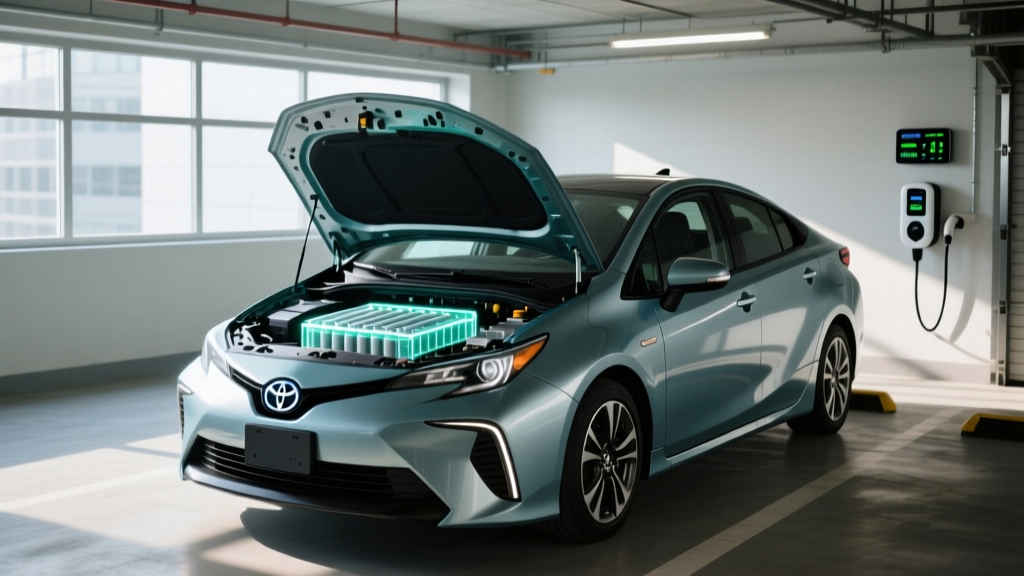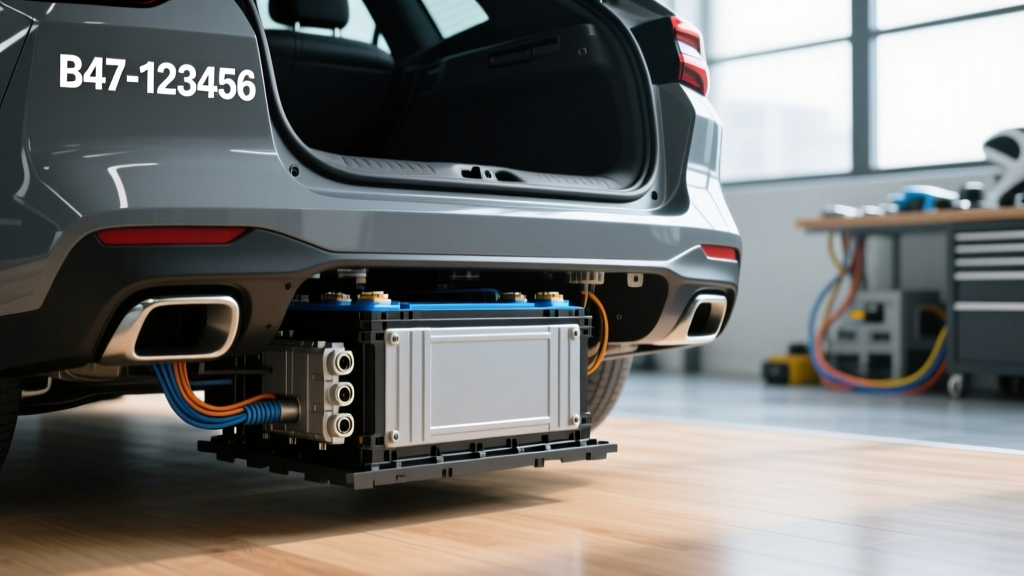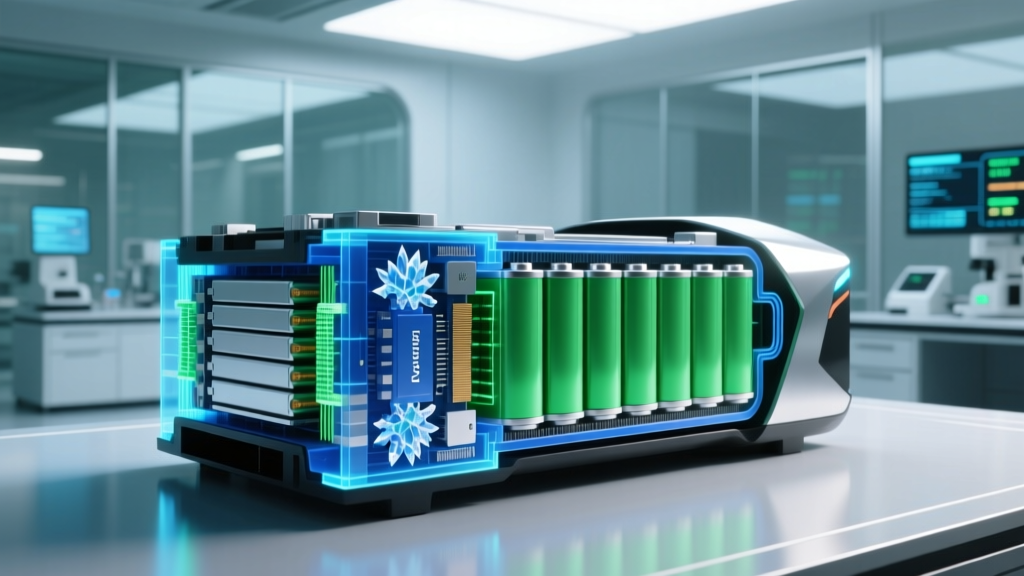
If you have been following the electric vehicle market, you have likely seen a flood of infographics and marketing materials attempting to provide an illustration of EV battery advancements visually. Most of those graphics stop at a simple upward trend line showing energy density climbing year over year. The reality for buyers and owners in 2026 is far more nuanced — and far more important to understand before signing a purchase agreement.
This guide maps the actual state of EV battery technology today: the chemistry trade-offs that determine your real-world range, the degradation data pulled from high-mileage fleets, the warranty terms that protect your investment, and the emerging solid-state and silicon-anode technologies that remain on the horizon. We will separate what you can drive home today from what is still in the lab.
Mapping the Chemistry Landscape: LFP vs NMC/NCA
The single most consequential battery decision you will make is not about kWh capacity — it is about chemistry. In 2026, the market has consolidated around two dominant lithium-ion chemistries for passenger EVs: Lithium Iron Phosphate (LFP) and Nickel Manganese Cobalt / Nickel Cobalt Aluminum (NMC/NCA). Each has distinct strengths that make it better suited to different ownership patterns.
| Attribute | LFP (Lithium Iron Phosphate) | NMC/NCA (Nickel-Based) |
|---|---|---|
| Energy Density | ~160–180 Wh/kg (cell level) | ~230–290 Wh/kg (cell level) |
| Cycle Life | 3,000–5,000+ full cycles | 1,000–2,000 full cycles |
| Cold-Weather Performance | Reduced range; slower charge acceptance below 32°F | Better low-temp discharge and charge performance |
| Thermal Stability | Excellent; higher runaway threshold (~270°C) | Good; requires more active thermal management |
| Cobalt/Nickel Content | None (iron + phosphate) | Contains cobalt and/or nickel (sourcing concerns) |
| Cost per kWh (pack level) | ~$90–$110 | ~$120–$145 |
| State of Charge (SoC) Habit | Can be charged to 100% daily without accelerated wear | Best kept between 20–80% for daily use; 100% only for trips |
| Typical Applications (2026) | Tesla Model 3/Y RWD, base Ford Mustang Mach-E, many Chinese-market EVs | Long-range and performance trims (Model 3 LR, Ioniq 5, EV6, Cadillac Lyriq) |
The practical takeaway: If you charge at home nightly and want a low-maintenance battery you can fill to 100% without worry, LFP is the pragmatic choice. If you need maximum range in a single charge and live in a cold climate where winter performance matters, NMC/NCA remains the stronger option. Neither chemistry is universally "better" — the right choice depends on your driving pattern, climate, and charging access.
Real-World Degradation Data: What High-Mileage EVs Actually Show
Battery degradation is the most anxiety-inducing topic in EV ownership, and it is also the most misunderstood. The fear narrative suggests your EV will become a paperweight after 100,000 miles. The data tells a very different story.
Degradation Curve Summary (Fleet & Owner Data, 2020–2026 models):
- Year 1 / 15,000 miles: ~2–4% capacity loss (initial formation loss, steepest part of the curve)
- Year 3 / 45,000 miles: ~6–9% total loss from new
- Year 5 / 75,000 miles: ~8–12% total loss
- Year 8 / 120,000 miles: ~10–15% total loss for NMC; ~7–10% for LFP
- Year 10 / 150,000 miles: ~12–18% total loss (NMC); ~8–12% (LFP)
Sources: Geotab fleet battery health study, Tesla Impact Reports, owner-reported data on Recurrent Auto.
The degradation curve is not linear. The most significant capacity drop occurs in the first 12–18 months as the battery undergoes initial formation cycling. After that, degradation slows considerably and enters a long, gradual decline. According to data aggregated by Recurrent Auto, the average EV battery in their study cohort retained approximately 90% of its original capacity after five years of real-world use.
A critical nuance: degradation is not the same as failure. A battery that has degraded to 80% of its original capacity still functions perfectly — it simply delivers less range. For a vehicle with an original EPA range of 320 miles, 80% retention still yields ~256 miles of usable range, which covers the vast majority of daily driving needs.
Battery Warranty Terms: What Is Actually Covered
Federal law mandates that EV batteries carry a minimum warranty of 8 years or 100,000 miles (whichever comes first). In California Air Resources Board (CARB) states, that mandate extends to 10 years or 150,000 miles. Most major manufacturers meet or exceed these thresholds, but the details matter enormously.
| Manufacturer | Warranty Period | Capacity Retention Threshold | Notes |
|---|---|---|---|
| Tesla (Model 3/Y) | 8 yr / 120,000 mi (LR/AWD); 8 yr / 100,000 mi (RWD) | 70% minimum | LR/AWD gets higher mileage cap |
| Hyundai / Kia | 10 yr / 100,000 mi | 70% minimum | Among the longest coverage in the market |
| Ford (Mach-E, F-150 Lightning) | 8 yr / 100,000 mi | 70% minimum | Covers battery and high-voltage components |
| GM (Ultium-based: Lyriq, Blazer EV, Equinox EV) | 8 yr / 100,000 mi | 70% minimum | Ultium platform standard warranty |
| Volkswagen (ID.4) | 8 yr / 100,000 mi | 70% minimum | Covers defects and capacity loss below threshold |
| BMW (iX, i4) | 8 yr / 100,000 mi | 70% minimum | Includes high-voltage storage and management system |
What triggers a warranty claim: The warranty covers capacity loss below the stated threshold (typically 70% of original capacity) as measured by the manufacturer's diagnostic tools. It also covers defects in materials and workmanship. What it does not cover: damage from accidents, improper charging equipment, flooding, or modifications to the high-voltage system.
The 70% threshold is important context. Given that real-world degradation data shows most batteries retain 85–92% of capacity at the 8-year mark, the warranty threshold is set well below typical degradation — it is designed to catch genuine failures and severe outliers, not normal wear.
Battery Replacement Costs: The Numbers and the Timeline
This is the question that generates the most fear, so let us address it with data rather than speculation. Battery replacement is rare — far rarer than engine or transmission replacement in internal combustion vehicles. When it does occur, it is typically due to a manufacturing defect (covered under warranty) or physical damage (covered by insurance), not end-of-life degradation.
| Vehicle | Battery Size | Chemistry | Out-of-Warranty Replacement Estimate |
|---|---|---|---|
| Tesla Model 3 RWD | ~60 kWh (usable) | LFP | $10,000–$13,000 |
| Tesla Model 3 Long Range | ~75 kWh (usable) | NMC | $13,000–$16,000 |
| Hyundai Ioniq 5 | ~77.4 kWh (usable) | NMC | $14,000–$18,000 |
| Ford F-150 Lightning (Extended Range) | ~131 kWh (usable) | NMC | $20,000–$28,000 |
| Chevrolet Equinox EV | ~85 kWh (usable) | NMC (Ultium) | $14,000–$17,000 |
| Volkswagen ID.4 | ~82 kWh (usable) | NMC | $14,000–$18,000 |
When is replacement actually needed? Based on current fleet data, the vast majority of EV batteries will outlast the vehicle they are installed in. A study by the National Renewable Energy Laboratory (NREL) projects that modern lithium-ion EV batteries are designed for a service life of 15–20 years under normal use conditions before reaching 70–80% capacity retention. For most owners, the vehicle will be retired, sold, or totaled in an accident long before the battery reaches end of life.
It is also worth noting that pack-level replacement is becoming less common as manufacturers move toward module-level service. Rather than replacing an entire battery pack, technicians can identify and swap individual degraded modules, reducing costs by 50–70% compared to a full pack replacement.
Factors That Accelerate or Slow Battery Degradation
Not all miles are created equal when it comes to battery health. The rate at which your battery degrades depends heavily on how you charge it, where you live, and how you drive. Here are the variables that matter most, ranked by impact:
High Impact
- State of Charge (SoC) habits: Routinely holding an NMC battery at 100% or letting it sit at 0% for extended periods accelerates degradation. The ideal daily range for NMC is 20–80%. LFP batteries tolerate 100% SoC far better and manufacturers often recommend periodic full charges for calibration.
- Extreme heat exposure: Sustained ambient temperatures above 95°F, combined with high SoC, cause the most chemical stress. Active thermal management systems (liquid cooling) mitigate this significantly, but parking in shade or a garage in hot climates extends battery life.
- Frequent DC fast charging at high power: Exclusive reliance on 150+ kW DC fast charging generates heat and mechanical stress in the cells. Occasional fast charging is fine; daily fast charging as your only charging method will accelerate degradation measurably over years.
Moderate Impact
- Cold-weather charging without preconditioning: Charging a cold battery (below 32°F) without preconditioning the pack can cause lithium plating on the anode. Most modern EVs precondition automatically when you navigate to a charger. Always use this feature in winter.
- Aggressive acceleration patterns: High-current discharge events (repeated hard launches) generate heat. The impact is smaller than SoC and temperature effects but adds up over time.
Low Impact
- Level 2 home charging: This is the gentlest charging method and the one most recommended for daily use. Charging at 7–11 kW generates minimal heat and stress.
- Total mileage: Cycle count matters less than most owners assume. Modern batteries are rated for 1,000–5,000 full cycles depending on chemistry. Even at 2,000 cycles with a 250-mile range, that equates to 500,000 miles — well beyond the service life of most vehicles.
Monitoring Battery Health: How to Check State of Health (SoH)
State of Health (SoH) is expressed as a percentage: a brand-new battery is at 100% SoH, and a battery that has lost 12% of its original capacity sits at 88% SoH. Unlike the 12V auxiliary battery (which powers accessories and is a standard lead-acist or lithium-12V unit unrelated to your traction battery), the high-voltage traction battery's SoH is what determines your remaining range.
Here is how to monitor it:
In-Vehicle Displays
Most modern EVs provide a battery health indicator in the settings menu. Tesla offers a battery health percentage under Service > Battery Health. Hyundai/Kia provides a similar readout in the EV settings panel. These readings are calculated by the Battery Management System (BMS) based on charge/discharge cycle data and internal resistance measurements.
OBD-II Diagnostic Tools
For more granular data, an OBD-II dongle paired with apps like Leaf Spy (Nissan Leaf), Scan My Tesla, or Car Scanner ELM OBD2 can read individual cell voltages, pack temperature, and precise SoH figures directly from the BMS. This is especially useful when evaluating a used EV.
Third-Party Battery Health Reports
Companies like Recurrent Auto offer free battery health reports that compare your vehicle's degradation curve against a fleet of identical models. Some dealerships also provide printed battery health certificates for certified pre-owned EVs.
Manual Range Tracking
The simplest method: track your actual range at a consistent SoC over time. If your vehicle delivered 280 miles at 90% SoC when new and now delivers 255 miles at the same SoC under similar conditions, you can estimate roughly 9% degradation. This method is imprecise (weather, tire pressure, and driving style affect range) but provides a useful trend line.
Emerging Battery Technologies: Solid-State and Silicon Anodes
If you have seen concept-car press releases promising 600-mile ranges and 5-minute charging, you have encountered the hype around next-generation battery tech. Here is where these technologies actually stand as of 2026:
Solid-State Batteries
Solid-state batteries replace the liquid electrolyte in current lithium-ion cells with a solid material (ceramic, sulfide, or polymer). The promised benefits are significant: higher energy density (potentially 400–500 Wh/kg at the cell level), faster charging, improved safety (no flammable liquid electrolyte), and longer cycle life.
Current status: Toyota has announced a solid-state battery pilot for limited production vehicles targeting 2027–2028, with initial deployment in small volumes. Samsung SDI and QuantumScape are supplying prototype cells to OEM partners for testing. Nissan and Honda have announced pilot production lines but have not committed to volume production timelines.
Realistic timeline for consumer availability: Limited-production vehicles with solid-state batteries may appear in select markets by 2028–2029. Broad, cost-competitive availability across mainstream EV models is not expected before 2030–2032. The manufacturing challenges — particularly achieving consistent quality at scale and reducing per-kWh cost below current NMC levels — remain significant.
Silicon Anode Technology
Replacing the graphite anode with silicon can increase energy density by 20–40% because silicon can store roughly 10 times more lithium ions per unit mass. The challenge has been that silicon expands up to 300% during charging, causing mechanical failure.
Current status: Companies like Sila Nanotechnologies and Group14 Technologies are producing silicon-composite anode materials that are being incorporated into cells by manufacturers including Mercedes-Benz (for the upcoming G-Class EV) and others. These are incremental improvements — partial silicon blending with graphite — rather than pure silicon anodes.
Realistic timeline: Silicon-blended anodes are already in limited production in 2026 and will become more common through 2028. Full silicon anodes remain a research-stage technology with no announced production timeline for automotive applications.
Neither technology should factor into a current purchase decision. The EVs you can buy today use mature, well-understood lithium-ion chemistry with proven track records spanning over a decade of fleet data.
Frequently Asked Questions
How long do EV batteries last in years and miles?
Based on fleet data from Geotab, Recurrent Auto, and manufacturer impact reports, modern EV batteries are designed to last 15–20 years or 200,000+ miles before degrading to 70–80% of their original capacity. Most batteries will outlast the vehicle they are installed in. The federal warranty mandate of 8 years/100,000 miles (10 years/150,000 miles in CARB states) covers capacity loss below 70%.
How much does an EV battery cost to replace?
Full pack replacement costs range from approximately $10,000 for a smaller LFP pack (Tesla Model 3 RWD) to $28,000 for a large NMC pack (F-150 Lightning Extended Range). However, replacement is rarely needed due to degradation alone — most replacements result from physical damage (insurance-covered) or manufacturing defects (warranty-covered). Module-level repairs can reduce costs by 50–70%.
What does the EV battery warranty actually cover?
The standard warranty covers capacity loss below 70% of original capacity (measured by manufacturer diagnostics), defects in materials and workmanship, and failures of the Battery Management System. It does not cover damage from accidents, flooding, improper aftermarket modifications, or use of non-certified charging equipment. Warranty terms are 8 years/100,000 miles federally, and 10 years/150,000 miles in CARB states.
How do I check and maximize my EV battery health?
Monitor State of Health through your vehicle's built-in battery health display, OBD-II diagnostic apps, or third-party services like Recurrent Auto. To maximize longevity: charge NMC batteries to 80% for daily use (LFP can go to 100%), avoid frequent DC fast charging as your sole charging method, precondition the battery before charging in cold weather, and park in shade or a garage during extreme heat.
LFP vs NMC — which battery chemistry is better for me?
Choose LFP if: you charge at home regularly, want to charge to 100% without worry, prioritize cycle life and lower cost, and do not need maximum single-charge range. Choose NMC/NCA if: you need the longest possible EPA range, live in a cold climate where winter charge performance matters, or frequently take long road trips where energy density translates to fewer charging stops. Both chemistries are proven and reliable — the right choice depends on your specific driving pattern and climate.
The data is clear: EV battery technology in 2026 is mature, well-warranted, and far more durable than early fears suggested. Understanding the chemistry in your vehicle, adopting sensible charging habits, and monitoring health over time will ensure your battery delivers reliable service for the life of the car — and likely well beyond it.