The Lithium-Ion Divide: Automotive vs. Consumer Marine Batteries
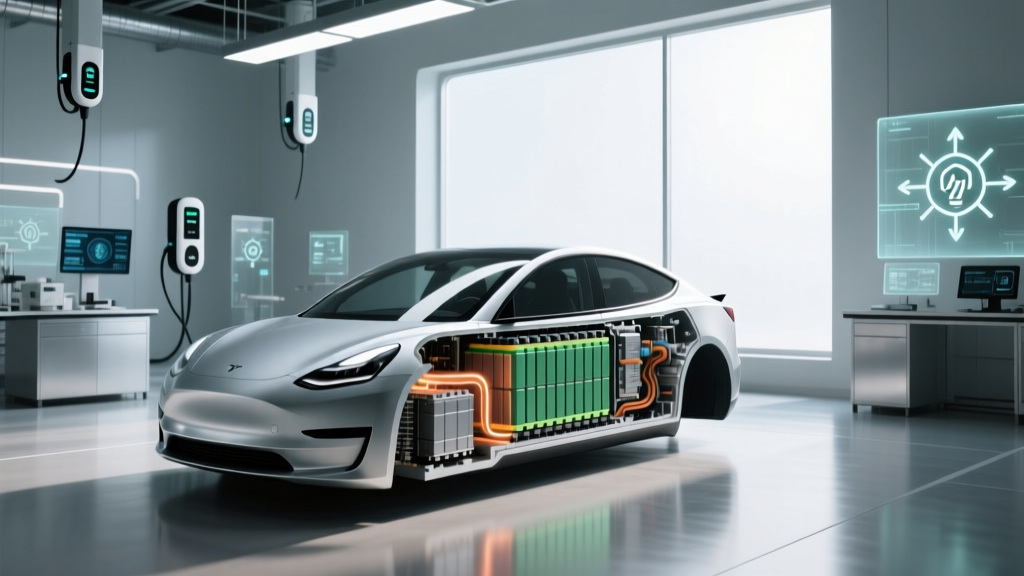
If you've ever rented a battery-powered surfboard hydrofoil at a coastal resort, you've probably noticed the rental operator swapping packs every 45 minutes or limiting your session to preserve battery health. Those compact, high-discharge marine lithium-ion packs endure brutal conditions—saltwater exposure, deep cycling to near-zero, and minimal thermal management. They're a useful contrast to the high-voltage traction battery sitting under your EV's floor, which is engineered for a fundamentally different mission: 150,000+ miles of service with single-digit percentage annual degradation.
This guide breaks down exactly what's inside a modern EV battery, how long it lasts with real-world data, what the warranty actually covers, and what it costs to replace one—so you can buy and own an EV with eyes wide open.
Chemistry 101: LFP vs. NMC vs. NCA
Every EV sold in 2026 uses one of three dominant lithium-ion chemistries in its high-voltage traction battery. The choice affects range, longevity, cold-weather performance, and price. Here's how they stack up:
| Attribute | LFP (Lithium Iron Phosphate) | NMC (Nickel Manganese Cobalt) | NCA (Nickel Cobalt Aluminum) |
|---|---|---|---|
| Energy Density | Lower (~160 Wh/kg cell-level) | Higher (~230-260 Wh/kg) | Highest (~260-290 Wh/kg) |
| Cycle Life | 3,000-5,000+ cycles | 1,000-2,000 cycles | 800-1,500 cycles |
| Cold Performance | Weaker; ~15-20% range loss at 20°F | Better; ~10-15% range loss at 20°F | Similar to NMC |
| Peak Fast-Charge Tolerance | Good; handles 100% SoC daily | Best kept 20-80% for longevity | Best kept 20-80% for longevity |
| Cost per kWh (pack-level) | ~$95-$115 | ~$125-$155 | ~$130-$160 |
| Cobalt Content | None | Low-moderate (5-10%) | Low (~5%) |
| Typical 2026 Applications | Tesla Model 3 RWD, Ford Mustang Mach-E Select (base), BYD, Rivian Standard | Hyundai Ioniq 5, VW ID.4, Chevrolet Equinox EV, Kia EV6 | Tesla Model S/X, some Lucid configs |
The trade-off is straightforward: LFP gives you a longer-lasting, cheaper, cobalt-free battery at the cost of lower energy density (meaning less range for a given pack weight) and weaker cold-weather performance. NMC and NCA maximize range per kilogram but degrade faster if routinely charged to 100% or DC fast-charged in extreme heat.
That battery-powered surfboard hydrofoil you rode last summer? It almost certainly uses an NMC or NCA pouch cell pack optimized for burst power (high C-rate discharge to spin the hydrofoil motor) and compact size—not cycle life or decade-long durability. It's a fundamentally different engineering priority.
How Long Do EV Batteries Actually Last?
Let's look at the real degradation data rather than manufacturer optimism.
Observed Degradation Curves (Fleet and Owner Data):
- Tesla Model 3/Y (NMC/NCA, 2018-2022 production): Per Tesla's 2024 Impact Report, fleet data shows an average capacity loss of ~12% at 200,000 miles. Early-model (2018-2019) vehicles show slightly steeper curves, with some owners reporting 8-10% loss by 80,000 miles before the curve flattens.
- Chevrolet Bolt EV/EUV (NMC, 2017-2023): GM recalled and replaced packs in 2021-2022 due to manufacturing defects causing fire risk—not degradation. Post-recall replacement packs (LG Energy Solution, new-spec) show ~4-6% degradation at 50,000 miles per owner forums and fueleconomy.gov efficiency tracking.
- Hyundai Ioniq 5 (NMC, 2022-present): Early fleet data from Recurrent Auto (a battery analytics firm) shows ~3-5% loss at 30,000 miles for vehicles primarily Level 2 home-charged.
- Tesla Model 3 RWD (LFP, 2021-present): LFP packs show remarkably flat degradation—many owners report 2-4% loss at 40,000 miles, consistent with LFP's superior cycle life.
- Nissan Leaf (NMC, passive air cooling, 2011-2025): The cautionary tale. Air-cooled packs in hot climates (Arizona, Texas) saw 15-25% loss by 60,000-80,000 miles. The 2026 Leaf (if produced) is expected to adopt liquid cooling.
The pattern: most modern, liquid-cooled EV batteries lose 5-10% capacity in the first 50,000 miles, then the degradation curve flattens significantly. A 2026 EV with a 300-mile EPA range will likely still deliver 260-280 miles at 100,000 miles—perfectly usable for daily driving and road trips.
What the Battery Warranty Actually Covers
Federal law (EPA emissions warranty precedent) and California's ZEV mandate have pushed automakers to offer robust high-voltage battery warranties. Here's what the major brands commit to as of 2026:
| Manufacturer | Duration | Mileage Cap | Capacity Retention Threshold | Notes |
|---|---|---|---|---|
| Tesla (Model 3/Y RWD, LFP) | 8 years | 120,000 miles | 70% | Whichever comes first |
| Tesla (Model 3/Y Long Range, S, X) | 8 years | 150,000 miles | 70% | NMC/NCA packs |
| Hyundai / Kia (E-GMP platform) | 10 years | 100,000 miles | 70% | Longest duration in mainstream market |
| GM (Ultium-based: Equinox EV, Blazer EV, Silverado EV) | 8 years | 100,000 miles | 70% | Covers battery and electric drive components |
| Ford (Mustang Mach-E, F-150 Lightning) | 8 years | 100,000 miles | 70% | Includes battery management system |
| Volkswagen (ID.4, ID.7) | 8 years | 100,000 miles | 70% | Standard across MEB platform |
| Rivian (R1T, R1S) | 8 years | 120,000 miles | 70% | Standard and Max packs covered |
| BMW (i4, iX, i7) | 8 years | 100,000 miles | 70% | Includes battery cooling system |
The critical detail: the 70% retention threshold. If your 80 kWh (usable) battery drops below 56 kWh of usable capacity within the warranty period, the manufacturer must repair or replace it at no cost. In practice, very few modern liquid-cooled EVs hit this threshold before the warranty expires. Data from Recurrent Auto and Geotab's fleet studies consistently show average degradation of 1-2% per year for vehicles with active thermal management.
Replacement Cost: What You'd Actually Pay (And Why You Probably Won't)
If your battery does fail outside warranty—or if you're buying a used EV and want to budget for worst-case scenarios—here are the replacement costs as of early 2026:
| Vehicle | Pack Size (Usable kWh) | Chemistry | Replacement Cost (Parts + Labor) | Typical Replacement Trigger |
|---|---|---|---|---|
| Tesla Model 3 RWD | ~57 kWh | LFP | $10,000 - $13,000 | Rare before 200,000+ mi; individual module repair possible |
| Tesla Model Y Long Range | ~75 kWh | NMC | $12,000 - $16,000 | Cell imbalance or cooling system failure |
| Hyundai Ioniq 5 | ~72.6 kWh | NMC | $11,000 - $15,000 | Module-level replacement available at lower cost |
| Chevrolet Equinox EV | ~85 kWh | NMC (Ultium) | $12,000 - $18,000 | Ultium's modular design allows partial pack swaps |
| Ford F-150 Lightning Extended Range | ~131 kWh | NMC | $18,000 - $25,000 | Largest consumer pack; high material cost |
| Rivian R1T Max Pack | ~141 kWh | NMC | $20,000 - $28,000 | Large pack; limited third-party service options |
| BMW iX xDrive50 | ~105 kWh | NMC | $16,000 - $22,000 | Dealer-only service; OEM parts premium |
Important context: the vast majority of EV batteries never need full replacement. When issues do arise, they're often a failed cell module, a cooling system leak, or a battery management system (BMS) fault—not wholesale pack death. Module-level repairs (replacing 1-2 of 4-12 modules) cost $2,000-$6,000 at independent EV shops, a fraction of a full swap.
For comparison, that battery-powered surfboard hydrofoil's replacement pack—a 2-4 kWh consumer-grade NMC unit—runs $1,500-$3,500 from the manufacturer. Per kWh, EV packs are actually far cheaper ($100-$155/kWh pack-level in 2026 vs. $400-$800/kWh for specialty marine applications), but the total dollar amount is higher because EV packs are 20-50x larger.
What Kills an EV Battery (And How to Prevent It)
Modern EV batteries don't just "wear out" from use—they degrade from specific stress factors. Understanding these lets you maximize longevity.
Factors That Accelerate Degradation
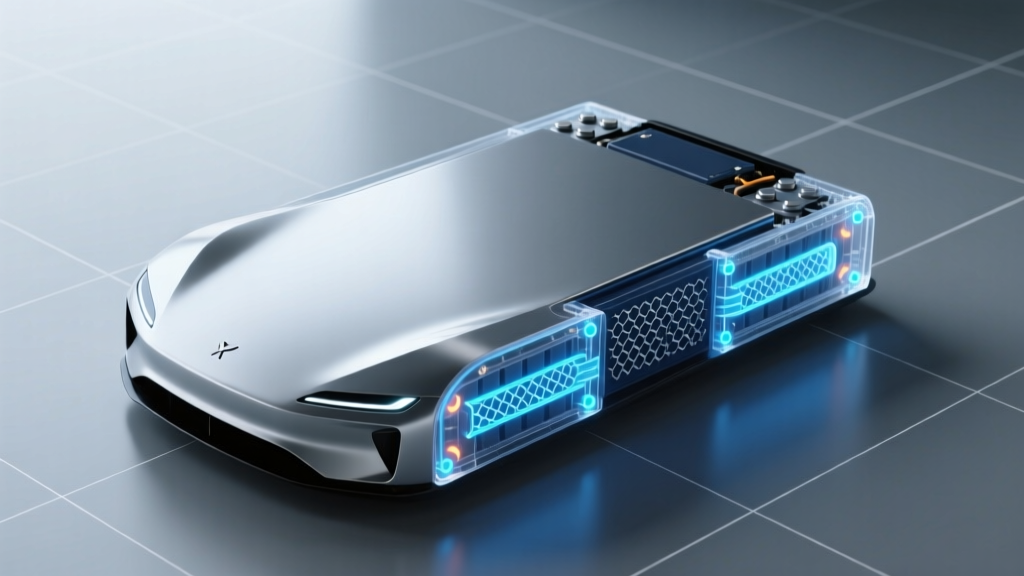
- Extreme heat exposure: Sustained battery temps above 104°F (40°C) accelerate electrolyte decomposition. Parking in direct sun in Phoenix without preconditioning is worse than 100 DC fast charges. Mitigation: Garage parking, preconditioning while plugged in, using the vehicle's active cooling.
- Frequent DC fast charging above 150 kW in hot weather: High-current charging generates internal heat. Doing it repeatedly at 95°F+ ambient without adequate preconditioning stresses cells. Mitigation: Use the vehicle's built-in nav-to-charger preconditioning (Tesla, Hyundai, Ford, GM all offer this). Limit 350 kW sessions to road trips, not daily use.
- Sustained 100% State of Charge (NMC/NCA only): Leaving an NMC or NCA battery at 100% SoC for days or weeks causes electrolyte oxidation at the cathode. Mitigation: Set charge limit to 80-90% for daily use; charge to 100% only before long trips. LFP batteries are the exception—they tolerate and even benefit from periodic 100% charges for BMS calibration.
- Deep discharge below 10% SoC: Consistently running the battery to near-zero causes copper dissolution at the anode. Mitigation: Plug in before you drop below 15-20%. The vehicle's buffer (typically 2-5 kWh below the displayed 0%) provides a safety margin, but don't rely on it routinely.
- Very cold charging without preconditioning: Charging a frozen battery (below 32°F / 0°C) at high rates causes lithium plating on the anode—permanent capacity loss. Mitigation: Always precondition before charging in cold weather. Most 2026 EVs do this automatically when you navigate to a charger.
Habits That Maximize Battery Life
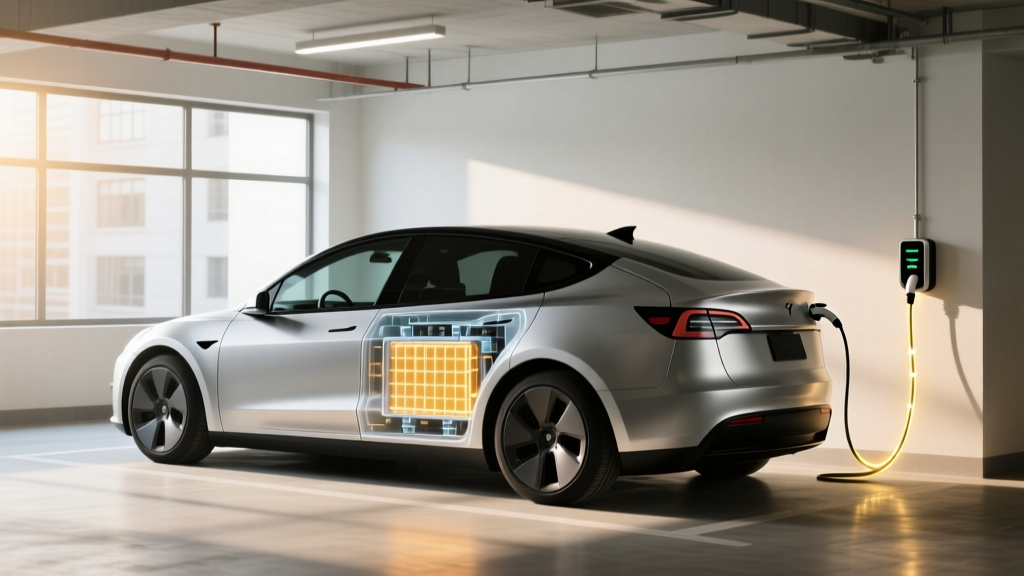
- Home Level 2 charging (7-11 kW) as your primary method—gentle on cells, cheapest per kWh
- Daily charge limit of 80% for NMC/NCA; 100% is fine for LFP
- Keep the vehicle plugged in during extreme heat or cold so the thermal management system can maintain optimal pack temperature
- Use regenerative braking in moderate mode rather than aggressive one-pedal to reduce heat generation in the pack during deceleration
- Drive it. Batteries that sit unused for months at low SoC degrade faster than batteries in regular use
Monitoring Battery Health: How to Check Your State of Health (SoH)
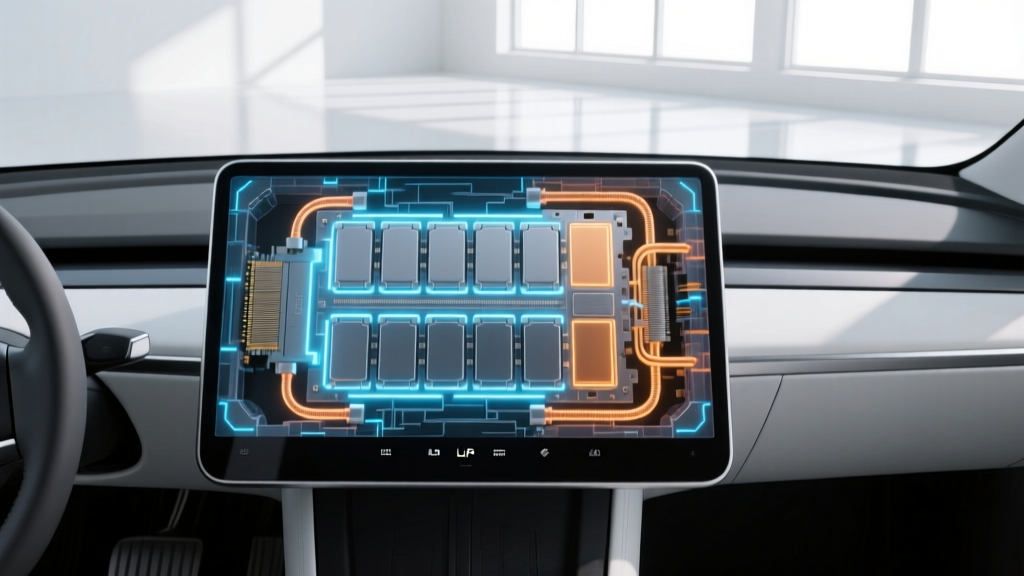
State of Health (SoH) is the percentage of original capacity your battery currently holds. A brand-new pack is 100% SoH; one that's lost 8% of capacity is at 92% SoH. Here's how to check it:
In-vehicle displays (2026 models with native SoH readouts):
- Tesla: No native SoH percentage in the UI, but the Service menu (hold model name on About screen for 3 seconds) shows battery health metrics. Third-party apps like Tessie or TeslaFi calculate SoH from energy data.
- Hyundai/Kia (E-GMP): The infotainment system's EV diagnostics menu displays estimated SoH as a percentage. Also accessible via the Kia Connect / Hyundai Bluelink app.
- GM (Ultium): The myChevrolet/myCadillac app shows a battery health indicator. OnStar diagnostics can provide a detailed SoH report on request.
- Ford: FordPass app includes battery health status. The in-dash diagnostics (Settings > Vehicle > Battery) provides a pass/fail indicator rather than a precise percentage.
- BMW: iDrive's battery management section shows SoH. BMW's Connected Drive app also reports this remotely.
Third-party methods:
- OBD-II dongles + apps: Devices like the OBDeleven (VW/Audi/BMW) or Car Scanner ELM OBD2 (broad compatibility) can read BMS data including SoH, cell voltage variance, and pack temperature. This is the most precise consumer-accessible method.
- Dealer diagnostic check: Any authorized service center can run a full battery health report, typically for $50-$150 if out of warranty. Request this when buying a used EV.
- Manual calculation: Fully charge to 100%, note the displayed range, and compare to the original EPA rating adjusted for the vehicle's efficiency. This is imprecise (displayed range depends on recent driving habits) but gives a rough estimate.
What's Next: Solid-State and Silicon Anode Batteries
Two technologies are frequently cited as "next-generation" EV batteries. Here's where they actually stand in 2026:
Silicon-dominant anode batteries: Companies like Sila Nanotechnologies and Group14 are shipping silicon-anode cells in limited production. These replace the graphite anode with silicon, boosting energy density by 15-25% at the cell level. The Mercedes-AMG EQG (G-Wagen EV) uses a silicon-anode pack from Sila. Expect broader adoption by 2027-2028, primarily in premium vehicles where cost per kWh is less critical than range density.
Solid-state batteries: Toyota has announced a solid-state battery targeting 2027-2028 production in limited volumes, claiming 750 km (~466 miles) of range and 10-minute 10-80% DC fast charging. Samsung SDI and QuantumScape are also in advanced testing. However, manufacturing yield, cost, and scale remain unsolved for mass-market vehicles. Realistic timeline for broad availability: 2029-2032 at the earliest, with initial deployment in luxury or performance models.
Neither technology changes the advice in this guide. The liquid-electrolyte lithium-ion batteries in 2026 EVs are mature, well-understood, and backed by extensive warranty coverage. They'll serve you well for 150,000+ miles with basic care.
Frequently Asked Questions
How long do EV batteries last in years and miles?
Most modern liquid-cooled EV batteries (2020 and newer) are designed to retain 70-85% of their original capacity at 150,000-200,000 miles, which typically corresponds to 10-15 years of average driving (12,000-15,000 miles/year). Fleet data from Geotab and Recurrent Auto supports this. Air-cooled batteries (older Nissan Leafs) degrade significantly faster in hot climates.
How much does an EV battery cost to replace?
Full pack replacements range from $10,000-$28,000 depending on pack size and vehicle, with most mainstream models (60-85 kWh packs) falling in the $11,000-$18,000 range including labor. However, module-level repairs cost $2,000-$6,000 and are more common. Per IRS guidelines, battery replacement costs are not covered by the §30D federal tax credit (that credit applies only to new vehicle purchases). Most EV batteries outlast the vehicle's useful life and are never replaced.
What does the EV battery warranty cover?
Every major automaker covers the high-voltage traction battery for at least 8 years/100,000 miles (Hyundai/Kia extends to 10 years/100,000 miles) against capacity loss below 70% of original. The warranty covers the battery pack, modules, BMS, and often the cooling system. It does not cover damage from accidents, flooding, or unauthorized modifications. The warranty is transferable to subsequent owners.
How do I check and maximize my EV battery health?
Check SoH through your vehicle's native diagnostics (varies by brand), an OBD-II reader with BMS access, or a dealer diagnostic report. Maximize health by: charging to 80% daily for NMC/NCA (100% is fine for LFP), avoiding sustained high SoC in heat, preconditioning before DC fast charging, keeping the vehicle plugged in during temperature extremes, and minimizing deep discharges below 15%.
LFP vs. NMC — which battery chemistry is better?
Neither is universally better; they optimize for different priorities. Choose LFP if you prioritize longevity (3,000-5,000+ cycles), lower cost, cobalt-free sourcing, and the convenience of daily 100% charging. Choose NMC if you need maximum range per pound, better cold-weather performance, and faster peak DC charging speeds. For most commuters who charge at home nightly, LFP is the pragmatic choice. For road-trippers and cold-climate drivers, NMC's energy density and cold tolerance justify the more careful charging habits.
Does DC fast charging damage my battery?
Occasional DC fast charging (road trips, 1-2 times per week) causes negligible additional degradation in modern liquid-cooled packs. The risk comes from exclusive DC fast charging in extreme heat without preconditioning—this can add 1-3% extra degradation over 100,000 miles compared to Level 2 home charging. The vehicle's battery management system actively limits charge rate when the pack is too hot or too cold, which is why you may see slower charging speeds in July in Arizona or January in Minnesota.
Is a used EV with 80,000 miles a bad idea?
Not if the battery checks out. A 2021-2023 EV with 80,000 miles and a verified SoH of 90%+ still has years of useful life and likely remains under the original battery warranty. Request a dealer diagnostic report or use an OBD-II reader before purchasing. The bigger concerns with high-mileage used EVs are suspension wear, tire condition, and whether the vehicle received all software updates—not the battery.