If you've ever wondered can you charge batteries in an electric vehicle thousands of times without destroying them, the short answer is yes — but the nuance matters. Modern EV traction batteries are engineered for longevity that typically outlasts the car itself, provided you understand the chemistry inside, the habits that accelerate wear, and what the warranty actually protects. This guide breaks down the data behind EV battery lifespan, replacement economics, and daily care so you can make an informed purchase or optimize the pack you already own.
How Long Do EV Batteries Actually Last?
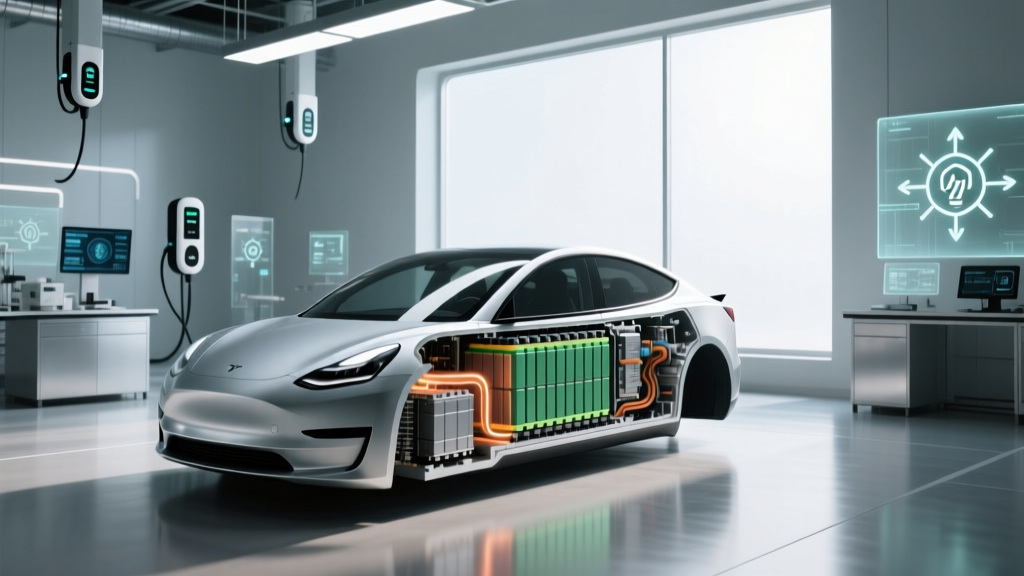
The high-voltage traction battery — not the 12V auxiliary battery that runs your lights and infotainment — is the expensive heart of any EV. Based on fleet data from Tesla, real-world studies by Geotab, and manufacturer warranty structures, most modern lithium-ion EV batteries retain between 85% and 95% of their original capacity after 150,000 miles or 8–10 years of typical use.
That means a vehicle with an EPA-rated 300-mile range when new might deliver 255–285 miles at the 150K-mile mark. For most owners, that's still eminently usable. Catastrophic failure (a battery that simply stops working) is rare; gradual capacity loss is the norm.
- Year 1 / ~15,000 mi: 2–4% loss (initial formation drop)
- Year 3 / ~45,000 mi: 5–8% total loss
- Year 5 / ~75,000 mi: 7–11% total loss
- Year 8 / ~120,000 mi: 10–15% total loss
- Year 10 / ~150,000 mi: 12–18% total loss
Sources: Geotab fleet study (6,300+ vehicles), Tesla Impact Reports, owner-reported data on Recurrent Auto. LFP packs tend to cluster on the lower-loss end of these ranges.
The key insight: degradation is not linear. Most capacity loss occurs in the first 12–24 months as the battery's solid electrolyte interphase (SEI) layer stabilizes. After that, the curve flattens considerably, which is why a 10-year-old EV with a healthy pack is entirely realistic.
LFP vs NMC vs NCA: Which Battery Chemistry Is Better?
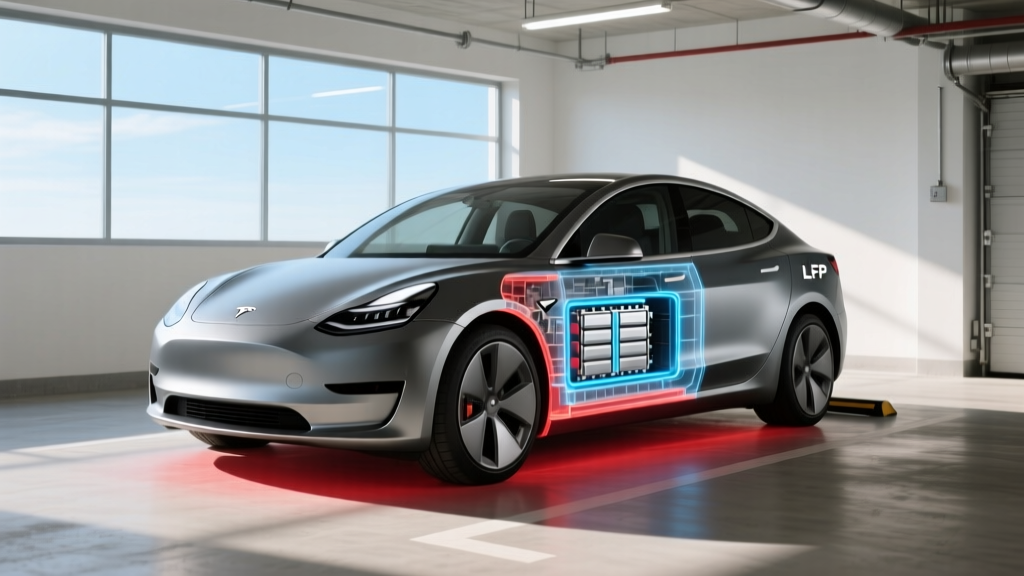
Not all EV batteries are the same. The two dominant chemistries in 2026 passenger vehicles are LFP (lithium iron phosphate) and NMC/NCA (nickel manganese cobalt / nickel cobalt aluminum). Your choice of chemistry — often dictated by the trim level you buy — has real consequences for range, longevity, cost, and daily charging habits.
| Attribute | LFP (Lithium Iron Phosphate) | NMC / NCA (Nickel-Based) |
|---|---|---|
| Energy Density | Lower (~160 Wh/kg cell-level) — heavier pack for same kWh | Higher (~250–300 Wh/kg) — lighter, more range per kg |
| Cycle Life | 3,000–5,000+ cycles to 80% SoH | 1,000–2,000 cycles to 80% SoH |
| Cold-Weather Performance | Weaker — greater range loss below freezing, slower cold charging | Better low-temp conductivity, less range penalty |
| Charging to 100% | Recommended regularly for BMS calibration; no harm | Daily 80% limit advised; 100% only for trips |
| Cost | ~20–30% cheaper per kWh — no cobalt or nickel | More expensive due to nickel/cobalt supply chain |
| Typical Vehicles (2026) | Tesla Model 3/Y RWD, base Ford Mustang Mach-E, BYD models | Tesla Long Range, Hyundai Ioniq 5/6, Rivian, most luxury EVs |
The verdict: If you prioritize maximum range per charge and live in a cold climate, NMC/NCA is the stronger pick. If you want the longest possible battery lifespan, plan to own the car 10+ years, and can accept slightly less range, LFP is the durability champion. Many buyers in 2026 are choosing LFP-equipped base trims specifically for this longevity advantage.
What Does the EV Battery Warranty Actually Cover?
Federal law mandates that EV manufacturers provide a minimum battery warranty of 8 years or 100,000 miles (whichever comes first). In California Air Resources Board (CARB) states — which include CA, NY, MA, WA, CO, and others — that extends to 10 years / 150,000 miles. The warranty threshold is almost universally set at 70% capacity retention, meaning the manufacturer will repair or replace the pack if it drops below 70% of its original kWh within the warranty period.
| Manufacturer | Battery Warranty (Federal) | CARB-State Warranty | Capacity Threshold |
|---|---|---|---|
| Tesla | 8 yr / 100K–120K mi (varies by model) | Same as federal for most trims | 70% |
| Hyundai / Kia | 10 yr / 100,000 mi | 10 yr / 150,000 mi | 70% |
| Ford | 8 yr / 100,000 mi | 10 yr / 150,000 mi | 70% |
| GM (Chevy, Cadillac) | 8 yr / 100,000 mi | 10 yr / 150,000 mi | 70% (some Ultium packs: 60%) |
| Rivian | 8 yr / 175,000 mi | 8 yr / 175,000 mi | 70% |
Critical caveat: Warranties cover defects and abnormal degradation — not range loss from abuse, accidents, or unauthorized modifications. If you track your EV or repeatedly DC fast-charge to 100% on an NMC pack, a manufacturer may deny a claim. Read your warranty booklet carefully.
How Much Does an EV Battery Cost to Replace?
This is the question that generates the most anxiety — and the most misinformation. Here are the real numbers for out-of-warranty replacement in 2026:
| Vehicle / Battery Size | Battery Replacement Cost (Parts + Labor) | Refurbished / Module Repair |
|---|---|---|
| Tesla Model 3 RWD (~60 kWh LFP) | $8,000 – $12,000 | $5,000 – $7,000 |
| Tesla Model Y LR (~82 kWh NMC) | $12,000 – $16,000 | $7,000 – $10,000 |
| Hyundai Ioniq 5 (~77 kWh NMC) | $11,000 – $15,000 | $6,500 – $9,000 |
| Ford F-150 Lightning Ext. Range (~131 kWh) | $18,000 – $25,000 | $12,000 – $16,000 |
| Chevrolet Equinox EV (~85 kWh Ultium) | $10,000 – $14,000 | $6,000 – $9,000 |
Context that matters: According to data from Recurrent Auto, fewer than 2% of EVs in their 15,000-vehicle study needed a battery replacement under 150,000 miles. Most packs are outliving the vehicles they're installed in. When replacement is needed, independent EV shops increasingly offer module-level repair (replacing individual degraded cell groups rather than the entire pack) at 40–60% lower cost than a full OEM swap.
Battery prices have also been declining steadily. The average pack cost fell below $130/kWh at the cell level in 2025, and continued declines mean a replacement in 2032 will cost significantly less than one today.
Factors That Accelerate Battery Degradation
You can charge EV batteries every day for a decade and still end up with a healthy pack — or you can kill 10% of your capacity in three years. The difference comes down to these variables:
- Daily State of Charge (NMC/NCA): Set charge limit to 80%. Reserve 100% for road trips. LFP owners: charge to 100% at least once per week for BMS calibration.
- Avoid prolonged storage at extremes: Don't leave your EV sitting at 100% SoC or below 10% SoC for days. If storing for weeks, target 50% SoC.
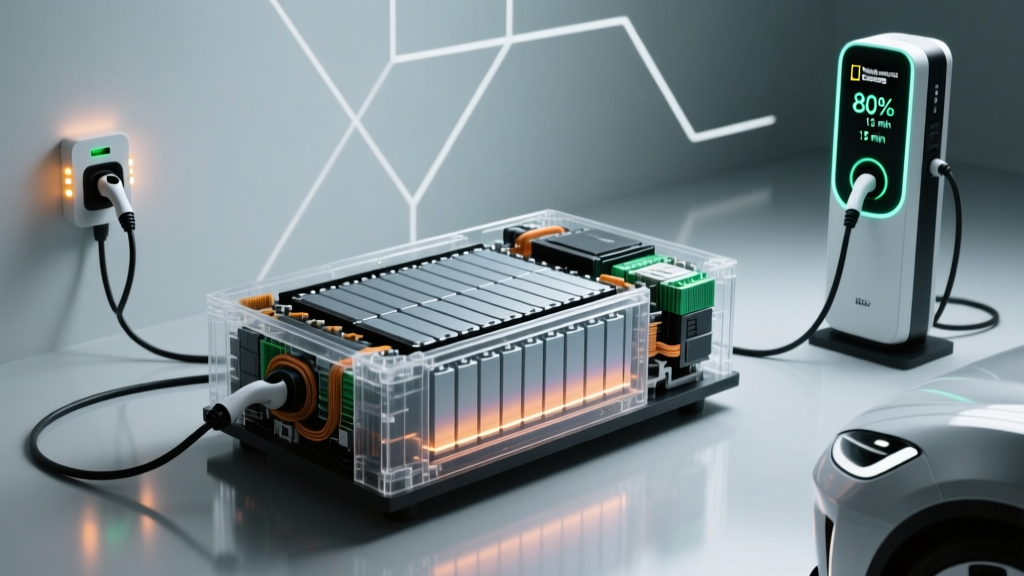
- DC fast charging: Occasional DCFC is fine; daily reliance on 150+ kW chargers accelerates wear, especially without battery preconditioning. Use Level 2 (7–11.5 kW) for routine home charging.
- Extreme heat: Sustained battery temperatures above 95°F (35°C) accelerate chemical degradation. Park in shade, use preconditioning, and avoid repeated fast-charging in peak summer heat.
- Extreme cold: Cold doesn't cause permanent damage but temporarily reduces capacity. Always precondition before driving or charging in sub-freezing temps — most EVs do this automatically when you set a departure time or navigate to a charger.
- Regen braking settings: Max regen is fine for battery health; the charge rates involved are well within safe C-rate limits.
The single biggest factor most owners can control is charge limit discipline. Data from Tesla's fleet shows that NMC vehicles routinely charged to 100% lose capacity roughly 2× faster than those held at 80% daily. Conversely, LFP batteries are largely immune to this effect — which is why Tesla and Ford recommend regular 100% charging for their LFP-equipped models.
How to Check Your Battery's State of Health (SoH)
State of Health (SoH) is the percentage of your battery's original usable capacity that remains. A new EV starts at 100% SoH; at 70% SoH, you'd hit your warranty threshold. Here's how to monitor it:
Built-In Vehicle Displays
Some manufacturers surface battery health directly. Tesla shows a "Battery Health" percentage under Settings > Software in 2024+ models. Hyundai and Kia display degradation estimates in the EV menu on newer Ioniq and EV6 models. Ford provides battery health data through the FordPass app for the Mustang Mach-E and F-150 Lightning.
Third-Party Apps and Services
For vehicles without a native SoH readout, apps like Recurrent, Tessie (Tesla-specific), and ABRP (A Better Route Planner) can estimate SoH by comparing your actual energy consumption and range against factory baselines. These tools use OBD-II dongles or Tesla API data to track degradation trends over time.
Dealer Diagnostic
Any authorized service center can run a full battery health diagnostic that reads individual module voltages, internal resistance, and total pack capacity. Request this during routine service or before purchasing a used EV.
DIY Range Test
Charge to 100% (or your normal limit for LFP), reset the trip meter, drive until you reach 10% SoC, and note the miles driven plus the kWh consumed (from the trip computer or your charger's metered data). Compare this to the vehicle's original EPA range and usable kWh spec. This won't be lab-accurate but gives you a practical SoH estimate within ~3–5%.
What's Next: Solid-State and Silicon-Anode Batteries
The battery landscape is evolving, but it's important to separate announced timelines from showroom reality:
Solid-state batteries replace the liquid electrolyte with a solid material, promising higher energy density (~400+ Wh/kg), faster charging, and improved safety. Toyota has announced solid-state production for select models in 2027–2028, while Samsung SDI targets 2027 mass production. However, these are initial low-volume deployments — broad availability across mainstream models is not expected before 2030 at the earliest.
Silicon-anode batteries (using silicon instead of graphite in the anode) are closer to market. Companies like Sila Nanotechnologies and Group14 are already supplying silicon-dominant anode materials for vehicles shipping in 2025–2026, offering 10–20% energy density improvements over conventional graphite anodes. These are incremental gains, not revolutionary leaps, but they compound with other improvements over successive model years.
Sodium-ion batteries are emerging as a low-cost alternative for budget EVs and stationary storage. CATL began shipping sodium-ion packs in Chinese-market vehicles in 2024, and the technology may reach global markets by 2027–2028 for entry-level models. Energy density is lower than LFP, but raw material costs are dramatically cheaper.
None of these technologies are available in vehicles you can buy today in the US. If you're shopping now, current-generation LFP and NMC packs are mature, well-understood, and backed by robust warranties. Waiting for solid-state means waiting at least 3–4 years for limited availability at premium prices.
Frequently Asked Questions
Can you charge EV batteries every day without damaging them?
Yes. Daily charging is expected and normal. The key is how much you charge. For NMC/NCA packs, set your daily limit to 80% and only charge to 100% when you need the full range for a trip. For LFP packs, daily charging to 100% is recommended by manufacturers. The act of charging itself does not harm the battery — it's sustained high SoC and high temperatures that accelerate wear.
How long do EV batteries last in years and miles?
Most modern EV batteries (2020 and newer) retain 85–95% of their original capacity at 150,000 miles or 8–10 years. Based on current degradation data, a well-maintained pack can reasonably be expected to provide usable service for 200,000+ miles before falling below 70% capacity — the point at most warranty thresholds. Many packs will outlast the vehicle's body, suspension, and interior.
Does fast charging ruin EV batteries?
Occasional DC fast charging (1–2 times per week) has minimal impact on long-term battery health. The concern arises with exclusive reliance on DCFC, particularly at 150+ kW rates without preconditioning. Tesla's own data shows vehicles that primarily use Level 2 home charging degrade ~1–2% less over 100,000 miles than those relying heavily on Superchargers. If you can install a Level 2 home charger (7.2–11.5 kW), use it as your primary charging method.
LFP vs NMC — which battery should I choose?
Choose LFP if you want maximum cycle life, plan to own the vehicle 10+ years, live in a mild climate, and can accept slightly less range per charge. Choose NMC/NCA if you need maximum range, live in a cold climate, frequently take road trips, or prioritize lighter vehicle weight. Both chemistries are proven and reliable in 2026 — the "better" choice depends entirely on your ownership timeline and driving patterns.
What happens if my EV battery fails just outside the warranty period?
Out-of-warranty replacement costs range from $5,000 to $25,000 depending on pack size and whether you choose new OEM, refurbished, or module-level repair. Independent EV service shops are increasingly offering module replacement (swapping only the degraded cell groups) at 40–60% less than a full pack replacement. Additionally, battery costs continue to decline, so a replacement in 2030 will likely cost less than today's prices.
Is it safe to buy a used EV with high mileage?
Generally yes, provided you verify the battery's State of Health. A 100,000-mile EV with 90% SoH is a better buy than a 30,000-mile EV that was repeatedly fast-charged to 100% and stored in Phoenix heat. Always request a battery health diagnostic before purchase, or use a service like Recurrent's battery report (available for many models) to see the degradation history.