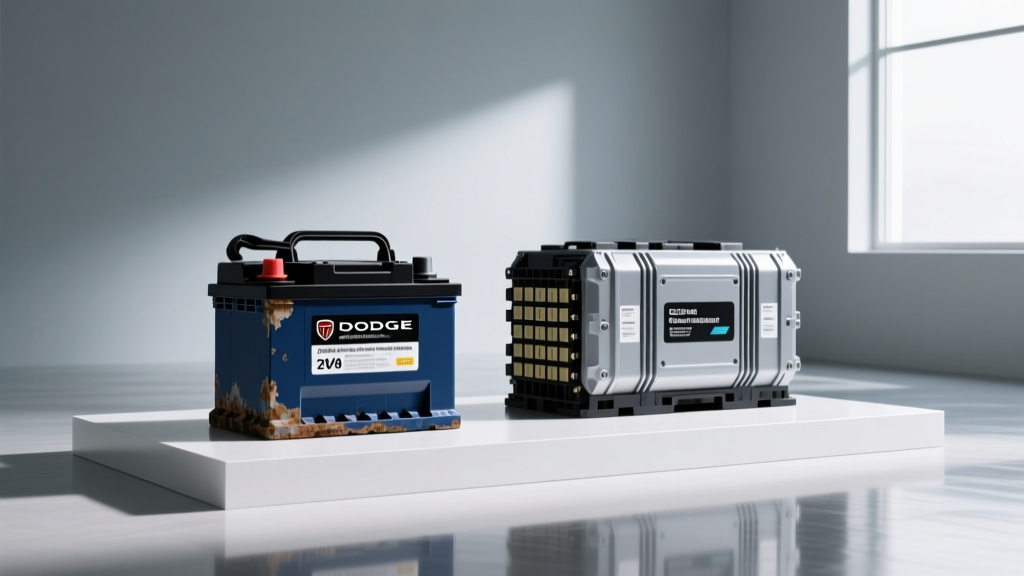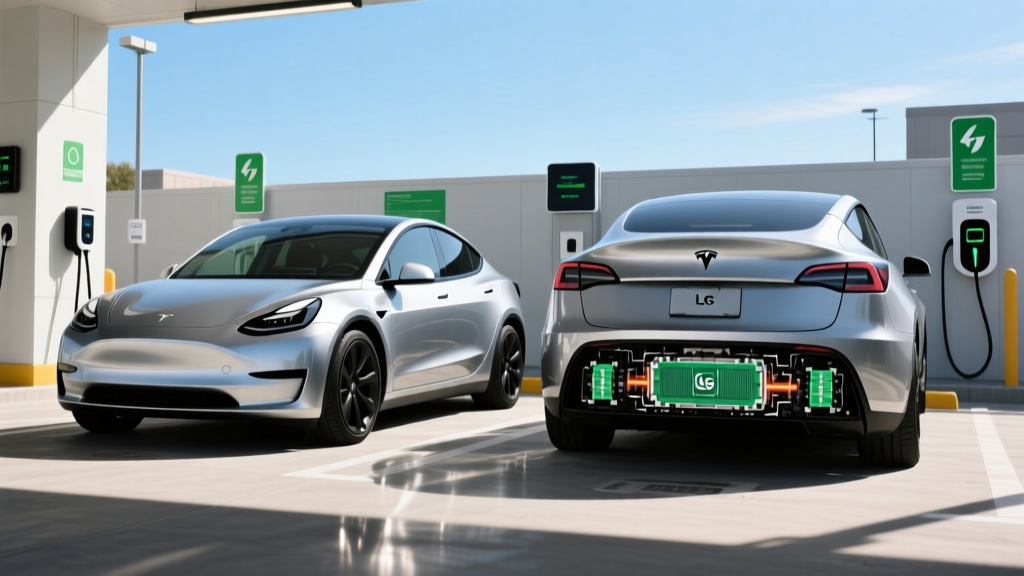
Every EV buyer eventually confronts the same question: what happens when the battery degrades? Unlike a gas car's engine, which can be rebuilt in pieces, an EV's high-voltage traction battery is its single most expensive component — and its health dictates range, resale value, and long-term ownership economics. This guide breaks down battery chemistry, real-world degradation data, warranty coverage, replacement costs, and the emerging storage technologies — including South Battery's grid-scale innovations — that are reshaping how we think about lithium-ion longevity.
LFP vs NMC vs NCA: Choosing Your Battery Chemistry
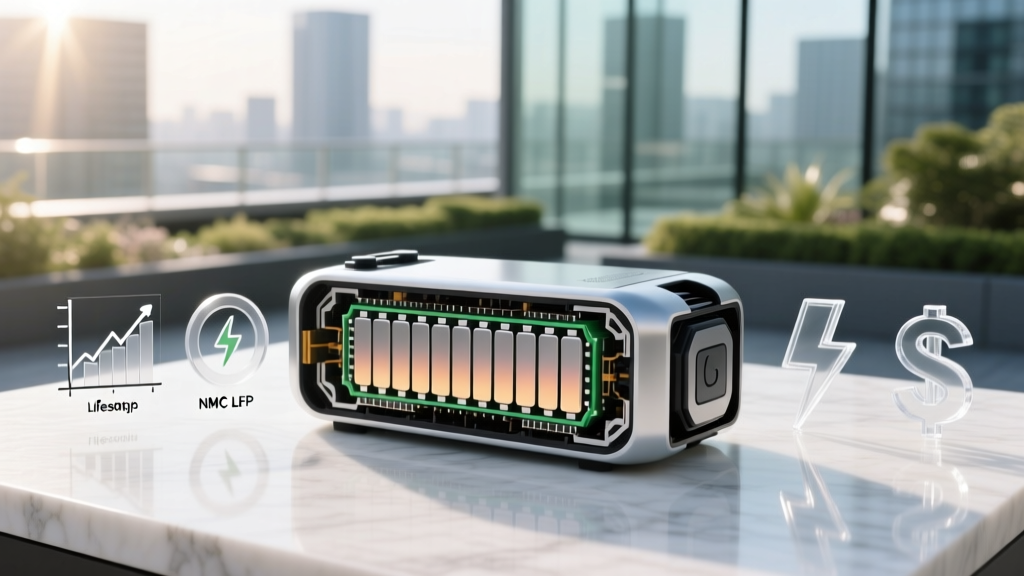
Not all EV batteries are created equal. The two dominant chemistries in 2026 passenger vehicles are Lithium Iron Phosphate (LFP) and Nickel Manganese Cobalt (NMC), with Nickel Cobalt Aluminum (NCA) appearing primarily in Tesla's performance-oriented packs. Each has distinct trade-offs that affect your daily driving and long-term ownership.
kWh (kilowatt-hours) measures the energy stored in the battery — think of it as the fuel tank size. kW (kilowatts) measures power flow — how fast energy moves in or out during charging or acceleration. These are not interchangeable.
| Attribute | LFP (LiFePO₄) | NMC (NiMnCo) | NCA (NiCoAl) |
|---|---|---|---|
| Energy Density | ~160-180 Wh/kg (lower) | ~220-260 Wh/kg (higher) | ~250-280 Wh/kg (highest) |
| Cycle Life | 3,000-5,000+ cycles | 1,000-2,000 cycles | 800-1,500 cycles |
| Cold-Weather Performance | Moderate loss; slower charging below 32°F | Better low-temp performance | Good low-temp performance |
| Cost per kWh | ~$90-$110 (lower) | ~$120-$150 (higher) | ~$130-$160 |
| Recommended SoC Range | Can charge to 100% daily | Best kept 20-80% for daily use | Best kept 20-80% for daily use |
| Thermal Stability | Excellent (less prone to thermal runaway) | Good with active thermal management | Good with active thermal management |
| Common 2026 Applications | Tesla Model 3/Y RWD, BYD, Rivian Standard | Hyundai Ioniq 5/6, Ford Mustang Mach-E, VW ID.4 | Tesla Model S/X, Model 3/Y Long Range/Performance |
Which is better? It depends on your use case. If you commute daily and can charge at home, LFP's ability to accept a full 100% charge regularly, its superior cycle life, and lower cost make it ideal. If you need maximum range in a lighter package or frequently drive in cold climates, NMC or NCA delivers better energy density and cold-weather efficiency. Neither is universally superior — the right choice depends on your mileage patterns, climate, and charging access.
Real-World Degradation: What the Data Actually Shows
EV batteries don't "die" suddenly. They gradually lose capacity over time, reducing your available range. The key metric is State of Health (SoH) — the percentage of original capacity remaining. A battery at 90% SoH holds 90% of its original kWh.
Based on aggregated fleet data from sources including Geotab's longitudinal study of over 10,000 EVs and Tesla's 2025 Impact Report, here is what degradation looks like in practice:
- Year 1: ~2-3% loss (initial formation loss)
- Years 2-4: ~1-2% per year (gradual linear decline)
- Years 5-8: ~1% per year (plateau phase)
- After 8 years / 100,000 miles: Average SoH of ~88-92%
- After 150,000 miles: Average SoH of ~83-88%
LFP batteries show slower degradation, with many fleet vehicles retaining 92-95% SoH after 100,000 miles, thanks to the chemistry's inherently longer cycle life.
Tesla's own published data claims their fleet retains approximately 88% of original capacity at 200,000 miles. Hyundai/Kia's confidence in their battery packs is reflected in their 10-year/100,000-mile warranty in the United States. The key takeaway: modern liquid-cooled battery packs are lasting significantly longer than early-2010s EV batteries, and most will outlive the vehicle's useful economic life.
Battery Warranty Terms: What's Actually Covered
Federal law mandates that EV batteries carry a minimum warranty of 8 years or 100,000 miles (whichever comes first). California Air Resources Board (CARB) states extend this to 10 years or 150,000 miles. But the details matter enormously — specifically the capacity retention threshold that triggers a warranty claim.
| Manufacturer | Warranty Period | Mileage Limit | Capacity Threshold | Notes |
|---|---|---|---|---|
| Tesla (Model 3/Y) | 8 years | 100,000-120,000 mi | 70% retention | Varies by trim/drive |
| Hyundai / Kia | 10 years | 100,000 mi | 70% retention | Among the best coverage |
| Ford (Mach-E, F-150 Lightning) | 8 years | 100,000 mi | 70% retention | Standard across EV lineup |
| GM (Ultium platform) | 8 years | 100,000 mi | 70% retention | Covers Bolt EV/EUV, Blazer EV, etc. |
| Volkswagen (ID.4) | 8 years | 100,000 mi | 70% retention | Net usable capacity basis |
| Rivian | 8 years | 175,000 mi (R1T/R1S) | 70% retention | Higher mileage threshold |
| BMW (iX, i4) | 8 years | 100,000 mi | 70% retention | Includes battery management system |
Critical nuance: The 70% threshold means your battery must lose more than 30% of its original capacity before the manufacturer is obligated to repair or replace it under warranty. In practice, hitting 70% SoH within 8 years/100,000 miles is extremely rare with modern liquid-cooled packs. The warranty is a safety net, not an expectation.
Warranties typically cover defects in materials and workmanship, excessive capacity loss beyond the threshold, and failures of the battery management system (BMS). They generally do not cover damage from accidents, improper charging equipment, modifications, or environmental damage (flooding, fire from external sources).
EV Battery Replacement Costs: The Numbers
If your battery fails outside warranty — or you're buying a used EV with a degraded pack — replacement cost is the elephant in the room. Here's what the data shows for 2026:
| Vehicle | Battery Size (kWh) | Chemistry | Replacement Cost (Parts + Labor) | Typical Replacement Trigger |
|---|---|---|---|---|
| Tesla Model 3 RWD | ~60 kWh | LFP | $8,000-$12,000 | Rare before 200K+ mi |
| Tesla Model Y Long Range | ~82 kWh | NCA | $12,000-$16,000 | Rare before 200K+ mi |
| Hyundai Ioniq 5 | ~77.4 kWh | NMC | $10,000-$15,000 | Rare before 150K+ mi |
| Ford Mustang Mach-E ER | ~91 kWh | NMC | $14,000-$18,000 | Rare before 150K+ mi |
| Ford F-150 Lightning ER | ~131 kWh | NMC | $18,000-$25,000 | Rare before 150K+ mi |
| Chevrolet Bolt EV | ~65 kWh | NMC | $9,000-$14,000 | Post-recall packs improved |
| VW ID.4 | ~82 kWh | NMC | $11,000-$16,000 | Rare before 150K+ mi |
Context that matters: Battery pack prices have fallen roughly 80% since 2013 on a per-kWh basis, according to BloombergNEF. Module-level repair is increasingly possible — many shops can replace individual modules within a pack for $2,000-$5,000 rather than swapping the entire assembly. And the vast majority of EV batteries never need replacement during the vehicle's first-owner lifecycle. According to data from Recurrent Auto, fewer than 1.5% of EVs in their study fleet required battery replacement under the original warranty.
What Kills an EV Battery (and What Doesn't)
Battery degradation is driven by a combination of chemical, thermal, and electrical stress. Here are the factors that matter most, ranked by impact:
- Avoid sustained 100% SoC (NMC/NCA only): Daily charging to 80% dramatically reduces cathode stress. LFP batteries are exempt — charge to 100% regularly for accurate BMS calibration.
- Minimize DC fast charging frequency: Occasional road-trip fast charging is fine. Daily reliance on 150+ kW DC charging accelerates degradation by ~0.5-1% annually vs. Level 2 charging, per Geotab data.
- Precondition before fast charging: Cold batteries charged at high power suffer lithium plating. Always use your vehicle's preconditioning feature (or navigate to a charger via the car's nav system, which auto-preconditions).
- Limit exposure to extreme heat: Parking in 100°F+ ambient heat for extended periods accelerates calendar aging. Garage parking or shaded spots matter in hot climates.
- Don't store at 0% or 100%: If leaving your EV for weeks, set the charge limit to ~50% SoC.
- Use regenerative braking moderately in cold weather: Some vehicles limit regen when the battery is cold — this is protective, not a fault.
- Keep software updated: OTA updates often include BMS refinements that optimize charging curves and thermal management.
What does NOT significantly harm your battery: Occasional 100% charges for road trips, Level 2 home charging (even nightly), regenerative braking, and driving in rain or moderate cold. Modern BMS systems are sophisticated — they manage cell balancing, thermal regulation, and charge-rate tapering to protect the pack even when you're not thinking about it.
Monitoring Your Battery's State of Health
Knowing your battery's SoH is essential for peace of mind, resale value, and warranty claims. Here are the primary ways to check it in 2026:
In-vehicle displays: Tesla provides a battery health estimate in the service menu. Hyundai/Kia's infotainment system on 2024+ models includes an EV battery status screen showing SoH percentage. Ford's MyFordPass app displays battery health data.
OBD-II diagnostic tools: Devices like the OBDLink SX paired with apps such as Leaf Spy (Nissan Leaf), Scan My Tesla, or Car Scanner ELM OBD2 can read the BMS-reported SoH directly. This is the most accurate consumer-accessible method.
Third-party services: Companies like Recurrent Auto and Geotab offer battery health reports based on telematics data. Some used-EV marketplaces now include battery health certificates in their listings.
Manual estimation: If your vehicle doesn't display SoH, you can estimate it by fully charging to a known SoC, driving a measured distance, and comparing the kWh consumed (from the trip computer or charging log) to the battery's original usable capacity. This is less precise but directionally useful.
Beyond the Vehicle: South Battery and Grid-Scale Storage Innovation
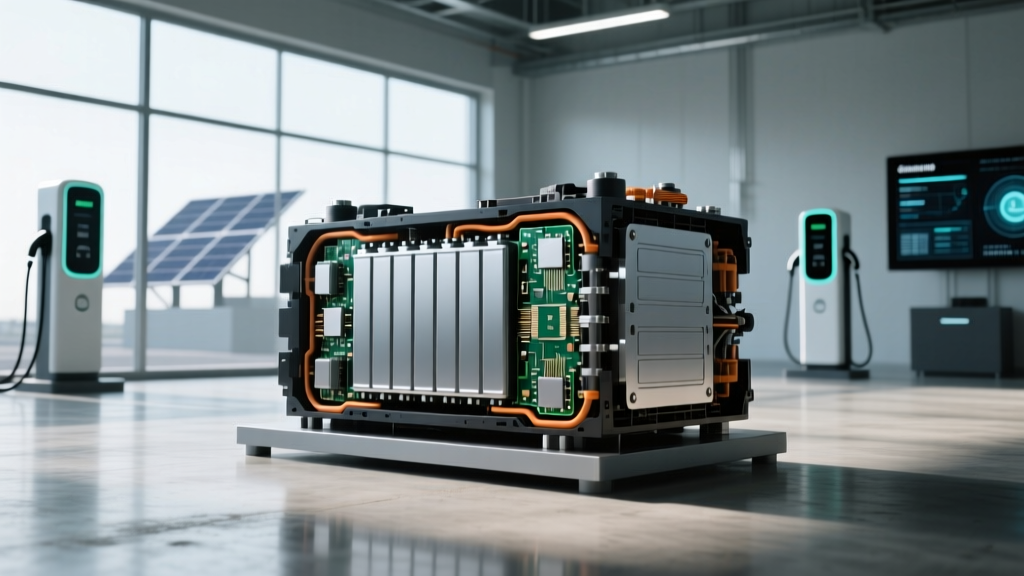
The conversation about battery longevity extends beyond individual vehicles. Companies like South Battery are developing grid-scale energy storage systems that repurpose and extend the lifecycle of lithium-ion cells. As EV batteries retire from automotive service — typically at 70-80% SoH, where they still hold substantial capacity — second-life applications in stationary storage can add 5-10 additional years of useful service.
South Battery's approach focuses on modular storage architectures that accept heterogeneous battery modules from different manufacturers and chemistries, using advanced BMS software to balance cells with varying degradation profiles. This matters for EV owners because it:
- Creates a viable secondary market for retired EV battery packs, improving resale/recycling economics
- Reduces the effective lifecycle cost of EV batteries by capturing residual value
- Supports grid stability and renewable integration, indirectly lowering the cost of EV charging
Grid-scale storage is also driving demand for LFP chemistry, which dominates stationary applications due to its cycle life and thermal stability. This demand is pulling LFP costs down further — a benefit that flows back to EV buyers choosing LFP-equipped vehicles.
Emerging Battery Technologies: What's Next (and When)
Several next-generation battery technologies are in development, but it's critical to separate lab announcements from production reality:
Solid-state batteries: These replace the liquid electrolyte with a solid conductor, promising higher energy density (~400-500 Wh/kg), faster charging, and improved safety. Toyota has announced a 2027-2028 production target for a solid-state-equipped vehicle with ~750 km (466 mi) range. Samsung SDI and QuantumScape are targeting similar timelines. However, manufacturing scale-up and cost reduction remain significant hurdles. Realistic consumer availability: 2028-2030 for premium vehicles; mainstream adoption likely 2032+.
Silicon-dominant anodes: Replacing graphite anodes with silicon can boost energy density by 20-40%. Companies like Sila Nanotechnologies and Group14 are supplying silicon anode materials to battery manufacturers now, with incremental silicon blending already in production cells (2026 vehicles). Full silicon-dominant anodes face expansion/contraction durability challenges. Realistic timeline: incremental adoption now; dominant silicon anodes by 2028-2030.
Sodium-ion batteries: Using abundant sodium instead of lithium, these offer lower cost and good cycle life but significantly lower energy density (~120-160 Wh/kg). CATL and BYD are producing sodium-ion cells for entry-level EVs in China. Realistic US availability: 2027-2029 for budget city cars and stationary storage.
None of these technologies will render current EV batteries obsolete overnight. The transition will be gradual, and today's NMC and LFP packs represent mature, well-understood technology with proven longevity data.
Frequently Asked Questions
How long do EV batteries last in years and miles?
Based on fleet data, most modern liquid-cooled EV batteries retain 83-92% of their original capacity after 8 years and 100,000-150,000 miles. Many packs will function acceptably (above 70% SoH) for 200,000+ miles. The battery typically outlasts the vehicle's economic life. LFP chemistries generally show slower degradation than NMC/NCA.
How much does it cost to replace an EV battery?
Full pack replacement ranges from approximately $8,000 for smaller packs (Tesla Model 3 LFP, ~60 kWh) to $25,000 for large packs (F-150 Lightning, ~131 kWh). Module-level repair, where only degraded modules are replaced, costs $2,000-$5,000. Prices continue to decline as pack costs fall. Most batteries never require replacement during first ownership.
What does the EV battery warranty actually cover?
Federal law mandates 8 years/100,000 miles minimum coverage (10 years/150,000 miles in CARB states). Warranties cover defects and capacity loss below a threshold — typically 70% of original capacity. They do not cover accident damage, improper charging, or external environmental damage. Check your specific manufacturer's terms, as mileage limits and thresholds vary.
How do I check my EV battery health?
Use your vehicle's built-in battery health display (available on Tesla, 2024+ Hyundai/Kia, and some Ford models), an OBD-II scanner with a compatible app (Scan My Tesla, Leaf Spy, Car Scanner), or a third-party telematics service like Recurrent Auto. For warranty purposes, a dealer diagnostic report is the authoritative record.
LFP vs NMC: which battery chemistry should I choose?
Choose LFP if you want longer cycle life, can charge at home daily to 100%, prioritize lower cost, and don't need maximum range in a light package. Choose NMC/NCA if you need the longest possible range, frequently drive in cold weather, or value faster DC charging speeds. Both chemistries are proven and reliable — the right choice depends on your driving patterns and climate.
Does fast charging damage my EV battery?
Occasional DC fast charging (road trips, a few times per month) has minimal impact on battery health. Daily reliance on 150+ kW DC fast charging can accelerate degradation by roughly 0.5-1% per year compared to Level 2 charging, per fleet studies. Modern BMS systems manage charge-curve tapering and thermal regulation to mitigate damage. Always precondition your battery before fast charging, especially in cold weather.